
Solar-powered Christmas lights have become a popular choice for festive outdoor decoration due to their energy efficiency, low maintenance, and eco-friendly operation. Unlike traditional electric lights that draw power from the grid, solar lights charge during the day using built-in photovoltaic panels and illuminate at night using stored battery power. However, many homeowners wonder: what happens when stormy weather rolls in? Specifically, is it safe to leave these lights connected during thunderstorms? The answer involves understanding not just how solar lights work, but also the risks posed by lightning, power surges, and environmental exposure.
While solar Christmas lights are generally safer than hardwired alternatives during storms, they are not entirely risk-free—especially if they include backup charging options or are part of larger lighting systems. This article explores the technical aspects of solar lighting, evaluates real-world risks during thunderstorms, and provides actionable guidance to help you enjoy your holiday display without compromising safety.
How Solar Christmas Lights Work: A Quick Overview
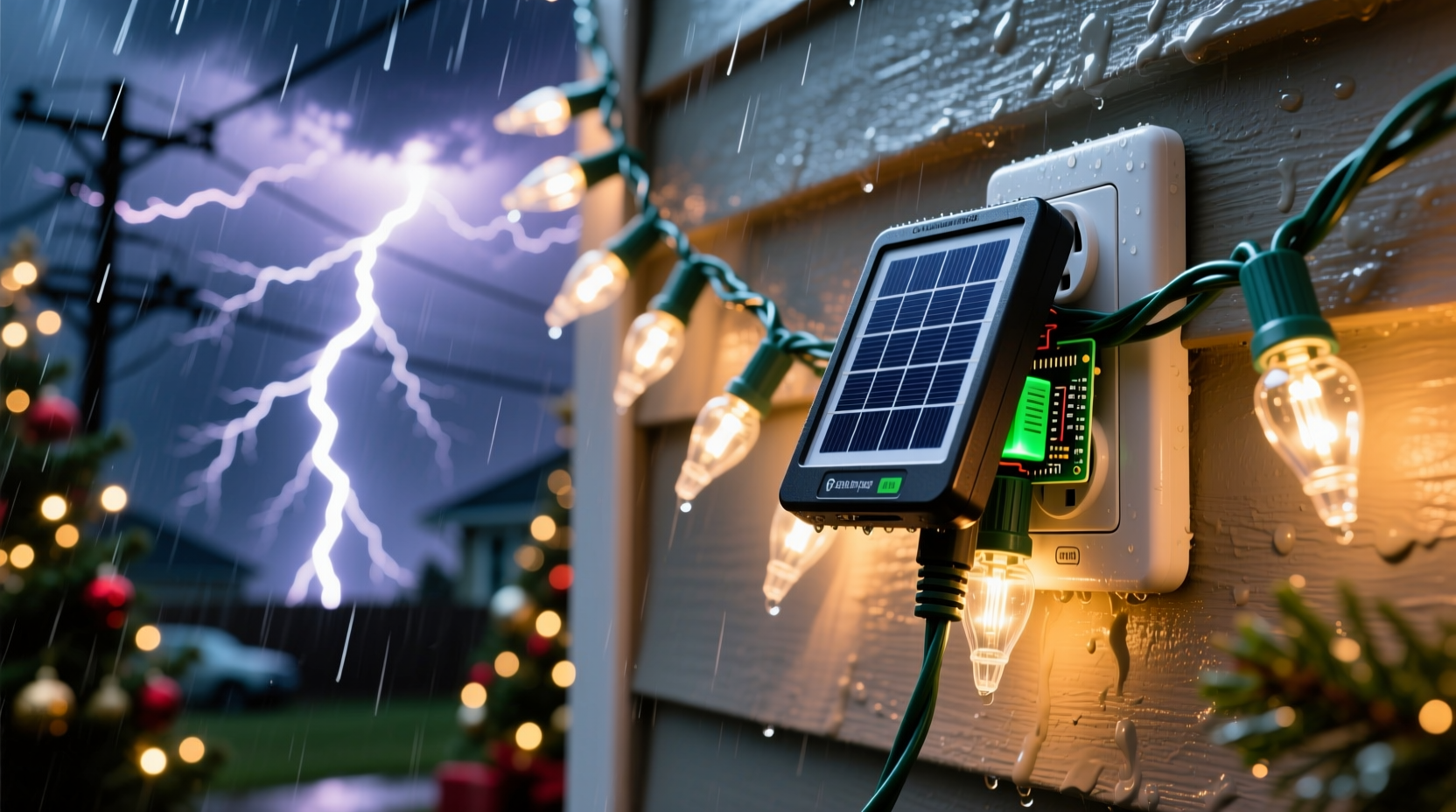
Solar Christmas lights operate on a simple yet effective principle. Each string includes three core components:
- Solar panel: Converts sunlight into electrical energy during daylight hours.
- Battery (usually NiMH or Li-ion): Stores the generated electricity for nighttime use.
- LED lights and control circuitry: Draws power from the battery after dark, often with built-in light sensors and timers.
During normal operation, the system is self-contained and isolated from household electrical wiring. This independence significantly reduces the risk of electrical hazards compared to traditional plug-in lights. Because there’s no direct connection to your home’s electrical grid, the chance of a surge traveling through your house wiring due to a lightning strike is minimal—provided the lights remain purely solar-powered.
However, complications arise when manufacturers add features like USB charging ports, AC adapters, or hybrid power modes. Some models allow users to plug the lights into an outlet as a backup during extended cloudy periods. In such cases, the lights are no longer fully isolated from mains electricity, introducing new vulnerabilities during severe weather.
Thunderstorm Risks: Lightning, Surges, and Moisture
Thunderstorms present multiple threats to outdoor lighting systems, even those powered by alternative energy sources. Understanding these risks helps determine whether leaving solar lights connected is truly safe.
Lightning Strikes and Indirect Surges
A direct lightning strike near your property can induce massive electrical surges in nearby conductive materials—even without a physical connection to the power grid. While solar lights themselves don’t attract lightning, metal components such as mounting stakes, wires, or nearby railings can act as pathways for induced currents.
If a surge travels along a fence or gutter where lights are mounted, it may damage the internal circuitry of the lights or ignite flammable materials. Although rare, this risk increases in areas with frequent thunderstorms or tall surrounding structures.
Moisture and Water Ingress
Most solar Christmas lights are marketed as “weather-resistant” or “waterproof,” typically rated IP44 or higher. However, prolonged exposure to heavy rain, wind-driven moisture, or flooding can compromise seals over time, especially in lower-quality units.
Water entering the battery compartment or control box can cause short circuits, corrosion, or even small fires if residual current is present. This is more likely if the unit has been damaged, aged, or improperly stored between seasons.
Wind Damage and Physical Hazards
Strong winds during thunderstorms can dislodge lights from trees, eaves, or walls. Falling strings pose tripping hazards or could land on walkways, vehicles, or power lines. Additionally, loose wires may come into contact with grounded metal objects, creating potential grounding issues if any part of the system becomes energized.
“Even low-voltage systems can become hazardous under extreme conditions. It’s not just about electricity—it’s about how all elements interact during a storm.” — Dr. Alan Reeves, Electrical Safety Engineer, National Fire Protection Association (NFPA)
Do’s and Don’ts: Managing Solar Lights During Storms
To minimize risks, follow best practices based on product design and local weather patterns. The table below summarizes key actions to take before and during thunderstorms.
| Situation | Do | Don’t |
|---|---|---|
| Lights are purely solar-powered (no outlet plug) | Inspect seals and connections; ensure secure mounting | Ignore visible damage or frayed wires |
| Lights have AC/USB backup charging capability | Unplug from outlet before storm arrives | Leave connected during active storms |
| Severe weather warning issued | Remove delicate installations temporarily | Wait until rain starts to act |
| After the storm passes | Dry components thoroughly before reuse | Reconnect immediately without inspection |
Real-World Scenario: A Homeowner’s Close Call
In suburban Georgia, homeowner Lisa Tran installed a set of hybrid solar Christmas lights along her front porch railing in November. The lights operated primarily on solar power but included a micro-USB port for backup charging via a wall adapter—an option she occasionally used after several overcast days.
One evening in mid-December, a sudden thunderstorm moved through the area. Lisa had forgotten to unplug the lights after topping up the battery earlier that day. Around 8:30 PM, a nearby lightning strike caused a power surge. Though her home’s main breaker held, the surge traveled through the USB adapter into the light string. The next morning, she found the control box charred and partially melted, with one section of LEDs completely burned out. Fortunately, no fire ignited, but the incident prompted her to replace all hybrid units with strictly solar-only models.
This case illustrates how seemingly minor conveniences—like a backup charging option—can introduce significant risks during storms. It also highlights the importance of proactive management, especially in regions prone to unpredictable weather.
Step-by-Step Guide: Preparing Solar Lights for Storm Season
Follow this timeline-based approach to ensure your solar Christmas lights remain safe throughout the holiday season, particularly during storm-prone periods.
- Week 1: Inventory and Inspection
Collect all solar light strings and examine each for cracks, frayed wires, or swollen batteries. Discard or repair damaged units. - Week 2: Check Power Options
Determine whether any lights support external power. Label hybrid models clearly for easy identification. - Week 3: Install with Safety in Mind
Mount lights away from large metal structures, gutters, or areas prone to pooling water. Use insulated hooks and avoid daisy-chaining too many strings. - Before Each Storm: Disconnect Hybrid Units
If your lights can be plugged in, unplug them at the source as soon as severe weather is forecasted. - After Rain or Storm: Dry and Reassess
Allow wet components to air-dry for at least 24 hours before reconnecting or storing. Test functionality once dry.
Frequently Asked Questions
Can solar lights get struck by lightning?
No, solar Christmas lights do not attract lightning. Lightning is drawn to tall, isolated, and conductive objects—not small decorative fixtures. However, if lightning strikes nearby, secondary effects like ground currents or electromagnetic pulses can still damage electronic components in solar lights.
Should I bring solar lights inside during storms?
For purely solar-powered models in good condition, bringing them inside isn't always necessary. However, if the storm involves high winds, hail, or flooding, removing them temporarily prevents physical damage. For hybrid models connected to outlets, disconnecting and storing indoors is strongly advised.
Can rain damage solar lights permanently?
Prolonged exposure to moisture can degrade seals and lead to internal corrosion, especially in cheaper models. While most quality solar lights are designed to withstand rain, submersion or continuous soaking (e.g., in flooded yards) increases failure risk. Always let wet units dry completely before reuse.
Expert Recommendations for Safe Holiday Lighting
The consensus among electrical safety professionals is clear: while standalone solar Christmas lights pose minimal danger during thunderstorms, user behavior and product design play critical roles in overall risk levels.
The NFPA recommends treating any outdoor lighting system—including solar—as part of your broader storm preparedness plan. This means integrating lighting checks into seasonal home maintenance routines and prioritizing products with clear safety certifications (such as UL or ETL marks).
“Just because something runs on low voltage doesn’t mean it’s immune to hazard. Environment, installation quality, and usage patterns matter just as much as the power source.” — Sarah Lin, Senior Safety Consultant, Consumer Technology Association
Experts also emphasize education. Many consumers assume “solar = automatically safe,” which can lead to complacency. Understanding the limitations of weather resistance, recognizing signs of wear, and knowing when to disconnect devices are essential skills for responsible ownership.
Final Checklist for Storm-Safe Solar Lighting
Use this concise checklist to evaluate your setup before every storm:
- ✅ Confirm lights are purely solar-powered or unplug hybrid models
- ✅ Inspect for cracks, corrosion, or loose connections
- ✅ Ensure lights are securely mounted and away from standing water
- ✅ Verify solar panel and battery compartments are sealed properly
- ✅ Monitor weather forecasts and act early when storms are predicted
- ✅ Allow wet units to dry fully before reuse or storage
Conclusion: Stay Festive, Stay Safe
Solar Christmas lights offer a convenient and sustainable way to brighten the holiday season. Their independence from the electrical grid makes them inherently safer than traditional string lights during thunderstorms—but only when used correctly. By choosing reliable products, avoiding unnecessary connections to mains power, and taking preventive steps before severe weather, you can enjoy your festive display with peace of mind.
Safety doesn’t require sacrificing style or brightness. With a little planning and awareness, you protect both your home and your holiday spirit. As storm season coincides with peak decorating time, now is the perfect moment to review your setup, upgrade aging lights, and adopt habits that ensure long-term enjoyment.




 浙公网安备
33010002000092号
浙公网安备
33010002000092号 浙B2-20120091-4
Comments
No comments yet. Why don't you start the discussion?