
E-readers like the Amazon Kindle, Kobo, and Barnes & Noble Nook have become essential companions for book lovers. Lightweight, long-lasting, and designed for extended reading sessions, these devices are built with efficiency in mind. One common habit among users is plugging in their e-reader before bed and leaving it to charge all night. But is this practice truly safe? With concerns ranging from battery degradation to potential fire hazards, it’s worth examining what really happens when you leave your e-reader plugged in for hours on end.
Modern e-readers use lithium-ion batteries — the same type found in smartphones, tablets, and laptops. These batteries are engineered for safety and efficiency, but they’re not immune to wear or risk if misused over time. While occasional overnight charging is unlikely to cause immediate harm, consistent long-term habits can affect both device longevity and personal safety. This article breaks down the science behind e-reader charging, evaluates real-world risks, and provides actionable guidance to help you make informed decisions.
How E-Reader Batteries Work
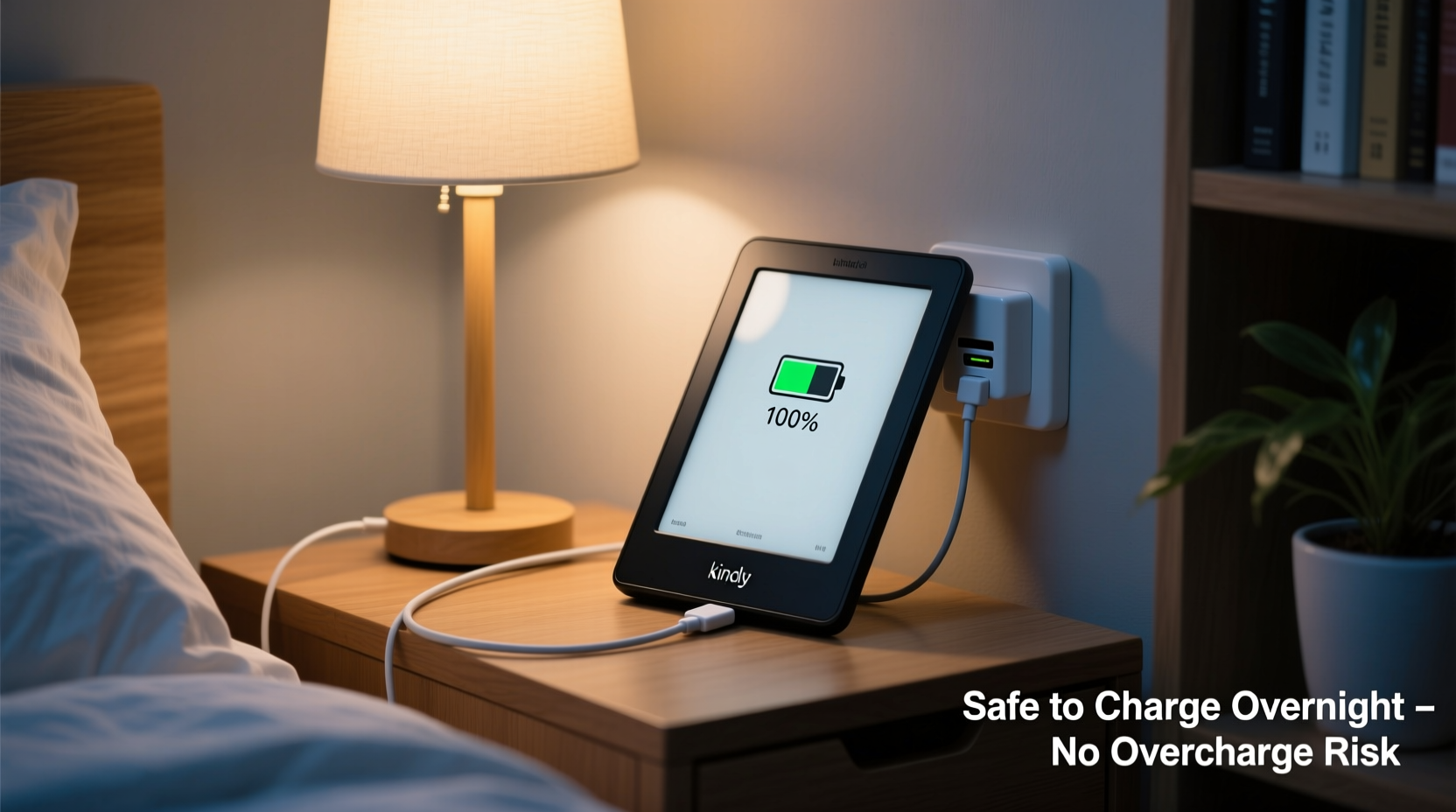
Lithium-ion batteries power nearly all modern portable electronics, including e-readers. They offer high energy density, low self-discharge rates, and relatively stable performance across thousands of charge cycles. Unlike older battery types such as nickel-cadmium, lithium-ion cells do not suffer from a “memory effect,” meaning partial charging won’t reduce overall capacity.
When you plug in your e-reader, the internal charging circuit regulates the flow of electricity to prevent overcharging. Once the battery reaches 100%, the charger automatically stops delivering current. Some devices may engage in “trickle charging” — periodically topping off small losses due to background drain — but this process is tightly controlled by firmware.
Manufacturers design e-readers with multiple layers of protection: thermal sensors monitor temperature, voltage regulators prevent surges, and software algorithms manage charging speed. These safeguards significantly reduce the risk of overheating or electrical failure under normal conditions.
“Lithium-ion batteries in consumer electronics are among the most regulated components. Built-in protections make incidents rare, but user behavior still plays a role in long-term reliability.” — Dr. Alan Reyes, Electrical Safety Engineer at Consumer Tech Labs
Assessing the Risks of Overnight Charging
While e-readers are generally safer than larger electronics like laptops or phones due to lower power requirements, no electronic device is entirely without risk when left unattended. The primary concerns associated with overnight charging include:
- Battery degradation: Keeping a battery at 100% for prolonged periods stresses the chemical composition, accelerating capacity loss.
- Overheating: Faulty cables, damaged ports, or poor ventilation can lead to excessive heat buildup.
- Fire hazard: Though extremely rare, defective batteries or chargers can short-circuit and ignite.
- Power surges: Sudden spikes in household voltage during storms or grid fluctuations may damage connected devices.
The likelihood of any serious incident remains very low, especially with reputable brands and certified accessories. However, cumulative stress from daily full charges can shorten an e-reader’s usable lifespan. For example, a Kindle advertised to last six weeks on a single charge might drop to three weeks after two years of constant top-ups and overnight charging.
Best Practices for Charging Your E-Reader
You don’t need to stop charging your e-reader overnight altogether, but adopting smarter habits will preserve battery health and minimize risk. Consider the following strategies:
1. Use Original or Certified Accessories
Always charge with the cable and adapter provided by the manufacturer or those bearing official certification (e.g., MFi for Apple-compatible products, USB-IF for universal standards). Third-party chargers that lack proper regulation circuits may deliver inconsistent voltage, increasing strain on the battery.
2. Charge in a Cool, Dry Environment
Heat is one of the biggest enemies of lithium-ion batteries. Ideal operating temperatures range between 0°C and 35°C (32°F–95°F). Never leave your e-reader charging in direct sunlight, near radiators, or inside enclosed spaces like drawers.
3. Unplug Once Fully Charged When Possible
If your schedule allows, aim to charge during the day and unplug once the battery hits 100%. This reduces the time spent in a fully charged state, which helps maintain long-term capacity.
4. Enable Battery-Saving Features
Some newer e-readers include adaptive charging modes that delay reaching 100% until just before you typically unplug — similar to features in iPhones and iPads. If available, enable these settings through the device menu.
5. Perform Regular Maintenance
Every few months, let your e-reader discharge completely before recharging to zero-to-100%. This recalibrates the battery gauge and ensures accurate readings. Do not do this weekly — once every 2–3 months is sufficient.
Comparison: Safe vs. Risky Charging Habits
| Practice | Recommended? | Reason |
|---|---|---|
| Using OEM charger | ✅ Yes | Ensures proper voltage and built-in safety protocols |
| Leaving on a wooden nightstand | ✅ Yes | Allows ventilation; non-flammable surface |
| Charging under a pillow or blanket | ❌ No | Blocks airflow; increases fire risk |
| Using a power strip with surge protection | ✅ Yes | Protects against voltage spikes |
| Charging with a frayed or bent cable | ❌ No | May cause short circuits or overheating |
| Unplugging after full charge | ✅ Ideal | Reduces battery stress over time |
Real-World Example: A Cautionary Case
In 2021, a homeowner in Portland reported a minor fire originating from a nightstand where an e-reader was charging. The device itself wasn’t the root cause — rather, a counterfeit USB cable had failed internally, creating a short circuit. The plastic casing melted, igniting nearby paper books. Fire investigators confirmed the e-reader model was intact and within safety specifications, but the unauthorized accessory lacked overcurrent protection.
This case underscores a critical point: while the e-reader may be designed safely, external factors — particularly third-party accessories — can introduce avoidable dangers. It also highlights why placement matters; had the device been on a metal tray or stone surface, the outcome could have been less severe.
Step-by-Step Guide: Optimizing Your Charging Routine
- Inspect your charging equipment: Check the cable for bends, exposed wires, or loose connectors. Replace if damaged.
- Choose a safe location: Place the e-reader on a hard, non-flammable surface away from bedding or curtains.
- Plug into a surge-protected outlet: Use a power strip with overload protection, especially in older homes.
- Monitor initial charge: Watch for unusual warmth or noise during the first 15 minutes of charging.
- Set a reminder (optional): Use a phone alarm to unplug after 4–5 hours if charging overnight.
- Update firmware: Ensure your e-reader’s software is up to date — updates often include battery management improvements.
- Rotate usage: If you own multiple devices, alternate charging to distribute wear evenly.
Frequently Asked Questions
Can leaving my e-reader charging overnight cause a fire?
While theoretically possible, actual cases are exceptionally rare. Modern e-readers include multiple fail-safes to prevent overcharging and overheating. The greater risk comes from using damaged cables, uncertified chargers, or charging on flammable materials. With proper equipment and placement, the fire risk is negligible.
Does overnight charging ruin the battery faster?
Yes, over time. Lithium-ion batteries degrade more quickly when kept at 100% charge for extended periods. Constant full charging accelerates chemical aging, reducing total capacity. To maximize battery life, try to keep the charge level between 20% and 80% whenever possible.
Should I turn off my e-reader while charging?
It’s not required, but doing so can slightly improve charging efficiency and reduce heat generation. Since e-ink screens only consume power when turning pages, leaving the device on uses minimal energy. However, turning it off eliminates background processes and may result in a marginally faster charge.
Final Recommendations and Checklist
Leaving your e-reader charging overnight isn’t inherently dangerous, but it’s not the optimal practice for long-term device health. By making small adjustments to how and when you charge, you can extend battery life, reduce risk, and ensure reliable performance for years.
Use the checklist below to evaluate your current routine and implement safer habits:
- ✅ Use only manufacturer-approved or certified charging cables and adapters
- ✅ Charge on a hard, flat, non-flammable surface
- ✅ Avoid covering the device while charging
- ✅ Replace frayed or stiff cables immediately
- ✅ Keep the device in a cool room with good air circulation
- ✅ Unplug once fully charged when convenient
- ✅ Update device firmware regularly
- ✅ Avoid extreme temperatures (hot cars, cold garages)
Conclusion: Smart Charging for Long-Term Enjoyment
Your e-reader is built to last — many Kindles and Kobos remain functional after five or more years of regular use. How you treat the battery plays a major role in determining its lifespan. While convenience often wins, especially with nighttime routines, understanding the trade-offs empowers you to make better choices.
Think of charging like nutrition: occasional indulgence won’t hurt, but consistent habits define long-term health. You wouldn’t eat dessert every day and expect peak fitness — similarly, constantly maxing out your battery comes at a cost. Simple changes, like unplugging in the morning or using quality gear, go a long way toward preserving both safety and performance.




 浙公网安备
33010002000092号
浙公网安备
33010002000092号 浙B2-20120091-4
Comments
No comments yet. Why don't you start the discussion?