
Skincare routines have become a cornerstone of personal wellness for millions. From serums packed with antioxidants to moisturizers designed to restore the skin barrier, these products promise healthier, more radiant skin. But what happens when that carefully curated shelf of bottles and jars starts accumulating dust—and dates? Many people wonder: is it really unsafe to use skincare past its expiration date? And if so, what exactly goes wrong inside those containers over time?
The truth is, using expired skincare isn’t just about diminished results—it can pose real risks to your skin’s health. Active ingredients degrade, preservatives weaken, and bacterial growth becomes more likely. Understanding what happens to skincare formulas after their prime helps you make informed decisions about what stays in your routine and what gets tossed.
Understanding Expiration Dates and PAO Symbols
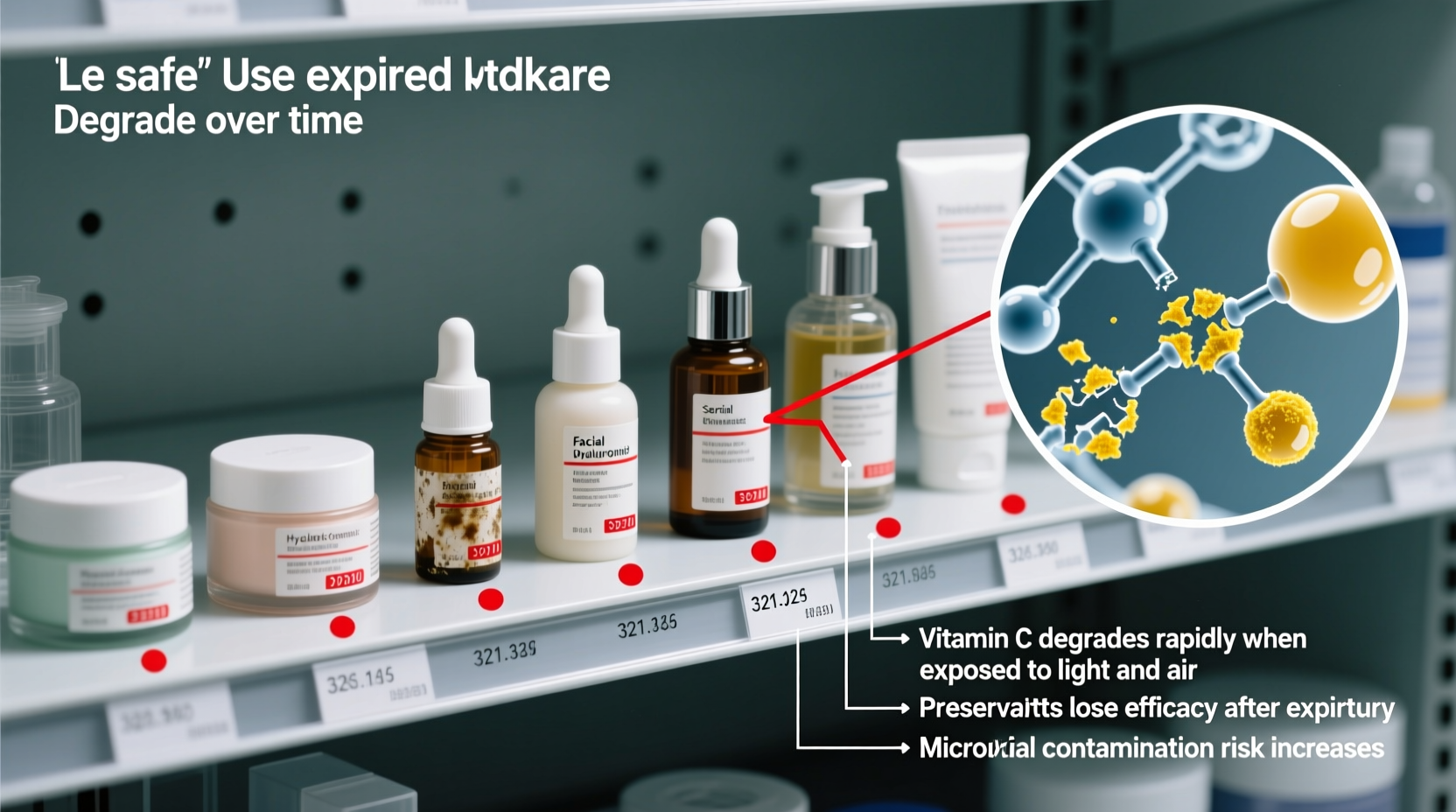
Unlike food, most skincare products don’t come with a clear “use by” date stamped on the front. Instead, manufacturers rely on two key indicators: expiration dates and Period After Opening (PAO) symbols.
An expiration date—usually found on prescription or medicated skincare—refers to the last date the product is guaranteed to be effective and safe under proper storage conditions. These are typically based on stability testing conducted by the manufacturer.
The PAO symbol, represented by an open jar icon with a number like “6M” or “12M,” indicates how many months the product remains stable after first being opened. This is crucial because exposure to air, light, and bacteria accelerates ingredient breakdown.
What Happens to Skincare Ingredients Over Time?
Not all ingredients degrade at the same rate. Some remain stable for years, while others begin losing potency within weeks of opening. The formulation type—cream, serum, oil, or gel—also affects shelf life due to differences in water content, pH balance, and emulsifiers.
Here’s a breakdown of common active ingredients and how they change post-expiration:
| Ingredient | Function | Stability Over Time | Risks When Degraded |
|---|---|---|---|
| Vitamin C (L-ascorbic acid) | Brightening, antioxidant protection | Degrades rapidly when exposed to light/air; turns yellow/brown | Loses efficacy; may irritate skin due to oxidation byproducts |
| Retinol & Retinoids | Anti-aging, cell turnover | Sensitive to light and oxygen; degrades within 3–6 months after opening | Becomes less effective; potential for irritation if degraded into inactive compounds |
| Hyaluronic Acid | Hydration, moisture retention | Relatively stable; lasts up to 2 years unopened | May lose viscosity but generally safe even after expiration |
| Niacinamide | Reduces redness, improves texture | Highly stable; minimal degradation over time | Low risk; may separate but usually still functional |
| Benzoyl Peroxide | Acne treatment, antibacterial | Breaks down quickly when exposed to light; loses potency | Ineffective against acne; possible staining or dryness without benefit |
| Alpha Hydroxy Acids (AHAs) | Exfoliation (e.g., glycolic, lactic acid) | pH-dependent; can become unstable or too acidic | Increased risk of burns, sensitivity, or barrier damage |
The vehicle—the base formula carrying these ingredients—also deteriorates. Emulsions can separate, oils may go rancid, and water-based products are prone to microbial contamination once preservatives lose effectiveness.
“Once a product passes its expiration window, you're not just losing benefits—you're potentially introducing compromised chemistry to your skin.” — Dr. Lena Torres, Cosmetic Chemist & Formulation Specialist
Risks of Using Expired Skincare Products
The primary danger of expired skincare lies not in immediate toxicity, but in unintended consequences. As formulations break down, they shift from beneficial to inert—or worse, harmful.
Loss of Efficacy: A vitamin C serum that’s turned amber won’t brighten your complexion. Sunscreen past its prime may offer only SPF 10 instead of the labeled SPF 50, leaving you vulnerable to UV damage.
Microbial Contamination: Preservatives like phenoxyethanol or parabens inhibit mold and bacteria growth. Over time, their concentration drops below effective levels. Water-based products—especially creams and lotions dispensed with fingers—are especially susceptible. Using contaminated products can lead to folliculitis, fungal infections, or staph outbreaks.
Chemical Irritation: Oxidized retinol or degraded AHAs can cause redness, peeling, and inflammation—even in people with normally resilient skin. Rancid oils produce free radicals, counteracting the very antioxidant effects you’re trying to achieve.
Allergic Reactions: As ingredients break down, they may form new compounds that trigger sensitivities. For example, oxidized essential oils can become allergenic, leading to contact dermatitis.
Real Example: The Case of the Irritating Moisturizer
Sophie, a 32-year-old marketing executive, had been using a popular fragrance-free facial cream for over a year. She stored it on her bathroom sink, exposing it daily to steam and temperature fluctuations. After several weeks of increasing redness and tightness, she consulted a dermatologist. Upon inspection, the cream showed slight separation and a faint sour odor—signs of bacterial growth and lipid oxidation. Despite having no prior sensitivity, Sophie developed perioral dermatitis linked to the compromised product. Switching to a fresh, properly stored moisturizer resolved her symptoms within two weeks.
This case illustrates how subtle changes in product integrity can manifest as significant skin issues—often mistaken for new allergies rather than outdated formulations.
How to Tell If a Skincare Product Has Gone Bad
Expiration dates and PAO labels are helpful, but sensory cues often provide earlier warnings. Regularly inspect your products using the following checklist:
Checklist: Signs Your Skincare Product Is No Longer Safe
- Change in color: Yellowing serums, darkened toners, or cloudy solutions indicate oxidation or contamination.
- Off smell: Sour, metallic, or rancid odors suggest bacterial growth or lipid spoilage.
- Texture shifts: Separation that doesn’t re-blend upon shaking, graininess, or excessive thinning/thickening.
- Packaging issues: Cracked pumps, broken seals, or residue buildup around caps increase contamination risk.
- Unusual reactions: Stinging, burning, or breakouts when the product previously caused no irritation.
Note: Some natural or preservative-light brands may exhibit minor separation or scent variation. However, drastic changes should always prompt disposal.
Best Practices for Extending Skincare Shelf Life
You can’t stop time, but you can slow it down. Proper storage and usage habits significantly extend the usability and safety of your skincare investments.
- Store in a cool, dark place: Avoid humid bathrooms and sunny countertops. A bedroom drawer or cabinet away from heat sources is ideal.
- Keep lids tightly closed: Minimize air exposure to reduce oxidation of sensitive ingredients like vitamin C and retinol.
- Use clean hands or tools: Fingers introduce bacteria. Consider spatulas for jars or pump dispensers whenever possible.
- Avoid double-dipping: Never reinsert a used applicator or cotton swab into a product container.
- Don’t mix products in your palm: Combine them on your face, not in your hand, to prevent cross-contamination.
- Refrigerate select items: Unstable actives like pure vitamin C or probiotic serums benefit from cold storage (check label first).
Products with dropper tops—common in oils and serums—are particularly vulnerable. Residue buildup around the neck can harbor microbes. Clean droppers weekly with rubbing alcohol and rinse thoroughly.
Frequently Asked Questions
Can I use sunscreen after the expiration date?
No. Sunscreen relies on precise chemical stability to block UV rays. Expired sunscreen may offer drastically reduced protection, increasing your risk of sunburn and long-term skin damage. Physical (mineral) sunscreens may remain somewhat effective, but chemical filters degrade and can irritate skin. Always replace expired sun protection.
Do natural skincare products expire faster?
Yes. Products labeled “natural” or “organic” often contain fewer synthetic preservatives, making them more prone to spoilage. Essential oils, plant extracts, and botanical butters can oxidize or ferment quickly. Check batch codes and use within 3–6 months of opening unless otherwise specified.
Is it safe to use an unopened expired product?
Possibly, but not recommended. While unopened products last longer due to sealed environments, extreme storage conditions (like a hot car or damp basement) can compromise integrity even before opening. If the product shows any off-color, smell, or texture upon first use, discard it immediately.
Conclusion: Prioritize Skin Health Over Savings
Using expired skincare might seem like a harmless way to stretch your budget, but the cost to your skin’s health can outweigh any savings. Compromised formulas lose their intended benefits and can trigger irritation, infection, or accelerated aging. By understanding how ingredients degrade and learning to spot warning signs, you empower yourself to maintain a safer, more effective routine.
Your skin deserves products that work as promised—not relics of past potency. Make checking expiration dates and storage conditions a non-negotiable part of your regimen. When in doubt, throw it out. Healthy skin isn’t built on expired promises.




 浙公网安备
33010002000092号
浙公网安备
33010002000092号 浙B2-20120091-4
Comments
No comments yet. Why don't you start the discussion?