
Humidifiers are essential for maintaining comfortable indoor humidity, especially during dry winter months or in arid climates. They help soothe dry skin, ease respiratory discomfort, and protect wooden furniture from cracking. But a common question arises: What kind of water should you use? While tap water is convenient and readily available, many manufacturers recommend distilled water. Understanding the difference—and the potential consequences—can impact not only your humidifier’s lifespan but also your health.
Using the wrong type of water can lead to mineral buildup, bacterial growth, and even the release of harmful airborne particles. This article explores the science behind water types, compares tap and distilled water for humidifier use, and provides clear guidance based on health recommendations and device longevity.
The Science Behind Humidifier Mist
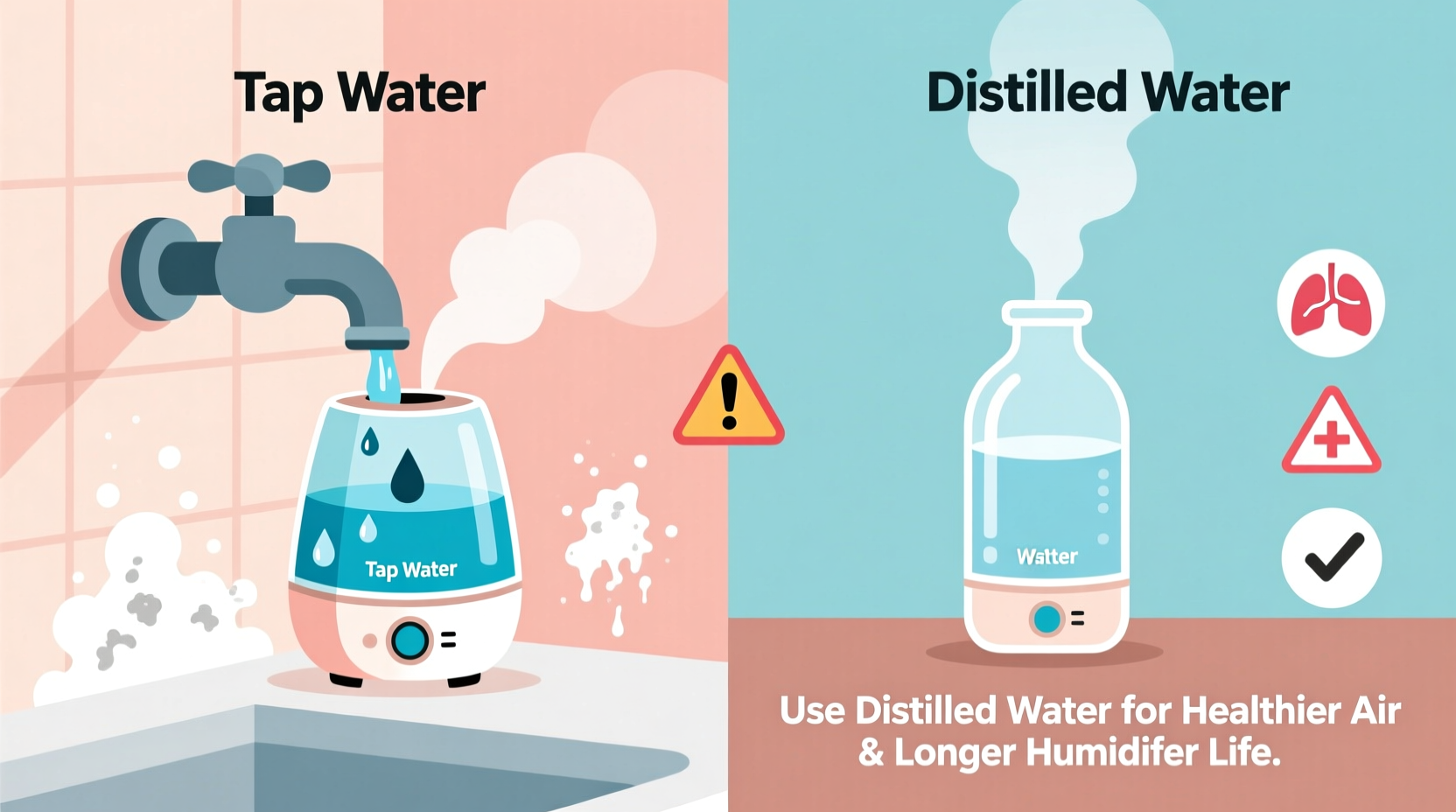
When a humidifier operates, it converts liquid water into a fine mist that disperses into the air. The method varies by model—cool mist humidifiers typically use ultrasonic vibrations or evaporation, while warm mist units boil water before releasing vapor. In ultrasonic models, water is broken down into microscopic droplets through high-frequency vibrations. If that water contains minerals or contaminants, those substances become part of the mist.
This process is key to understanding why water quality matters. Unlike boiling a pot of water on the stove, where impurities remain behind, ultrasonic humidifiers aerosolize everything in the water—including dissolved solids like calcium, magnesium, and trace metals. These tiny particles, known as \"white dust,\" can settle on furniture, electronics, and even be inhaled.
“Ultrasonic humidifiers can emit mineral particles into the air if non-purified water is used. This may pose respiratory concerns, especially for individuals with asthma or allergies.” — Dr. Lena Patel, Environmental Health Specialist at the National Institute of Clean Air Research
In contrast, evaporative humidifiers pull water through a wick filter, which traps some minerals and prevents them from becoming airborne. While this design offers some protection, hard water can still clog the wick over time, reducing efficiency and increasing maintenance needs.
Tap Water vs. Distilled Water: A Detailed Comparison
To make an informed decision, it's important to compare the composition, performance, and long-term effects of using tap water versus distilled water in humidifiers.
| Factor | Tap Water | Distilled Water |
|---|---|---|
| Mineral Content | High (calcium, magnesium, iron) | Negligible (virtually none) |
| Microbial Risk | Moderate (bacteria, protozoa possible) | Very low (sterilized during distillation) |
| White Dust Production | Common in ultrasonic models | None |
| Impact on Humidifier | Builds scale, shortens lifespan | Minimal residue, prolongs life |
| Cost & Accessibility | Low cost, widely available | Higher cost, requires purchase or home distillation |
| Health Implications | Potential inhalation of minerals and microbes | Safer for sensitive individuals |
The table highlights a critical trade-off: convenience versus safety and equipment durability. Tap water is easy to access and free, but introduces variables that affect both air quality and machine function. Distilled water eliminates most risks but comes at a higher cost and logistical effort.
Health Risks of Using Tap Water in Humidifiers
The primary concern with tap water isn’t just about damaging the humidifier—it’s about what ends up in the air you breathe. When minerals are aerosolized, they form fine particulates that can be inhaled deep into the lungs. For healthy adults, occasional exposure may not cause noticeable symptoms. However, vulnerable populations—including infants, the elderly, and people with chronic lung conditions—are at greater risk.
A study published in the *Journal of Exposure Science & Environmental Epidemiology* found that households using ultrasonic humidifiers with hard tap water had significantly higher levels of airborne calcium and magnesium particles—up to 5 times the background concentration. Long-term inhalation of such particles has been linked to respiratory irritation and reduced lung function in sensitive individuals.
Additionally, tap water can contain microorganisms like *Legionella*, *Pseudomonas*, and mold spores. While municipal water systems are treated, these organisms can proliferate once water sits stagnant in a humidifier tank, especially in warm environments. When released into the air, they can trigger allergic reactions or infections, particularly in immunocompromised individuals.
The U.S. Environmental Protection Agency (EPA) advises caution: “Using clean, distilled, or demineralized water in humidifiers reduces the risk of breathing in harmful minerals or microbes.”
Real-World Example: A Pediatric Case
In 2021, a pediatric clinic in Colorado reported a case involving a 9-month-old infant who developed persistent coughing and wheezing during winter. No signs of infection were present, and allergy tests came back negative. Upon investigation, parents revealed they were using an ultrasonic humidifier in the baby’s room filled daily with unfiltered tap water. White dust was visible on nearby surfaces.
After switching to distilled water and thoroughly cleaning the unit, the child’s symptoms improved within days. The attending physician concluded that inhaled mineral particles from the humidifier were likely contributing to airway irritation—a condition sometimes referred to as \"humidifier lung\" in extreme cases.
This scenario underscores how seemingly minor choices—like water type—can have tangible health impacts, especially in enclosed spaces with continuous device operation.
Best Practices for Safe and Effective Humidifier Use
Whether you choose tap or distilled water, proper usage and maintenance are crucial. Here’s a step-by-step guide to ensure your humidifier operates safely and efficiently:
- Check your humidifier manual: Some models explicitly prohibit tap water. Always follow manufacturer guidelines to maintain warranty and safety standards.
- Determine your water hardness: Use a home test kit or consult your local water report. Areas with hard water (above 7 grains per gallon) should avoid tap water in ultrasonic humidifiers.
- Choose the right water type: Opt for distilled or demineralized water whenever possible, especially for ultrasonic or steam vaporizers.
- Clean the tank daily: Empty, rinse, and dry the water reservoir each day to prevent microbial growth. Never let standing water sit for more than 24 hours.
- Disinfect weekly: Use a mixture of white vinegar and water (1:1 ratio) or a manufacturer-approved cleaner to remove biofilm and mineral deposits.
- Replace filters regularly: If your unit uses a wick or filter, change it according to the schedule—even more often if using hard water.
- Use purified alternatives if distilled isn’t available: Reverse osmosis (RO) water is a suitable substitute, as it removes most minerals and contaminants.
Checklist: Weekly Humidifier Maintenance Routine
- ☑ Empty and rinse the water tank daily
- ☑ Inspect for mold or slime (discard if present)
- ☑ Descale with vinegar solution weekly
- ☑ Replace filter (if applicable)
- ☑ Wipe exterior with damp cloth
- ☑ Store with tank open to dry completely
Frequently Asked Questions
Can I use bottled spring water instead of distilled?
No. While bottled spring water is safe to drink, it still contains natural minerals that can produce white dust and promote scale buildup. Only distilled, deionized, or demineralized water is recommended for humidifiers.
Is it okay to mix tap and distilled water?
It’s not advisable. Even partial use of tap water reintroduces minerals and microbes. For consistent performance and safety, use one type of water—preferably distilled—exclusively.
Does boiling tap water make it safe for humidifiers?
Boiling kills bacteria but does not remove dissolved minerals. Boiled tap water will still contribute to scaling and white dust. True distillation involves vaporizing and recondensing water, which leaves minerals behind—something simple boiling doesn’t achieve.
Conclusion: Making the Right Choice for Health and Efficiency
The answer to whether tap water is safe in humidifiers isn’t absolute—it depends on your device type, water hardness, and household health needs. For most users, especially those with ultrasonic models or vulnerable family members, distilled water is the safer, smarter choice. It minimizes respiratory risks, prevents costly mineral buildup, and extends the life of your appliance.
If distilled water isn’t practical long-term, consider switching to an evaporative humidifier, which is less prone to dispersing minerals. Alternatively, use a demineralization cartridge or filter designed for your model to reduce mineral output.
Your humidifier should improve air quality—not compromise it. By choosing the right water and maintaining your device diligently, you ensure cleaner, healthier moisture in your home.




 浙公网安备
33010002000092号
浙公网安备
33010002000092号 浙B2-20120091-4
Comments
No comments yet. Why don't you start the discussion?