
In a culture that often glorifies the idea of a lifelong \"best friend,\" many adults begin to question their social lives when they realize they don’t have one singular person who fits that role. Social media feeds filled with paired-up friendships, shared vacations, and inside jokes between two inseparable individuals can amplify this sense of isolation or inadequacy. But is it actually unusual—or unhealthy—to go through adulthood without a best friend?
The short answer: no. In fact, not having a best friend is more common than most people assume, and for many, it reflects a mature shift in how relationships are understood and valued. Modern psychology increasingly recognizes that adult friendships serve different functions than those in adolescence, and emotional fulfillment doesn't require a single confidant above all others.
The Evolution of Friendship Across the Lifespan
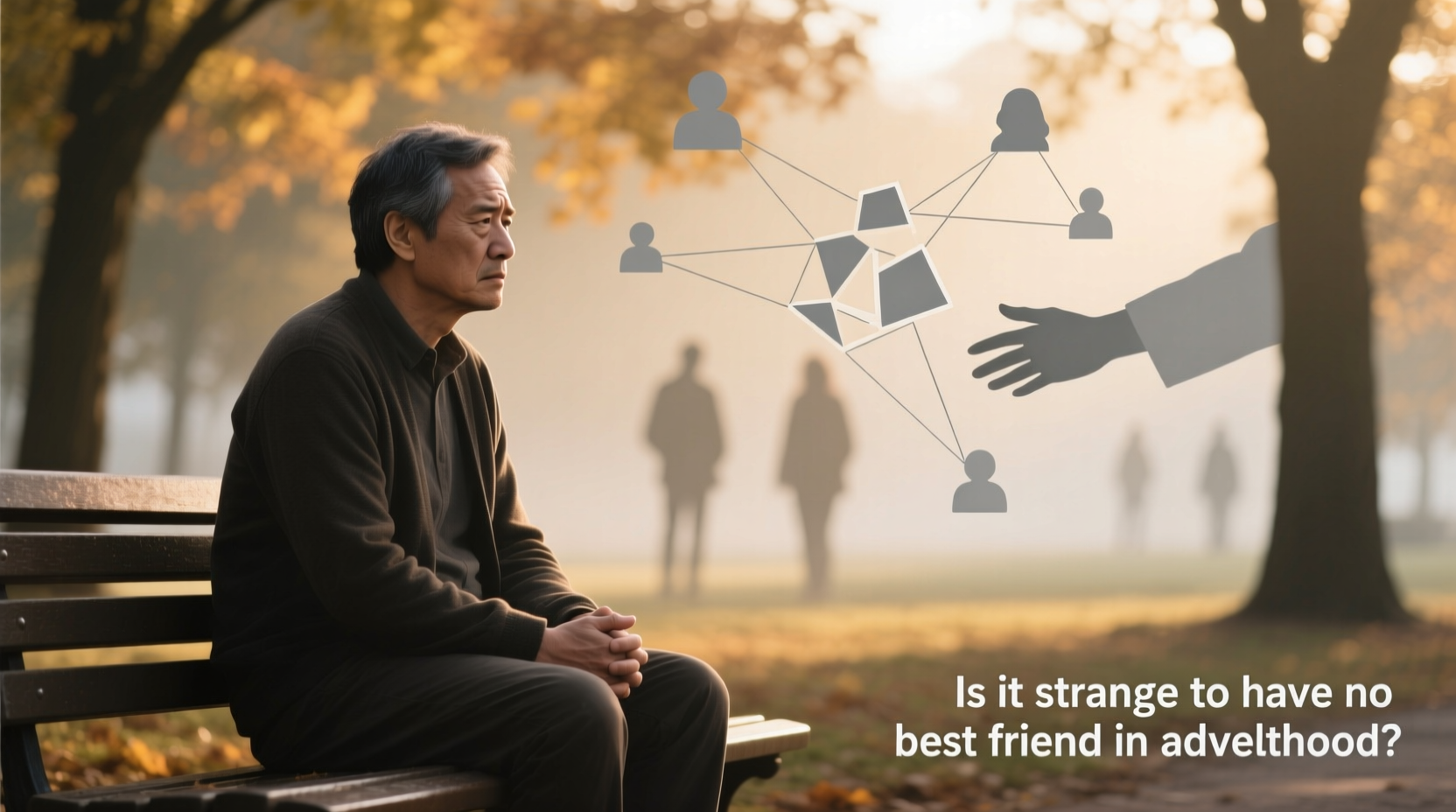
Childhood and teenage friendships are often built on proximity—same school, same neighborhood, same hobbies. These bonds form quickly and can feel intense, sometimes leading to the designation of a “best friend” based more on availability than deep compatibility. As people enter adulthood, however, life paths diverge. Careers, geographic relocation, marriage, parenting, and personal growth introduce new priorities that reshape social networks.
According to developmental psychologist Dr. Laura Wagner, “Friendship in adulthood becomes less about constant companionship and more about functional and emotional alignment. People seek friends who fit specific needs—someone to talk to about work stress, another to go hiking with, another to share parenting challenges.” This pluralistic model of friendship replaces the all-in-one best friend ideal with a network of meaningful but specialized connections.
This shift isn’t a failure—it’s an adaptation. The expectation that one person should fulfill all emotional, recreational, and intellectual companionship roles is increasingly seen as unrealistic and potentially burdensome.
Why the “Best Friend” Ideal Can Be Problematic
The cultural narrative around best friendship often implies exclusivity, intensity, and permanence. While such bonds can be beautiful, they also carry risks:
- Emotional overreliance: Depending on one person for all emotional support can strain the relationship and limit personal resilience.
- Social stagnation: Prioritizing one friendship may lead to neglecting other connections or missing opportunities to meet new people.
- Fear of change: When life transitions occur—like moving cities or changing jobs—the loss of a best friend can feel catastrophic, even if other supportive relationships exist.
“Putting all your relational eggs in one basket increases vulnerability. Healthy interdependence means having multiple sources of connection.” — Dr. Nadia Patel, Clinical Psychologist specializing in adult attachment
Psychology research supports the concept of a “social portfolio,” where individuals maintain a diverse range of relationships that collectively contribute to well-being. A 2022 study published in the Journal of Social and Personal Relationships found that adults with broader, moderately close friendships reported higher life satisfaction than those relying heavily on one intense bond.
Signs You’re Emotionally Healthy Without a Best Friend
Absence of a best friend doesn’t automatically indicate loneliness or poor mental health. Many emotionally secure adults thrive socially without designating anyone as “the closest.” Consider whether you exhibit these signs of psychological well-being:
| Indicator | What It Looks Like |
|---|---|
| Emotional Regulation | You can process difficult emotions without needing to immediately share them with someone. |
| Satisfying Connections | You have multiple people you enjoy spending time with, even if no one is labeled “best.” |
| Comfort with Solitude | You don’t equate being alone with being lonely; solitude feels restorative, not isolating. |
| Low Relationship Anxiety | You don’t obsess over whether friends like you or fear abandonment regularly. |
| Active Social Engagement | You initiate plans, respond to invitations, and engage authentically when with others. |
If these traits resonate, your lack of a best friend may reflect emotional maturity rather than deficiency.
When Lack of Connection Might Signal a Deeper Issue
While not having a best friend is normal, complete social withdrawal or persistent loneliness warrants attention. The key distinction lies in subjective experience: do you feel fulfilled, or are you masking unmet needs with rationalizations?
Certain patterns may suggest underlying challenges:
- Consistently avoiding social invitations due to anxiety
- Believing no one could truly understand or accept you
- Having only superficial interactions despite wanting closeness
- Experiencing sadness or emptiness when thinking about relationships
These feelings may stem from past relational trauma, social anxiety, or depression. In such cases, therapy can help unpack barriers to intimacy and develop skills for building trust gradually.
A Real-Life Example: Sarah’s Shift in Perspective
Sarah, a 38-year-old project manager, grew up with a tight-knit best friend through college. After moving for a job, she struggled to replicate that bond. For years, she felt defective—joining Facebook groups for “lonely women in their 30s” and going on forced double dates. Then, during a therapy session, she realized she wasn’t actually lonely. She enjoyed her book club, had a running buddy, regularly video-called her sister, and occasionally met coworkers for drinks. None were “best friends,” but together, they provided balance.
“I stopped chasing a label,” she said. “Now I see my friendships like a toolkit. Different tools for different needs. That mindset lifted a huge weight.”
Building a Sustainable Adult Friendship Framework
Rather than aiming for a single transformative friendship, consider cultivating a resilient social ecosystem. This approach emphasizes consistency, mutual respect, and realistic expectations.
Step-by-Step: Creating Your Friendship Network
- Assess Your Current Connections: List everyone you interact with monthly. Categorize them by activity (e.g., gym partner, work peer, family member).
- Identify Gaps: Are there areas where you’d like more support—career advice, emotional listening, adventure?
- Invest Strategically: Choose 1–2 relationships to deepen. Initiate deeper conversations or suggest recurring activities.
- Lower Entry Barriers: Normalize low-stakes hangouts—walking meetings, grocery runs, or co-working sessions.
- Accept Fluidity: Understand that some friendships will fade, others will grow. This is natural, not a personal failure.
“We need to retire the myth of the forever best friend. Adulthood brings too much change for any single relationship to remain static and central.” — Dr. Marcus Liu, author of *The Flexible Heart: Rethinking Adult Intimacy*
Checklist: Signs You’re on Track Socially (Without a Best Friend)
- ✅ You feel safe expressing your opinions around certain people
- ✅ You look forward to some social events without pressure
- ✅ You’ve had meaningful conversations in the past month
- ✅ You don’t feel compelled to perform or impress in friendships
- ✅ You can say “no” to plans without guilt
- ✅ You have at least one person you can call during a crisis
FAQ
Isn’t everyone supposed to have at least one best friend?
No. While some people thrive with a primary confidant, others find fulfillment in distributed networks. Cultural norms vary widely—some societies emphasize family over peer friendships, while others value community over dyads. What matters is whether your connections meet your emotional needs, not whether they conform to a template.
Could not having a best friend affect my mental health?
Only if you feel chronically isolated or unsupported. Loneliness—not the absence of a best friend—is linked to negative outcomes like increased anxiety and cardiovascular risk. If you feel connected in other ways (through family, colleagues, groups), your mental health is likely unaffected.
What if I want a best friend but can’t seem to make one as an adult?
Adult friendship formation is slower and more situational. Try joining interest-based groups (hiking clubs, volunteer organizations, classes) where repeated, low-pressure interaction builds familiarity. Focus on consistency over intensity—small moments accumulate into closeness over time.
Conclusion: Redefining Connection on Your Own Terms
The idea that every adult must have a best friend is a relic of childhood narratives and romanticized media portrayals. Psychology now affirms that diverse, flexible, and moderately close relationships can provide just as much—if not more—support than a single intense bond. Emotional independence, comfort with solitude, and the ability to nurture multiple types of connection are signs of psychological strength, not deficit.
Instead of measuring your social success by outdated standards, ask yourself: Do I feel seen? Supported? Engaged? If the answer is yes—even if it comes from five people instead of one—you’re already living a rich relational life.




 浙公网安备
33010002000092号
浙公网安备
33010002000092号 浙B2-20120091-4
Comments
No comments yet. Why don't you start the discussion?