
In an age where digital convenience shapes nearly every aspect of life, reading habits have evolved just as dramatically. For decades, the image of a reader curled up with a paper book—its spine cracked, pages fluttering—has been romanticized in literature, film, and culture. But today, millions of readers reach for tablets, e-readers, or smartphones instead of printed volumes. This shift has sparked debate: is it strange to prefer ebooks over physical books? The short answer is no. But understanding why requires unpacking deeper questions about accessibility, personal preference, environmental impact, and evolving definitions of what it means to be a “real” reader.
The Evolution of Reading Habits
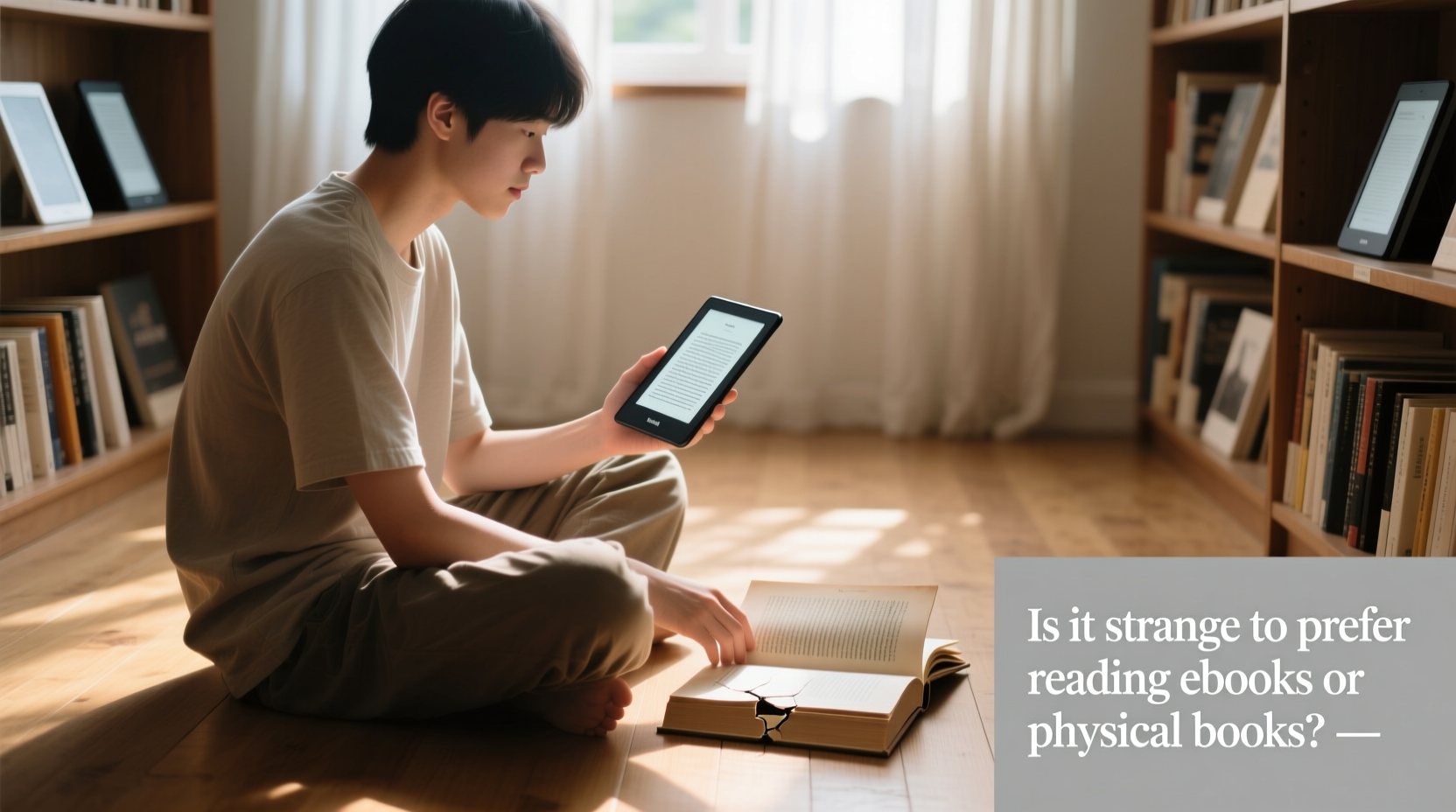
Reading has never been static. From clay tablets to scrolls, from handwritten manuscripts to Gutenberg’s printing press, each technological leap transformed how people accessed knowledge and stories. The rise of ebooks in the early 2000s—accelerated by devices like Amazon’s Kindle and Apple’s iPad—was simply the next chapter in this long evolution. Today, global ebook sales continue to grow, especially in academic, professional, and self-help genres, while fiction remains strong in both print and digital formats.
What often gets overlooked is that reading preferences are deeply personal. Some readers thrive on the tactile sensation of turning a page; others value the portability and search functionality of digital texts. Neither choice diminishes the act of reading itself. As literacy expert Dr. Naomi Baron observes:
“Technology doesn’t replace reading—it reshapes it. The medium may change, but the cognitive engagement remains profound.” — Dr. Naomi Baron, Author of *How We Read Now*
Why Ebooks Make Sense for Modern Readers
For many, the appeal of ebooks isn’t just convenience—it’s necessity. Consider these practical advantages:
- Portability: A single device can hold thousands of books, ideal for travelers, commuters, or frequent movers.
- Accessibility: Features like adjustable font sizes, text-to-speech, and high-contrast modes make ebooks more inclusive for visually impaired or dyslexic readers.
- Instant access: No waiting for shipping or trips to the bookstore. With one click, a new book is available.
- Searchability: Need to find a quote or reference? Digital text allows instant keyword searches.
- Cost efficiency: Many classic titles are free, and new releases are often cheaper in digital format.
Moreover, for students and professionals, digital annotation tools allow seamless highlighting, note-taking, and cross-referencing—features that enhance comprehension and retention. In academic settings, researchers routinely use digital libraries and citation software that integrate directly with ebook platforms.
Debunking the Myth: “Real Readers Only Read Print”
A persistent cultural narrative suggests that only physical books “count” as legitimate reading material. This belief often stems from nostalgia, sensory attachment, or skepticism toward technology. However, equating authenticity with format overlooks the essence of reading: engagement with ideas, narratives, and language.
There’s no neurological evidence that comprehension or emotional resonance is inherently superior in print. While some studies suggest slight differences in focus (particularly with dense academic texts), these variations are highly individual and influenced more by environment and reading goals than by medium alone.
Furthermore, dismissing digital reading risks alienating entire demographics. For instance:
- People with limited storage space may not have room for large book collections.
- Those with mobility challenges benefit from voice-assisted reading features.
- Low-income readers gain access to vast libraries through free digital lending programs like Libby or Project Gutenberg.
Preferring ebooks isn’t a rejection of literature—it’s an adaptation to real-world constraints and opportunities.
Comparing Formats: When Each Shines
Neither format is universally better. Each excels in different contexts. The table below outlines key strengths and ideal use cases:
| Factor | Physical Books | Ebooks |
|---|---|---|
| Sensory Experience | High: smell, texture, visual layout | Low: limited tactile feedback |
| Mobility | Low: bulky, heavy when traveling | High: lightweight, portable |
| Durability | Medium: prone to wear, water damage | High: backed up digitally, resistant to physical harm |
| Distractions | Low: no notifications | Medium: depends on device settings |
| Environmental Impact | High: uses paper, ink, transport emissions | Lower: energy use per device, but e-waste concerns |
| Best For | Gifts, collectors, deep literary analysis, bedtime reading | Research, travel, learning, accessibility needs |
The key is recognizing that format preference should be guided by purpose, not guilt.
Real-Life Example: Maria’s Transition to Digital
Maria, a 34-year-old medical resident in Chicago, used to pride herself on her overflowing bookshelf. She read novels during lunch breaks and kept a paperback by her bedside. But after starting her residency, time vanished. Commutes grew longer, sleep became fragmented, and carrying books between hospital shifts felt impractical.
Reluctantly, she bought a basic e-reader. At first, she missed the feel of paper. But within weeks, she discovered unexpected benefits. She could read for ten minutes between patient rounds without lugging anything. She adjusted the font size when tired. She highlighted passages in her medical textbooks and synced notes to her laptop. Most importantly, she started reading again—consistently.
“I don’t feel less like a reader,” she says. “If anything, I feel more connected to books because I actually have time to read them.” Her experience reflects a broader trend: digital reading isn’t replacing print—it’s enabling reading in lives too busy for traditional habits.
Building a Balanced Reading Life: A Step-by-Step Guide
Many readers don’t need to choose one format over the other. A hybrid approach often works best. Here’s how to create a flexible, sustainable reading routine:
- Assess your reading goals. Are you reading for pleasure, study, or professional development? Match the format to the purpose.
- Experiment with both formats. Try reading the same book in print and digital to notice differences in focus and enjoyment.
- Optimize your devices. Reduce blue light, disable notifications, and use dark mode at night to minimize eye strain.
- Create dedicated spaces. Even with ebooks, designate distraction-free zones—like a chair or café corner—for immersive reading.
- Rotate formats seasonally. Use ebooks during busy periods; return to print during vacations or slower months.
FAQ: Common Questions About Ebook Preferences
Isn’t reading on screens bad for concentration?
It can be—if the device is cluttered with notifications or used in distracting environments. However, dedicated e-readers with e-ink displays (like Kindle Paperwhite) mimic paper and lack apps, making them excellent for focused reading. The issue isn’t the screen, but how it’s used.
Do ebooks harm the publishing industry?
No. In fact, they’ve expanded access. Self-publishing via digital platforms has empowered diverse voices. Libraries offer free ebook loans. Publishers now release simultaneous print and digital editions, increasing overall readership. Digital sales complement rather than cannibalize print.
Can I still feel connected to a book if it’s digital?
Absolutely. Emotional connection comes from story, character, and language—not paper. Many readers report crying, laughing, or being deeply moved by ebooks. The medium doesn’t dilute meaning; it delivers it differently.
Actionable Checklist: Embrace Your Reading Preference Without Guilt
If you’re questioning whether your preference for ebooks is “strange,” use this checklist to affirm your choices:
- ✅ Recognize that reading format is a personal decision, not a moral one.
- ✅ Identify what matters most to you: convenience, accessibility, sustainability, or sensory experience.
- ✅ Explore tools that enhance digital reading (annotations, dictionaries, night mode).
- ✅ Join online book communities that celebrate all formats.
- ✅ Donate or lend physical books if you own them, but don’t feel obligated to collect them.
- ✅ Respect others’ preferences without judgment—whether they love paper or pixels.
Conclusion: Reading Is Reading—No Matter the Format
At its core, reading is an act of imagination, empathy, and intellectual growth. Whether the words appear on creamy paper or a glowing screen, their power remains unchanged. Preferring ebooks isn’t strange—it’s a rational, often necessary adaptation to modern life. It reflects awareness of personal needs, lifestyle demands, and technological possibilities.
The future of reading isn’t about choosing sides. It’s about inclusivity—welcoming all formats, all readers, and all paths to knowledge. So if you love your e-reader, keep using it. If you cherish your bookshelf, keep building it. And if you do both, know that you’re part of a rich, evolving tradition of human curiosity.




 浙公网安备
33010002000092号
浙公网安备
33010002000092号 浙B2-20120091-4
Comments
No comments yet. Why don't you start the discussion?