
November 1st arrives—and before the last pumpkin spice latte cools, storefronts are already draped in tinsel, Amazon ads feature light-up reindeer, and your neighbor’s front porch sprouts a full-sized inflatable Santa. You pause mid-unboxing of last year’s ornaments, wondering: Is this normal? Am I behind—or am I rushing? The question isn’t just about aesthetics; it’s a quiet cultural litmus test reflecting shifting expectations around tradition, mental health, consumerism, and even time perception. What once felt like a joyful early indulgence now carries subtle social weight—some see it as festive enthusiasm, others as premature pressure. To answer whether November decorating is “weird” or “expected,” we need to move beyond personal preference and examine the forces reshaping the holiday calendar—not just what people do, but why they do it, who benefits, and what it costs us emotionally.
The Data Behind the December Drift
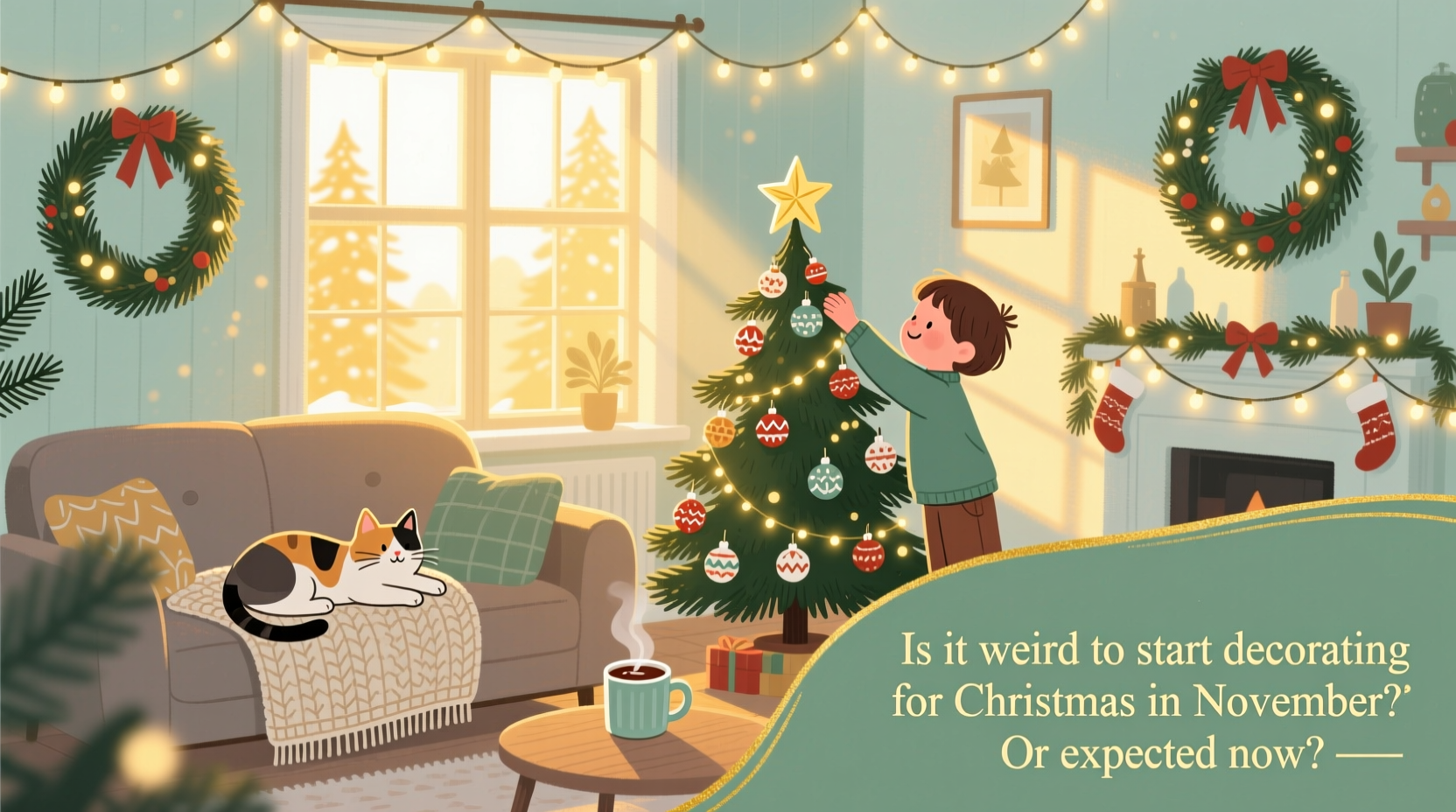
What feels like anecdotal observation is, in fact, a measurable trend. According to the National Retail Federation’s 2023 Holiday Consumer Intentions and Actions Survey, 42% of U.S. consumers began holiday shopping in October—and 17% started in September. While shopping and decorating aren’t identical, they share underlying drivers: anticipation, planning fatigue, and the desire to “get ahead.” A 2022 Pew Research Center analysis found that 68% of adults aged 18–34 reported putting up at least one Christmas decoration before Thanksgiving—up from 49% in 2015. Meanwhile, retailers have formalized the shift: Target launched its “Holiday Shop” online on October 10, 2023; Walmart’s “Holiday Hub” went live October 1; and Hallmark’s “Countdown to Christmas” programming begins the first Saturday in October. This isn’t accidental—it’s a synchronized expansion of the holiday season designed to extend purchase windows and emotional engagement.
But data alone doesn’t explain lived experience. Consider the psychological scaffolding: For many, November decorations serve as an intentional mood anchor. Clinical psychologist Dr. Lena Torres notes, “After years of pandemic-related uncertainty and ongoing economic stress, people are seeking predictable, controllable sources of comfort. The sensory cues of Christmas—lights, scent of pine, familiar carols—activate neural pathways associated with safety and positive memory. Starting earlier isn’t about commercialism; it’s often a self-regulation strategy.” That reframes November decorating not as impatience, but as emotional triage.
Why November Feels Right (For Many)
There’s a growing cohort for whom November decorating isn’t just acceptable—it’s essential. These aren’t casual decorators; they’re practitioners of what interior designer and seasonal wellness advocate Marcus Bell calls “intentional holiday pacing.” His clients—many of them remote workers, neurodivergent adults, or caregivers—report that spreading out festive tasks over five weeks reduces December burnout by up to 70%, based on his practice’s internal tracking. Their reasoning is pragmatic: lighting strings require testing; fragile ornaments need careful unpacking; garlands must be measured and secured. Doing it all in the final 10 days creates avoidable stress.
This approach also aligns with modern household logistics. With dual-income families, school schedules, and extracurricular commitments, finding uninterrupted weekend blocks in December is rare. November offers breathing room—especially the first two weeks, which typically lack major holidays or deadlines. It’s not about loving Christmas more; it’s about honoring real-world constraints.
When November Decorating Crosses Into Social Friction
That said, timing isn’t neutral. Cultural context matters deeply. In communities where Advent is observed as a period of reflective waiting—not preparation—the early arrival of decorations can feel spiritually dissonant. Pastor Anya Ruiz of St. Brigid’s Episcopal Church observes, “I’ve had parishioners tell me they feel guilt when their kids ask, ‘Why don’t we have a tree yet?’ while they’re trying to hold space for quiet expectation. The visual language of Christmas has become so dominant that resisting it requires active intention—and sometimes, explanation.”
Workplace dynamics add another layer. A 2023 Gartner HR study found that 31% of employees reported feeling “excluded or alienated” by colleagues’ early holiday displays—particularly those celebrating non-Christian winter holidays like Diwali, Hanukkah, or Kwanzaa, whose observance periods overlap with November. One respondent shared: “My Diwali rangoli was still on the office entryway floor when someone hung red-and-green stockings beside it. It didn’t feel joyful—it felt like erasure.”
| Situation | Considerations | Potential Impact |
|---|---|---|
| Living in a shared residence | Housemates may have different traditions, energy levels, or religious practices. | Unilateral decorating can create tension; co-creating a timeline shows respect. |
| Working in a public-facing role | Early decor may signal to clients or customers that your availability for non-holiday work is reduced. | Can unintentionally communicate decreased professionalism or responsiveness. |
| Raising young children | Kids absorb cues about time and ritual. Overly extended holiday periods may blur seasonal boundaries. | Some educators report increased difficulty transitioning students back to academic focus post-New Year. |
| Caring for elderly relatives | For those with dementia or memory challenges, prolonged holiday stimuli can cause confusion or agitation. | Extended decor may increase anxiety if it contradicts their internal sense of season. |
A Mini Case Study: The November Pivot in Portland
In Portland, Oregon, the “Maplewood Co-op” is a 12-unit apartment building known for its community garden and shared laundry room. For years, residents followed an informal rule: no Christmas decor until after Thanksgiving. But in 2022, three households—including a family with a child undergoing cancer treatment—began decorating in early November. Not as a statement, but as an act of care: the child found deep comfort in the predictability and sensory richness of holiday lights, and her parents needed the ritual to ground themselves amid medical uncertainty.
Instead of friction, the building responded with adaptation. Residents held a potluck meeting and co-created a “Seasonal Harmony Agreement”: • Decorations may go up starting November 15—but must be tasteful and non-commercial (no branded characters or flashing LEDs); • Shared spaces (hallways, laundry room) remain neutral until December 1; • A rotating “Holiday Ambassador” ensures new residents understand the agreement and feel invited to contribute their own winter traditions.
By late November, the lobby featured a Diwali diya display beside a small, battery-operated Advent wreath—and by December 1, a collective tree went up in the courtyard, decorated with ornaments representing every resident’s heritage. What began as an individual need became a model for inclusive, intentional seasonal expression.
Expert Insight: Beyond “Weird” and “Normal”
“The question ‘Is it weird?’ reveals how much we’ve outsourced our seasonal intuition to external calendars. Historically, Christmas prep wasn’t tied to November or December—it was tied to harvest, light cycles, and communal readiness. What’s changed isn’t human nature; it’s the industrialization of joy. Your timeline isn’t wrong if it serves your well-being, honors your values, and respects those around you. The real metric isn’t the date on the calendar—it’s whether your decorations deepen connection or create distance.” — Dr. Elena Marquez, Cultural Anthropologist & Author of The Rhythm of Ritual
Your Practical November Decorating Timeline
If you’re considering an early start—or want to make it meaningful rather than mechanical—here’s a grounded, step-by-step framework designed for sustainability and intentionality:
- November 1–7: Assess & Prepare Audit last year’s decor: discard broken items, test lights, clean glass ornaments, label storage bins by room or theme. Donate duplicates.
- November 8–14: Anchor Spaces Install permanent or semi-permanent elements: outdoor wreaths, foyer garlands, mantel greenery. These set tone without demanding daily attention.
- November 15–21: Sensory Layering Introduce scent (cinnamon sticks in simmer pots), sound (a curated playlist of instrumental carols), and texture (knit stockings, wool throws). Avoid visual overload.
- November 22–30: Personalize & Reflect Add meaningful ornaments—handmade ones from kids, travel souvenirs, symbols of gratitude. Write one thing you’re thankful for on each ornament tag.
- December 1 onward: Celebrate & Share This is when lights go fully bright, music gets louder, and invitations go out. Let December be the culmination—not the entire event.
FAQ: Navigating Real Questions
Is it bad etiquette to decorate before Thanksgiving?
Etiquette evolves with culture. Formal “rules” about holiday timing have largely dissolved outside of specific religious contexts. What matters more is contextual awareness: If you’re hosting a Thanksgiving gathering, consider delaying prominent indoor decor until after the meal. Outdoor elements (like wreaths or pathway lights) are widely accepted as early as November 1.
Won’t starting early make Christmas feel less special?
Research suggests the opposite—if done intentionally. A 2021 Journal of Positive Psychology study found participants who engaged in *ritualized* early preparation (e.g., weekly ornament-making, Advent journaling) reported higher sustained joy through January than those who waited until December. The key is avoiding passive consumption (e.g., scrolling holiday ads) in favor of active, meaning-driven acts.
How do I handle pushback from family or friends?
Respond with curiosity, not defensiveness. Try: “I’ve found that spreading things out helps me stay present instead of rushed. Would you be open to helping me hang the lights this weekend?” Framing it as an invitation—not a declaration—builds bridges. And remember: You don’t need universal approval to honor your needs.
Conclusion: Reclaiming Time, Not Just Tinsel
Calling November decorating “weird” implies there’s a single, objective standard for how humans should experience time and tradition. But the truth is richer and more flexible. Whether you hang your first wreath on November 1 or wait until December 23, what gives your holiday season meaning isn’t the calendar date—it’s the intention behind your choices. Are your decorations an act of love, resilience, creativity, or spiritual practice? Do they help you show up more fully for yourself and others? Or do they amplify anxiety, debt, or disconnection? Those questions matter far more than any arbitrary deadline.
This year, try something different: Before you pull a single box from the attic, sit quietly for five minutes. Ask yourself—not what’s expected, but what’s true. What does your body need? What does your heart remember? What would make this season feel like home, not homework? Then let that answer—not the weather, the sales cycle, or your neighbor’s inflatable snowman—guide your timeline.




 浙公网安备
33010002000092号
浙公网安备
33010002000092号 浙B2-20120091-4
Comments
No comments yet. Why don't you start the discussion?