
In the not-so-distant past, stepping outside in pajamas would have raised eyebrows, sparked concern, or at least drawn a few curious glances. Today, however, it’s increasingly common to see people in soft loungewear, footed PJs, or silk sets while running errands, walking dogs, or even grabbing coffee. What was once considered socially inappropriate now appears to be part of a broader cultural shift—one influenced by comfort-driven lifestyles, remote work, and evolving fashion norms. So, is it still weird to wear pajamas in public, or has the social rulebook quietly been rewritten?
The answer isn't a simple yes or no. It depends on context, location, design, and societal expectations. What’s clear is that the line between private and public attire has blurred significantly over the last decade—especially since the global pandemic accelerated trends toward casualization and self-expression through clothing.
The Evolution of Public Attire Norms
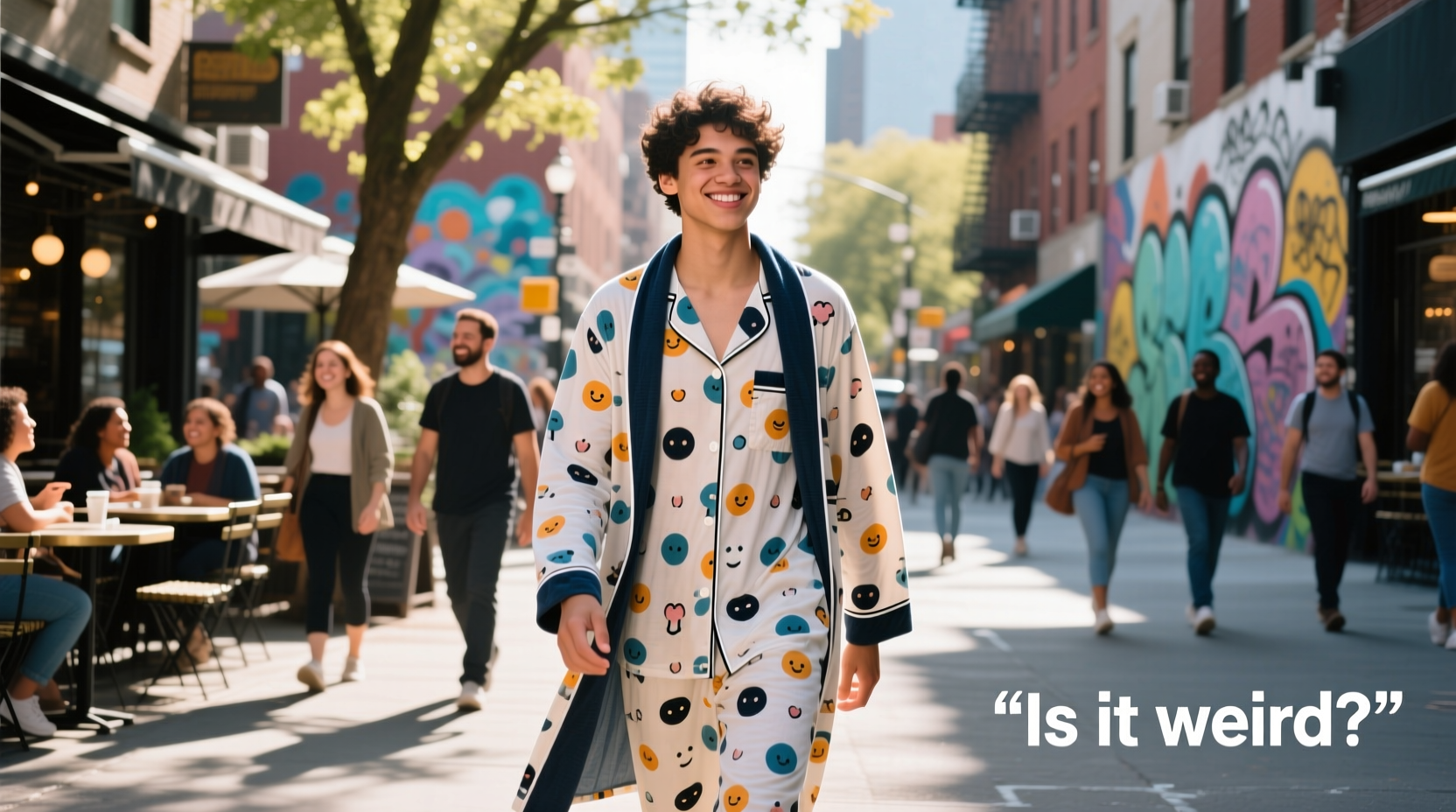
Historically, clothing served as a marker of social status, professionalism, and decorum. Suits, dresses, and formal wear were expected in most public settings, while sleepwear remained strictly confined to the bedroom. But the 20th century saw gradual relaxation: jeans moved from workwear to mainstream fashion; sneakers became acceptable in offices; and athleisure redefined what “appropriate” meant for casual outings.
Pajamas, too, began creeping into public spaces—not as full sleepwear, but as inspiration. The rise of “loungewear” brands like Lululemon, Ettitude, and Sleepy Jones reflects a market demand for garments that blend comfort with aesthetic appeal. These pieces often resemble traditional pajamas but are marketed as stylish, functional wear suitable for low-key public interactions.
Sociologist Dr. Lena Patel observes:
“Clothing norms are never static. They reflect economic conditions, technological shifts, and psychological needs. The normalization of pajama-like wear in public signals a collective desire for comfort amid rising stress and blurred work-life boundaries.”
When Is It Acceptable to Wear Pajamas Outside?
Acceptability hinges on several factors:
- Design and Fabric: Silk camisoles or tailored cotton sets may pass as fashionable loungewear, while flannel onesies with cartoon prints likely won’t.
- Context: Walking to a nearby mailbox differs from attending a job interview. Proximity and purpose matter.
- Cultural Setting: Urban centers tend to be more permissive than suburban or rural communities.
- Time of Day: Early morning dog walks may excuse sleepwear; wearing PJs at dinner raises more questions.
Loungewear vs. Sleepwear: Understanding the Difference
Not all “pajamas” are created equal. The distinction between true sleepwear and modern loungewear is critical when assessing public appropriateness.
| Feature | Traditional Sleepwear | Modern Loungewear |
|---|---|---|
| Fabric | Flannel, polyester blends, thin cotton | Bamboo, TENCEL™, silk, organic cotton |
| Design | Elastic waists, loose fits, printed patterns | Tailored cuts, neutral tones, minimalist styling |
| Function | Exclusively for sleeping | Worn at home or in semi-public spaces |
| Public Perception | “Inappropriate” if worn visibly outside | Often seen as trendy or cozy-chic |
This evolution mirrors how yoga pants transitioned from studio-only gear to everyday wear. As long as the outfit maintains a degree of polish and cohesion, many now accept it as part of a relaxed personal uniform.
The Pandemic’s Lasting Impact on Dress Codes
The early 2020s marked a turning point in sartorial expectations. With lockdowns confining millions to their homes, formal clothing sales plummeted while sales of sweatpants, hoodies, and soft robes surged. Remote work erased daily commutes and office dress codes, making comfort the default.
Even as workplaces reopened, many retained hybrid models, allowing employees to work from home several days a week. This sustained exposure to relaxed dressing eroded the psychological barrier around wearing sleep-inspired clothing outside the bedroom.
A 2023 Pew Research study found that 43% of adults under 35 reported wearing pajamas or loungewear during daytime errands at least occasionally—up from just 14% in 2018. Among remote workers, that number climbed to 57%. These behaviors aren’t just about laziness; they reflect a recalibration of priorities where mental ease often outweighs external judgment.
Mini Case Study: The Rise of “Errand Pajamas”
Meet Maya, a 32-year-old graphic designer in Portland, Oregon. Before the pandemic, she dressed fully before leaving her apartment—even for short trips. Now, she keeps a curated set of “errand PJs”: high-waisted bamboo pants and a matching cropped top in muted sage green. She wears them to walk her dog, pick up groceries, or meet a friend at a café patio.
“People don’t stare,” she says. “If anything, they compliment my outfit. I feel put together without sacrificing comfort. It’s efficient and feels honest—I’m not pretending to be ‘on’ all the time.”
Maya’s experience illustrates a broader trend: intentional blending of private and public identity through clothing. Her choice isn’t about sloppiness—it’s about authenticity and efficiency in a fast-paced world.
Where the Line Still Exists
Despite growing acceptance, certain situations still demand clearer boundaries. Wearing pajamas to:
- Job interviews
- Formal events (weddings, funerals)
- Professional meetings (even virtual ones)
- School drop-offs in conservative neighborhoods
…can still carry negative connotations. In these cases, appearance communicates respect, preparedness, and social awareness. Crossing the line may signal disengagement or lack of effort, regardless of intent.
Fashion psychologist Dr. Adrian Lowe notes:
“Clothing acts as nonverbal communication. When you wear pajamas to a business meeting, others may interpret it as indifference—even if you’re deeply focused on the content.”
Checklist: Can You Wear Pajamas in Public?
Before stepping out, ask yourself:
- Is the fabric clean, intact, and not overly worn?
- Does the outfit resemble coordinated loungewear rather than bedtime wear?
- Am I going somewhere informal (e.g., local park, convenience store)?
- Is it early morning or late evening (when flexibility is higher)?
- Would I feel comfortable being photographed in this?
If you answered yes to most, you’re likely within acceptable range. If not, consider swapping into something slightly more polished.
Global and Generational Differences
Attitudes vary widely across cultures. In Japan, for example, wearing sleepwear outside is generally frowned upon, tied to values of modesty and public order. In contrast, Scandinavian countries embrace “hygge” and “kos” lifestyles, where comfort and coziness are virtues—making soft, warm fabrics more socially acceptable year-round.
Generationally, younger demographics are far more permissive. Gen Z and Millennials prioritize individuality and mental well-being over rigid etiquette. For them, wearing pajamas outside isn’t rebellion—it’s routine. Older generations may still view it as a sign of declining standards, though even among Baby Boomers, tolerance has grown post-pandemic.
Step-by-Step Guide to Styling Sleepwear for Public Wear
If you want to embrace the trend tastefully, follow this approach:
- Choose Elevated Fabrics: Opt for bamboo, silk, or organic cotton instead of polyester or flannel.
- Stick to Neutral or Minimalist Designs: Avoid loud cartoons, slogans, or overly juvenile prints.
- Pair with Structured Outerwear: Throw on a tailored coat, cardigan, or blazer to add polish.
- Add Footwear That Elevates: Swap slippers for clean sneakers, loafers, or ankle boots.
- Accessorize Thoughtfully: A tote bag, sunglasses, or simple jewelry can shift perception from “just woke up” to “intentionally casual.”
This method transforms sleepwear into a cohesive, socially appropriate ensemble without sacrificing comfort.
FAQ
Is it unprofessional to wear pajamas on Zoom calls?
It depends on visibility. If only your torso is visible, a neat top (even a pajama shirt) paired with good lighting and background can be acceptable—especially in informal or remote-first companies. However, leadership roles or client-facing meetings call for more conventional attire to maintain credibility.
Can kids wear pajamas in public?
Young children often do—especially during travel, early mornings, or medical visits—and it’s generally accepted. Parents may face less scrutiny with toddlers in PJs than adults would. However, sending school-aged children to class or social events in sleepwear may still be seen as neglectful in many communities.
Are pajamas becoming fashion statements?
Yes. Designers like Preen, Etro, and even luxury brands such as Gucci have released collections featuring silk sets, embroidered tops, and satin trousers explicitly designed to blur the line between nightwear and daywear. Fashion weeks now regularly feature “night-to-day” looks, signaling institutional validation of the trend.
Conclusion: Redefining Normal
The question isn’t whether wearing pajamas in public is weird—it’s whether we’re ready to redefine what “normal” means in a world that values well-being, authenticity, and personal comfort more than ever. Social norms evolve, and today’s oddity can become tomorrow’s standard.
That said, awareness matters. Context, intention, and presentation determine whether pajama wear reads as thoughtful self-care or social disregard. The goal isn’t to discard etiquette entirely, but to adapt it to modern life.
So, can you wear pajamas in public? Often, yes—especially if done with care. As society continues to shift, the clothes we choose may say less about our laziness and more about our desire to live comfortably, honestly, and on our own terms.




 浙公网安备
33010002000092号
浙公网安备
33010002000092号 浙B2-20120091-4
Comments
No comments yet. Why don't you start the discussion?