
Every holiday season, millions of households set up their Christmas trees with care—positioning lights, hanging ornaments, and arranging presents beneath the branches. Yet, no matter how beautifully decorated, one persistent issue remains: limited viewing angles. Once the tree is placed in a corner or against a wall, half of its charm becomes invisible without constant repositioning. This is where the idea of a rotating Christmas tree stand comes in. Marketed as a convenience upgrade, these motorized stands promise 360-degree visibility with minimal effort. But does that justify the added cost and complexity? For many families, the answer depends on space, tradition, and long-term use.
The Problem With Static Tree Placement
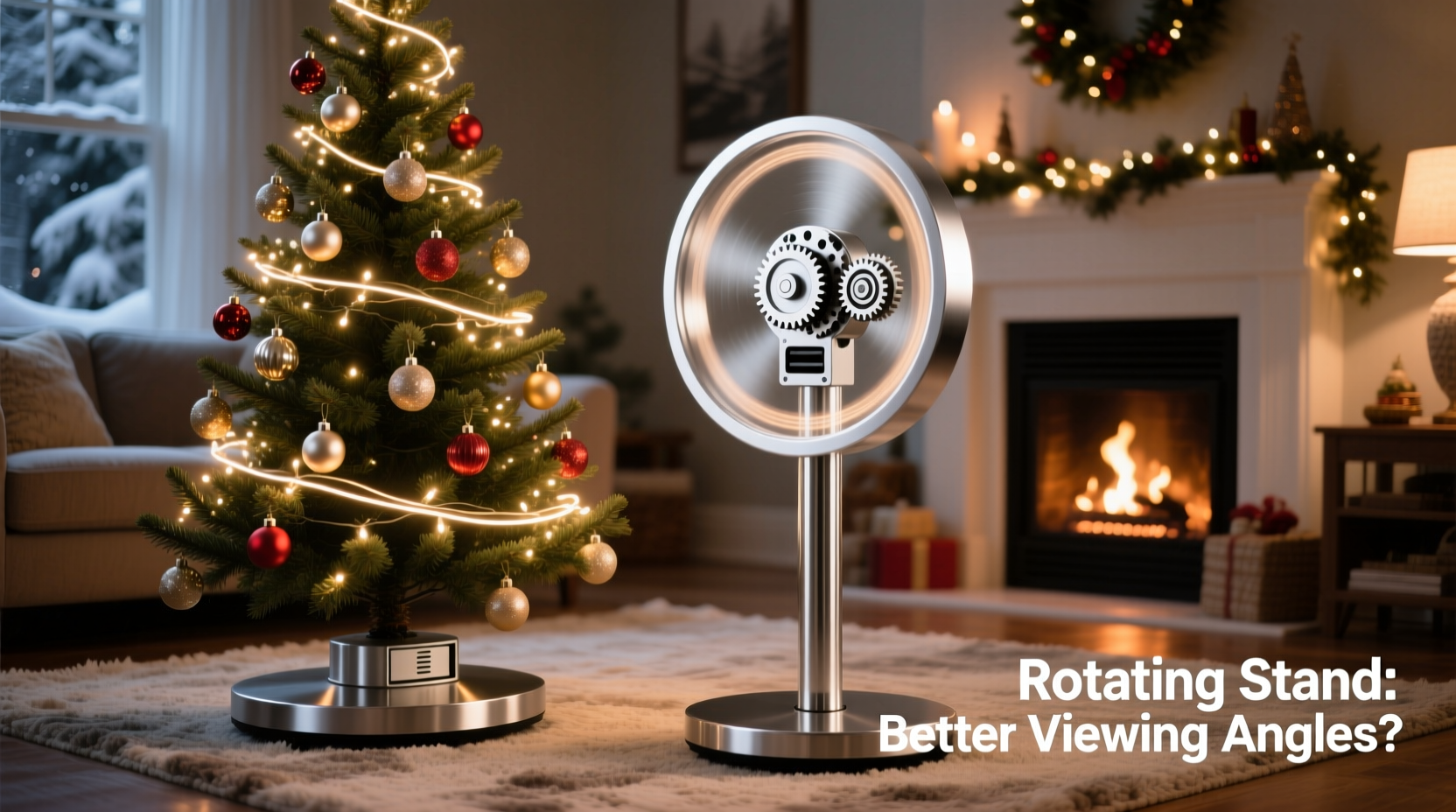
A traditional tree stand holds the tree firmly in place, which is essential for stability but restrictive when it comes to viewing. Most living rooms position the tree in a corner, against a wall, or near a window for safety and aesthetics. However, this often means only one side of the tree is fully visible at any time. Guests see the front, while the back remains hidden—sometimes unevenly lit, poorly decorated, or even leaning slightly due to weight distribution.
Families with children or pets may also struggle to rotate the tree manually. Lifting and turning a six- or seven-foot tree—even a lightweight artificial one—can be awkward and risky. Over time, repeated adjustments can loosen the trunk’s grip in the stand, increasing the chance of tipping. A rotating stand aims to solve both visibility and safety issues by allowing smooth, effortless rotation without touching the tree itself.
How Rotating Christmas Tree Stands Work
Rotating tree stands come in two primary types: manual and motorized. Manual versions require users to gently turn the tree by hand, relying on a low-friction bearing system. These are typically more affordable and don’t require power, but still reduce strain compared to lifting the entire tree.
Motorized stands are the premium option. They include a small electric motor that slowly rotates the tree at a preset speed—usually one full rotation every 30 to 60 seconds. The mechanism is powered by batteries or a standard electrical outlet. Many models feature remote controls, timers, and even app connectivity for adjusting rotation speed or pausing the motion.
Underneath, the stand functions like a traditional base: it holds water (for real trees) or securely clamps the trunk (for artificial ones). The key difference lies in the internal rotating platform. High-quality models use sealed bearings and reinforced frames to support trees up to 9 feet tall and over 100 pounds.
“Motorized rotation transforms the tree into a dynamic centerpiece. It’s not just about seeing all sides—it’s about creating movement and engagement during gatherings.” — Daniel Reeves, Holiday Home Stylist & Interior Consultant
Benefits of a Rotating Tree Stand
The appeal of a rotating stand goes beyond convenience. When used thoughtfully, it enhances the overall holiday experience in several tangible ways.
- Better ornament visibility: Families spend hours decorating every branch. A rotating stand ensures no ornament is “wasted” on the unseen side.
- Improved lighting effects: Lights and reflective ornaments catch different angles as the tree turns, creating a shimmering, cinematic effect.
- Safer adjustments: No need to lift or shove the tree after setup, reducing risk of spills, broken ornaments, or injury.
- Photogenic appeal: For social media-savvy decorators, a slowly spinning tree offers a unique visual element for videos and reels.
- Accessibility: Elderly family members or those with mobility issues can enjoy the full tree without walking around it.
In homes with open floor plans, a rotating tree can become a shared focal point between the living room, dining area, and kitchen. As it turns, it draws attention from multiple vantage points, making the holiday spirit feel more immersive.
Drawbacks and Considerations
Despite their advantages, rotating stands aren’t ideal for every household. Understanding the limitations helps avoid buyer’s remorse.
Cost is the most immediate barrier. While basic stands range from $20 to $50, motorized rotating models start at $80 and can exceed $200 for high-capacity, smart-enabled versions. This represents a significant increase over standard options.
Noise is another concern. Although most modern motors are designed to be quiet, some emit a faint hum or whirring sound. In a quiet home, especially at night, this can be distracting. Lower-end models may produce more noticeable vibrations, particularly on hardwood floors.
Power dependency limits placement. Motorized stands need access to an outlet or fresh batteries. If your ideal tree location is far from a socket, extension cords may be necessary—potentially creating tripping hazards or aesthetic clutter.
Durability varies widely. Cheaper rotating mechanisms may wear out after one or two seasons, especially under heavy loads. Investing in a reputable brand with strong customer reviews is crucial for longevity.
“I bought a budget rotating stand two years ago. It worked fine the first season, but by year two, the motor stuttered and eventually stopped. Now I use it as a manual turntable.” — Lisa Tran, homeowner from Portland, OR
Comparison: Traditional vs. Rotating Tree Stands
| Feature | Traditional Stand | Rotating Stand (Motorized) |
|---|---|---|
| Price Range | $15–$50 | $80–$250+ |
| Ease of Rotation | Manual lifting required | Automatic, hands-free |
| Noise Level | None | Low hum (varies by model) |
| Power Required | No | Yes (outlet or batteries) |
| Best For | Budget setups, occasional use | Frequent entertainers, large trees, accessibility needs |
When a Rotating Stand Makes the Most Sense
Not every home will benefit equally from a rotating stand. The decision should align with your specific circumstances.
Families who host holiday gatherings regularly gain the most value. Guests naturally gather around the tree, take photos, and admire decorations. A rotating display ensures everyone gets a full view without crowding one side. Similarly, homes with narrow layouts or furniture arrangements that block full access to the tree can use rotation to compensate for spatial constraints.
For those with artificial trees, the investment is easier to justify. Since these trees are reused annually, a durable rotating stand can pay for itself over time by enhancing the experience each season. Real tree owners face a tougher call—most rotating stands support real trunks, but the motor components can be damaged by water leakage or sap, requiring careful maintenance.
Mini Case Study: The Miller Family’s Upgrade
The Millers, a family of five in suburban Chicago, had always struggled with their Christmas tree presentation. Their 7-foot pre-lit artificial tree was tucked into a corner between the sofa and bookshelf. Every year, they spent hours decorating, only to realize that half the ornaments faced the wall.
After their youngest daughter asked, “Why can’t we see Santa on the other side?” they decided to try a mid-range motorized rotating stand. Priced at $119, it supported up to 8 feet and included a remote control. Installation took 15 minutes—slightly longer than their old stand due to wiring—but once set up, the difference was immediate.
During their annual holiday party, guests remarked on how “magical” the slow-spinning tree looked. Children loved watching the lights glide past. More importantly, the parents no longer had to worry about someone bumping the tree while trying to peek at the back. After three seasons, the motor still runs smoothly, and they consider it one of their best holiday investments.
Step-by-Step Guide to Choosing and Using a Rotating Stand
- Measure your tree: Confirm height, weight, and trunk diameter. Choose a stand rated for at least 10% above your tree’s specs.
- Determine power access: Ensure an outlet is nearby or plan for battery-powered operation (check runtime).
- Read reviews: Focus on feedback about noise, durability, and ease of assembly.
- Prepare the floor: Use a protective mat if placing on hardwood or carpet to prevent scratches and absorb moisture.
- Assemble carefully: Follow instructions precisely—misalignment can cause wobbling or motor strain.
- Test rotation before decorating: Spin the tree empty to confirm smooth operation.
- Decorate evenly: Take advantage of 360-degree visibility by balancing ornaments and lights on all sides.
- Maintain annually: Clean the base, check for debris in the mechanism, and store in a dry place.
Frequently Asked Questions
Can I use a rotating stand with a real Christmas tree?
Yes, many rotating stands are designed to hold real trees with water reservoirs. Just ensure the model explicitly supports live trees and monitor water levels to prevent leaks near the motor.
Do rotating tree stands work with all artificial trees?
Most do, as long as the trunk fits securely in the clamp mechanism. Trees with unusual bases or integrated stands may require adapters or be incompatible.
How long do motorized stands last?
With proper care, high-quality models can last 5–10 years or more. Cheaper versions may fail after 1–3 seasons, especially under heavy use.
Final Verdict: Is It Worth It?
For the average household, a rotating Christmas tree stand is a luxury—not a necessity. If your tree is already well-positioned and easily viewable from multiple angles, the upgrade may offer little return. However, for those with space limitations, hosting duties, or a passion for holiday perfection, the benefits are real and lasting.
The true value lies in the experience: the joy of watching ornaments catch the light as the tree glides past, the ease of sharing every detail with guests, and the pride of a display that feels alive. When viewed through that lens, the cost becomes less about mechanics and more about memory-making.
If you decorate the same artificial tree year after year, spend meaningful time around it, or simply appreciate thoughtful home innovations, a rotating stand is likely worth the investment. It’s not just about better viewing angles—it’s about transforming a static symbol into a dynamic celebration of the season.




 浙公网安备
33010002000092号
浙公网安备
33010002000092号 浙B2-20120091-4
Comments
No comments yet. Why don't you start the discussion?