
In an age where digital boundaries blur easily between personal and professional life, the demand for smarter device management has never been higher. One increasingly popular solution is the dual SIM phone—a device capable of hosting two active phone numbers simultaneously. For frequent travelers and professionals juggling multiple roles, this feature promises convenience, cost savings, and better organization. But is it truly worth upgrading your smartphone just for dual SIM functionality? The answer depends on your lifestyle, communication needs, and how you manage connectivity across borders and responsibilities.
Dual SIM technology isn’t new, but its relevance has surged with remote work, international travel, and the rise of digital nomadism. Modern smartphones from brands like Apple, Samsung, Google, and OnePlus now support either physical dual SIM (two nano-SIM slots) or hybrid setups (one physical SIM + eSIM). This flexibility allows users to maintain separate lines without carrying multiple devices. Yet, despite growing adoption, many consumers remain uncertain about whether the benefits outweigh potential trade-offs like battery drain, complexity, or limited carrier support.
This article explores the practical value of dual SIM phones specifically for travel and work separation. We’ll examine real-life scenarios, compare key advantages and limitations, and provide actionable guidance to help you decide if making the switch aligns with your goals.
Why Dual SIM Phones Are Gaining Popularity
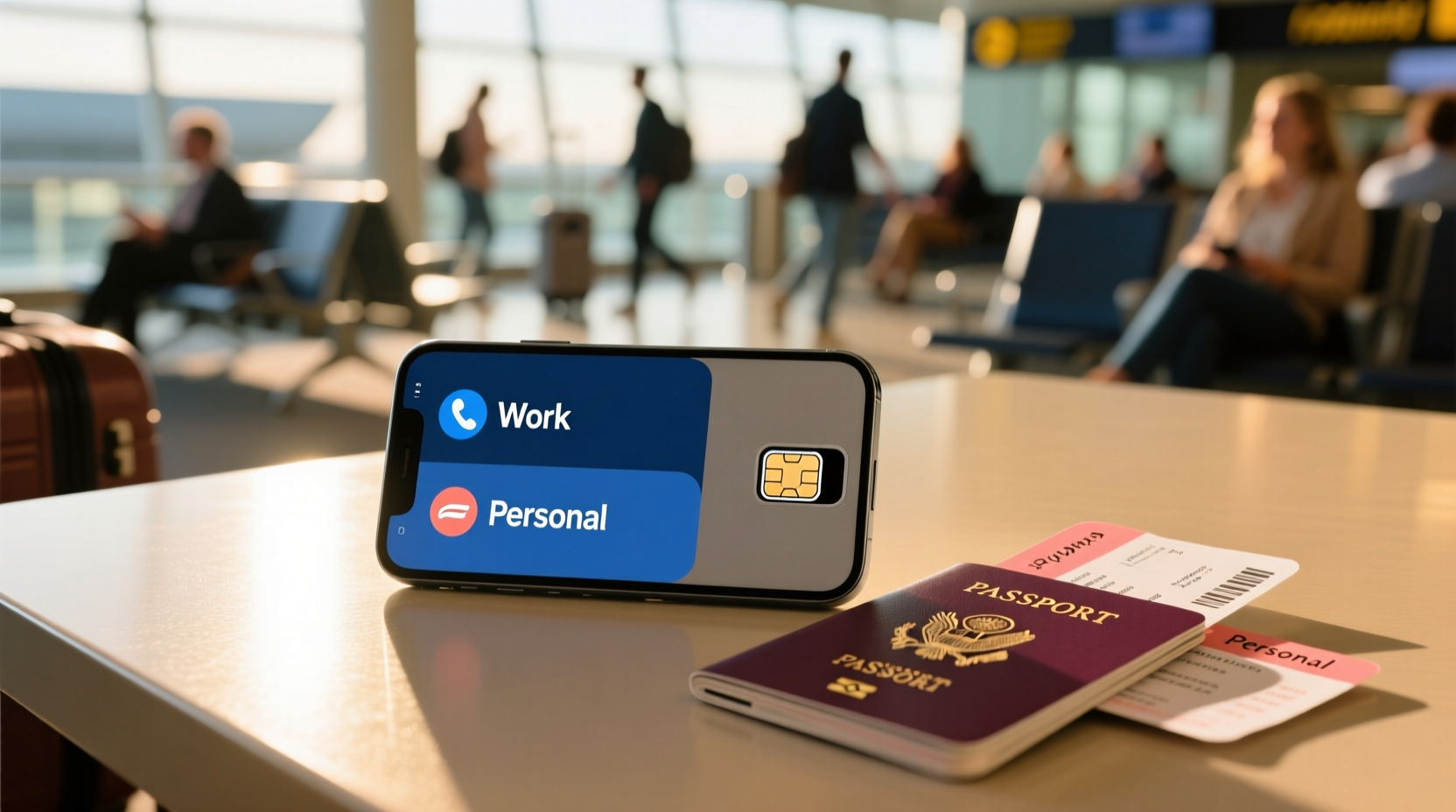
The appeal of dual SIM phones stems from their ability to solve a common modern dilemma: how to stay connected professionally while preserving personal privacy and minimizing costs—especially when crossing time zones or country borders.
For business travelers, maintaining a local number in each region they operate in avoids roaming fees and builds trust with clients who prefer calling local numbers. At the same time, keeping a personal line active ensures family and friends can reach them without being routed through a work contact. A single device that handles both eliminates the need to carry two phones—one for calls from the office, another for weekend plans.
Remote workers and freelancers also benefit significantly. Many run independent operations across different markets, requiring distinct identities for invoicing, customer service, and branding. With dual SIM, one number can be dedicated to client communications while the other remains reserved for private use. This separation reduces mental clutter and supports healthier work-life balance.
Key Benefits of Using Dual SIM for Travel and Work
When used strategically, dual SIM capability offers several tangible advantages:
- Cost Efficiency: Avoid expensive international roaming by inserting a local prepaid SIM upon arrival in a new country. Keep your home number active for incoming calls and messages via the primary line.
- Professional Image: Present a stable, location-specific number to clients—even when working remotely from abroad—without needing a virtual number service.
- Privacy Control: Share only the relevant number depending on context. Your landlord doesn’t need access to your freelance business line, and your coworkers shouldn’t have your personal mobile.
- Seamless Switching: Most modern Android and iOS devices allow quick toggling between SIMs for calls and data, enabling smart routing based on app usage or destination.
- Backup Connectivity: If one carrier has poor signal in a particular area, you can switch to the other SIM automatically or manually, ensuring consistent connectivity.
These benefits are not theoretical—they reflect actual patterns observed among digital nomads, expatriates, and cross-border entrepreneurs.
Real Example: A Freelancer’s Experience Across Three Continents
Consider Lena, a graphic designer based in Berlin who spends three months annually in Southeast Asia and occasionally consults for U.S.-based agencies. She uses a Samsung Galaxy S23 with dual SIM: one German contract for personal use, and a U.S. eSIM tied to her freelance brand.
While in Thailand, she inserts a local AIS SIM for affordable data and voice calls within the region. Her phone routes all domestic calls through the Thai SIM, while international calls to European clients use the German line. Meanwhile, her U.S. eSIM receives verification codes and handles client Zoom invites under a recognizable American number.
Lena reports saving over €400 per year in roaming charges and notes that clients perceive her as more accessible because she answers on a familiar area code. More importantly, she no longer feels pressured to respond to work messages after hours since her personal number is entirely separate.
“Having two numbers on one phone changed how I engage with work. It’s not just about convenience—it’s about reclaiming control over my attention.” — Lena Müller, Independent Designer & Digital Nomad
Comparing Single vs. Dual SIM Setups
| Factor | Single SIM Phone | Dual SIM Phone |
|---|---|---|
| Device Weight & Bulk | Lightweight; one device | Slightly heavier, but still one device |
| Roaming Costs | High unless using Wi-Fi calling | Low with local SIM insertion |
| Work-Life Separation | Poor unless using third-party apps | Strong native support |
| Battery Life | Standard consumption | Moderate increase due to dual standby |
| Setup Complexity | Simple | Moderate learning curve |
| Number Flexibility | One active identity | Two fully functional identities |
As shown above, dual SIM phones outperform single SIM models in nearly every category related to travel efficiency and professional separation—except perhaps in simplicity and marginal power draw. However, most users adapt quickly to settings menus that let them assign default SIMs per app or contact.
Practical Steps to Maximize Dual SIM Utility
If you're considering switching to a dual SIM phone, follow this step-by-step approach to ensure smooth integration into your routine:
- Assess Your Needs: Determine whether you genuinely require two active lines. Ask: Do I travel internationally more than twice a year? Am I frequently contacted for work outside business hours?
- Check Device Compatibility: Verify that your preferred phone model supports true dual SIM (preferably eSIM + physical SIM). iPhones from iPhone 14 onward sold in the U.S. lack physical SIM trays, relying solely on eSIMs.
- Choose Carrier Plans Wisely: Select at least one flexible plan that allows easy activation/deactivation. Prepaid options in countries like Japan, Germany, and Australia offer competitive rates for short-term stays.
- Assign Roles to Each SIM: Designate one as “Primary – Personal” and the other as “Secondary – Work/Travel.” Stick to this system consistently.
- Configure Call & Data Settings: On Android, go to Settings > Connections > SIM Manager to set defaults. On iOS, navigate to Settings > Cellular to manage voice and data rules per line.
- Use Contact Labels: Tag contacts in your address book by associated SIM (e.g., “Work – U.S. Line”) to avoid confusion during calls.
- Monitor Battery Usage: After setup, check battery stats to see if dual network scanning impacts longevity. Adjust settings like disabling 5G on the secondary SIM if needed.
Common Challenges and How to Overcome Them
Dual SIM functionality isn't flawless. Users may encounter issues such as:
- Limited eSIM Support: Some carriers still don’t support eSIM activation, particularly in rural regions or developing economies.
- Increased Power Consumption: Maintaining two network connections in standby mode can reduce battery life by up to 15%, especially in areas with weak signal.
- App Limitations: Not all messaging apps support dual accounts natively. WhatsApp, for example, requires additional steps to verify both numbers on the same device.
- Confusion in Routing: Without proper configuration, outgoing calls might use the unintended SIM, leading to unexpected charges.
To mitigate these risks:
- Use airplane mode selectively when only one SIM is needed (e.g., sleeping hours).
- Enable “Auto-switch to strongest signal” features if available.
- Leverage built-in call screening tools to identify which number is being dialed before connecting.
- Regularly audit your SIM usage via carrier apps or phone diagnostics.
Expert Insight: What Industry Leaders Say
“The future of mobile identity is multi-layered. Consumers want context-aware devices—ones that know whether you’re at a meeting or on vacation and adjust connectivity accordingly. Dual SIM is the first step toward that intelligence.” — Dr. Rajiv Mehta, Senior Analyst at Mobile Futures Group
According to recent research by Statista, over 60% of global smartphone shipments in 2023 included dual SIM capability, driven largely by demand in Asia-Pacific and Europe. While North American adoption lags due to carrier restrictions, experts predict wider acceptance as eSIM infrastructure matures.
Frequently Asked Questions
Can I use two different carriers at once on a dual SIM phone?
Yes. Dual SIM phones allow you to subscribe to two different carriers simultaneously—one on a physical SIM and one on eSIM (or two physical SIMs, depending on the model). You can receive calls and messages on both lines, and choose which carrier provides data or makes outgoing calls.
Does using dual SIM drain the battery faster?
Moderately. Keeping two radios active increases background power consumption, especially in low-signal areas where both networks search for coverage. However, modern chipsets and software optimizations minimize this impact. In typical use, expect a 5–15% reduction in overall battery life.
Is it legal to have two SIM cards under one name?
Yes, in most countries. There are generally no laws prohibiting individuals from holding multiple SIM cards. However, some nations require ID registration for each SIM (e.g., India, Brazil), so compliance with local telecom regulations is essential.
Checklist: Is a Dual SIM Phone Right for You?
Answer the following questions to determine if upgrading makes sense:
- ☐ Do I travel internationally more than once a year?
- ☐ Do I currently pay high roaming fees?
- ☐ Am I reachable for work after hours on my personal number?
- ☐ Would having a dedicated business number improve professionalism?
- ☐ Am I comfortable managing basic SIM settings on my phone?
- ☐ Does my current phone support eSIM or dual physical SIMs?
If you answered “yes” to three or more, a dual SIM phone could significantly enhance your daily experience.
Final Verdict: Should You Make the Switch?
For those balancing international travel with professional commitments, a dual SIM phone is more than a gadget upgrade—it’s a tool for regaining control over time, cost, and personal boundaries. The initial setup requires minor adjustments, but the long-term gains in efficiency, privacy, and financial savings are substantial.
It’s important to note that dual SIM isn’t universally necessary. Casual travelers who rely heavily on Wi-Fi and messaging apps like Signal or Telegram may find little added value. Similarly, employees in organizations that issue company phones may already enjoy separation without needing dual lines on a personal device.
Yet for freelancers, consultants, remote team leads, and frequent flyers, the case is clear: consolidating two critical identities into one reliable device simplifies logistics and strengthens professional presence. As global mobility becomes the norm rather than the exception, dual SIM capability transitions from niche feature to essential utility.




 浙公网安备
33010002000092号
浙公网安备
33010002000092号 浙B2-20120091-4
Comments
No comments yet. Why don't you start the discussion?