
Backlighting has long been a secret weapon in interior design, adding depth, drama, and dimension to spaces where light is used intentionally rather than just functionally. One increasingly popular technique is installing recessed LED strip lighting behind floating shelves—especially when those shelves frame or sit above a holiday tree, artwork, or architectural feature. But is this subtle glow truly worth the effort, cost, and planning? For homeowners considering this upgrade, especially around festive seasons, the answer isn’t always straightforward. It depends on goals: ambiance, aesthetics, practicality, and long-term use.
This article breaks down the full picture—from technical considerations to emotional impact—so you can decide if hidden LED strips behind a shelf are a smart enhancement or an overengineered flourish.
The Aesthetic Impact of Backlighting a Tree
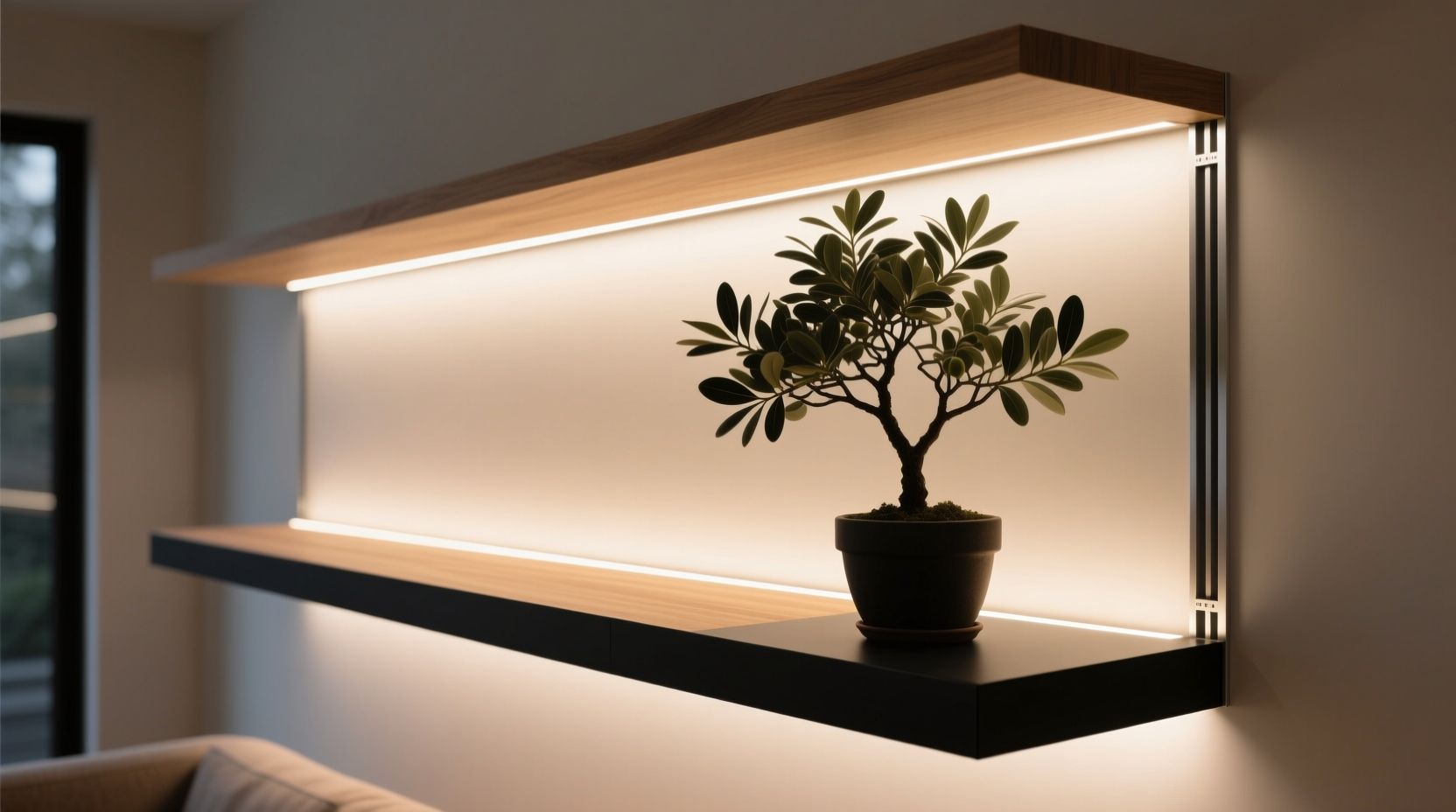
When done well, backlighting transforms a room. Placing a warm-white or color-tunable LED strip behind a floating shelf that hovers above a Christmas tree creates a halo effect, separating the tree from the wall and giving it visual prominence. The indirect glow eliminates flatness, casting soft shadows and enhancing textures in ornaments, garlands, and tinsel.
Unlike traditional string lights wrapped around branches—which illuminate outward—backlighting works from behind, creating contrast and silhouette. This mimics professional photography techniques where subject separation is key. The result? Your tree doesn’t just glow; it floats.
The psychological effect is significant. Studies in environmental psychology suggest that layered lighting—ambient, task, and accent—increases perceived comfort and luxury in residential spaces. Backlighting adds that third layer subtly, making the space feel more curated and intentional.
Practical Considerations: Installation and Maintenance
Installing recessed LED strip lighting isn’t as simple as peeling and sticking. True recessed installation means embedding the strip into a routed channel or mounting it within a built-in housing so it’s not visible directly. This requires carpentry skills, precise measurements, and access to tools like a router or Dremel.
The process typically involves:
- Measuring and marking the underside or rear edge of the floating shelf.
- Routing a shallow groove (usually 10–12mm wide and deep) along the back lip.
- Securing the LED strip with adhesive or clips, ensuring even spacing.
- Routing wires through the wall or shelf support structure to a power source or plug.
- Sealing ends and testing before final mounting.
If the shelf is already installed, retrofitting becomes more complex. You may need to remove it temporarily or fish wires through drywall—a job best left to professionals if you're unfamiliar with electrical safety.
Maintenance is generally low once installed. Quality LED strips last 30,000–50,000 hours and rarely fail. However, dust accumulation in the recessed channel can dull brightness over time. A yearly wipe-down with a microfiber cloth on a telescopic duster keeps output consistent.
Step-by-Step Guide: Installing Recessed LED Strip Behind a Floating Shelf
- Choose the Right Strip: Select a high-CRI (90+), dimmable LED strip with a minimum density of 60 LEDs per meter for even illumination.
- Plan the Layout: Decide whether the strip runs along the back edge (for wall wash) or under the front lip (to highlight shelf contents).
- Mark and Route: Use a straight edge and plunge router to cut a channel. Depth should match the strip thickness plus 1–2mm clearance.
- Test Before Fixing: Plug in the strip and run it for 15 minutes to ensure no flickering or hotspots.
- Install the Strip: Press into the groove, securing with additional clips if needed. Seal ends with silicone caps.
- Route Wires: Drill a small hole through the shelf support or wall stud to hide wiring.
- Connect Power: Link to a low-voltage driver and plug into an outlet, or hardwire to a junction box (hire an electrician if unsure).
- Mount the Shelf: Reattach securely, then test again post-installation.
Cost vs. Value: Is It Worth the Investment?
The financial aspect hinges on whether you DIY or hire help. Materials alone—LED strip, power supply, connectors, and tools—range from $60 to $150 depending on quality and length. Hiring a handyman or electrician could double or triple that cost, especially if wall modifications are involved.
But value isn’t purely monetary. Consider these intangible returns:
- Year-Round Versatility: While ideal for holiday trees, the same backlighting enhances artwork, bookshelves, or media consoles any time of year.
- Increased Home Appeal: Subtle lighting details signal craftsmanship and attention to detail—traits buyers notice during home tours.
- Emotional Payoff: Many users report that the soft glow elevates their mood during darker months, contributing to seasonal well-being.
“The right lighting doesn’t just change how a room looks—it changes how it feels. Backlighting adds warmth without glare, which is rare in modern homes.” — Daniel Reeves, Interior Lighting Designer & Author of *Light Layering for Living Spaces*
For renters or temporary setups, surface-mounted alternatives (like peel-and-stick strips under the shelf) offer similar effects at lower cost and zero structural commitment. But they lack the seamless, built-in elegance of true recessed installation.
Comparison: Recessed vs. Surface-Mounted vs. No Backlighting
| Feature | Recessed Installation | Surface-Mounted Strip | No Backlighting |
|---|---|---|---|
| Visibility of Lights | Completely hidden | Slightly visible | N/A |
| Installation Difficulty | High (requires tools) | Low (peel and stick) | None |
| Upfront Cost | $$–$$$ | $–$$ | $ |
| Long-Term Aesthetic Value | Very High | Moderate | Low |
| Flexibility / Removability | Low (permanent) | High | High |
| Best For | Permanent displays, high-end finishes | Renters, seasonal use | Minimalist or budget-focused setups |
Real-World Example: The Urban Apartment Holiday Upgrade
Take Sarah, a graphic designer living in a compact Brooklyn apartment. Her living area doubles as a guest space and home office. Each December, she sets up a slim artificial tree in the corner beside a walnut floating shelf holding books and family photos.
Two years ago, she tried standard string lights—but the tree still looked flat against the white wall. Last year, she invested in a recessed warm-white LED strip installed along the back edge of the shelf. She routed the wire through the wall into a nearby outlet, hiding everything except the plug.
The difference was immediate. The tree appeared to levitate, and the ambient glow softened the entire room. Neighbors commented on the “gallery-like” atmosphere. Even after the holidays, Sarah left the lights on at low brightness, using them as evening mood lighting. She now considers the project one of her most rewarding home upgrades—not because it was flashy, but because it changed how she experiences her space daily.
Checklist: Is Recessed Backlighting Right for You?
Before committing, ask yourself the following:
- ✅ Do I own my home or have permission to modify walls/shelves?
- ✅ Am I comfortable with basic carpentry and electrical safety?
- ✅ Will this shelf remain long-term, or is it temporary decor?
- ✅ Do I want lighting that works beyond the holiday season?
- ✅ Have I selected a dimmable, high-quality LED strip with proper color temperature?
- ✅ Is there accessible power nearby, or will I need an outlet extension?
- ✅ Am I aiming for a premium, built-in look rather than a quick fix?
If you answered “yes” to most, recessed installation is likely a worthwhile investment.
Frequently Asked Questions
Can I install recessed LED strips myself, or should I hire a professional?
You can DIY if you’re experienced with tools and understand low-voltage wiring. However, if you’re routing into load-bearing walls, running new circuits, or lack confidence with electricity, consult a licensed electrician. Safety should never be compromised for ambiance.
Will the heat from LED strips damage the shelf or wall?
Modern LED strips generate minimal heat—far less than incandescent bulbs. When properly ventilated (even in a recessed channel), they pose no fire risk or material degradation. Choose aluminum-backed strips or add a thin heat sink if installing in enclosed wood channels for added safety.
Can I control the lights remotely or with voice commands?
Yes. Pair your LED strip with a smart controller (like Philips Hue, LIFX, or a generic Wi-Fi-enabled RGBW module). These allow scheduling, color changes, dimming via app, and integration with Alexa or Google Assistant. For holiday trees, this means adjusting brightness for movie nights or turning lights on automatically at dusk.
Final Verdict: When It Makes Sense—and When It Doesn’t
Recessed LED strip lighting behind a floating shelf is absolutely worth it—if your priorities align with long-term aesthetic enhancement, ambiance, and seamless design. It’s not a necessity, but for those who value atmosphere and thoughtful detail, it delivers outsized returns.
It makes the most sense in:
- Permanent living rooms or entryways with recurring decorative focal points.
- Homes where holiday displays are cherished traditions.
- Interior designs emphasizing minimalism, modernism, or luxury finishes.
It’s less justified in:
- Rental units where modifications aren’t allowed.
- Spaces with existing strong ambient lighting (e.g., large windows, overhead fixtures).
- Budget-conscious projects where simpler solutions suffice.
The magic lies not in brightness, but in subtlety. A hidden glow doesn’t shout for attention—it invites presence. And when that light gently lifts a tree off the wall each December, framing memories in warm radiance, the effort fades into the background. What remains is the feeling: warmth, celebration, and a space that truly feels like home.




 浙公网安备
33010002000092号
浙公网安备
33010002000092号 浙B2-20120091-4
Comments
No comments yet. Why don't you start the discussion?