
In 2025, music streaming is more accessible than ever. With platforms like Spotify, Apple Music, YouTube Music, and Amazon Music offering both free and premium tiers, the question isn’t whether you can listen to music online—it’s whether you should pay to do so without interruptions. The free versions are tempting: unlimited access to millions of songs, curated playlists, and algorithmic recommendations—all at no cost. But ads, limited skips, and lower audio quality come with the territory. So, is upgrading to an ad-free subscription truly worth it?
The answer depends on how you use music, your listening habits, and what you value in a digital experience. For casual listeners, free tiers may suffice. But for anyone who relies on music throughout the day—commuters, creatives, fitness enthusiasts, or audiophiles—the premium experience offers tangible benefits that go beyond silence between tracks.
The Hidden Costs of Free Streaming
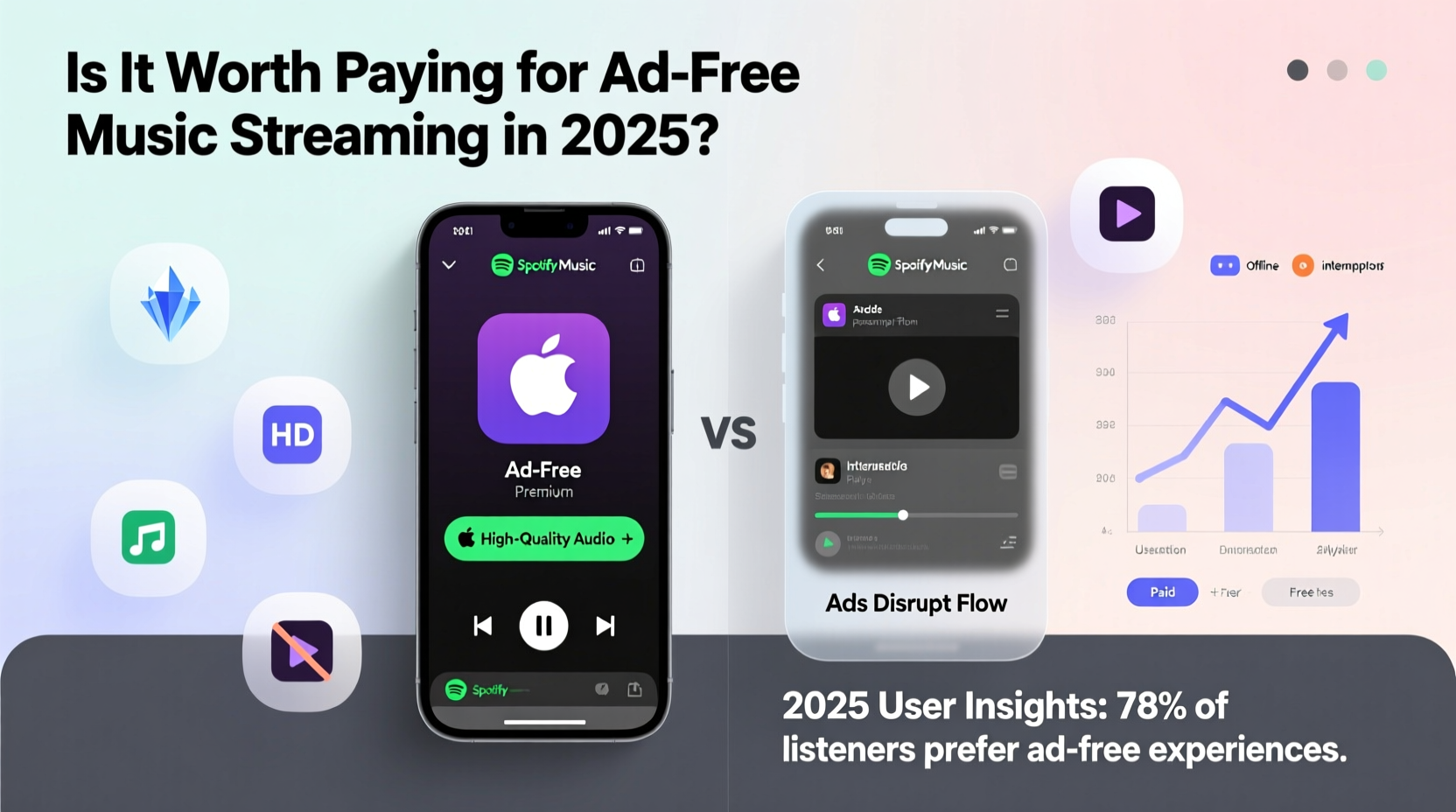
At first glance, free music streaming seems like a win. No credit card required, instant access, and vast libraries at your fingertips. But the trade-offs are significant. Ad-supported models rely on frequent interruptions: 15- to 30-second ads every few songs, voiceovers during transitions, and even video ads on mobile apps. Over time, these disruptions erode the listening experience.
Consider this: if you listen to two hours of music daily, you could endure over 40 minutes of ads per week. That’s not just annoying—it breaks immersion, disrupts focus, and reduces the emotional impact of music. For students, remote workers, or anyone using music as a productivity tool, those interruptions fragment concentration.
Additionally, free tiers often restrict functionality:
- Limited song skips (typically six per hour on Spotify)
- No offline playback
- Lower audio quality (often capped at 160 kbps)
- No background play on mobile
- No high-fidelity or spatial audio support
These limitations aren't minor inconveniences—they define the gap between passive listening and intentional engagement with music.
What You Actually Get with Premium
Paying for an ad-free music service unlocks a suite of features designed to enhance usability, convenience, and sound quality. While pricing varies by region and platform, most premium subscriptions range from $9.99 to $12.99 per month. Family plans often reduce individual costs to under $5.
Here’s a breakdown of what you gain across major platforms:
| Feature | Spotify Premium | Apple Music | YouTube Music Premium | Amazon Music Unlimited |
|---|---|---|---|---|
| Ad-Free Listening | Yes | Yes | Yes | Yes |
| Offline Downloads | Yes (up to 10k songs) | Yes (unlimited) | Yes (unlimited) | Yes (unlimited) |
| Audio Quality | Up to 320 kbps (Ogg Vorbis) | Lossless up to 24-bit/192kHz | Up to 256 kbps (AAC) | HD & Ultra HD up to 3730 kbps |
| Spatial Audio / Dolby Atmos | Limited rollout | Full support | Yes | Yes |
| Background Play | Yes | Yes | Yes | Yes |
| Unlimited Skips | Yes | Yes | Yes | Yes |
For many users, the ability to download albums and playlists for offline listening alone justifies the cost. Travelers, gym-goers, and subway commuters benefit from reliable access without draining data. Audiophiles will appreciate lossless and high-resolution options now standard on Apple Music and Amazon Music, which deliver studio-quality sound on compatible devices.
“Music isn’t just background noise—it’s part of our cognitive environment. Removing distractions improves retention, mood regulation, and focus.” — Dr. Lena Torres, Cognitive Psychologist specializing in auditory processing
Real-World Value: A Case Study
Meet Jordan, a freelance graphic designer based in Portland. For years, Jordan used Spotify’s free tier while working. But constant ad breaks disrupted creative flow. “I’d get into a rhythm, then suddenly there’s a car insurance jingle,” they said. “It pulled me out of the zone every time.”
In early 2024, Jordan upgraded to Spotify Premium after calculating how much time was lost weekly due to interruptions. They tracked their usage: approximately 3.5 hours of music per workday, totaling nearly 18 hours weekly. With ads appearing every 3–4 songs, Jordan estimated losing 22 minutes per day to commercials—over 1.8 hours each week.
After switching to premium, Jordan reported a noticeable improvement in workflow continuity. “I don’t realize how much I was stopping until I stopped stopping,” they joked. The $11.99 monthly fee felt justified not just for ad removal, but for the cumulative effect on productivity and mental ease.
Jordan also began using offline mode during weekend hikes and flights, eliminating reliance on spotty connections. Within four months, they concluded the subscription had paid for itself in saved time and reduced frustration.
When Free Might Still Make Sense
Not everyone needs premium. For occasional listeners—those who stream music only during workouts, dinner parties, or short commutes—the free tier remains viable. If you’re budget-constrained, live with strong Wi-Fi access, and don’t mind skipping around playlists, ads may be a fair trade-off.
Some platforms also offer student discounts (up to 50% off), family plans (supporting up to six users), or bundled deals (e.g., YouTube Premium with YouTube TV). These options dramatically lower the effective cost, making premium far more accessible.
Still, consider the long-term value. At roughly $10/month, a premium subscription costs less than a single coffee shop visit. Spread over a year, it’s about $120—comparable to one mid-tier pair of wireless earbuds. But unlike hardware, the benefits compound: uninterrupted focus, better sleep via ad-free ambient tracks, seamless travel playback, and improved audio fidelity.
Step-by-Step: How to Decide If Premium Is Right for You
Making the leap from free to paid doesn’t have to be impulsive. Follow this timeline to assess your needs objectively:
- Track Your Current Usage (Week 1): Note how often you hit skip limits, encounter ads, or wish you could play music in the background.
- Test Offline Needs (Week 2): Try commuting or traveling without data. See how often you want access to saved music.
- Compare Platforms (Week 3): Evaluate which service aligns best with your device ecosystem (iOS, Android, smart speakers) and audio preferences.
- Try a Free Trial (Week 4): Most services offer 1–3 months free. Use this period to experience ad-free, offline, and high-quality streaming.
- Calculate Long-Term Value: Ask: Does uninterrupted music improve my daily life enough to justify $10/month? Will I use the features consistently?
If you find yourself relying on downloads, annoyed by ads, or eager for better sound, the answer is likely yes.
Expert Insight: The Psychology of Uninterrupted Sound
Dr. Lena Torres, whose research focuses on sound and cognition, emphasizes that consistent auditory input supports deeper mental states.
“When music plays without disruption, the brain enters a steady-state response. This supports sustained attention, emotional regulation, and even memory consolidation. Ads act as micro-interruptions that trigger alertness responses—exactly what you don’t want when trying to relax or concentrate.” — Dr. Lena Torres
This insight matters beyond entertainment. People use music to manage anxiety, enhance workouts, fall asleep, or maintain focus during deep work. In all these cases, predictability and continuity are key. An unexpected ad burst can spike heart rate and derail relaxation—defeating the purpose of the playlist.
FAQ: Common Questions About Paid Music Streaming
Can I still get viruses or malware from ads on free music apps?
While rare, malicious ads (malvertising) have appeared on legitimate platforms. Though major services vet advertisers, third-party networks can occasionally slip through. Premium users avoid this risk entirely by eliminating ads altogether.
Do premium subscriptions include exclusive content?
Not typically in terms of songs, but yes for experiences. Some platforms offer early concert access, bonus podcast episodes, or artist Q&As for subscribers. Apple Music includes lyric integration and music videos; YouTube Music unlocks behind-the-scenes footage.
Will ad-free streaming become the default in the future?
Unlikely. Ad-supported models remain profitable, especially in emerging markets where credit card penetration is low. However, hybrid models—like TikTok’s evolving music licensing—are pushing platforms to innovate. Expect more personalized ad formats in free tiers, not fewer.
Checklist: Is It Time to Upgrade?
Answer the following—if three or more apply, premium is likely worth it:
- ✅ You regularly hit skip limits on free tier
- ✅ You commute, travel, or exercise without reliable internet
- ✅ You use music to focus, sleep, or manage stress
- ✅ You own high-quality headphones or audio equipment
- ✅ You're frustrated by recurring ads interrupting your flow
- ✅ You'd miss music access if you lost data/Wi-Fi
Conclusion: Silence the Noise, Elevate the Experience
In 2025, music is no longer just something we play—it’s woven into how we work, move, heal, and create. Paying for an ad-free streaming service isn’t a luxury; it’s an investment in consistency, control, and quality. The nominal monthly fee buys more than silence between songs. It buys uninterrupted thought, seamless mobility, and richer sound.
For heavy users, the return on investment is clear. Even moderate listeners may find that removing friction enhances their relationship with music. And with shared plans, student deals, and extended trials, the barrier to entry has never been lower.
If you’ve been hesitating, try a trial. Listen deeply. Notice when the ads used to come. Feel the difference when they don’t. In a world full of distractions, choosing uninterrupted music might be one of the simplest ways to reclaim focus—and joy.




 浙公网安备
33010002000092号
浙公网安备
33010002000092号 浙B2-20120091-4
Comments
No comments yet. Why don't you start the discussion?