
For many, the Christmas tree is the centerpiece of holiday decor—a symbol of warmth, tradition, and celebration. Yet no matter how beautifully decorated, a common frustration persists: ornaments on one side are always in view, while the others gather dust in obscurity. This imbalance leads many to consider a simple but impactful upgrade—switching to a rotating tree stand. But is it truly worth the investment? The answer depends on your priorities, space, decorating habits, and long-term plans. By examining functionality, design impact, maintenance, and user experience, we can determine whether a rotating stand offers meaningful value or merely novelty.
The Visibility Problem with Traditional Tree Stands
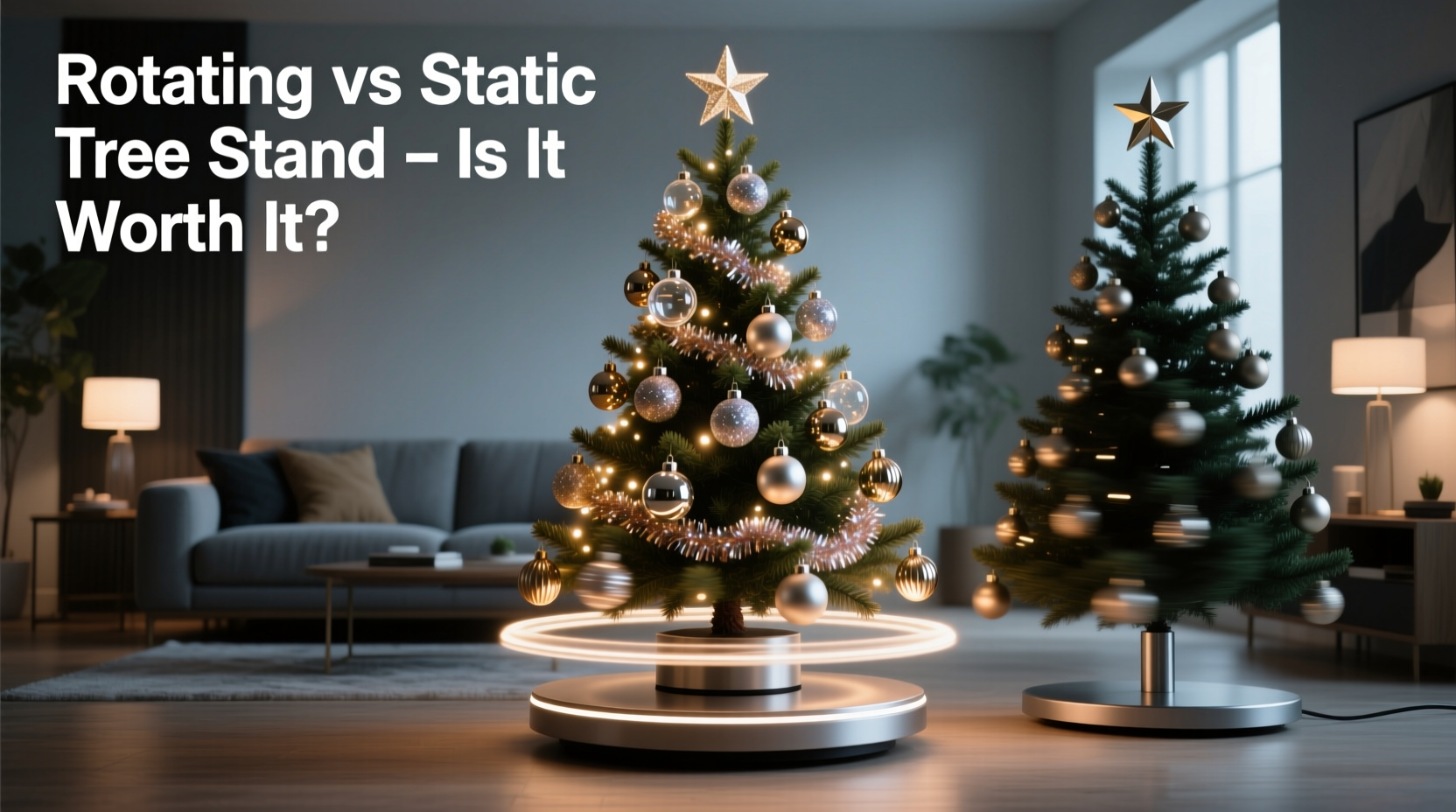
Most homes use static tree stands—simple bases that hold the tree upright but offer no movement. While effective at supporting weight, they lock the tree into a fixed position. This creates an uneven viewing experience. Guests naturally approach from the front door or living room entrance, so decorators instinctively prioritize the “show side.” Ornaments, lights, and special heirlooms cluster there, while the back and sides remain sparsely adorned or ignored entirely.
This isn’t just about aesthetics. It affects how you engage with your own tree. If you walk around it daily, you may notice mismatched lighting density or lopsided ornament distribution. Over time, this diminishes the immersive effect a well-decorated tree should deliver. The issue is especially pronounced in smaller rooms where furniture layout limits access to multiple angles, or in open-concept spaces where the tree is visible from several directions.
How Rotating Tree Stands Work
A rotating tree stand replaces the standard base with a motorized platform that slowly turns the tree, typically completing one full rotation every 30 to 60 seconds. Most models operate quietly using low-voltage motors and are powered by standard electrical outlets. Some higher-end versions include remote controls, variable speed settings, or programmable timers.
The mechanism supports trees up to a specified height and weight—commonly ranging from 7 to 10 feet tall and holding up to 75 pounds. Stability remains critical; these stands must balance rotation with secure anchoring to prevent tipping. Many feature adjustable leveling screws and non-slip surfaces to enhance safety on hardwood, tile, or carpeted floors.
Rotation is intentionally slow. The goal isn’t spectacle but gradual exposure. As the tree turns, viewers seated in one location can eventually see all four sides without needing to move. This transforms passive viewing into a dynamic experience, similar to watching a slow cinematic pan across a scene.
Key Components of a Quality Rotating Stand
- Motor unit: Should be quiet and durable, preferably with thermal overload protection.
- Weight capacity: Must match or exceed your tree’s total weight (including water, stand, and decorations).
- Stabilization system: Leveling legs and grip pads prevent wobbling during rotation.
- Cord management: Integrated channels keep power cords organized and reduce tripping hazards.
- Water reservoir compatibility: Essential for real trees; ensures hydration without interrupting rotation.
Benefits of Even Ornament Visibility
The primary advantage of a rotating stand is democratizing ornament visibility. Every decoration gets its moment in the spotlight. This encourages more balanced decorating, where care is given equally to all sides of the tree. No longer does the “back” become a dumping ground for misshapen bulbs or excess tinsel.
Psychologically, this enhances engagement. Studies in environmental psychology suggest that dynamic displays capture attention longer than static ones. A slowly turning tree invites prolonged observation, increasing feelings of wonder and seasonal joy. Children, in particular, are drawn to motion, often sitting nearby to watch the ornaments glide past like scenes in a snow globe.
From a design perspective, symmetry becomes less critical. You’re freed from the pressure to make every angle look identical because each will be seen in due course. Instead, you can create intentional themes on different sides—vintage ornaments on one, family photos on another, handmade crafts on a third—knowing each will be appreciated over time.
“Rotation changes the relationship between viewer and object. It introduces rhythm and anticipation, turning decoration into performance.” — Dr. Lila Monroe, Environmental Designer and Holiday Display Consultant
Cost vs. Value Analysis
Rotating tree stands range from $80 to over $200, depending on brand, weight capacity, and features. This is significantly more than basic stands, which cost $20–$40. So is the premium justified?
Consider longevity. If you plan to use the same tree (artificial or real) for five or more years, the per-year cost drops to under $20 annually—even less if shared across household members. Compare this to other holiday expenses: a single themed ornament set might cost $30, or a festive sweater $50. In context, the rotating stand is a modest investment for lasting improvement in display quality.
Additionally, enhanced visibility can extend the emotional value of ornaments. Sentimental pieces—like a child’s first handmade star or a travel souvenir—gain greater appreciation when they’re not hidden behind furniture. The ability to showcase them fully increases their impact on family traditions.
| Feature | Standard Stand | Rotating Stand |
|---|---|---|
| Price Range | $20–$40 | $80–$220 |
| Ornament Visibility | Limited to viewing angle | Full 360° over time |
| Maintenance | Low (manual watering) | Medium (motor care, cord safety) |
| Lifespan | 3–5 years (basic models) | 5–10+ years (with care) |
| Child/Family Engagement | Moderate | High (motion attracts attention) |
Real-World Example: The Thompson Family Upgrade
The Thompsons of Portland, Oregon, had used the same artificial tree for eight years. Each season, they spent hours decorating, only to find that guests rarely saw more than half the work. Their living room layout placed the tree in a corner, visible mainly from the sofa. The back faced a hallway, and the right side was partially blocked by a bookshelf.
In 2022, they invested in a mid-range rotating stand ($130). Initially skeptical, they noticed immediate differences. During their holiday party, multiple guests commented on ornaments they hadn’t seen before. Their youngest daughter began referring to the tree as “the spinning magic tree,” and family members took turns adjusting the speed based on mood.
By the second year, they redesigned their ornament strategy—placing delicate handmade pieces on the back, knowing they’d now be seen. They also reduced clutter on the front, achieving a cleaner aesthetic. After three seasons, they report the stand has paid for itself in reduced stress and increased enjoyment.
Practical Considerations Before Upgrading
Not every home is suited for a rotating stand. Several factors must align for optimal performance and safety.
Space and Clearance
The tree needs at least 2–3 inches of clearance on all sides to rotate freely. Furniture, walls, or drapes too close will obstruct movement or cause damage. Measure your space carefully before purchasing.
Power Access
These stands require a nearby outlet. Extension cords can work but increase tripping risks and visual clutter. If no outlet is within reach, installation becomes impractical unless you’re willing to reconfigure room layout temporarily.
Tree Type Compatibility
Retailers specify maximum heights and weights. Exceeding these limits risks motor strain or instability. Artificial trees with heavy metallic branches or pre-lit designs add significant weight. Real trees absorb water, increasing mass over time—ensure the stand’s capacity includes this added load.
Step-by-Step Guide to Transitioning to a Rotating Stand
- Measure your space: Confirm the tree’s diameter plus 6 inches fits within the available area.
- Check power sources: Identify the nearest outlet and assess cord path safety.
- Determine tree specifications: Note height, weight (dry and wet), and trunk diameter.
- Select a compatible model: Choose a stand that exceeds your tree’s weight by at least 10–15%.
- Assemble off-season: Test the stand before the holidays to ensure smooth operation.
- Position carefully: Center the tree, level the base, and verify rotation clears all obstacles.
- Decorate evenly: Apply ornaments with full 360° visibility in mind, balancing color and density.
- Monitor during use: Check weekly for wobbling, motor noise, or cord wear.
Common Misconceptions About Rotating Stands
Several myths deter potential buyers. Addressing them clarifies realistic expectations.
- Myth: Rotation causes ornaments to fall off. Fact: Slow, steady movement doesn’t generate enough force to dislodge properly hung decorations. Only loosely attached items are at risk.
- Myth: They’re loud and distracting. Modern models operate at sound levels below 30 decibels—quieter than a whisper.
- Myth: Only useful for large trees. Even 6-foot trees benefit, especially in compact spaces where viewing angles are limited.
Frequently Asked Questions
Can I use a rotating stand with a real tree?
Yes, provided the stand includes a water reservoir and supports the combined weight of the tree, water, and decorations. Monitor water levels regularly, as rotation doesn’t interfere with hydration.
Do rotating stands work with pre-lit trees?
Yes, but ensure the power cord for the lights doesn’t tangle during rotation. Use a rotating stand with a central cord channel or route the light cord through the trunk internally if possible.
How long do rotating stands last?
With proper care, most last 7–10 years. Avoid overloading, keep the motor dry, and store indoors during off-seasons to maximize lifespan.
Final Checklist: Is a Rotating Stand Right for You?
- ✅ Your tree is visible from multiple angles in your home.
- You’ll gain the most value when rotation enhances multi-directional viewing.
- ✅ You decorate thoughtfully and want all ornaments seen.
- If you invest time in decoration, ensure the effort isn’t wasted on unseen sides.
- ✅ You have floor-level outlet access near the tree location.
- No outlet means complicated cord runs—avoid unless manageable.
- ✅ Your tree is within the weight and height limits of available stands.
- Safety comes first; never exceed manufacturer specifications.
- ✅ You plan to keep your current tree for several years.
- Long-term use improves return on investment.
Conclusion: A Small Upgrade With Lasting Impact
Upgrading to a rotating tree stand isn’t essential, but for many households, it’s a transformative enhancement. It solves a subtle yet persistent flaw in traditional displays—the invisibility of half the holiday effort. By enabling even ornament visibility, it deepens engagement, rewards detailed decorating, and adds a gentle sense of motion that captivates both children and adults.
The financial investment is modest relative to long-term use, and the operational demands are minimal. For those who value balanced design, inclusive viewing, and the small joys of seasonal rituals, the rotating stand delivers disproportionate returns. It won’t replace tradition—but it can elevate it.




 浙公网安备
33010002000092号
浙公网安备
33010002000092号 浙B2-20120091-4
Comments
No comments yet. Why don't you start the discussion?