
For decades, learning the guitar meant finding a local instructor, scheduling weekly lessons, and practicing diligently between sessions. Today, a new path has emerged: mobile apps promising structured lessons, instant feedback, and gamified progress—all from a smartphone. But for beginners standing at this crossroads, a critical question arises: Is learning guitar through apps truly as effective as traditional in-person lessons?
The answer isn't a simple yes or no. It depends on your goals, learning style, discipline, and access to resources. While apps offer unmatched convenience and affordability, in-person instruction provides irreplaceable personalization and real-time correction. This article breaks down both approaches, compares their strengths and weaknesses, and helps you decide which method—or combination—will set you up for success.
How Guitar Learning Apps Work
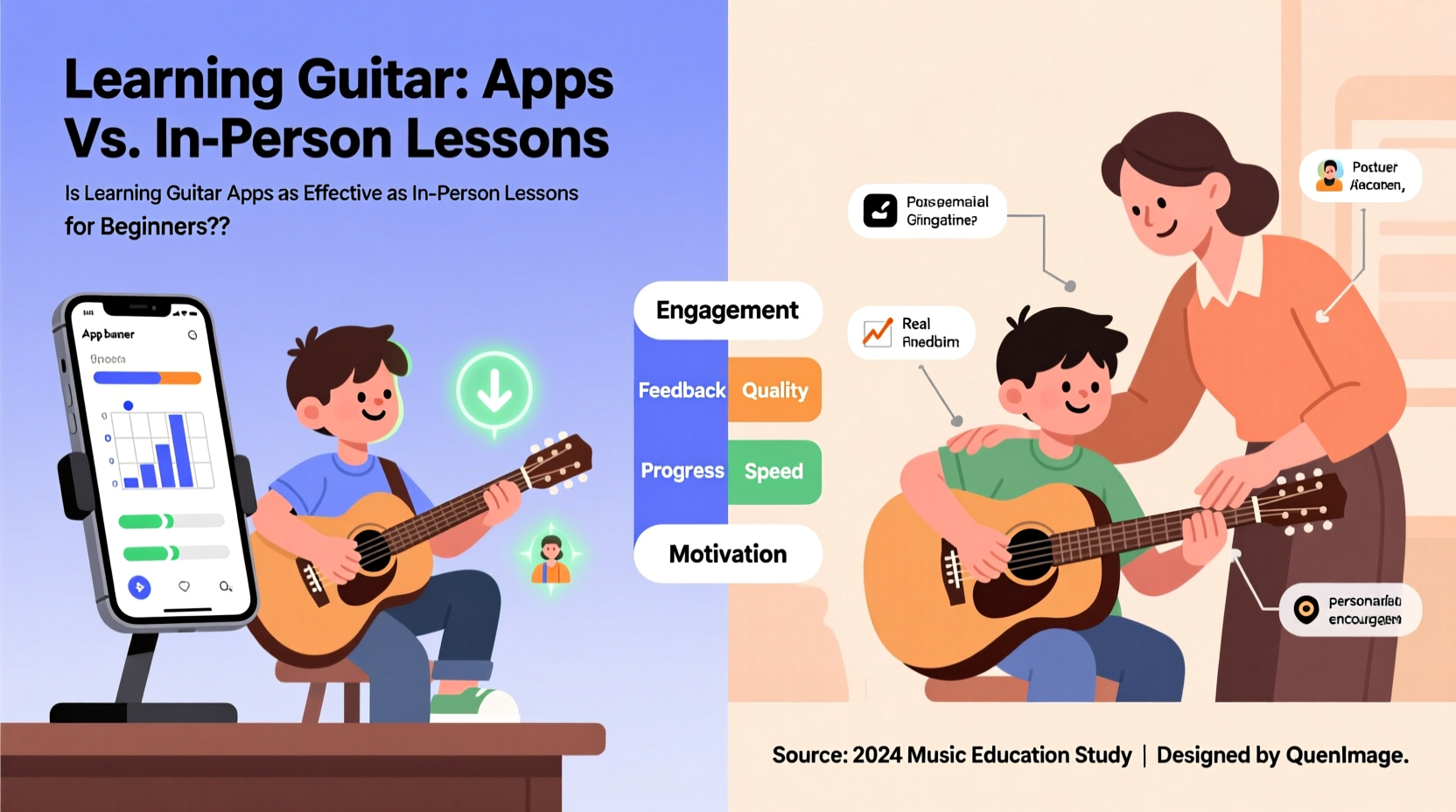
Guitar learning apps like Yousician, Fender Play, JustinGuitar (app version), and Simply Guitar have transformed entry-level music education. These platforms typically follow a structured curriculum divided into modules based on skill level—beginner, intermediate, and beyond. Lessons cover fundamentals such as:
- Proper hand positioning and posture
- Chord transitions (e.g., G to C, D to A)
- Strumming patterns and rhythm training
- Basic music theory (scales, keys, intervals)
- Song-based learning using popular tunes
What sets these apps apart is interactivity. Many use your device’s microphone to listen as you play, offering real-time feedback on timing and note accuracy. Progress is tracked visually with badges, streaks, and completion percentages—features designed to keep motivation high.
The Strengths of In-Person Guitar Lessons
No algorithm can replicate the nuanced observation of a skilled teacher. In-person lessons provide immediate, personalized feedback that adapts to your unique learning pace and physical setup. A good instructor doesn’t just correct mistakes—they anticipate them.
Consider hand tension. An app might not detect that you’re pressing too hard on the strings, leading to fatigue and poor technique. A live teacher will notice the strain in your fingers, adjust your wrist angle, and demonstrate proper pressure control instantly.
“Beginners often develop subtle bad habits—like improper thumb placement or inconsistent strumming motion—that go unnoticed until they become ingrained. A trained eye can correct these in real time.” — Daniel Reeves, Professional Guitar Instructor with 18 years of teaching experience
In addition to technical guidance, in-person teachers build accountability. Weekly check-ins create natural deadlines for practice, and face-to-face interaction fosters a sense of commitment. They also tailor lessons based on your musical tastes, adjusting repertoire to keep you engaged—something most apps struggle to do beyond preset tracks.
Comparing Effectiveness: Apps vs. In-Person Lessons
To assess effectiveness, we must define what “success” means for a beginner. Is it:
- Playing three chords well enough to accompany a song?
- Developing strong foundational technique?
- Gaining confidence to perform in front of others?
- Understanding how music works, not just memorizing shapes?
Depending on your goal, one method may outperform the other. The table below summarizes key differences across multiple dimensions:
| Factor | Guitar Learning Apps | In-Person Lessons |
|---|---|---|
| Cost | $5–$30/month subscription | $40–$100 per hour session |
| Flexibility | Learn anytime, anywhere | Fixed schedule; requires travel |
| Feedback Quality | Limited to audio input; cannot see form | Real-time visual and auditory correction |
| Pacing | Rigid structure; may rush or lag | Adaptable to individual progress |
| Motivation Tools | Streaks, points, levels | Personal encouragement, goal setting |
| Music Theory Integration | Minimal to moderate; often optional | Integrated naturally into lessons |
| Skill Transfer | Good for chord songs; limited improvisation | Broad foundation including ear training and creativity |
Apps excel at making early wins accessible. Within days, users can play recognizable riffs or sing along to “Wonderwall” or “Horse With No Name.” This quick gratification is powerful for engagement. However, once past the basics, many app users plateau due to lack of depth and adaptive challenge.
In contrast, in-person instruction builds sustainable skills. Teachers introduce concepts like finger independence, dynamic control, and phrasing—subtleties that separate functional players from expressive ones.
A Realistic Case Study: Two Beginners, Two Paths
Meet Sarah and James, both absolute beginners who started playing guitar at age 32.
Sarah chose Yousician. She practiced 20 minutes daily, completed all beginner levels in eight weeks, and could play five full songs confidently. She loved the game-like interface and felt accomplished. However, after three months, her progress stalled. Chord changes slowed, and she developed wrist discomfort. Without someone to observe her form, she didn’t realize she was arching her wrist incorrectly—a habit that took weeks to unlearn when she later consulted a teacher.
James invested in biweekly in-person lessons while supplementing with free online videos. His first month focused almost entirely on posture, picking technique, and single-note exercises. He played fewer complete songs initially but reported less frustration and more clarity. By month four, he was transitioning smoothly between complex chords and beginning to improvise simple melodies over backing tracks.
After six months, both could perform basic songs. But James demonstrated better technique, greater adaptability, and a deeper understanding of rhythm and harmony. Sarah caught up only after switching to hybrid learning—using an app alongside occasional coaching sessions.
When Apps Are Most Effective
Apps shine under specific conditions:
- You're highly self-motivated and disciplined.
- Your goal is recreational playing—not professional development.
- You want low-cost access to structured content.
- You already have some musical background (e.g., another instrument).
- You use the app as a supplement, not your sole resource.
They are particularly useful for busy adults who need flexibility. Parents, remote workers, or those in rural areas without local instructors benefit greatly from app-based learning.
Building a Hybrid Approach: Best of Both Worlds
The most effective strategy for many beginners isn’t choosing one method over the other—it’s combining them.
Here’s a practical step-by-step plan to integrate apps and human instruction:
- Start with 4–6 in-person lessons to establish proper technique, learn essential chords, and get personalized feedback on posture and hand position.
- Choose a reputable app that aligns with your goals (e.g., JustinGuitar for comprehensive structure, Yousician for interactive feedback).
- Use the app for daily drills—chord changes, strumming patterns, and ear training—while reserving weekly or biweekly sessions with a teacher for refinement and new material.
- Record yourself monthly and share recordings with your teacher for remote feedback if in-person meetings are infrequent.
- Every 8–10 weeks, schedule a “check-up” lesson to assess progress, correct emerging bad habits, and recalibrate goals.
This hybrid model reduces cost while preserving quality. You gain the accountability and precision of human teaching, paired with the accessibility and repetition tools of digital platforms.
Essential Checklist for Beginner Guitar Success
Regardless of your chosen method, follow this checklist to maximize results:
- ✅ Tune your guitar before every practice session
- ✅ Warm up with finger exercises (e.g., chromatic runs)
- ✅ Practice slowly—accuracy before speed
- ✅ Focus on clean chord transitions, not just isolated shapes
- ✅ Use a metronome or backing track to develop timing
- ✅ Record yourself weekly to track improvement
- ✅ Take short breaks to avoid strain or fatigue
- ✅ Play actual songs early—even simple ones—to stay motivated
Frequently Asked Questions
Can I become a proficient guitarist using only apps?
Yes, but with limitations. You can achieve functional proficiency—playing songs, accompanying vocals, and enjoying music. However, reaching advanced levels (improvisation, complex fingerstyle, music theory fluency) typically requires deeper guidance that apps alone rarely provide.
Are free guitar apps worth using?
Some free apps, like JustinGuitar Free or YouTube-integrated tools, offer excellent value. However, they often lack real-time feedback and structured progression. Use them as supplements rather than primary learning sources unless you're pairing them with external guidance.
How often should beginners practice?
Consistency trumps duration. Aim for 15–20 minutes daily rather than one long weekly session. Short, focused practice builds muscle memory more effectively and reduces burnout risk.
Final Thoughts: Choose Based on Your Goals, Not Just Convenience
Learning guitar is a journey shaped by how you begin. Apps have democratized access to music education, making it possible for millions to start playing without financial or geographic barriers. For casual learners, they can be perfectly sufficient—and even transformative.
But if your ambition extends beyond strumming campfire songs—if you dream of writing your own music, playing in a band, or mastering intricate techniques—then investing in human instruction, even sparingly, pays long-term dividends.
The best approach isn’t about rejecting technology or clinging to tradition. It’s about leveraging both wisely. Start with awareness: know your goals, acknowledge your learning style, and design a path that supports sustainable growth.




 浙公网安备
33010002000092号
浙公网安备
33010002000092号 浙B2-20120091-4
Comments
No comments yet. Why don't you start the discussion?