
For many aspiring Japanese learners, anime is more than entertainment—it’s a gateway to the language. With vivid expressions, emotional dialogue, and cultural context woven into every scene, it's no wonder thousands turn to series like *Death Note*, *Spirited Away*, or *Shirokuma Cafe* as part of their study routine. But does watching anime truly contribute to measurable language acquisition? Can you become fluent in Japanese just by bingeing your favorite shows? The answer isn’t simple, but research, anecdotal evidence, and linguistic experts suggest that anime can be a powerful supplement—if used strategically.
The Allure of Anime in Language Learning
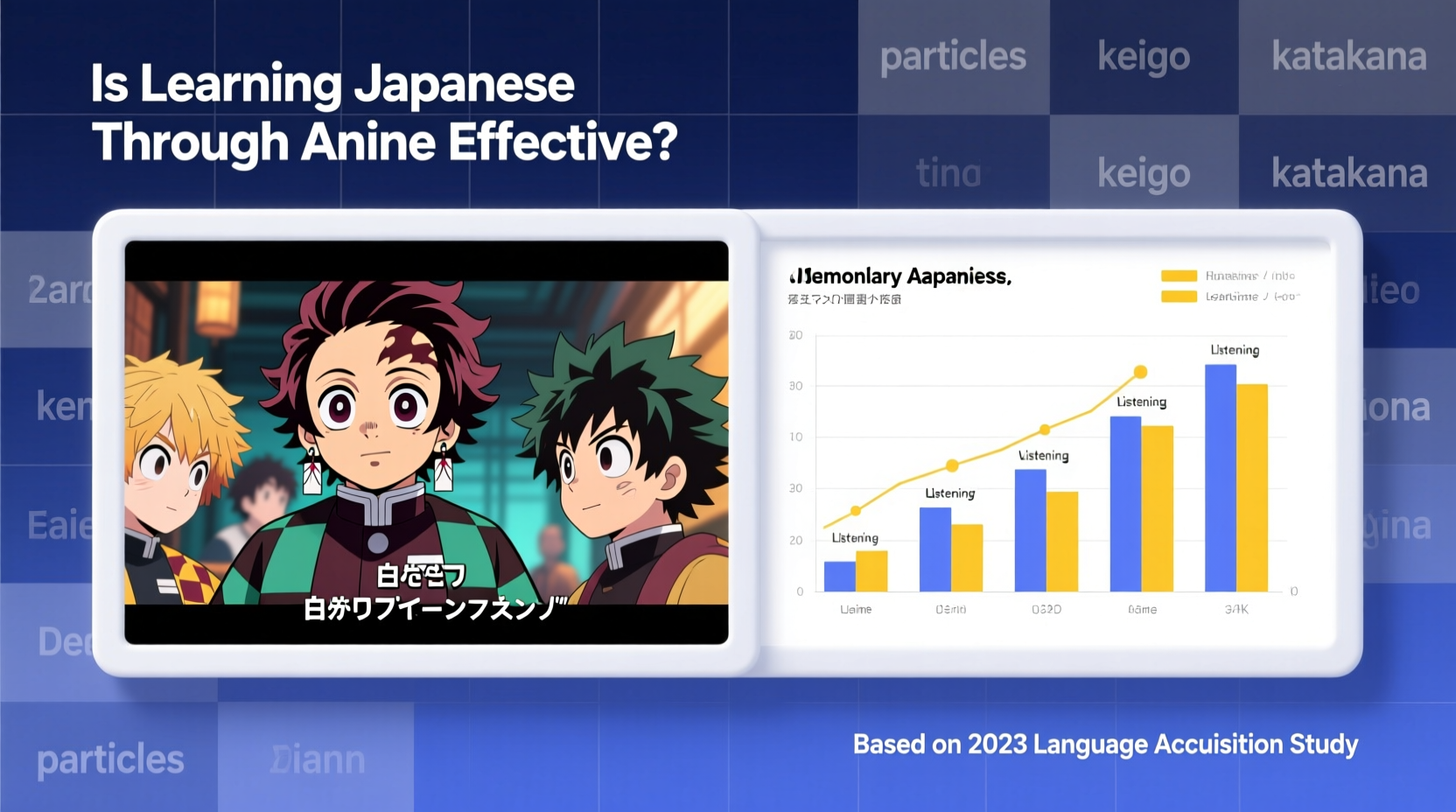
Anime offers an immersive experience unlike traditional textbooks. Learners are exposed to natural speech rhythms, colloquial expressions, and emotional intonation. Unlike scripted classroom dialogues, anime characters use contractions, slang, and honorifics in context—elements often missing from beginner curricula. For visual and auditory learners, this exposure can accelerate vocabulary retention and improve listening comprehension.
However, anime also presents challenges. Dialogue is often fast-paced, filled with homophones, puns, and culturally specific references. Characters may speak in non-standard dialects or use archaic forms for dramatic effect. Without proper scaffolding, beginners risk misunderstanding grammar structures or internalizing incorrect usage.
What Research Says About Media-Based Language Acquisition
Linguistic studies support the idea that consuming authentic media improves second-language proficiency. A 2020 study published in Language Learning & Technology found that learners who engaged with native audiovisual content showed significant gains in listening comprehension and lexical recall over six months compared to those using only textbook materials.
However, passive viewing yielded minimal results. The key differentiator was active engagement—using subtitles strategically, pausing to analyze sentences, and repeating phrases aloud. Another study from Osaka University observed that learners who combined anime with spaced repetition systems (SRS) like Anki improved kanji recognition by 37% over a semester.
“Authentic media doesn't replace structured learning—it amplifies it. The danger lies in mistaking exposure for mastery.” — Dr. Kenji Tanaka, Applied Linguist at Kyoto University
Pros and Cons of Learning Japanese Through Anime
To assess effectiveness, it's essential to weigh both benefits and limitations. Below is a comparative table outlining key factors.
| Aspect | Advantages | Drawbacks |
|---|---|---|
| Vocabulary Exposure | Introduces everyday and niche terms in context (e.g., ganbatte, betsu ni) | Overuse of exaggerated or fictional terms not used in real conversation |
| Pronunciation & Intonation | Models natural rhythm, pitch accent, and emotional tone | Some voice acting uses unnatural emphasis for dramatic effect |
| Cultural Context | Demonstrates social norms, politeness levels, and humor | Fantasy settings may distort real-world behavior and language use |
| Grammar Structures | Shows complex sentence patterns in action | Lacks explicit explanation; difficult to parse without prior knowledge |
| Motivation & Engagement | Highly motivating; encourages consistent daily exposure | Risk of treating it as pure entertainment rather than study material |
The data suggests that anime works best when integrated into a broader learning ecosystem—not as a standalone method.
A Realistic Case Study: From Fan to Fluent Speaker
Take the example of Maria Lopez, a university student from Spain who began studying Japanese after falling in love with Studio Ghibli films. Initially, she watched *My Neighbor Totoro* with English subtitles, picking up a few words like “Totoro” and “susuwatari.” Over time, she switched to Japanese audio with Japanese subtitles, using a browser extension to look up unknown kanji instantly.
Maria didn’t stop there. She created flashcards for new vocabulary, repeated dialogues aloud to practice pronunciation, and joined an online community where fans transcribed and analyzed scripts. After 18 months of combining anime with formal lessons and SRS apps, she passed the JLPT N3 exam. Today, she tutors others using curated anime clips as teaching tools.
Her success wasn’t due to anime alone—but because she transformed passive viewing into active learning.
How to Learn Japanese Effectively Using Anime: A Step-by-Step Approach
Using anime effectively requires intentionality. Follow this timeline to maximize language gains without wasting hours on passive consumption.
- Set a Clear Goal (Week 1)
Define what you want to achieve—improve listening skills, expand casual vocabulary, or understand fast speech. This guides your show selection and viewing strategy. - Choose the Right Anime (Week 2)
Select modern, slice-of-life series with realistic dialogue (*March Comes in Like a Lion*, *Barakamon*, *Non Non Biyori*). Avoid fantasy-heavy or mecha genres early on, as they use artificial language. - Use Subtitles Strategically (Ongoing)
Start with dual subtitles (Japanese + English), then transition to Japanese-only. Never watch with English-only subtitles if your goal is acquisition. - Watch Actively, Not Passively (Daily)
Pause every few minutes. Write down one new word or phrase. Replay lines and shadow (repeat aloud) to train pronunciation. - Create Personalized Flashcards (Weekly)
Add 5–10 new expressions from each episode to your SRS. Include audio clips if possible. - Review Grammar in Context (Biweekly)
When you hear a structure you don’t understand (e.g., 〜てしまう, 〜わけない), pause and research it. Use resources like Tae Kim’s Guide or Bunpro to fill gaps. - Speak What You Learn (Monthly)
Practice using new phrases in conversation exchanges via platforms like HelloTalk or iTalki. Say lines from anime aloud to build confidence.
Checklist: Optimize Your Anime Study Sessions
- ☐ Choose 1–2 anime aligned with your current level
- ☐ Use Japanese subtitles (never English-only)
- ☐ Limit sessions to 20–30 minutes for focused learning
- ☐ Take notes on new vocabulary and grammar
- ☐ Add at least 5 new words to your flashcard system weekly
- ☐ Shadow (repeat) short phrases to improve speaking fluency
- ☐ Re-watch key scenes without subtitles once per week
- ☐ Discuss episodes with other learners or native speakers
Common Pitfalls and How to Avoid Them
Many learners fall into traps that undermine progress. Recognizing these early can save months of frustration.
- Mistaking Comprehension for Fluency: Understanding 70% of a scene with subtitles doesn’t mean you can produce the language. Always balance input with output practice.
- Overreliance on Informal Speech: Anime characters often use casual or rude forms (ore, temee). Without balancing exposure to polite speech, learners may sound disrespectful in real interactions.
- Ignoring Kanji Literacy: Relying solely on kana subtitles prevents kanji recognition. Enable kanji-rich subtitles and use tools like Yomichan to hover-translate.
- Binge-Watching Without Review: Watching five episodes in a row leads to cognitive overload. Space out viewing and review material regularly.
Frequently Asked Questions
Can I become fluent in Japanese just by watching anime?
No. While anime provides valuable exposure, fluency requires structured grammar study, writing practice, speaking opportunities, and literacy development. Anime should complement—not replace—these elements.
Which anime are best for beginners?
Beginners benefit most from modern, everyday settings with clear dialogue. Recommended titles include:
• Shirokuma Cafe – slow-paced, humorous, uses varied speech levels
• Yuru Camp△ – relaxed conversations about hobbies and food
• Non Non Biyori – simple language with rural dialect exposure
Avoid early-stage shows like *Naruto* or *Attack on Titan*, which use complex vocabulary and fantastical terminology.
Should I watch with subtitles?
Yes—but use them wisely. Start with Japanese subtitles to connect sound and script. Gradually phase out subtitles as your listening improves. Avoid English subtitles after the beginner stage, as they encourage translation instead of direct comprehension.
Conclusion: Anime as a Catalyst, Not a Curriculum
Learning Japanese through anime is not a myth, nor is it a magic shortcut. When approached with discipline and strategy, anime becomes a dynamic tool for language acquisition—one that builds motivation, exposes learners to authentic speech, and deepens cultural understanding. But it must be paired with deliberate practice, vocabulary tracking, and grammar study to yield real results.
The most successful learners aren’t those who watch the most anime—they’re the ones who engage deeply with what they watch. They pause, reflect, repeat, and apply. They treat each episode not as escapism, but as a lesson disguised as entertainment.




 浙公网安备
33010002000092号
浙公网安备
33010002000092号 浙B2-20120091-4
Comments
No comments yet. Why don't you start the discussion?