
Micellar water has become a staple in skincare routines worldwide—praised for its gentle yet effective cleansing properties. It’s often marketed as a one-step solution for removing makeup, including stubborn waterproof formulas. But does it truly deliver on that promise? For those wearing long-wear mascara, smudge-proof eyeliner, or full-face waterproof foundation, the real question is: can micellar water stand alone, or is it merely the opening act in a proper double-cleansing routine?
The answer isn’t a simple yes or no—it depends on your skin type, the products you wear, and how thoroughly you cleanse. Understanding the science behind micellar water and the nature of waterproof makeup reveals why many dermatologists recommend treating it as a first step rather than a final solution.
How Micellar Water Works
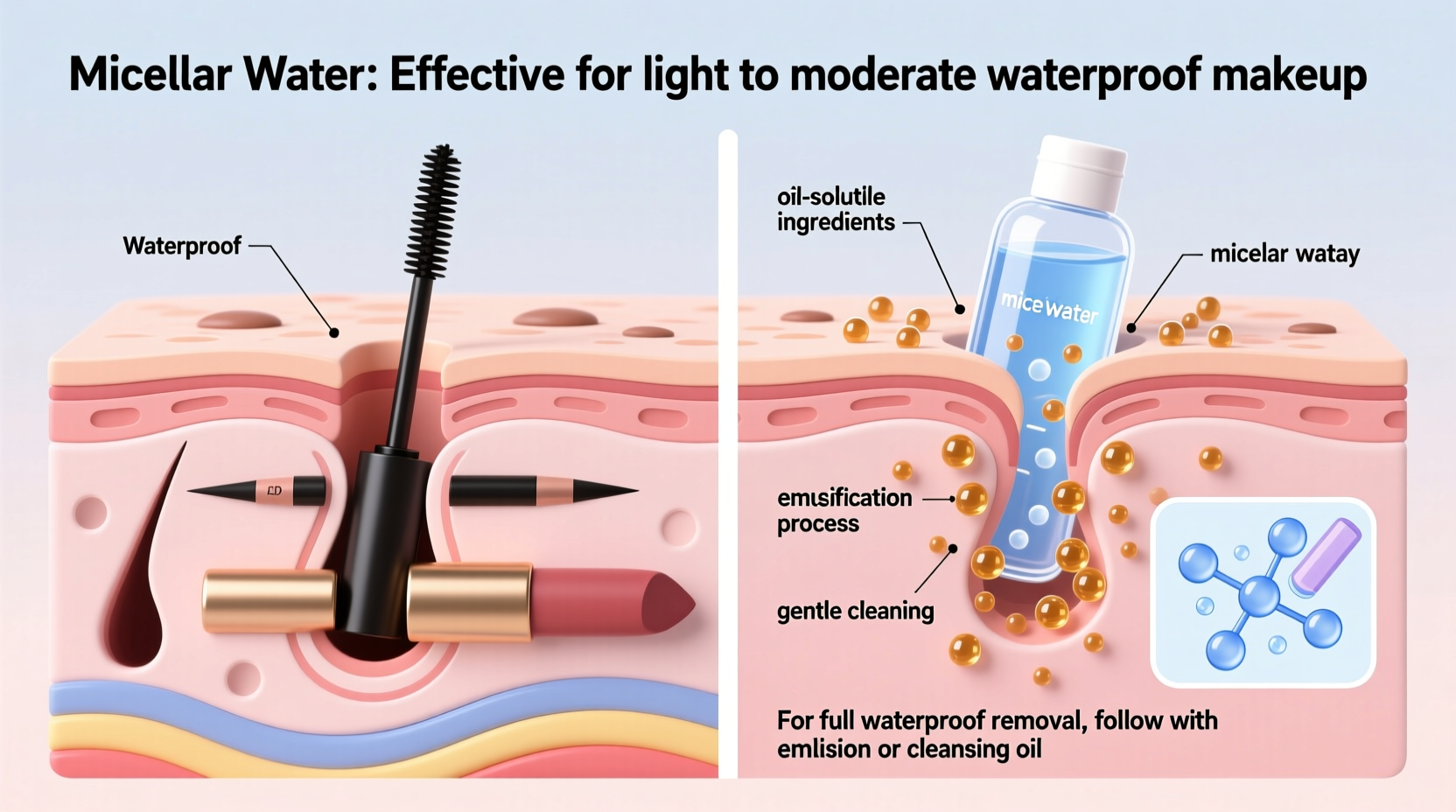
Micellar water contains tiny oil molecules called micelles suspended in soft water. These micelles act like magnets, attracting dirt, oil, and makeup without the need for harsh rubbing or rinsing. Because it’s formulated to be gentle, it’s especially popular among people with sensitive or dry skin who want to avoid stripping their natural moisture barrier.
However, while micelles are effective at lifting surface-level impurities, they don’t always penetrate deeply into pores or break down high-performance cosmetic polymers found in waterproof makeup. Waterproof products are specifically engineered to resist water, sweat, and tears—qualities that also make them resistant to quick wipe-offs with micellar water alone.
The Challenge of Waterproof Makeup
Waterproof makeup is formulated with film-forming agents such as acrylates, silicones, and waxes that create a durable, water-resistant layer on the skin. These ingredients are excellent for longevity but notoriously difficult to dissolve. Common examples include:
- Waterproof mascara: Often contains nylon fibers and flexible polymers that adhere tightly to lashes.
- Long-wear liquid eyeliner: Uses synthetic resins that dry into a flexible, smudge-proof film.
- Transfer-proof lip tint: Penetrates slightly into the top layer of lips, requiring more than surface wiping.
- Full-coverage waterproof foundation: May contain dimethicone or other silicones that repel water and resist removal.
Attempting to remove these products with micellar water alone often results in residue left behind—especially around the eyes and lips. Over time, this buildup can lead to clogged pores, irritation, or even milia (tiny keratin cysts).
“Micellar water is great for initial breakdown, but it rarely removes all traces of waterproof makeup. I always advise patients to follow up with a proper cleanser.” — Dr. Lena Patel, Board-Certified Dermatologist
Micellar Water: First Step or Final Solution?
In most cases, micellar water should be considered the first phase of a two-step cleansing process—especially when dealing with waterproof cosmetics. Here’s why:
Limited Emulsification Power
Unlike oil-based cleansers or balm cleansers, micellar water doesn’t emulsify effectively. Emulsification is the process where oils bind to makeup and turn into a washable mixture when combined with water. Without this, some waterproof components remain intact on the skin.
No Rinse, No Deep Clean
Because micellar water is typically used without rinsing, any residual makeup or dissolved oils stay on the skin unless wiped away completely—which is hard to achieve manually. A second, rinse-off cleanser ensures everything is washed away, reducing the risk of congestion.
Skin Type Considerations
While oily or acne-prone skin may suffer more from leftover residue, even dry or sensitive skin benefits from thorough cleansing. Leftover silicone or wax can form a barrier that prevents moisturizers from penetrating effectively.
| Cleansing Method | Effective on Waterproof Makeup? | Requires Rinsing? | Best For |
|---|---|---|---|
| Micellar Water Only | Limited – surface removal only | No | Light makeup, quick touch-ups |
| Micellar Water + Foaming Cleanser | Yes – complete removal | Yes (second step) | Oily, combination, acne-prone skin |
| Micellar Water + Oil Cleanser | Yes – dissolves all traces | Yes | Dry, sensitive, mature skin |
| Oil Cleanser Alone | Yes | Yes | All skin types, heavy makeup wearers |
Step-by-Step: How to Use Micellar Water Effectively
If you’re using micellar water as part of your routine, follow this proven method to maximize effectiveness and prevent residue buildup:
- Start with dry hands and face. Applying micellar water to a damp face reduces its ability to attract oil-based impurities.
- Saturate a cotton pad until it’s moist but not dripping. Avoid oversaturating, which wastes product and increases runoff.
- Press and hold on stubborn areas. Place the pad over closed eyes or lips for 15–20 seconds to loosen waterproof formulas before gently wiping.
- Use upward motions on the face to lift debris without tugging delicate skin.
- Flip the pad frequently to ensure you’re not reapplying removed makeup.
- Follow with a rinse-off cleanser. Choose an oil, balm, gel, or foam based on your skin type.
- Rinse thoroughly with lukewarm water and pat dry with a clean towel.
Real-World Example: The Late-Night Makeup Removal Struggle
Sophie, a 32-year-old marketing executive, wears full-coverage, waterproof makeup daily for client meetings and events. After a long day, she often relies solely on micellar water to remove her makeup, believing it’s “gentle and convenient.”
Over several months, she began noticing small bumps along her cheekbones and frequent breakouts near her hairline. Upon visiting a dermatologist, she learned that residual makeup and sunscreen were building up due to incomplete cleansing. The doctor explained that while micellar water lifted the top layer, it didn’t fully clear silicones and SPF filters embedded in her pores.
After switching to a double-cleansing routine—micellar water first, followed by a hydrating cream cleanser—her skin cleared within three weeks. She now swears by the two-step method, even on tired nights.
“Double cleansing isn’t about over-cleaning—it’s about ensuring nothing harmful stays on your skin overnight.” — Dr. Anika Rao, Cosmetic Dermatologist
When Micellar Water Might Be Enough
There are specific scenarios where micellar water alone can suffice:
- Light, non-waterproof makeup: Tinted moisturizer, blush, and powder can usually be removed with micellar water.
- Quick refresh during the day: Ideal for blotting excess oil or removing light smudging without disrupting your routine.
- Sensitive skin avoiding water: In cold climates or post-procedure care, micellar water offers a low-irritant option.
- Travel or emergency situations: When access to running water is limited, it’s a practical alternative.
Even in these cases, a follow-up with a moisturizer or toner helps restore balance. However, if you’ve worn SPF or any long-wear product, a second cleanse remains advisable.
Checklist: Are You Using Micellar Water Correctly?
Use this checklist to evaluate your current routine:
- ✅ Do you apply micellar water to dry skin?
- ✅ Do you press and hold on eyes/lips before wiping?
- ✅ Are you using a fresh side of the cotton pad for each area?
- ✅ Do you follow up with a rinse-off cleanser when wearing waterproof makeup?
- ✅ Do you rinse your face after the second cleanser?
- ✅ Do you moisturize afterward to maintain barrier health?
If you answered “no” to any of the last three questions, your cleansing routine may need adjustment.
Frequently Asked Questions
Can I leave micellar water on my skin without rinsing?
You can, but it’s not ideal when used as the sole cleanser—especially with waterproof makeup. Residual surfactants and dissolved oils may disrupt your skin barrier or cause clogged pores over time. If you skip rinsing, follow immediately with serums and moisturizers to buffer any potential irritation.
Is double cleansing necessary every night?
It depends on what you’ve worn. If you used only sunscreen and light makeup, a single gentle cleanser may be sufficient. But if you wore waterproof mascara, long-wear foundation, or heavy SPF, double cleansing is strongly recommended to prevent buildup and maintain skin clarity.
Does micellar water expire once opened?
Most micellar waters have a shelf life of 6–12 months after opening, indicated by the \"period after opening\" symbol (an open jar) on the packaging. Using expired product increases the risk of bacterial contamination and reduced efficacy.
Final Thoughts: Balance Between Convenience and Thoroughness
Micellar water is a valuable tool in modern skincare—a quick, accessible way to begin breaking down makeup and grime. Its popularity is well-earned, particularly for those seeking a low-effort, non-abrasive option. However, positioning it as a standalone solution for waterproof makeup sets unrealistic expectations.
Think of micellar water as the pre-cleanse: it loosens bonds, lifts surface debris, and prepares the skin for deeper cleansing. The second step—whether oil, balm, or foaming cleanser—completes the job by washing away what micelles can’t capture alone.
Your skin invests in protection throughout the day; give it equal care at night. Removing every trace of makeup isn’t vanity—it’s hygiene. Just as you wouldn’t brush your teeth once and call it done, your face deserves a complete cleanse to stay healthy, clear, and resilient.




 浙公网安备
33010002000092号
浙公网安备
33010002000092号 浙B2-20120091-4
Comments
No comments yet. Why don't you start the discussion?