
For many people struggling with thin or patchy eyebrows, microblading offers a tempting solution: natural-looking, semi-permanent brows that enhance facial symmetry and reduce daily makeup effort. But as with any cosmetic procedure, the decision isn’t just about immediate results—it’s about longevity, maintenance, and cost over time. If you're considering microblading for sparse eyebrows, understanding the real long-term value is essential. This article breaks down the lasting effects, recurring expenses, and practical considerations so you can determine whether microblading truly delivers on its promises.
How Microblading Works: A Quick Overview
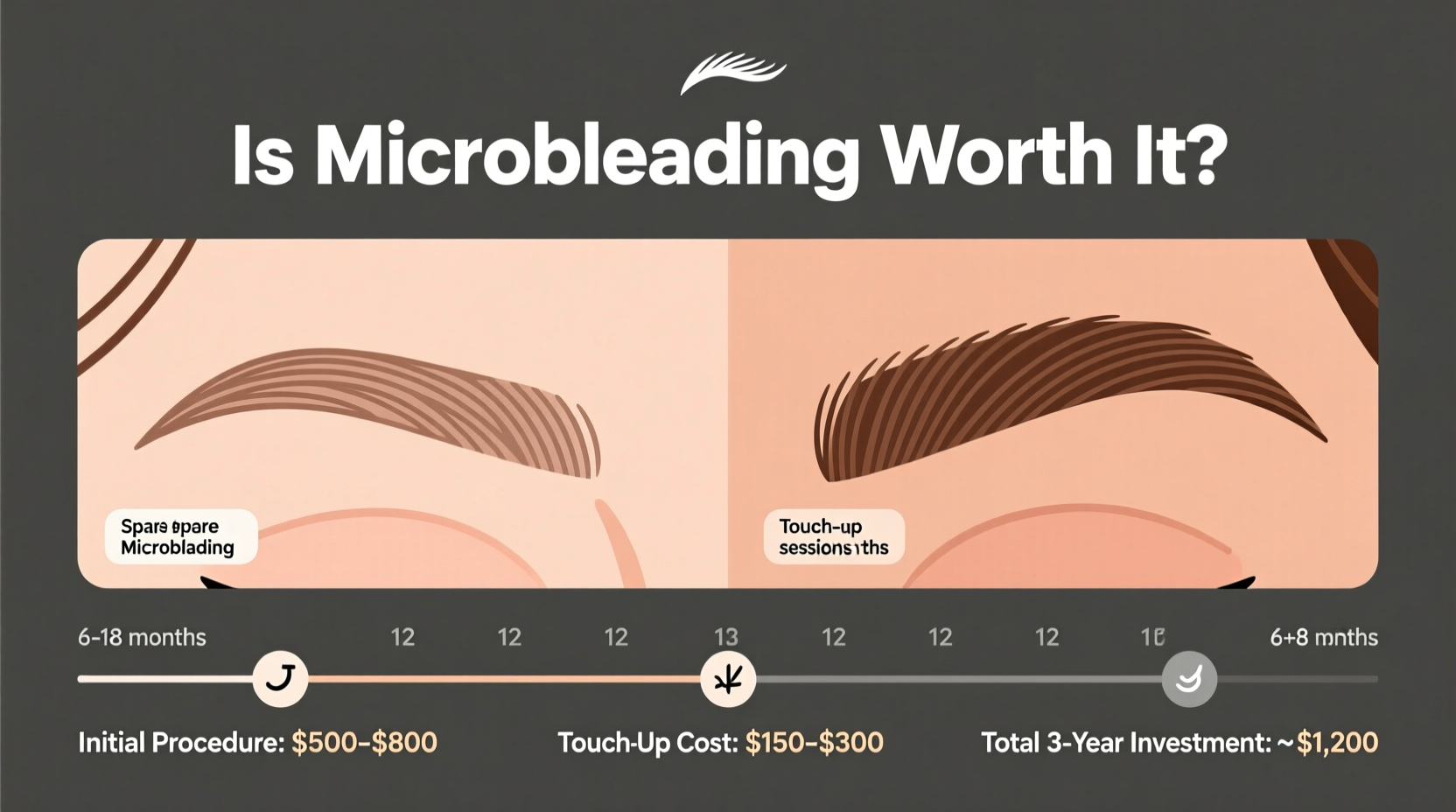
Microblading is a form of cosmetic tattooing where a licensed technician uses a handheld tool with fine needles to deposit pigment into the upper layers of the skin. Unlike traditional eyebrow tattoos that fill in the entire brow area, microblading creates individual hair-like strokes that mimic natural brow hairs. The result is fuller, more defined eyebrows tailored to your face shape and desired thickness.
The process typically involves two sessions: the initial application and a follow-up touch-up 4–6 weeks later. Healing takes about 7–10 days, during which the brows may appear darker and slightly scabbed before fading to a softer, more natural tone.
While results vary based on skin type, aftercare, and technician skill, most clients enjoy enhanced brows for 12 to 18 months—sometimes longer—before needing a refresh.
Long-Term Results: Do Brows Stay Natural-Looking Over Time?
One of the biggest concerns for potential clients is how microbladed brows age. While the initial results are often strikingly realistic, long-term outcomes depend heavily on several factors:
- Skin Type: Oily skin tends to break down pigment faster, leading to blurrier strokes and shorter retention.
- Aftercare: Proper post-procedure care—including avoiding moisture, sun, and exfoliants—preserves pigment integrity.
- Lifestyle: Frequent tanning, swimming, or use of retinoids can accelerate fading.
- Technician Skill: Poor technique can lead to unnatural angles, color shifts (e.g., blue or gray tones), or scar tissue.
Over time, microbladed brows don't disappear completely but gradually fade. Without touch-ups, they may become patchy or take on a softer, powdered appearance rather than crisp hair strokes. Some clients report their brows still look better than pre-procedure even after two years—just lighter.
“Microblading isn’t permanent, but it’s not temporary either. Think of it as a 1–3 year commitment with periodic upkeep.” — Dana Reyes, Certified Permanent Makeup Artist and Trainer
Touch-Up Costs: What to Expect Financially
Understanding the financial commitment beyond the initial session is crucial. Most reputable clinics include one touch-up within 6–8 weeks of the first appointment, but ongoing maintenance is extra.
Here’s a breakdown of typical pricing and frequency:
| Service | Average Cost (USD) | Frequency | Notes |
|---|---|---|---|
| Initial Microblading Session | $400–$800 | One-time | Includes one touch-up in most cases |
| Color Boost / Refresh | $200–$400 | Every 12–18 months | Restores faded pigment and sharpness |
| Correction Work | $300–$600+ | As needed | Fixes asymmetry, discoloration, or poor shaping |
| Annual Maintenance Average | $150–$300 | Per year | Based on biennial touch-ups |
Over five years, total investment can range from $700 to $1,500+, depending on skin retention and aesthetic goals. Compare this to daily brow pencils, powders, or gels, which might cost $200–$400 annually when factoring in high-end products and frequent replacements.
While microblading has a higher upfront cost, long-term savings are possible—especially for those who spend significant time and money on daily brow grooming.
Mini Case Study: Sarah’s Experience After Two Years
Sarah, a 34-year-old marketing professional with naturally sparse brows due to over-plucking in her teens, decided to try microblading after years of relying on pencils and powders. She paid $650 for her initial session, including a touch-up.
At the 6-month mark, her brows remained crisp and well-defined. By month 14, she noticed slight fading along the tail ends and scheduled a color boost for $325. Her technician adjusted the shape slightly to suit her matured preferences and refreshed the pigment.
Now approaching her third year, Sarah reports that even without another touch-up, her brows still provide enough definition to go makeup-free on casual days. “It’s not as sharp as right after the procedure,” she says, “but I’d say it’s like having lightly filled-in brows all the time. For me, that’s worth every penny.”
Her total investment: $975 over nearly three years—an average of $325 per year. Compared to her previous annual brow product spending of around $300 plus daily application time, she considers it a net gain in both convenience and confidence.
When Microblading May Not Be Worth It
Despite its popularity, microblading isn’t ideal for everyone. Certain conditions and expectations can make the procedure less effective or even problematic in the long run.
Skin Conditions That Affect Results
- Oily Skin: Excess sebum can cause pigment to spread or blur, turning hair-like strokes into smudged lines.
- Acne-Prone or Sensitive Skin: Inflammation near the brow area increases risk of infection or poor healing.
- Keloid Tendency: Individuals prone to raised scarring should avoid microblading due to potential complications.
- Mature, Thin Skin: Older skin may not hold pigment well and can lead to patchy results.
Unrealistic Expectations
Some clients expect microblading to last forever or look identical to a full makeup application every day. The reality is subtler. Microblading enhances what’s there—it doesn’t replace makeup entirely for special occasions. Those seeking bold, dramatic brows may be disappointed unless combined with powder shading techniques (often called “ombre brows” or “hybrid brows”).
Risk of Poor Technique
Not all technicians are equally skilled. Choosing an unlicensed or inexperienced artist increases the risk of:
- Incorrect brow mapping leading to asymmetry
- Use of incorrect pigment shades that turn blue or gray
- Painful procedures due to improper numbing
- Infection from unsterile tools
Always verify credentials, review portfolios, and insist on a patch test before proceeding.
Step-by-Step Guide to Making the Right Decision
Before committing to microblading, follow this practical timeline to ensure you’re making an informed choice:
- Research Licensed Artists: Look for certified professionals with verifiable training and hygiene standards. Check Google Reviews, Instagram portfolios, and Better Business Bureau ratings.
- Schedule a Consultation: Discuss your brow goals, skin type, and medical history. A good technician will assess your suitability and explain realistic outcomes.
- Undergo a Patch Test: Ensures you don’t react to pigments or numbing agents.
- Plan for Downtime: Book your procedure at least two weeks before major events to allow for healing.
- Follow Aftercare Instructions: Use only recommended ointments, avoid water contact, and resist touching the area.
- Attend Your Touch-Up: Don’t skip the second session—it’s critical for refining shape and ensuring even pigment retention.
- Monitor Fading: Track how your brows change over 12 months. Schedule a refresh when definition starts to soften significantly.
Frequently Asked Questions
Does microblading ruin your natural eyebrow hair?
No, microblading does not damage existing hair follicles. The pigment is deposited in the upper dermis, above the level where hair grows. However, chronic trauma from repeated poor procedures could potentially affect hair growth, though this is rare with proper technique.
Can you go completely natural after microblading fades?
Yes. Once fully faded, your brows return to their original state. Any residual pigment is usually faint and blends into the skin. You can choose to let them grow out naturally or continue with traditional makeup.
Are touch-ups mandatory?
Not mandatory, but highly recommended if you want to maintain the full, defined look. Skipping touch-ups means accepting gradual fading and potential unevenness. Some people prefer this soft, “no-makeup” effect and intentionally space out visits.
Checklist: Is Microblading Right for You?
- ✅ You have sparse or uneven brows due to genetics, over-plucking, or medical reasons
- ✅ You spend 5+ minutes daily filling in your brows
- ✅ You’re willing to invest $400–$800 upfront and $200–$400 every 1–2 years
- ✅ You don’t have oily or acne-prone skin in the brow area
- ✅ You’ve researched and selected a licensed, experienced technician
- ✅ You’re comfortable with semi-permanent results that require maintenance
- ❌ You expect lifelong results without upkeep
- ❌ You’re allergic to pigments or have active skin infections
Final Verdict: Is It Worth It?
For many individuals with sparse eyebrows, microblading is absolutely worth it—not because it’s permanent, but because it offers a meaningful improvement in daily convenience, self-confidence, and appearance with manageable upkeep. The long-term results are generally positive when performed by a qualified artist and supported by proper aftercare.
The touch-up costs, while recurring, are often less than the cumulative expense of high-quality brow products and salon visits over the same period. More importantly, the time saved each morning and the psychological boost of waking up with polished brows cannot be easily quantified.
However, success hinges on realistic expectations, skin compatibility, and choosing the right professional. Done poorly, microblading can lead to regret, costly corrections, or prolonged dissatisfaction. Done well, it becomes a seamless part of your beauty routine—one that pays dividends in ease and elegance for years.




 浙公网安备
33010002000092号
浙公网安备
33010002000092号 浙B2-20120091-4
Comments
No comments yet. Why don't you start the discussion?