
If you spend time every morning filling in your eyebrows with pencils, powders, or gels, you're not alone. For many, brows are a non-negotiable part of their routine—framing the face, enhancing symmetry, and boosting confidence. But what happens when that daily ritual starts feeling like a chore? Enter microblading: a semi-permanent cosmetic tattooing technique that promises fuller, defined brows with minimal effort. The question is, if you’re already committed to brow maintenance, does microblading offer enough value to justify the cost, downtime, and commitment?
The answer isn’t a simple yes or no. It depends on your lifestyle, skin type, expectations, and how much you value long-term convenience over short-term control. Let’s break down the realities of microblading for someone who already has a solid brow-filling habit.
Understanding Microblading: What It Is (and Isn’t)
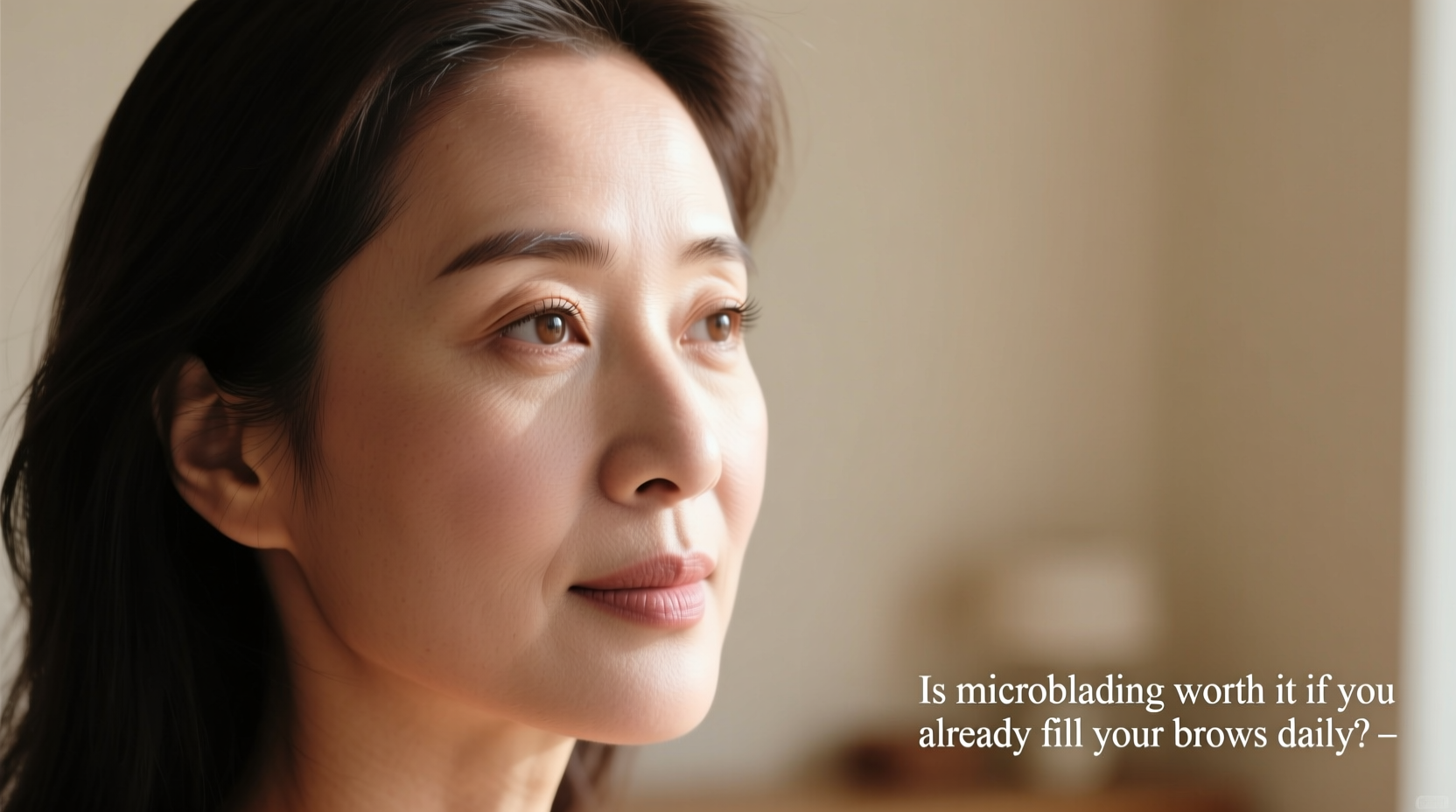
Microblading is a form of cosmetic tattooing where a technician uses a handheld tool with fine needles to deposit pigment into the upper layers of the skin, creating hair-like strokes that mimic natural eyebrow hairs. Unlike traditional tattooing, which goes deeper and lasts permanently, microblading is semi-permanent, typically lasting 12 to 18 months before fading significantly.
It’s important to clarify what microblading doesn’t do. It won’t drastically change your brow shape beyond subtle enhancements. It won’t work miracles on completely bare brows without some existing hair structure. And it won’t eliminate the need for all maintenance—just reduce it.
For someone who already fills their brows daily, microblading isn’t about starting from scratch. It’s about refining what you already do, reducing time spent in front of the mirror, and achieving a more consistent look—even on days when you skip makeup.
When Microblading Makes Sense for Daily Fillers
You might be thinking: “If I’m already good at filling my brows, why invest in microblading?” The truth is, consistency in your current routine doesn’t negate the appeal of long-term efficiency. Here are scenarios where microblading delivers clear value—even for skilled makeup users:
- You want a wake-up-ready look. Imagine rolling out of bed and still having defined, symmetrical brows. No smudged pencil after sweating, no asymmetry due to rushed application.
- Your skin type makes makeup slide off. Oily or combination skin can cause brow products to fade by midday. Microblading provides a base that stays put regardless of sebum production.
- You travel frequently or lead an active lifestyle. Whether you’re hiking, swimming, or just hate reapplying makeup, microbladed brows withstand moisture and movement far better than cosmetics.
- You’re concerned about aging or thinning brows. As we age, brows naturally thin. Microblading can restore density and prevent future gaps from becoming more noticeable.
As celebrity esthetician and brow specialist Lina Yanchuk explains:
“Even the most meticulous makeup wearers come to me for microblading because they want freedom. Freedom from reapplying, from checking mirrors, from worrying about sweat or water. It’s not about replacing skill—it’s about upgrading convenience.” — Lina Yanchuk, Certified Brow Technician & Educator
Cost vs. Time: The Real Investment Breakdown
Let’s compare the tangible investments: money versus time. Microblading typically costs between $400 and $800 for the initial session, plus a touch-up 6–8 weeks later. After that, you’ll likely need a refresh every 12–18 months, costing $200–$400 depending on location and artist.
Now consider your current routine. If you use a quality brow pencil ($25), powder ($30), and setting gel ($20) and replace them every 6–8 months, that’s roughly $110–$150 per year. Add in the value of your time: if you spend 5 minutes daily on brows, that’s 30 hours per year. At even $15/hour in personal time valuation, you’re investing $450 annually in labor alone.
| Factor | Microblading (Year 1) | Daily Filling (Year 1) |
|---|---|---|
| Product Cost | $0 (after procedure) | $110–$150 |
| Time Spent | 3 hours (consultation + sessions) | 30 hours |
| Cash Outlay | $600 (avg.) | $110–$150 |
| Ongoing Maintenance | Touch-up at 12–18 months | Daily application |
By year two, assuming one touch-up, microblading averages $400–$600, while daily filling continues at $110–$150 plus another 30 hours of time. Over three years, the total investment evens out—but microblading gives you back hundreds of minutes and eliminates daily decision fatigue.
A Real-Life Example: Sarah’s Decision Journey
Sarah, a 34-year-old marketing director, had filled her brows daily for over a decade. She was skilled—her arches were always crisp, her shading soft. But she hated the morning rush, especially on gym days when her brows would smear during spin class. She also noticed her brows were thinning slightly along the tails, making daily filling more time-consuming.
After researching microblading, she consulted with a licensed technician. The artist mapped her ideal shape based on facial symmetry and recommended a soft, natural enhancement—not a dramatic change. Sarah agreed.
The first session took two hours. There was mild discomfort, but nothing unbearable. After healing (about 10 days of flaking and darkening), her brows looked fuller and more defined. She still uses a light powder on high-makeup days, but on casual or active days, she skips brows entirely—and still feels polished.
“I didn’t think I needed microblading,” Sarah said. “But now that I have it, I can’t imagine going back. I save time, feel more confident with zero makeup, and my brows look better than I ever drew them.”
Her experience highlights a key insight: microblading isn’t just for people who struggle with brows. It’s for anyone who wants to optimize their routine and reduce dependency on cosmetics—even if they’re already good at using them.
What to Expect: Healing, Longevity, and Maintenance
Understanding the process is crucial. Microblading isn’t a “set it and forget it” solution. Here’s a realistic timeline:
- Consultation (1 week before): Discuss shape, color, and expectations. Avoid blood thinners, alcohol, and retinoids for 48–72 hours prior.
- First Session (2–3 hours): Numbing cream applied, then pigment implanted stroke by stroke. Brows appear darker immediately.
- Days 1–7 (Healing Phase): Brows will scab and flake. Avoid water, sweat, and picking. Use aftercare ointment as directed.
- Days 8–14: Flaking completes. Color fades by 30–50%. Final result emerges.
- Touch-Up (6–8 weeks later): Refines strokes, adjusts color, ensures longevity.
- Ongoing Care: Use SPF on brows to prevent fading. Schedule refresh appointments every 12–18 months.
Longevity varies. People with oily skin may see faster fading, as excess sebum pushes pigment out. Dry skin tends to hold pigment longer. Sun exposure, chemical exfoliants (like glycolic acid), and improper aftercare also accelerate fading.
“Microblading is not permanent, and that’s intentional. Skin changes, styles evolve, and pigment technology improves. Semi-permanence allows for adjustments over time.” — Dr. Alicia Nguyen, Dermatologist & Cosmetic Advisor
Checklist: Is Microblading Right for You?
Before booking, ask yourself these questions:
- ✅ Do I spend 3+ minutes daily on my brows?
- ✅ Am I frustrated by makeup fading during workouts or humid weather?
- ✅ Do I have realistic expectations about results (natural enhancement, not perfection)?
- ✅ Can I commit to aftercare for 10–14 days post-procedure?
- ✅ Have I researched and vetted a licensed, experienced artist with healed photo examples?
- ✅ Am I prepared for potential touch-ups and annual maintenance costs?
If you answered “yes” to most of these, microblading could be a worthwhile upgrade—even if you’re already great at filling your brows.
Frequently Asked Questions
Will I still need to fill my brows after microblading?
Most people still use light makeup occasionally, especially for full glam looks. However, the need is reduced. Many go makeup-free on casual days and only use powder or gel for special events. The microbladed base ensures you never start from scratch.
Can microblading ruin my natural brow hair?
No, when performed correctly, microblading doesn’t damage hair follicles. The pigment is deposited in the upper dermis, above the follicle root. However, poor technique or infection could cause trauma, so choosing a qualified artist is critical.
What if I don’t like the results?
Unlike permanent tattoos, microbladed pigment fades over time. Most issues—like unevenness or wrong color—can be corrected during the touch-up session. In rare cases, laser removal or corrective pigments may be needed, but these should be last resorts.
Final Thoughts: Elevating Your Routine, Not Replacing It
Microblading isn’t about admitting defeat in your brow game. It’s about leveraging modern aesthetics to enhance what you already do well. If you’re someone who values precision, symmetry, and a put-together appearance, microblading offers a smarter, more sustainable foundation.
Think of it like upgrading from hand-washing dishes to owning a dishwasher. You’re already good at the task, but automation frees up time, energy, and mental space. The results aren’t radically different—they’re just consistently better, with less effort.
For daily brow fillers, microblading isn’t a necessity. But for those seeking efficiency, durability, and confidence in their natural look, it’s often worth every penny and minute invested.




 浙公网安备
33010002000092号
浙公网安备
33010002000092号 浙B2-20120091-4
Comments
No comments yet. Why don't you start the discussion?