
For people with curly hair, managing frizz and preserving curl definition are daily challenges. One of the most debated steps in a curly hair care routine is post-wash drying—specifically, whether using a microfiber towel helps or harms curls. While many swear by microfiber towels as a gentler alternative to cotton, others report increased frizz and disruption of curl patterns. The truth lies not in the material alone but in how it's used. Understanding the science behind hair texture, friction, and moisture retention reveals that microfiber can be an excellent tool—if applied correctly.
The Science of Curly Hair and Friction
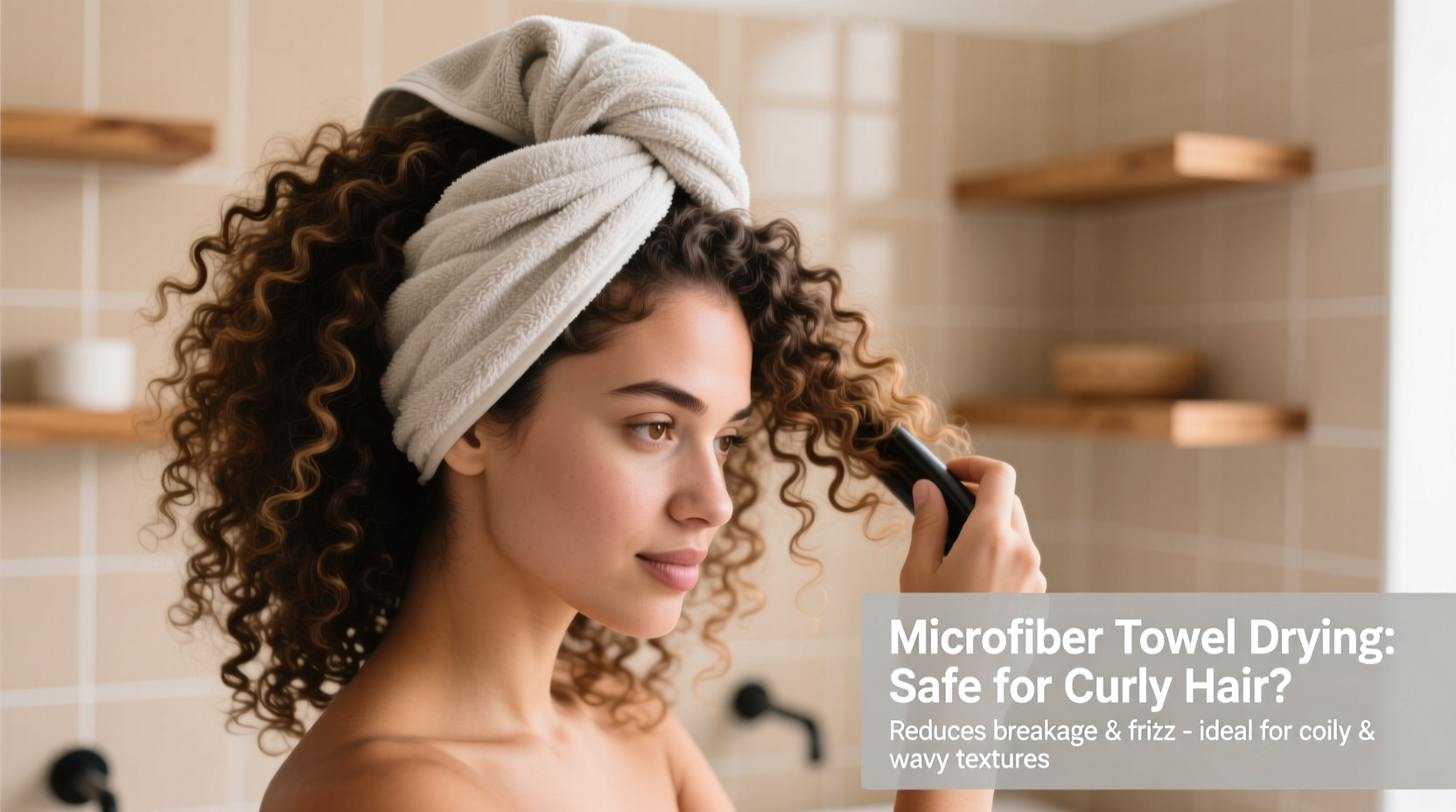
Curly hair has a unique structure. Unlike straight hair, which typically has a symmetrical cuticle layer, curly strands often have raised cuticles due to their natural shape. This makes them more porous and vulnerable to external damage, especially from friction. When wet, hair swells and becomes up to 15 times more fragile than when dry. Aggressive rubbing with any fabric—even soft ones—can lift the cuticle, leading to roughness, split ends, and frizz.
Traditional cotton towels are highly absorbent but also abrasive. Their looped fibers catch onto delicate curls, disrupting their formation and creating tangles. Microfiber, on the other hand, is engineered to be smoother and less damaging. Made from ultra-fine synthetic threads (usually polyester and polyamide), microfiber towels absorb water quickly while minimizing surface drag. This reduces mechanical stress on curls during drying.
“Microfiber is significantly less abrasive than cotton. For curly textures, this means less cuticle disruption and better curl clumping.” — Dr. Linette Williams, Trichologist and Hair Texture Specialist
How Microfiber Towels Work: Benefits and Misconceptions
The popularity of microfiber towels among curly-haired individuals stems from several key advantages:
- High absorption with low friction: Microfiber pulls moisture from hair faster than cotton without requiring vigorous rubbing.
- Reduced tangling: The smooth surface glides over curls instead of snagging them.
- Faster drying time: Less time spent with damp hair exposed to air reduces hygral fatigue (damage caused by repeated swelling and shrinking).
- Improved product retention: Gentle drying helps maintain styling product distribution, enhancing curl definition.
Despite these benefits, some users report increased frizz after switching to microfiber. This contradiction often comes down to technique rather than material flaws. Many people still use microfiber towels like traditional ones—wrapping hair tightly and twisting or scrunching aggressively. Even a soft fabric can cause frizz if misused.
Best Practices for Drying Curly Hair with Microfiber
To maximize the benefits of microfiber and avoid unnecessary frizz, follow a methodical approach:
- Squeeze out excess water first: After rinsing, gently press sections of your hair between your palms to remove bulk moisture before touching any towel.
- Use a large microfiber towel or T-shirt: A bigger surface area allows you to cover more hair without tight wrapping.
- Plop for 10–20 minutes: Lay the towel flat, tilt your head forward, place your curls in the center, then bring the sides up around your head. Let gravity draw moisture away without disturbing curl formation.
- Blot, don’t twist: After plopping, lightly blot remaining dampness by pressing the towel against your hair. Avoid twisting or wringing.
- Apply products immediately: Seal in moisture right after drying with leave-in conditioner or curl cream while hair is still slightly damp.
Timing matters. Prolonged plopping beyond 20 minutes may lead to uneven drying or flattened roots. Similarly, leaving hair too wet before styling increases drying time and potential for shrinkage-related tension.
Microfiber vs. Alternatives: A Practical Comparison
Not all drying methods are created equal. Below is a comparison of common options based on frizz control, absorption speed, ease of use, and impact on curl definition.
| Method | Absorption Speed | Frizz Risk | Curl Definition Impact | Best For |
|---|---|---|---|---|
| Cotton Towel | Fast | High | Negative – disrupts clumps | Thick, coarse textures needing high absorption |
| Microfiber Towel | Very Fast | Low (if used properly) | Positive – preserves clumping | All curl types, especially fine to medium |
| Cotton T-Shirt | Moderate | Low | Neutral to Positive | Beginners learning gentle drying |
| Leave-In Air Dry | Slow | Variable | Depends on environment | Low-manipulation routines |
| Dryer with Diffuser | Fast | Low (with proper technique) | Positive – enhances volume | Defined curls needing lift |
While microfiber ranks highly across categories, its performance depends heavily on user behavior. Those who rush the process or apply pressure will negate its structural advantages.
Mini Case Study: Transforming a Frizz-Prone Routine
Maya, a 32-year-old with 3C curls, struggled with inconsistent results despite using sulfate-free shampoos and curl-defining gels. Her wash days often ended in frustration: well-defined curls at the crown would dissolve into frizz toward the nape. Upon reviewing her routine, she realized she was using a small microfiber towel, wrapping her hair tightly, and twisting it into a turban overnight—a habit carried over from her cotton towel days.
After switching to a larger microfiber towel and adopting the plopping method for only 15 minutes, followed by air drying with minimal touch, her results improved dramatically. Within two weeks, she noticed tighter clumping, reduced frizz, and longer-lasting definition. “I thought I needed a new product,” she said. “But really, I just needed to stop treating my curls like they were straight hair.”
Avoiding Common Mistakes That Cause Frizz
Even with the right tools, poor habits can undermine your efforts. Here are frequent errors that turn microfiber drying into a frizz trigger:
- Using worn-out microfiber: Over time, microfiber degrades and becomes scratchy. Replace towels every 6–12 months or when they feel rough.
- Wringing or twisting hair: This breaks curl clumps and stretches delicate coils, inviting frizz.
- Drying hair completely before styling: Applying products to soaking-wet hair ensures even distribution. Waiting until hair is half-dry limits effectiveness.
- Ignoring water quality: Hard water leaves mineral deposits that increase porosity and frizz. Consider a chelating shampoo monthly if you live in a hard-water area.
- Skipping a pre-plop conditioner: A light detangling rinse-out conditioner helps smooth the cuticle before drying begins.
Expert-Backed Checklist for Safe Microfiber Drying
Follow this checklist to ensure your microfiber towel enhances, rather than hinders, your curly hair health:
- Choose a high-quality, non-abrasive microfiber towel (or oversized T-shirt as backup).
- Detangle gently with fingers or a wide-tooth comb under water before exiting the shower.
- Squeeze out excess water—do not rub.
- Lay the towel flat, position your hair in the center, and wrap gently around your head (plopping).
- Limit plopping time to 10–20 minutes.
- Remove and lightly blot any remaining moisture.
- Apply leave-in conditioner, gel, or cream to damp hair immediately.
- Air dry or diffuse on low heat/cool setting.
- Never sleep with wet hair wrapped in any fabric—this causes breakage and frizz.
- Wash your towel regularly in warm water without softener.
Frequently Asked Questions
Can microfiber towels cause hair breakage?
When used correctly, microfiber towels are less likely to cause breakage than cotton. However, aggressive rubbing, tight wrapping, or using degraded towels can still lead to mechanical damage. Always handle wet curls with care, regardless of towel type.
Is there a difference between microfiber towels and \"curly girl approved\" brands?
Many curly girl-friendly brands use ultra-soft, finely woven microfiber designed specifically for textured hair. These often have a silkier feel and larger size for effective plopping. While standard microfiber works, specialty versions may offer enhanced comfort and performance.
Should I use a microfiber towel every time I wash my hair?
Yes, if it fits your routine. Consistent use of a gentle drying method supports long-term curl health. However, if your hair is only damp (e.g., after refreshing), a light blot with a cotton T-shirt may suffice to avoid over-absorption.
Conclusion: Mastering the Balance Between Dryness and Definition
Microfiber towel drying is not inherently harmful to curly hair—it’s one of the safest and most effective methods available. The key lies in technique. When used with intention, microfiber minimizes friction, speeds drying, and supports curl formation. But like any tool, its value depends on how you wield it.
By replacing old habits with informed practices—gentle plopping, timely product application, and consistent maintenance—you transform a simple towel into a cornerstone of frizz-free, defined curls. Curly hair thrives on consistency and care, and your drying method should reflect that philosophy.




 浙公网安备
33010002000092号
浙公网安备
33010002000092号 浙B2-20120091-4
Comments
No comments yet. Why don't you start the discussion?