
If you’ve recently introduced both niacinamide and retinol into your skincare routine and are now dealing with redness, dryness, or stinging sensations, you’re not alone. These two powerhouse ingredients—niacinamide, a form of vitamin B3 known for calming inflammation and strengthening the skin barrier, and retinol, a derivative of vitamin A celebrated for its anti-aging and acne-fighting benefits—are often recommended together. Yet, when used incorrectly, they can trigger irritation that makes users question whether they’re truly compatible.
The good news is that niacinamide and retinol don’t inherently clash. In fact, research suggests they can complement each other when applied properly. The issue usually lies not in the ingredients themselves, but in how they’re layered, how frequently they’re used, and whether your skin has been given time to acclimate. Understanding the science behind their interaction and mastering the correct application technique can transform an irritating experience into a smooth, effective regimen.
Understanding Niacinamide and Retinol: How They Work
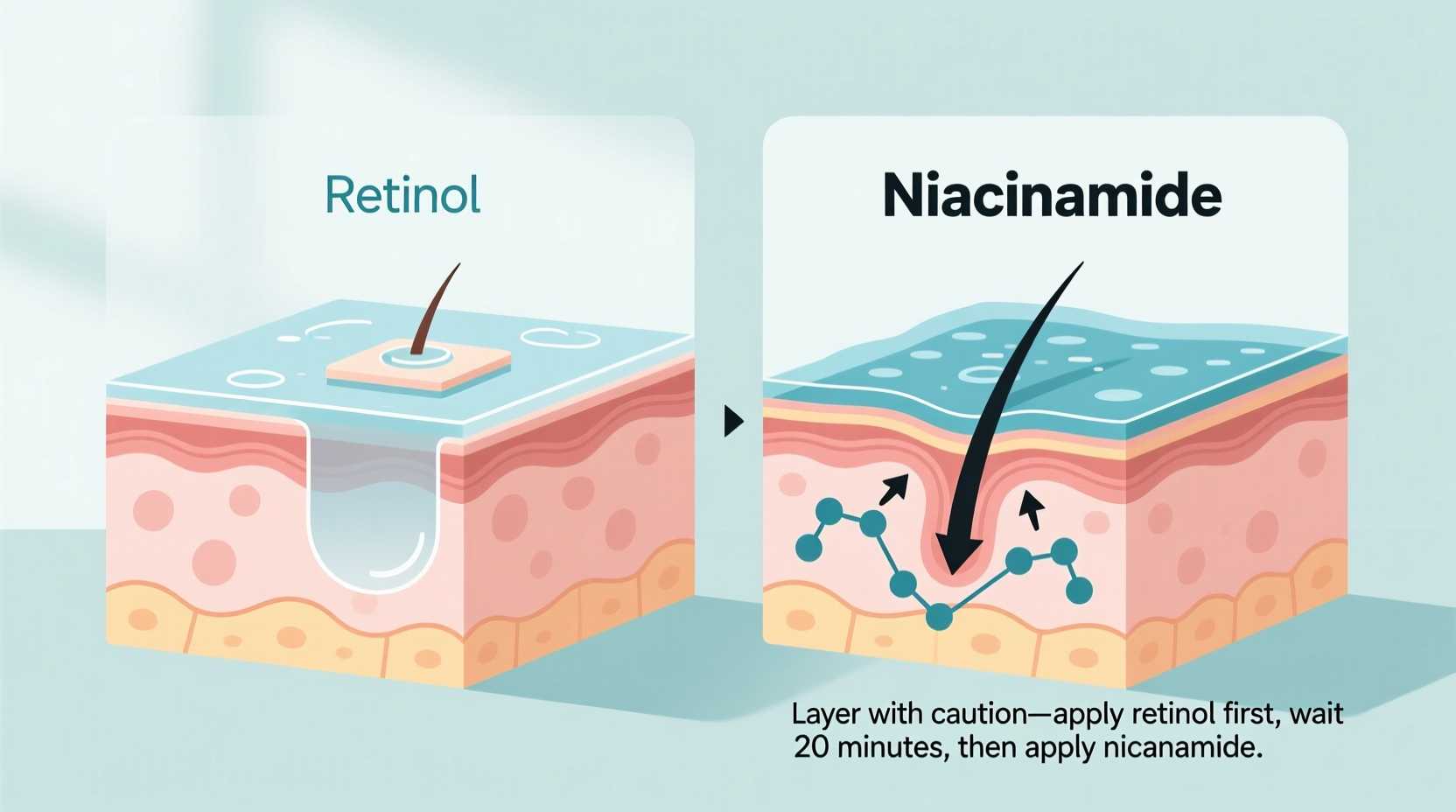
Niacinamide functions on multiple levels. It helps regulate sebum production, minimizes the appearance of pores, evens out skin tone by reducing hyperpigmentation, and reinforces the skin’s natural moisture barrier. Because it's water-soluble and generally well-tolerated—even by sensitive skin types—it has earned a reputation as one of the most versatile and gentle active ingredients available.
Retinol, on the other hand, works at a deeper level. It accelerates cellular turnover, encourages collagen production, and clears out clogged pores from within. While highly effective, retinol is also notoriously drying and sensitizing, especially during the initial weeks of use. It increases the skin’s photosensitivity and can cause peeling, flaking, and discomfort if overused or improperly paired with other actives.
Historically, there was concern that combining niacinamide with retinol could lead to the formation of nicotinic acid (a form of niacin), which may cause flushing or irritation. However, modern formulations and clinical studies have largely debunked this myth. According to Dr. Leslie Baumann, a board-certified dermatologist and author of *The Skin Type Solution*, “There is no significant chemical instability between topical niacinamide and retinol under normal storage and usage conditions.”
“There’s a misconception that mixing niacinamide and retinol causes irritation due to pH conflict or chemical breakdown. In reality, most commercial products are buffered and formulated to remain stable even when layered.” — Dr. Hadley King, Clinical Assistant Professor of Dermatology
Why You Might Be Experiencing Irritation
If the ingredients themselves aren’t the problem, what’s causing the discomfort? Several factors come into play:
- Overloading actives: Using high concentrations of both ingredients simultaneously, especially if your skin isn’t accustomed to either.
- Poor formulation choices: Some products contain additional irritants like alcohol, fragrances, or essential oils that amplify sensitivity.
- Incorrect layering order: Applying them too close together or in the wrong sequence can disrupt absorption and increase penetration-related irritation.
- Lack of buffering: Skipping moisturizer or using them on dry, compromised skin heightens reactivity.
- Frequency overload: Using retinol nightly while also applying niacinamide twice daily doesn’t allow the skin time to recover.
Step-by-Step Guide to Layering Niacinamide and Retinol Correctly
Successfully integrating both ingredients requires strategic timing, proper sequencing, and attention to product textures. Follow this timeline-based approach to minimize irritation and maximize benefits:
- Cleanse gently: Use a mild, non-stripping cleanser to remove impurities without compromising the skin barrier.
- Apply niacinamide first (optional wait): After cleansing, apply your niacinamide serum. Allow 1–2 minutes for absorption. This step preps the skin by reinforcing hydration and calming potential inflammatory responses.
- Buffer with moisturizer (if needed):strong> For sensitive skin, apply a thin layer of fragrance-free moisturizer before retinol. This reduces direct contact and slows down retinol penetration, decreasing irritation risk.
- Apply retinol last: Dab a pea-sized amount of retinol onto dry skin. Focus on areas of concern and avoid the immediate eye area. Start with 2–3 times per week.
- Finish with moisturizer: Seal everything in with a nourishing night cream to prevent transepidermal water loss and support recovery overnight.
For daytime use, niacinamide can be safely applied in the morning routine—paired with antioxidants like vitamin C and always followed by sunscreen. Retinol should remain a nighttime-only ingredient due to its photosensitizing effects.
Do’s and Don’ts When Combining Niacinamide and Retinol
| Do’s | Don’ts |
|---|---|
| Start with low concentrations (e.g., 5% niacinamide, 0.2% retinol) | Use high-strength formulas right away without building tolerance |
| Space applications initially (e.g., niacinamide AM, retinol PM) | Layer multiple exfoliants (like AHAs/BHAs) with retinol on the same night |
| Use a hydrating toner or gel-based moisturizer as a buffer | Apply retinol on damp or wet skin, which increases absorption and irritation risk |
| Allow 1–2 minutes between layers for full absorption | Mix serums together in your palm before applying—they may not absorb optimally |
| Listen to your skin—if it stings or turns red, stop and reassess | Push through persistent irritation thinking it’s just “purging” |
Real Example: Sarah’s Skincare Turnaround
Sarah, a 32-year-old marketing executive, began using a 10% niacinamide serum and a 0.5% retinol cream every night after reading about their anti-aging benefits online. Within a week, her cheeks became tight, flaky, and inflamed. She assumed she was allergic to one of the ingredients and nearly gave up on both.
After consulting a licensed esthetician, she learned she had been applying both actives immediately after cleansing on slightly damp skin, with no buffer in between. The esthetician advised her to separate the two: use niacinamide in the morning and introduce retinol only twice a week at night, always after a moisturizer layer. She also switched to a lower-strength retinol (0.3%) and incorporated a ceramide-rich moisturizer.
Within three weeks, Sarah’s irritation subsided, and she started noticing improved texture and reduced breakouts. Today, she uses both ingredients regularly—niacinamide daily in the AM and retinol four nights a week—with no adverse reactions.
Tips for Maximizing Compatibility and Minimizing Sensitivity
- Choose well-formulated products: Look for niacinamide serums free from denatured alcohol and added fragrances. Opt for encapsulated retinol formulas, which release the ingredient gradually and reduce irritation.
- Build tolerance slowly: Begin retinol use once or twice a week, gradually increasing frequency as your skin adapts. Never rush the process.
- Hydrate aggressively: Incorporate hyaluronic acid, glycerin, and ceramides into your routine to maintain a resilient moisture barrier.
- Avoid physical scrubs: While using retinol, skip harsh exfoliants like facial brushes or grainy scrubs that can worsen micro-tears in the skin.
- Monitor environmental stressors: Cold weather, low humidity, and excessive sun exposure can weaken the skin barrier, making it more reactive to actives.
Frequently Asked Questions
Can I mix niacinamide and retinol in the same product?
Yes, many brands now formulate combination products containing both niacinamide and retinol. These are typically designed with stabilizing agents and balanced pH levels to ensure compatibility. However, if you're new to either ingredient, it's safer to start with separate products so you can control concentration and frequency independently.
Does the order matter when applying niacinamide and retinol?
Yes. Apply niacinamide before retinol. Since niacinamide is usually water-based and lighter in texture, it absorbs quickly and prepares the skin for subsequent layers. Retinol, typically suspended in an oil-based or emulsion base, should go on afterward. Think of it as laying a protective foundation before introducing a potent active.
Is it safe to use niacinamide and retinol if I have rosacea or eczema?
Caution is advised. Individuals with inflammatory skin conditions should consult a dermatologist before incorporating either ingredient. While niacinamide is often beneficial for rosacea due to its anti-inflammatory properties, retinol can exacerbate flare-ups. A prescription alternative like low-dose tretinoin or bakuchiol may be better suited.
Final Checklist: Are You Ready to Layer Safely?
- ✅ I’ve introduced retinol gradually (1–2 times per week).
- ✅ My niacinamide product is fragrance-free and well-tolerated.
- ✅ I’m applying niacinamide before retinol in my evening routine.
- ✅ I’m using a moisturizer to buffer retinol, especially on sensitive nights.
- ✅ I’m avoiding other exfoliants (AHA/BHA) on retinol nights.
- ✅ I’m wearing sunscreen daily, even when using these ingredients at night.
- ✅ I’m listening to my skin and adjusting frequency based on how it feels.
Conclusion: Harmony Over Conflict
The idea that niacinamide and retinol clash is largely outdated. With thoughtful layering, proper pacing, and respect for your skin’s limits, these two ingredients can coexist—and even enhance each other’s performance. Niacinamide helps counteract the dryness and inflammation that retinol can provoke, while retinol amplifies the long-term renewal benefits that make niacinamide so valuable.
The key is patience. Skincare isn’t about speed; it’s about sustainability. By following a structured approach, choosing quality products, and tuning into your skin’s signals, you can harness the full power of both actives without compromise.




 浙公网安备
33010002000092号
浙公网安备
33010002000092号 浙B2-20120091-4
Comments
No comments yet. Why don't you start the discussion?