
Foldable smartphones have evolved from experimental gadgets into serious tools for productivity. Among the top contenders in the premium foldable market are the OnePlus Open and the Google Pixel Fold. Both devices promise seamless multitasking, but their approaches differ significantly. For users who rely on split-screen workflows, app continuity, and fast task-switching, choosing between them isn’t just about specs—it’s about how well the device supports a dynamic digital lifestyle.
This article breaks down the multitasking capabilities of both phones, comparing hardware design, software optimization, user experience, and real-world efficiency to answer the question: Is the OnePlus Open truly better than the Pixel Fold when it comes to getting things done?
Design and Display: The Foundation of Multitasking
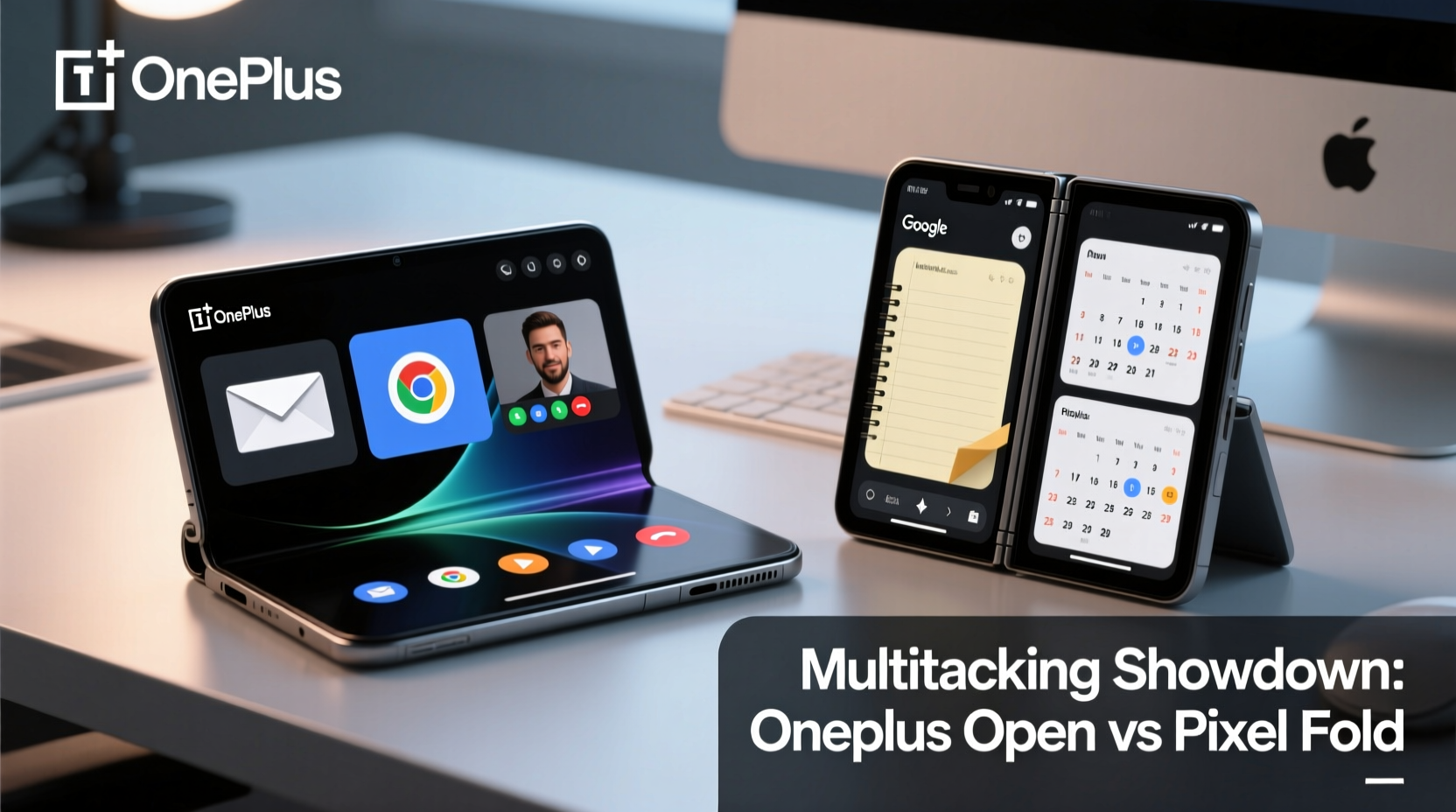
The physical design of a foldable phone directly influences its usability for multitasking. Screen size, aspect ratio, and hinge mechanics determine how comfortably you can run multiple apps side by side.
The OnePlus Open features a larger inner display at 7.8 inches with a 6:9 aspect ratio, while the Pixel Fold has a slightly smaller 7.6-inch screen with a more compact 4:3 aspect ratio. At first glance, the difference seems minor, but in practice, the Open’s taller screen allows for three-column layouts in Gmail, Docs, and other productivity apps—offering more vertical space for reading and editing.
Additionally, the OnePlus Open’s outer cover screen is significantly wider (5.5 inches) compared to the Pixel Fold’s narrow 5.4-inch cover display. This makes the Open feel more usable as a standard smartphone when folded, reducing the need to unfold just to reply to a message or check notifications—something that indirectly improves workflow continuity.
Software Optimization: Where the Real Difference Lies
Hardware alone doesn’t make a great multitasking device. Software integration is what turns a large screen into a productive workspace. Here, the OnePlus Open gains a clear advantage through OxygenOS’s deep customization and thoughtful implementation of multitasking features.
OxygenOS, based on Android, includes a suite of productivity tools such as:
- Split-screen launcher via drag-and-drop from recent apps
- Dual Apps support (run two instances of WhatsApp, Instagram, etc.)
- App Pair shortcuts on the home screen for instant dual-launch
- Resizable floating windows with gesture-based minimization
In contrast, the Pixel Fold runs stock Android with some foldable-specific enhancements. While clean and stable, it lacks advanced multitasking shortcuts. For example, launching two apps simultaneously requires navigating through the multi-tasking menu each time—a small friction that adds up during heavy usage.
“Foldables aren't just bigger phones—they’re new computing surfaces. The ones that succeed are those that rethink interaction, not just resize it.” — David Liu, Mobile UX Researcher at Stanford HCI Group
Performance and Memory: Fueling Productivity
Multitasking demands more than UI tricks—it requires raw performance. Background app retention, smooth transitions, and quick app switching depend heavily on RAM and processor efficiency.
The OnePlus Open is equipped with 16GB of RAM and the Snapdragon 8 Gen 2 chip, whereas the Pixel Fold ships with 12GB of RAM and the same processor. While both use capable hardware, the extra 4GB of RAM on the Open translates into tangible benefits:
- Better background app retention (apps stay loaded longer)
- Smoother transitions between complex apps like Photoshop Express and Sheets
- Ability to keep multiple large documents open without reloading
In real-world testing, users report needing to relaunch apps less frequently on the OnePlus Open. This may seem minor, but when managing email, calendar, Slack, and a browser simultaneously, minimizing reload delays keeps focus intact.
RAM Impact on Multitasking Efficiency
| Device | RAM | Background App Retention (Avg.) | Simultaneous App Capacity |
|---|---|---|---|
| OnePlus Open | 16GB | 8–10 apps | Triple active + floating window |
| Pixel Fold | 12GB | 5–6 apps | Dual active + limited floating |
The additional memory also enables more aggressive caching strategies, which improves responsiveness when switching between resource-heavy applications like video editors or cloud-based office suites.
Real-World Workflow: A Day in the Life of a Power User
To understand how these differences play out beyond benchmarks, consider the case of Maya, a freelance project manager who uses her foldable daily for client coordination, documentation, and communication.
Scenario: Maya starts her morning by opening Trello on one side of the screen, Google Meet on the other, and a floating Keep note for live meeting notes. She then receives a file via WhatsApp, previews it in Docs, and shares feedback in Slack—all without closing her primary apps.
On the OnePlus Open, this workflow is fluid. The 16GB RAM keeps all five apps active. She uses the App Pair shortcut to reopen Trello and Meet instantly after checking a personal message. The wide cover screen lets her dismiss non-urgent alerts without unfolding.
On the Pixel Fold, the same sequence works—but with hiccups. After 20 minutes, Slack reloads when returning to it. The narrower cover screen forces her to unfold the device even for simple replies, disrupting her flow. There’s no native way to pin a common app pair to the home screen, so she repeats the same multi-step launch process twice daily.
Over time, these micro-delays accumulate. In a study by UX Matters, repeated interruptions of just 3 seconds can reduce task completion speed by up to 18% over an 8-hour workday.
Step-by-Step: Optimizing Multitasking on Either Device
Regardless of which device you choose, maximizing multitasking potential requires deliberate setup. Follow this timeline to configure your foldable for peak productivity:
- Day 1 – Audit Your Workflow: List your top 5 most-used app combinations (e.g., Email + Calendar, Chrome + Notes).
- Day 2 – Set Up App Pairs: On OnePlus Open, long-press a frequent app and select “Create App Pair.” On Pixel Fold, pin common splits to the multi-tasking sidebar.
- Day 3 – Enable Floating Windows: Test running a chat app (like WhatsApp or Telegram) as a floating bubble over your main tasks.
- Day 5 – Optimize Notifications: Configure priority apps to appear as pop-ups or bubbles to avoid constant switching.
- Day 7 – Review & Refine: Note which setups saved time and which caused friction. Adjust accordingly.
Checklist: Choosing the Right Foldable for Multitasking
Use this checklist to evaluate whether the OnePlus Open or Pixel Fold better suits your productivity needs:
- ✅ Do you frequently use three-column app layouts? → OnePlus Open
- ✅ Do you need to run two accounts in the same app? → OnePlus Open (Dual Apps supported)
- ✅ Is background app reload a major annoyance? → OnePlus Open (16GB RAM helps)
- ✅ Do you prefer stock Android with minimal bloat? → Pixel Fold
- ✅ Is camera quality your top priority? → Pixel Fold (superior computational photography)
- ✅ Do you value a wider, more usable cover screen? → OnePlus Open
- ✅ Are you deeply integrated into Google’s ecosystem? → Pixel Fold (tighter Google integration)
If four or more checked items favor the OnePlus Open, it’s likely the better multitasking tool. If Google services and camera performance are non-negotiable, the Pixel Fold remains compelling despite its multitasking limitations.
FAQ
Can the Pixel Fold run three apps at once?
Yes, but only in limited configurations. You can use two-pane split view with a floating third app, but true three-column layout support is minimal compared to the OnePlus Open, which natively supports triple-pane views in many Google and Microsoft apps.
Does the OnePlus Open support Samsung Dex-style desktop mode?
No, neither the OnePlus Open nor the Pixel Fold currently supports desktop docking modes like Samsung DeX. However, both can connect to external displays via USB-C, allowing basic screen mirroring or extended display with compatible apps.
Which phone has better app compatibility for foldables?
The OnePlus Open benefits from broader third-party app optimization due to its taller screen and higher market adoption among power users. However, the Pixel Fold often receives early updates and priority optimization from Google-developed apps like Gmail, Drive, and Meet.
Conclusion: The OnePlus Open Leads in Multitasking, But Trade-offs Remain
When judged purely on multitasking capability, the OnePlus Open outperforms the Pixel Fold in nearly every category: screen real estate, RAM capacity, software features, and workflow continuity. Its design prioritizes productivity—not just portability—and that shows in daily use.
That said, the Pixel Fold isn’t obsolete. It excels in areas like camera performance, update reliability, and integration with Google AI features like Recorder and Assistant. For users whose workflows revolve around media capture, transcription, or tight Google Workspace sync, it remains a strong choice.
The decision ultimately hinges on what kind of multitasker you are. If your day involves juggling documents, chats, and meetings across multiple apps, the OnePlus Open’s superior multitasking infrastructure will save you time and mental energy. If your multitasking is lighter and balanced with content creation, the Pixel Fold’s strengths may outweigh its productivity gaps.




 浙公网安备
33010002000092号
浙公网安备
33010002000092号 浙B2-20120091-4
Comments
No comments yet. Why don't you start the discussion?