
In an era defined by high-resolution smartphone cameras, AI-enhanced editing, and cloud-stored photo libraries, the idea of waiting minutes for a single physical image to develop might seem absurd. Yet, walk into any urban coffee shop, boutique hotel, or music festival, and you’re likely to spot someone holding a chunky, retro-style camera ejecting a smudged, slightly off-kilter square photo. The Polaroid is back — but is it a fleeting nostalgia trip, or a legitimate revival challenging the dominance of digital?
Digital photography remains the undisputed leader in volume, convenience, and functionality. But the analog resurgence, particularly around instant film, suggests something deeper than mere trendiness. It reflects a cultural shift toward intentionality, tangibility, and emotional connection in how we capture memories.
The Digital Dominance: Speed, Scale, and Smart Tools
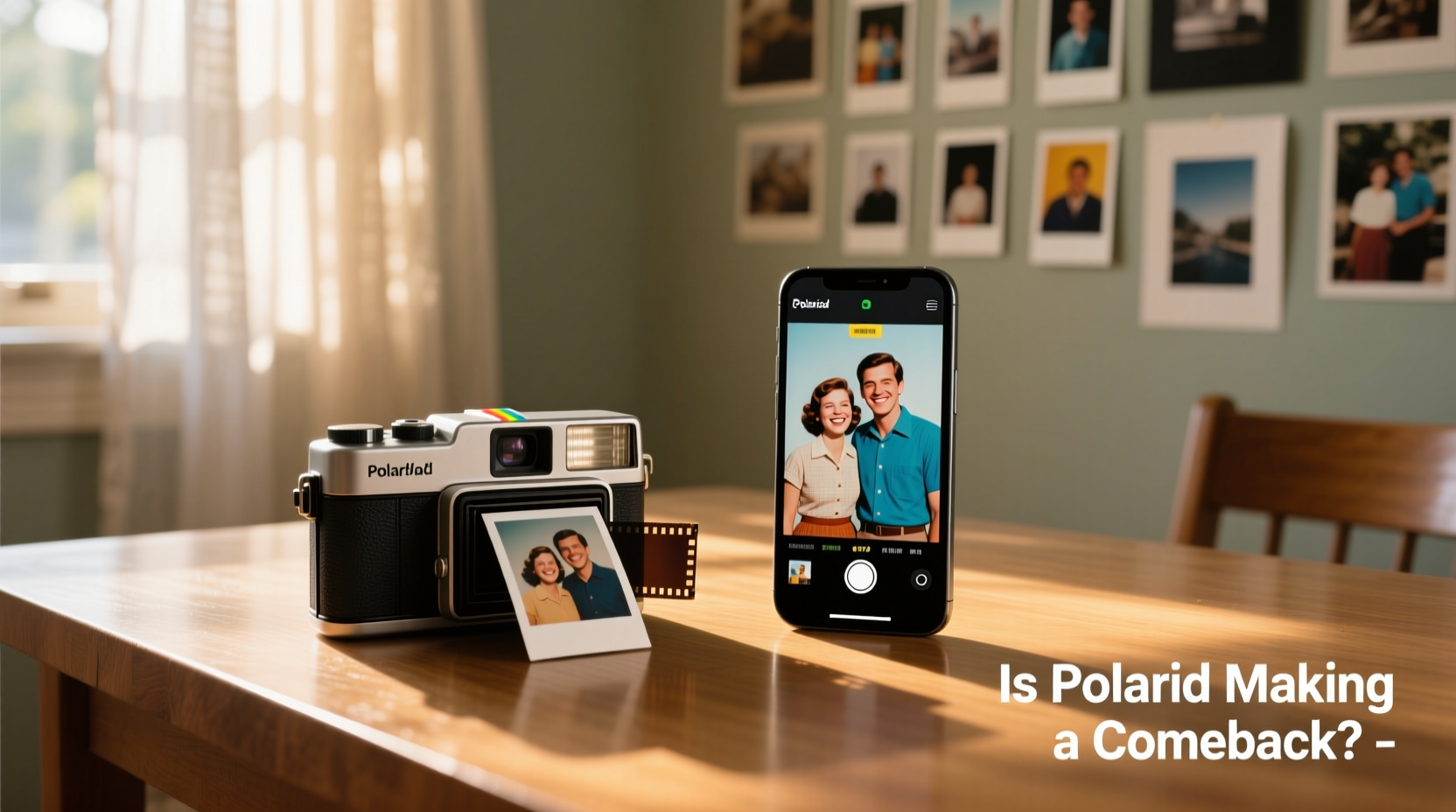
Digital photography has revolutionized every aspect of visual culture. With over 1.4 trillion photos taken annually — mostly on smartphones — the scale is incomparable. Instant sharing, facial recognition, geotagging, and machine learning enhancements make digital not just efficient, but intelligent.
Cameras today don’t just record images; they interpret them. Night modes, portrait effects, HDR blending, and real-time filters have turned casual shooters into competent photographers. Cloud backups ensure nothing is lost. For professionals, raw file support, rapid burst shooting, and seamless integration with editing software make digital indispensable.
“Digital didn’t just improve photography — it redefined what a photograph can do.” — Mark Tran, Photo Technology Analyst at Imaging Futures
From journalism to e-commerce, social media to scientific documentation, digital’s speed and scalability are irreplaceable. No instant film can compete with uploading a breaking news image from a phone in seconds.
The Analog Resurgence: Why Polaroid Is Back
Despite digital’s supremacy, Polaroid and other instant formats have seen steady growth since their near-collapse in the late 2000s. After Polaroid Corporation filed for bankruptcy in 2001 and ceased production of original film in 2008, many assumed the format was dead. But a surprising turnaround began when a group of Dutch fans founded The Impossible Project, rescuing the last functioning Polaroid film factory in Enschede.
By 2017, they had rebranded as Polaroid Originals (now simply Polaroid), relaunching updated versions of classic cameras like the OneStep 2 and reintroducing color and black-and-white film. Sales of instant cameras and film have grown year-over-year in most markets since then, with millennials and Gen Z driving demand.
Cultural Drivers Behind the Comeback
- Nostalgia with a modern twist: Many users never grew up with Polaroids but are drawn to their vintage aesthetic and tactile experience.
- Slowness as rebellion: In a world of endless scrolling, taking one deliberate shot feels radical.
- Tangibility: A physical photo resists deletion, algorithmic curation, or device obsolescence.
- Gift economy: Handing someone a freshly developed photo is an intimate gesture rarely matched digitally.
Polaroid vs. Digital: A Practical Comparison
| Feature | Polaroid / Instant Film | Digital Photography |
|---|---|---|
| Cost per shot | $1–$2 per frame (film + camera amortization) | Near-zero after initial device cost |
| Image quality | Limited resolution (~1–2 megapixels equivalent), soft focus, color shifts | High resolution (12MP+), sharp detail, accurate color |
| Editing flexibility | None — final image is fixed | Extensive post-processing possible |
| Sharing speed | Instant physical handoff; slow to digitize | Instant global sharing via networks |
| Longevity | Fade over time unless preserved properly | Indefinite if backed up correctly |
| User experience | Deliberate, ritualistic, tactile | Fast, automated, scalable |
This table highlights a key truth: Polaroid isn’t competing on technical merit. It wins on experience.
A Real Moment: The Wedding That Blended Both Worlds
Take Sarah and James’ wedding in Portland, 2023. They hired a professional digital photographer for full coverage, but also set up a Polaroid station at the reception. Guests could pose with quirky props, take a shot, and either keep it or add it to a communal guestbook album.
“We got hundreds of digital proofs,” Sarah said, “but the Polaroid wall became the heart of the night. People were laughing, hugging, passing cameras around. Those imperfect, sun-faded photos? We look at them more than any others.”
This hybrid model is increasingly common — digital for documentation, analog for emotion.
How to Embrace Both: A Balanced Approach
You don’t have to choose sides. Many photographers now integrate both formats intentionally. Here’s how to get the best of both worlds:
- Use digital for everyday moments: Kids growing up, travel sights, recipes — situations where volume and searchability matter.
- Reserve Polaroid for milestones: Birthdays, anniversaries, quiet moments worth savoring slowly.
- Create analog displays: Frame favorite instant shots instead of leaving them buried in phone albums.
- Digitize your Polaroids: Scan developed prints at high resolution to preserve them and share online.
- Experiment creatively: Try double exposures, light painting, or film swaps that embrace imperfection.
FAQ: Common Questions About the Polaroid Revival
Is Polaroid film still being manufactured?
Yes. Polaroid produces several types of instant film compatible with 600, i-Type, and Go cameras. Third-party options exist too, though quality varies.
Can I use old Polaroid cameras today?
Many vintage models work with current film, especially those using 600 or SX-70 cartridges. However, aging electronics and battery issues may require repairs.
Why are instant photos so expensive now?
Film production is low-volume and chemically complex. Unlike digital sensors, each frame requires custom dyes, developers, and precise layering — all contributing to higher costs.
Conclusion: Coexistence, Not Competition
Digital photography is, and will remain, king in terms of utility, reach, and technological advancement. But Polaroid’s comeback isn’t about dethroning a monarch — it’s about reclaiming space for slowness, authenticity, and human connection in our visual lives.
The resurgence isn’t fooling anyone into thinking analog is better technically. Instead, it satisfies a hunger for meaning in an age of excess. When you press the shutter on a Polaroid, you commit. There’s no delete button, no retake unless you’ve got another $2. That constraint breeds mindfulness.
So yes, Polaroid is making a comeback — not as a replacement, but as a counterbalance. It thrives not despite digital, but because of it. Like vinyl records or handwritten letters, it offers what efficiency cannot: soul.




 浙公网安备
33010002000092号
浙公网安备
33010002000092号 浙B2-20120091-4
Comments
No comments yet. Why don't you start the discussion?