
In an age where desk jobs dominate and screen time has skyrocketed, poor posture has become a modern epidemic. Rounded shoulders, forward head position, and a hunched spine are now common sights in offices, cafes, and even gyms. In response, posture corrector clothing—ranging from compression shirts to wearable braces disguised as undershirts—has surged in popularity. Marketed as a discreet, effortless fix, these garments promise to “train” your body into proper alignment. But do they actually help, or are they creating a dependency that weakens your natural postural strength over time?
The answer isn’t straightforward. While some users report immediate relief and improved awareness of their posture, others find themselves reliant on the garment, feeling worse when they take it off. To understand the real impact, we need to examine the mechanics of posture, how these garments work, and what long-term strategies truly lead to sustainable improvement.
How Posture Corrector Clothing Works
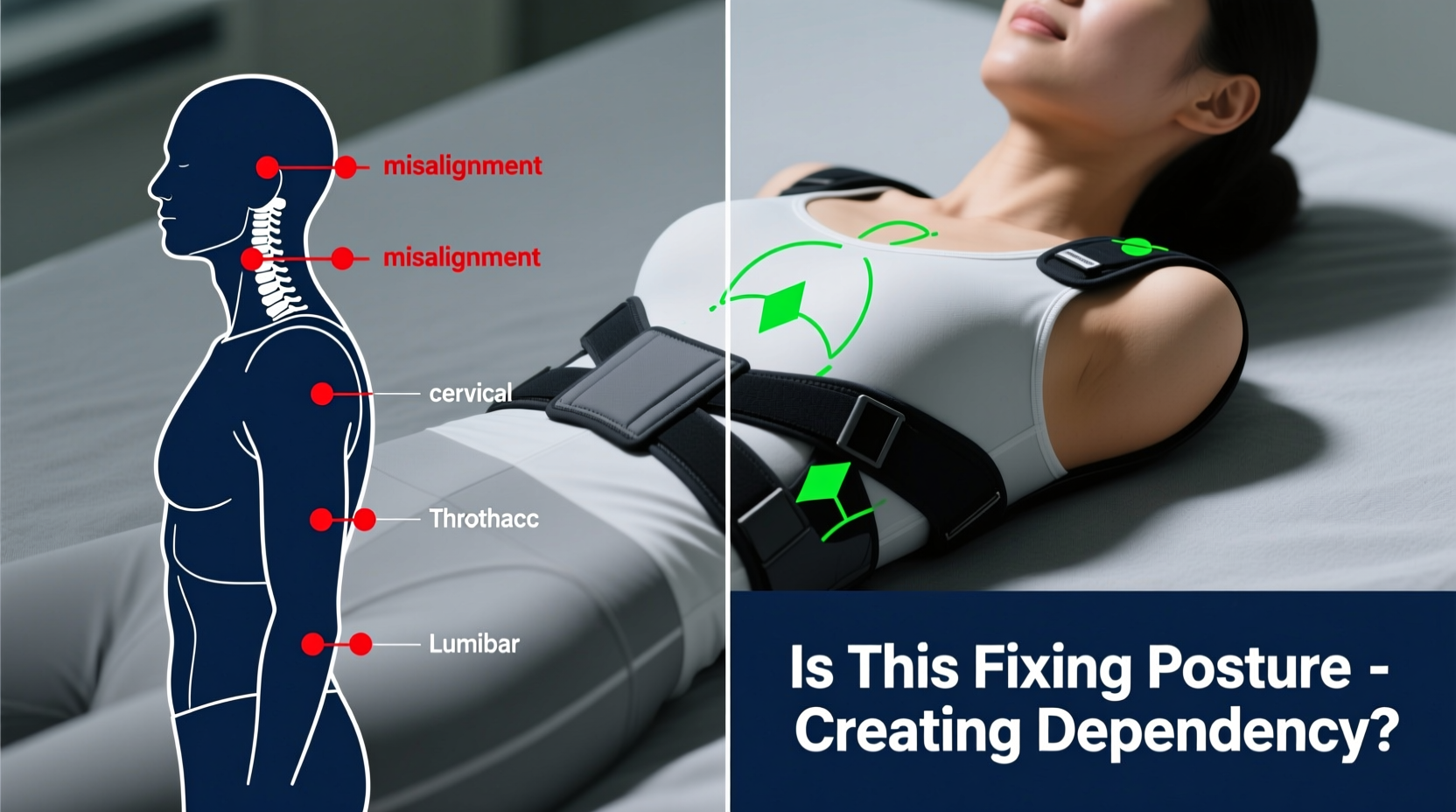
Posture corrector clothing typically uses strategic compression, elastic bands, or internal stays to pull the shoulders back and align the spine. Some function like a built-in brace (e.g., shirts with rigid panels), while others use subtle tension across the upper back to discourage slouching. These garments aim to create passive correction by physically restricting forward shoulder roll and encouraging an upright stance.
The principle behind them is similar to orthotics for feet: provide external support to guide the body into a healthier position. Over time, manufacturers claim, wearers will \"retrain\" their muscles and nervous system to maintain this alignment naturally—even without the garment.
However, biomechanics experts caution that not all forms of postural retraining are equal. Passive correction doesn't necessarily equate to active muscle engagement. Just as wearing arch supports won’t automatically strengthen foot muscles, pulling the shoulders back with fabric doesn’t guarantee improved neuromuscular control.
The Science Behind Posture and Muscle Memory
Good posture isn’t just about standing up straight; it’s the result of balanced muscular activity, joint alignment, and neurological feedback. When you sit or stand for prolonged periods, especially in suboptimal positions, certain muscles become overactive (like the chest and neck flexors), while others—particularly the mid-back muscles (rhomboids, lower trapezius)—become inhibited and weak.
This imbalance leads to what physical therapists call “upper crossed syndrome,” a common postural dysfunction characterized by forward head, elevated shoulders, and a rounded upper back. Left unaddressed, it contributes to chronic neck pain, headaches, and reduced breathing efficiency.
Muscle memory—the nervous system’s ability to automate movement patterns—plays a crucial role in posture. The longer you maintain a slouched position, the more your brain accepts it as “normal.” Posture correctors attempt to interrupt this pattern by providing real-time feedback. However, research suggests that passive devices alone are insufficient for rewiring motor patterns without deliberate strengthening and mobility work.
“External support can raise awareness, but lasting change requires active participation. You can’t brace your way to better posture without engaging the right muscles.” — Dr. Lena Torres, DPT, Board-Certified Orthopedic Specialist
Benefits vs. Risks: A Balanced Look
Like any tool, posture corrector clothing has both advantages and drawbacks. Understanding both helps users make informed decisions.
| Benefits | Risks |
|---|---|
| Immediate postural improvement: Shoulders retract, spine aligns visibly. | Muscle atrophy: Prolonged use may reduce activation of postural muscles. |
| Increased body awareness: Wearers notice when they start to slump. | Over-reliance: Users may feel unable to sit/stand correctly without the garment. |
| Pain reduction: Alleviates strain on neck and upper back in some cases. | Discomfort or skin irritation: Tight bands or restrictive materials can cause chafing. |
| Convenience: Easy to integrate into daily wear, especially under clothing. | Misalignment masking: May hide underlying issues like joint dysfunction or weakness. |
The key differentiator between benefit and harm lies in usage. Short-term, mindful use—as part of a broader corrective strategy—can be helpful. But treating these garments as a standalone solution risks undermining long-term progress.
Mini Case Study: Office Worker Finds Temporary Relief, Then Setback
Mark, a 34-year-old software developer, began experiencing chronic shoulder tightness and neck pain after transitioning to remote work. He purchased a popular posture-correcting undershirt advertised as “wearable training.” Initially, he felt dramatically better. His shoulders stayed back, and his focus improved due to less physical discomfort.
After two weeks of wearing it 8 hours a day, Mark stopped doing his usual stretching routine, assuming the shirt was “doing the work.” Within a month, he noticed increased fatigue in his upper back when not wearing the garment. One weekend, after forgetting it at home, he struggled through a family outing, feeling “slumped and weak.”
When he consulted a physical therapist, he learned that his scapular stabilizers had weakened from disuse. The shirt was supporting him—but not strengthening him. With guided exercises and reduced reliance on the garment, Mark gradually rebuilt his postural endurance over 10 weeks.
Building Sustainable Posture: A Step-by-Step Guide
True postural correction comes not from external constraints, but from internal strength, flexibility, and mindfulness. Here’s a practical, science-backed approach to developing lasting posture health.
- Assess Your Baseline
Stand sideways in front of a mirror or take a photo. Look for: ears aligned over shoulders, shoulders over hips, slight inward curve in lower back. Note any forward head, rounded shoulders, or pelvic tilt. - Improve Thoracic Mobility
Spend 5–10 minutes daily on thoracic spine mobility:- Seated spinal twists
- Foam rolling upper back (avoid lower back)
- Cat-Cow stretches with emphasis on arching the upper spine
- Strengthen Key Postural Muscles
Focus on the posterior chain:- Rows (banded or dumbbell): 3 sets of 12 reps, 3x/week
- Face pulls: 3 sets of 15 reps to activate rear delts and rhomboids
- Prone Y-T-W raises: lie face down, lift arms into Y, T, and W shapes to engage scapular stabilizers
- Stretch Tight Anterior Muscles
Release tension in overactive areas:- Pectoral doorway stretch: 30 seconds per side, 2x/day
- Neck flexor stretch: gently tilt head back while tucking chin
- Levator scapulae release: use a tennis ball against the wall to massage the side-back of the neck
- Use Posture Corrector Clothing Strategically
If using a garment:- Limited to 2–4 hours/day
- Pair with posture checks every 30 minutes
- Remove it during exercise or stretching sessions
- Optimize Your Environment
Adjust ergonomics:- Monitor at eye level
- Elbows at 90 degrees, wrists neutral
- Feet flat, hips slightly higher than knees
- Take a 2-minute break every hour to stand and reset posture
Checklist: Healthy Posture Habits to Adopt Today
- ✅ Perform 5 minutes of thoracic mobility work each morning
- ✅ Do 3 sets of face pulls or rows every other day
- ✅ Stretch chest and neck muscles daily
- ✅ Use a posture corrector only during focused work hours—not all day
- ✅ Schedule hourly posture check-ins (use a smartwatch or app)
- ✅ Evaluate workspace ergonomics: chair height, monitor position, keyboard placement
- ✅ Practice diaphragmatic breathing to engage core and improve spinal alignment
- ✅ Avoid prolonged static positions—move frequently
FAQ: Common Questions About Posture Corrector Clothing
Can posture corrector clothing fix kyphosis or scoliosis?
No. While mild postural kyphosis (rounding of the upper back due to habit) may improve with combined interventions, structural conditions like Scheuermann’s kyphosis or scoliosis require medical evaluation and targeted treatment such as bracing, physical therapy, or surgery. Posture garments do not correct spinal deformities.
How long should I wear a posture corrector each day?
Limit use to 2–4 hours per day, preferably during active sitting or light movement. Extended wear can lead to muscle inhibition. Think of it as a “posture coach,” not a permanent support system.
Will I become dependent on posture corrector clothing?
You might, if used incorrectly. Dependency arises when the garment replaces muscle engagement instead of complementing it. To prevent this, pair wear time with active posture exercises and gradually reduce reliance as your strength improves.
Conclusion: Tools Are Not Substitutes for Training
Posture corrector clothing isn’t inherently harmful—but it’s often misused. When marketed as a quick fix, it distracts from the real solution: consistent, active effort to rebuild postural resilience. Like training wheels on a bike, these garments can offer temporary support during the learning phase. But no one learns to ride by keeping the training wheels on forever.
The human body adapts to what it repeatedly does. If you spend hours being pulled into alignment by fabric, your nervous system may stop recruiting the muscles meant to do that job. True correction comes from re-educating those systems through movement, strength, and awareness.
Instead of asking whether posture corrector clothing works, ask how you can use it wisely—without sacrificing long-term independence. Combine it with targeted exercises, ergonomic adjustments, and mindful habits. Build a body that holds good posture not because it’s strapped in, but because it’s strong enough to do so on its own.




 浙公网安备
33010002000092号
浙公网安备
33010002000092号 浙B2-20120091-4
Comments
No comments yet. Why don't you start the discussion?