
For students navigating the rising costs of higher education, textbook expenses represent a significant burden. With new editions priced at $150 or more, many turn to alternatives like renting through digital platforms or purchasing used physical copies. But which option truly saves more money—and under what circumstances? The answer isn’t always straightforward. While rental apps promise convenience and lower upfront fees, buying used books can offer long-term savings, especially for courses with recurring reference value. This article breaks down the financial, logistical, and practical dimensions of both choices to help students make informed decisions.
Understanding the Cost Structures
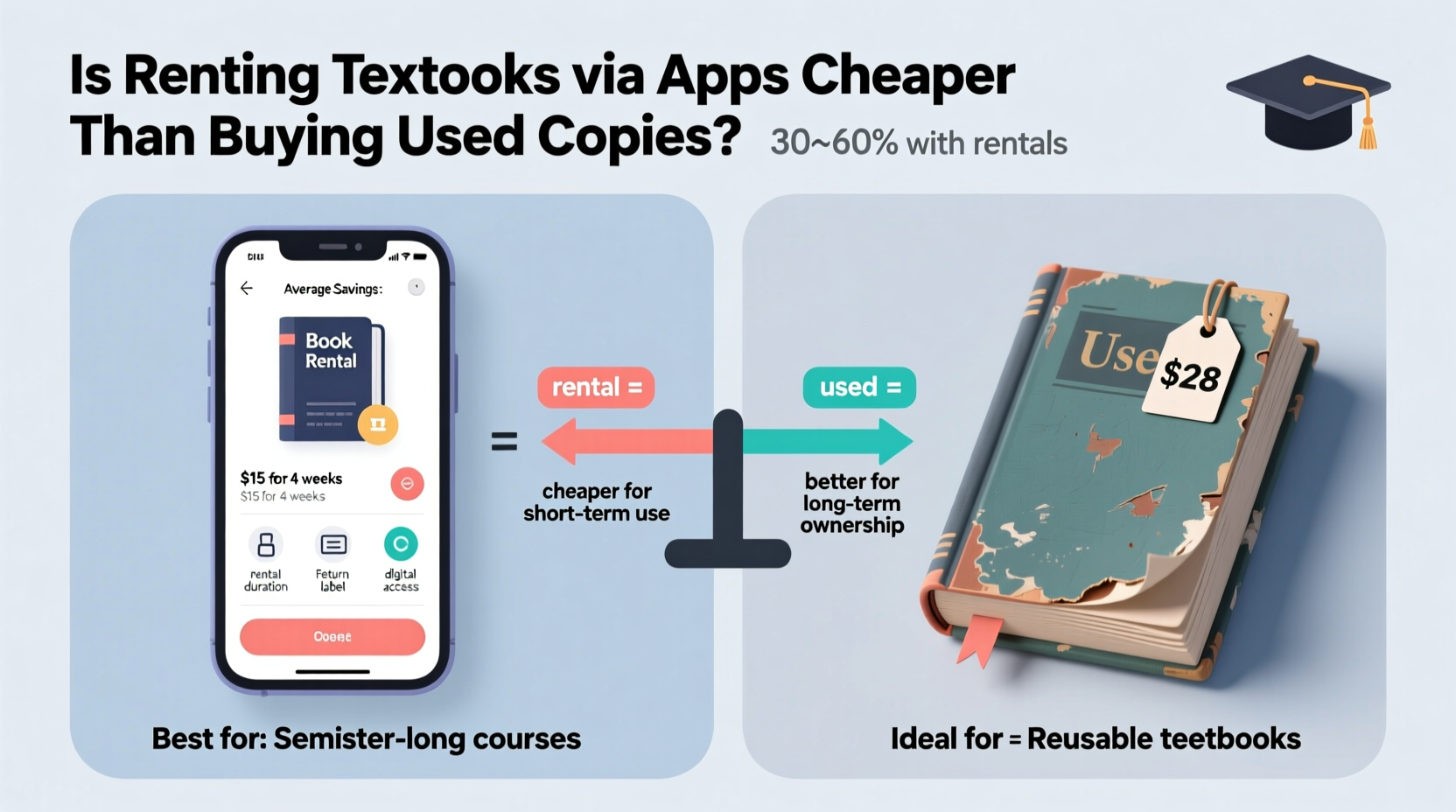
The first step in comparing rentals and used purchases is understanding how each model works financially. Rental apps such as Chegg, Amazon Textbook Rentals, and BookFinder typically charge a fee based on the duration of use—usually one semester or 90 days. These fees often range from 40% to 60% of the new book’s retail price. In contrast, used textbooks are sold outright, often at 30% to 70% off the original price, depending on condition and demand.
Consider a textbook with a new price of $120:
| Option | Average Cost | Ownership | Return Required? |
|---|---|---|---|
| Rental (semester) | $50–$70 | No | Yes |
| Used Purchase | $40–$80 | Yes | No |
| New Purchase | $120 | Yes | No |
At first glance, renting appears slightly more expensive than buying used. However, this comparison doesn’t account for resale potential. A student who buys a used book may resell it at the end of the term for 50% of the purchase price, effectively reducing net cost. For example, a $60 used book resold for $30 results in a net expense of $30—significantly less than most rental fees.
When Renting Makes Financial Sense
Renting becomes advantageous in specific scenarios. First, when a textbook is needed for only one course with no future relevance—such as a general education requirement—ownership offers little added value. In these cases, avoiding the hassle of resale may justify the slightly higher cost of renting.
Second, high-demand textbooks with volatile pricing often see inflated used market prices due to scarcity. Apps that aggregate inventory across multiple vendors can sometimes offer competitive rental rates even when used copies are scarce. For instance, during back-to-school season, introductory biology texts may sell for $90 used but rent for $65—a clear win for renters.
Third, digital rentals eliminate shipping time and physical storage concerns. Many apps provide instant access via mobile or web platforms, making them ideal for last-minute enrollment or accelerated courses. Some even include built-in note-taking tools, highlighting, and search functions that enhance study efficiency.
“Students in time-sensitive programs like nursing or engineering benefit from immediate access to materials. Rental apps reduce delays caused by shipping or bookstore shortages.” — Dr. Laura Simmons, Academic Advisor at Ohio State University
Advantages of Buying Used Copies
Purchasing used textbooks shines when long-term utility is expected. Courses in core disciplines—calculus, economics, programming—often require reference beyond the semester. Owning the book allows review during finals, graduate studies, or professional certification prep without re-purchasing.
Additionally, physical ownership enables unrestricted annotation. While some rental agreements permit light highlighting, others penalize any markings. Students preparing for exams frequently rely on margin notes, diagrams, and tabbed pages—practices that risk damage fees upon return.
Resale flexibility also adds value. Platforms like AbeBooks, eBay, and Facebook Marketplace allow sellers to set their own prices, potentially recovering more than official buyback programs offer. A well-maintained used copy of a perennially assigned text might retain 60% of its value year after year.
Real Example: Sarah’s Organic Chemistry Dilemma
Sarah, a sophomore pre-med student, faced a choice before her organic chemistry sequence. The required textbook bundle was priced at $140 new. She found a gently used hardcover for $75 on a university forum and decided to buy it. Over two semesters, she annotated reaction mechanisms directly in the margins and used sticky tabs to organize chapters. At the end of the second term, she resold it for $40 to a junior taking the same course. Her total cost: $35.
Her roommate opted to rent the same book via an app for $68 per semester, totaling $136—nearly four times Sarah’s net expense. Worse, she couldn’t annotate freely and struggled to keep up with fast-paced lectures. Sarah’s decision saved money and improved learning outcomes.
Hidden Costs and Risks to Consider
Both models carry hidden costs that can erode savings. Rental risks include late return penalties, damage fees, and lost book charges. A single torn page or water stain can trigger fines of $50 or more. One survey by Student Monitor found that 18% of renters incurred unexpected fees, averaging $37 per incident.
Buying used introduces different risks. Outdated editions are common, especially when listings lack clear ISBN verification. A student purchasing a 2018 edition for a 2023 course may find mismatched problem sets or missing content. Additionally, international editions—while cheaper—sometimes differ in pagination or question numbering, complicating classroom participation.
- Late fees: Rental apps typically charge $10–$15 per day past the due date.
- Shipping delays: Mailed rentals may arrive late, disrupting early-week assignments.
- Digital access limits: Some e-rentals expire the moment the term ends, cutting off final exam prep.
- Buyback devaluation: Books not on the current syllabus may be worth nothing at resale.
Step-by-Step Decision Guide
To determine the most cost-effective option, follow this five-step process:
- Check your syllabus. Identify required textbooks and confirm the exact edition and ISBN.
- Compare rental prices. Use aggregators like BookScouter or CampusBooks to find the lowest rental rate across platforms.
- Search used markets. Look on Amazon, Chegg, ThriftBooks, and local student groups for used copies, noting condition and shipping time.
- Estimate resale value. Research recent sales of the same edition on eBay or campus boards to project recovery potential.
- Evaluate usage needs. Will you need the book beyond the course? Do you plan to annotate heavily? Is digital access sufficient?
If resale value exceeds 40% of the used purchase price and you anticipate future use, buying wins. If the book is disposable and timely access is critical, renting may be preferable despite higher net cost.
Expert Tips for Maximizing Savings
Smart students combine strategies to minimize expenses. Here’s a checklist of proven tactics:
- ✅ Confirm the correct ISBN with your professor or syllabus
- ✅ Compare rental quotes across at least three platforms
- ✅ Search for looseleaf or PDF versions (often cheaper)
- ✅ Join campus textbook exchange groups
- ✅ Rent early to lock in lower seasonal rates
- ✅ Inspect used books for excessive highlighting or missing pages
- ✅ Sell used books within two weeks of course end for maximum resale value
- ✅ Consider open educational resources (OER) or library reserves as free alternatives
Frequently Asked Questions
Can I highlight or write in rented textbooks?
Most rental agreements allow minimal highlighting and pencil notes, but excessive marking or ink writing may result in damage fees. Policies vary by provider, so review terms carefully before annotating.
What happens if I lose a rented book?
You’ll be charged the full replacement cost, often equivalent to the new retail price, plus a processing fee. Some services offer insurance for an additional $5–$10 at checkout, which may be worthwhile for high-value texts.
Are digital rentals cheaper than physical ones?
Yes, e-textbook rentals are typically 10% to 25% cheaper than physical rentals because they eliminate shipping and inventory costs. However, screen fatigue and lack of tactile navigation can affect study effectiveness for some learners.
Conclusion: Making the Smart Choice
Renting textbooks through apps isn't universally cheaper than buying used—but it can be, under the right conditions. The decision hinges on timing, subject relevance, annotation habits, and resale opportunities. For disposable, short-term needs with tight deadlines, rentals offer speed and predictable pricing. For foundational courses where knowledge compounds over time, owning a used copy often delivers superior value, both academically and financially.
The most effective strategy isn’t choosing one method exclusively, but rather adopting a flexible approach. Savvy students assess each textbook individually, weighing immediate access against long-term utility. They leverage tools, compare real-time data, and avoid assumptions based on past experiences. By treating textbook procurement as a calculated investment rather than a routine expense, students can save hundreds per year—money better spent on tuition, housing, or peace of mind.




 浙公网安备
33010002000092号
浙公网安备
33010002000092号 浙B2-20120091-4
Comments
No comments yet. Why don't you start the discussion?