
Rosewater toner has graced beauty routines for centuries, revered across cultures for its delicate scent, soothing properties, and gentle touch on the skin. From Cleopatra’s bath rituals to Ayurvedic traditions and Victorian-era vanity tables, rosewater has long symbolized purity and natural elegance. Today, in an era dominated by science-backed skincare—glycolic acid peels, salicylic acid cleansers, and pH-balancing actives—the question arises: does rosewater toner still belong in a modern regimen? Or have newer, more potent acids rendered it obsolete?
The answer isn’t binary. While advanced chemical exfoliants offer measurable results for texture, tone, and acne control, rosewater continues to serve a unique role—one rooted in hydration, calming irritation, and supporting skin barrier health. The real issue isn’t replacement but relevance: understanding when and for whom rosewater still shines.
The Rise of Acid-Based Toners
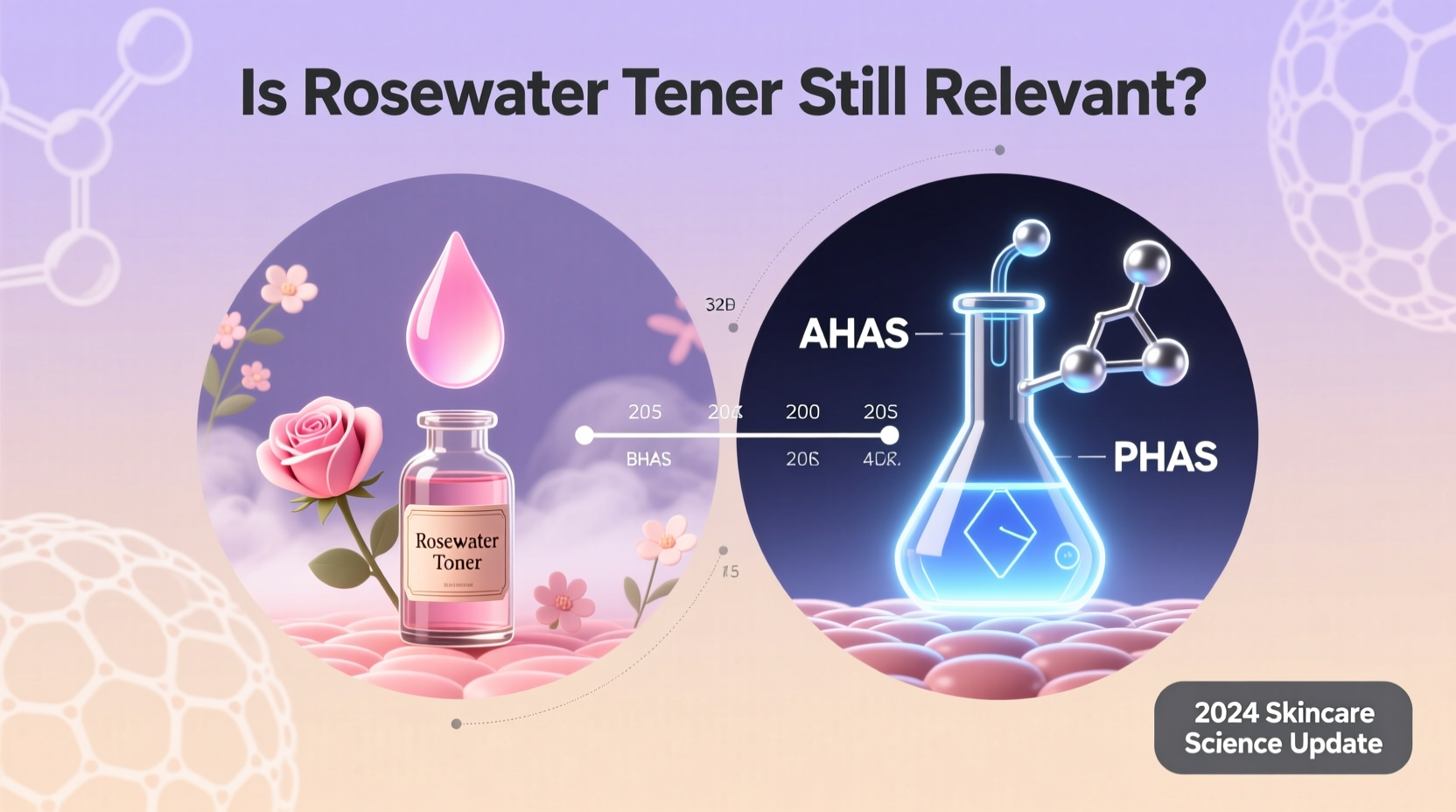
In the last decade, skincare has undergone a transformation fueled by dermatological research and consumer demand for visible results. Acid-based toners—formulated with ingredients like glycolic, lactic, salicylic, and mandelic acids—have surged in popularity due to their ability to exfoliate, brighten, and refine pores.
These toners work by dissolving dead skin cells, accelerating cellular turnover, and improving penetration of subsequent products. For concerns like dullness, clogged pores, hyperpigmentation, and uneven texture, they are often more effective than traditional hydrating toners.
Brands like Paula’s Choice, The Ordinary, and Drunk Elephant have popularized pH-targeted formulations that align with the skin’s natural acidity (around 4.5–5.5), enhancing both efficacy and safety. As a result, many consumers now associate “toner” not with refreshment, but with active treatment.
“Acid toners are game-changers for addressing signs of aging and congestion, but they aren't suitable for every skin type or every day.” — Dr. Lena Torres, Board-Certified Dermatologist
What Rosewater Toner Actually Does
Rosewater is made by steam-distilling rose petals, typically from *Rosa damascena*. It contains antioxidants like quercetin and kaempferol, anti-inflammatory compounds, and small amounts of citronellol and geraniol—natural fragrances with mild antimicrobial properties.
Unlike acid toners, rosewater doesn’t exfoliate or chemically alter the skin. Instead, its benefits are functional and sensory:
- pH balancing: Rosewater naturally sits around pH 5.5, closely matching the skin’s acid mantle, helping maintain barrier integrity.
- Hydration boost: Acts as a humectant, drawing moisture into the upper layers of the skin.
- Soothing effect: Reduces redness and irritation, especially beneficial after sun exposure or retinoid use.
- Makeup setting aid: Frequently used in facial mists to refresh makeup and add a dewy finish.
It’s particularly well-suited for sensitive, dry, or reactive skin types that may not tolerate even low concentrations of acids. In clinical settings, rosewater has been studied for its wound-healing potential and ability to reduce transepidermal water loss (TEWL).
Comparing Rosewater and Acid Toners: A Practical Breakdown
To understand where each product fits, consider their mechanisms, ideal users, and limitations. The table below outlines key differences:
| Feature | Rosewater Toner | Acid-Based Toner |
|---|---|---|
| Primary Function | Hydration, soothing, pH stabilization | Exfoliation, cell renewal, pore cleansing |
| Active Ingredients | Natural floral water, trace antioxidants | Glycolic, lactic, salicylic, or polyhydroxy acids |
| pH Level | ~5.0–6.0 | 3.0–4.0 (optimized for penetration) |
| Skin Types Best Suited | Dry, sensitive, rosacea-prone, mature | Oily, combination, acne-prone, non-sensitive |
| Frequency of Use | Daily, morning and night | 2–4 times per week (can be daily for tolerant skin) |
| Visible Results Timeline | Immediate comfort; subtle long-term hydration | 2–6 weeks for texture and brightness improvement |
| Risks | Minimal; possible fragrance sensitivity | Irritation, over-exfoliation, sun sensitivity |
This comparison shows that rosewater and acid toners are not direct competitors—they fulfill different roles. One supports skin health passively; the other actively transforms it. Choosing between them—or deciding to use both—depends on individual goals and skin tolerance.
When Rosewater Still Makes Sense
In certain situations, rosewater isn’t just relevant—it’s superior to acid alternatives:
- Post-procedure care: After laser treatments, microneedling, or chemical peels, dermatologists often recommend fragrance-free, non-irritating mists. Pure rosewater (without added alcohol or essential oils) fits this need perfectly.
- Barrier repair phases: During \"skin fasting\" or recovery from over-exfoliation, rosewater provides hydration without further stress.
- Layering in K-beauty routines: In 10-step regimens, rosewater acts as a hydrating buffer between steps, enhancing product absorption without disrupting pH.
- For children or elderly users: Gentle enough for fragile skin where acids could cause stinging or dryness.
Moreover, rosewater offers psychological benefits. Its aroma has been linked to reduced cortisol levels in some studies, making it a form of aromatherapy within skincare—a ritualistic moment of calm in a fast-paced routine.
A Real-Life Example: Managing Rosacea Flare-Ups
Sophie, a 34-year-old graphic designer with mild rosacea, had been using a glycolic acid toner three times a week to address post-acne marks. Over winter, her skin became increasingly reactive—tight, red, and flaky. Her dermatologist advised pausing all exfoliants and simplifying her routine.
She switched to a pure rosewater toner applied with a cotton pad after cleansing. Within days, the tightness subsided. She layered a ceramide serum over the damp skin, locking in moisture. After two weeks, her flare-up calmed significantly. Once stabilized, she reintroduced the acid toner—but only once weekly, always following up with rosewater to soothe any residual irritation.
This case illustrates how rosewater can act as both a standalone solution and a complementary tool—softening the impact of stronger ingredients while maintaining hydration.
Can You Use Both? Strategic Layering Tips
Many modern routines don’t require choosing one over the other. With proper timing and layering, rosewater and acid toners can coexist effectively.
- Use acid toners first, at night: Apply after cleansing and before serums. Allow 1–2 minutes for absorption.
- Follow with rosewater if needed: If your skin feels tight or irritated, spritz rosewater to neutralize discomfort and restore surface pH.
- Morning hydration boost: Skip acids in the AM. Use rosewater after cleansing, then apply vitamin C or sunscreen.
- Dilution trick: For those new to acids, mix a few drops of rosewater into the toner to reduce potency and minimize irritation.
Expert Insights: What Dermatologists Say
Dr. Amara Lin, a cosmetic dermatologist based in Los Angeles, emphasizes balance: “I see patients who abandon gentle products entirely in pursuit of fast results. But skin health isn’t just about turnover—it’s about resilience. Rosewater may not ‘do’ much in the way of visible change, but it helps maintain equilibrium.”
She adds, “Think of it like nutrition: you need protein and greens, but you also benefit from herbal teas and hydration. Skincare is similar—actives are your vegetables, rosewater is your chamomile tea.”
“Rosewater won’t replace AHAs, but it shouldn’t have to. Its value lies in support, not performance.” — Dr. Amara Lin, Cosmetic Dermatologist
Frequently Asked Questions
Can rosewater clog pores?
No, pure rosewater is non-comedogenic and lightweight. However, check labels—some commercial versions contain added oils, thickeners, or preservatives that might cause breakouts in acne-prone individuals.
Is rosewater safe for daily use?
Yes, for most people. Because it lacks active exfoliants, it can be used morning and night. Those with rose allergies should avoid it, and anyone with extremely sensitive skin should opt for alcohol-free, additive-free versions.
Do acid toners make rosewater obsolete?
Not at all. They serve different purposes. Acids target specific concerns like texture and pigmentation; rosewater supports overall comfort and hydration. Obsolescence only occurs if you assume all toners must exfoliate—which is a narrow view of skincare function.
Actionable Checklist: Choosing the Right Toner for You
Use this checklist to determine whether rosewater, an acid toner, or both belong in your routine:
- ✅ I have dry or sensitive skin → Rosewater likely beneficial
- ✅ I experience redness or irritation after using actives → Rosewater can help soothe
- ✅ I want brighter, smoother skin and tolerate exfoliants well → Acid toner appropriate
- ✅ I’m recovering from a procedure or over-exfoliation → Pause acids; try rosewater
- ✅ I enjoy multi-step routines with sensory elements → Rosewater enhances ritual
- ✅ I wear makeup daily and want a dewy finish → Rosewater works as a setting mist
- ✅ I’m pregnant or breastfeeding and avoiding strong actives → Rosewater is a safe alternative
Conclusion: Relevance Over Replacement
Rosewater toner hasn’t been replaced—it’s been recontextualized. In a world enamored with rapid transformation and clinical precision, rosewater represents continuity: a bridge between ancestral wisdom and contemporary wellness. It doesn’t promise dramatic change, nor should it. Its strength lies in gentleness, compatibility, and accessibility.
Newer acid toners deliver powerful results for specific concerns, but they come with trade-offs: potential irritation, increased sun sensitivity, and incompatibility with compromised barriers. Rosewater, meanwhile, remains a reliable ally for hydration, calming, and balance—especially when skin needs rest, repair, or simple comfort.
The most effective skincare routines aren’t built on trends alone, but on thoughtful inclusion. Whether you're navigating sensitivity, simplifying your regimen, or simply seeking a moment of calm, rosewater still has a place. Not as a competitor to acids, but as a complement—to soften, to hydrate, and to remind us that sometimes, less really is more.




 浙公网安备
33010002000092号
浙公网安备
33010002000092号 浙B2-20120091-4
Comments
No comments yet. Why don't you start the discussion?