
In the digital age, screens have become inseparable from daily life. From smartphones and laptops to streaming platforms and social media, young adults spend an average of 6 to 9 hours per day interacting with digital devices. While technology has enhanced communication, learning, and productivity, a growing body of research suggests that excessive screen exposure may be taking a toll on cognitive functions—particularly memory retention. Recent studies are now drawing strong correlations between prolonged screen use and diminished short-term and working memory performance in individuals aged 18 to 30. This article examines the latest scientific evidence, explores the underlying mechanisms, and offers actionable solutions to mitigate cognitive decline.
The Cognitive Cost of Constant Connectivity
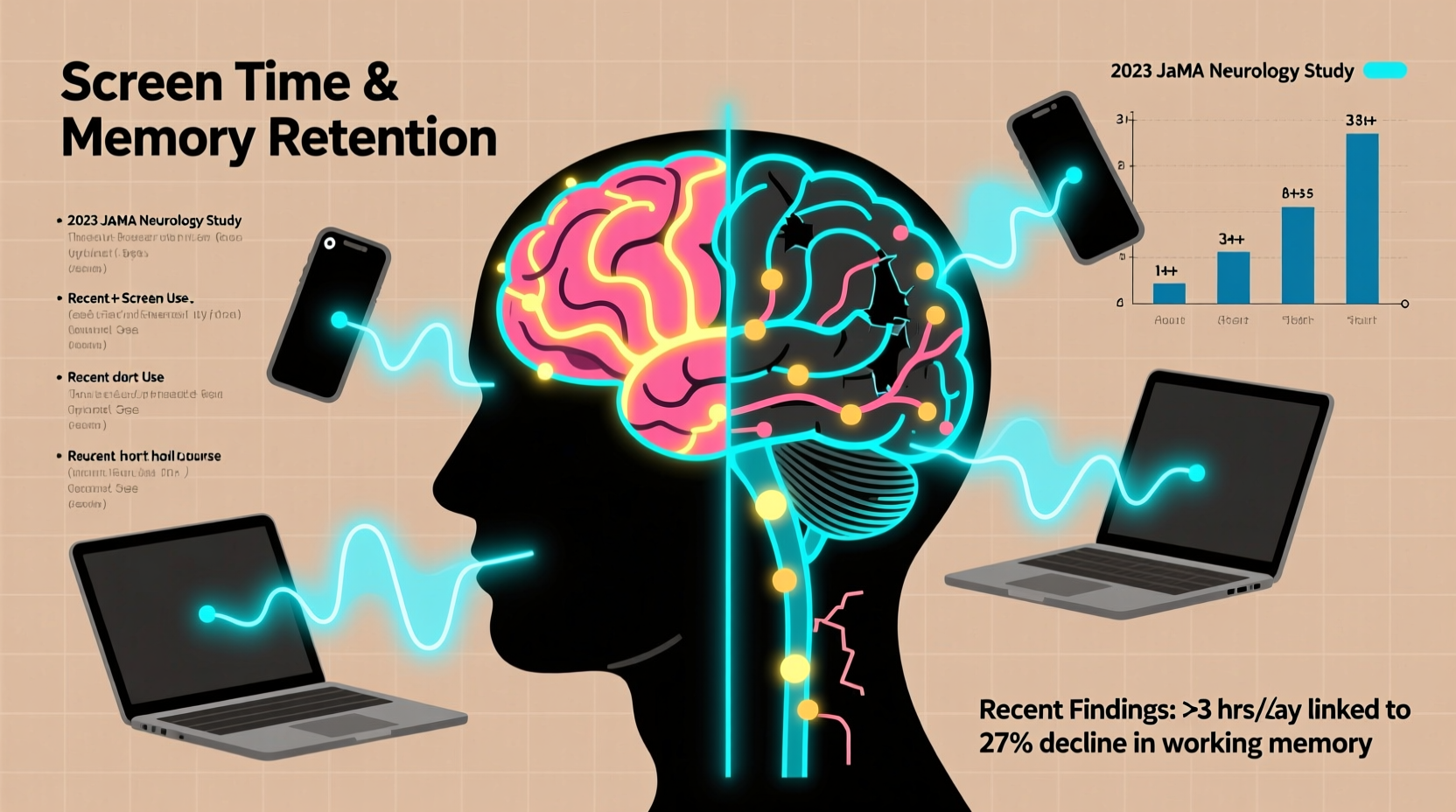
Memory retention—the brain’s ability to encode, store, and retrieve information—is essential for academic success, professional performance, and personal growth. Working memory, a subset of short-term memory, plays a crucial role in processing immediate tasks like problem-solving, following conversations, and remembering instructions. However, neuroscientists have observed a troubling trend: as screen time increases, performance on memory-related tasks declines.
A 2023 longitudinal study conducted by the University of California, Los Angeles (UCLA) followed 450 college students over two academic years. Participants were divided into low (<4 hours/day), moderate (4–7 hours/day), and high (>7 hours/day) screen users based on self-reported and tracked usage. The results showed that high screen users experienced a 15% reduction in working memory capacity compared to their low-use peers. Notably, the decline was most pronounced in tasks requiring attention switching and delayed recall—key components of effective learning.
“Digital multitasking doesn’t make us more efficient—it fragments our attention and weakens memory consolidation.” — Dr. Lena Torres, Cognitive Neuroscientist, UCLA Brain Research Institute
How Screen Time Disrupts Memory Formation
The human brain relies on focused attention and uninterrupted processing to transfer information from short-term to long-term memory. This process, known as memory consolidation, primarily occurs during deep sleep and periods of mental rest. Excessive screen time interferes with both.
Attention Fragmentation and Cognitive Overload
Young adults frequently engage in “media multitasking”—simultaneously browsing social media, texting, watching videos, and studying. This constant task-switching floods the prefrontal cortex with stimuli, impairing its ability to prioritize and encode meaningful information. A 2022 meta-analysis published in Neuropsychologia concluded that chronic media multitaskers exhibit weaker neural connectivity in brain regions associated with memory and executive control.
Sleep Disruption and Blue Light Exposure
Evening screen use suppresses melatonin production due to blue light emission, delaying sleep onset and reducing sleep quality. Poor sleep directly undermines memory consolidation. A Harvard Medical School study found that participants who used screens within one hour of bedtime had 23% lower recall accuracy the next day compared to those who read physical books before sleeping.
Passive Consumption vs. Active Learning
Scrolling through curated content often involves passive absorption rather than active engagement. Unlike reading or writing, which stimulate deeper cognitive processing, passive screen activities do not require the brain to organize or reflect on information. As a result, retention is minimal. Researchers at the University of Toronto refer to this phenomenon as “cognitive offloading”—the brain’s tendency to treat external devices as memory storage, weakening internal recall mechanisms.
Recent Findings: Key Studies and Data Trends
Over the past three years, multiple peer-reviewed studies have reinforced the connection between screen habits and memory performance. Below is a summary of pivotal findings:
| Study | Sample Size | Key Finding | Published In |
|---|---|---|---|
| UCLA Longitudinal Screen Use Study (2023) | 450 undergraduates | High screen users showed 15% lower working memory scores after 18 months | Journal of Cognitive Neuroscience |
| Oxford Digital Habits & Cognition Survey (2022) | 2,100 young adults (18–30) | Each additional hour of recreational screen time correlated with 4-point drop in verbal memory tests | Nature Human Behaviour |
| McGill University fMRI Study (2024) | 60 participants | Heavy social media users exhibited reduced hippocampal activation during memory tasks | Cerebral Cortex |
The hippocampus, a region critical for forming new memories, appears particularly vulnerable to digital overstimulation. Functional MRI scans from the McGill study revealed that participants who spent more than 6 hours daily on interactive screens (e.g., TikTok, Instagram, messaging apps) had less gray matter density in the posterior hippocampus—a change typically seen in early cognitive aging.
Actionable Strategies to Protect Memory Health
Reducing screen time doesn’t mean abandoning technology—it means using it intentionally. The goal is to shift from reactive consumption to purposeful engagement. Here are seven evidence-based practices to support memory retention:
1. Implement the 50/10 Rule
Work or study in 50-minute blocks followed by 10-minute screen-free breaks. During breaks, engage in physical movement, mindfulness, or analog note review. This rhythm aligns with the brain’s ultradian cycles, enhancing focus and retention.
2. Designate Tech-Free Zones and Times
Establish boundaries such as no screens during meals, one hour before bed, or in the bedroom. These limits reduce cognitive clutter and improve sleep hygiene—both vital for memory consolidation.
3. Practice Active Recall Instead of Passive Review
When studying or learning new material, close your laptop or put your phone down and verbally summarize key points. This technique forces the brain to retrieve information, strengthening neural pathways.
4. Replace Scrolling with Deep Reading
Dedicate 20–30 minutes daily to reading physical books or long-form articles without distractions. Deep reading promotes sustained attention and narrative comprehension, both linked to improved memory function.
5. Leverage Digital Tools Mindfully
Use apps like Forest or Freedom to block distracting websites during work sessions. Schedule specific times for checking messages instead of responding instantly. Controlled use enhances productivity without sacrificing connectivity.
Mini Case Study: Sarah’s Semester Turnaround
Sarah, a 22-year-old psychology major, struggled with retaining lecture material despite attending every class and reviewing her notes nightly. Midway through her spring semester, she scored poorly on two consecutive exams. After consulting her academic advisor, she participated in a campus cognitive wellness program that included screen usage tracking.
The data revealed she averaged 8.5 hours of recreational screen time daily—mostly TikTok, Instagram, and YouTube—often while attempting to study. Following the program’s recommendations, Sarah implemented the 50/10 rule, deleted social media apps from her phone, and began reading textbooks in a quiet library corner without her laptop nearby.
Within six weeks, her quiz scores improved by 32%, and she reported feeling “less mentally foggy.” At the end of the term, she earned her highest GPA to date. Her experience reflects a broader trend: intentional screen management can reverse memory fatigue and restore cognitive clarity.
Checklist: Building a Memory-Friendly Digital Routine
- ✅ Track your daily screen time using built-in device tools or apps like Moment or Screen Time
- ✅ Limit recreational screen use to under 5 hours per day
- ✅ Avoid screens at least 60 minutes before bedtime
- ✅ Replace passive scrolling with active learning (e.g., summarizing, teaching, writing)
- ✅ Schedule two 20-minute tech-free walks daily to boost cerebral blood flow
- ✅ Use physical notebooks for note-taking during lectures or meetings
- ✅ Perform weekly “digital detox” sessions (e.g., Sunday mornings offline)
Frequently Asked Questions
Can reducing screen time really improve memory?
Yes. Multiple studies show that cutting recreational screen use—even by 2–3 hours daily—leads to measurable improvements in attention span, working memory, and information recall within 4 to 6 weeks.
Is all screen time harmful to memory?
No. Purposeful screen use—such as reading academic articles, attending virtual lectures, or using educational apps—can support learning when done mindfully. The issue lies in unstructured, passive, or multitasking-heavy usage.
What is the ideal screen time limit for optimal memory function?
Research suggests keeping non-essential screen time under 5 hours per day. For students or knowledge workers, prioritizing single-tasking and incorporating screen breaks every 50 minutes maximizes cognitive efficiency.
Conclusion: Reclaim Your Cognitive Edge
The convenience of digital devices comes at a hidden cost—one that accumulates silently in the form of weakened memory and scattered attention. But the brain is adaptable. With conscious effort, young adults can recalibrate their relationship with technology and reclaim their cognitive potential. It starts with small, consistent changes: putting the phone down during study sessions, choosing real books over endless feeds, and protecting sleep like a precious resource.
Memory is not just about recalling facts—it’s the foundation of identity, decision-making, and growth. By managing screen time wisely, you’re not just preserving memory; you’re investing in a sharper, more resilient mind. Start today. Your future self will remember the difference.




 浙公网安备
33010002000092号
浙公网安备
33010002000092号 浙B2-20120091-4
Comments
No comments yet. Why don't you start the discussion?