
Hair breakage is a common concern for people with all hair types, especially those who frequently style their hair. One of the most overlooked culprits behind split ends, frizz, and weakened strands is the humble hair tie. Traditional elastic bands—especially those made from synthetic rubber or coated in rough fabric—are notorious for tugging, snagging, and weakening hair over time. In contrast, silk scrunchies have gained popularity as a gentler alternative. But is there real evidence that silk scrunchies outperform standard elastics when it comes to preventing breakage? The answer lies in material science, friction dynamics, and long-term hair care practices.
Silk scrunchies aren’t just a luxury fashion accessory—they’re engineered to reduce mechanical stress on hair. Unlike conventional elastics that grip and pull, silk offers a smooth surface that glides through strands without catching. This fundamental difference plays a critical role in minimizing damage during both wear and removal. For anyone struggling with thinning edges, split ends, or general fragility, switching from traditional elastics to silk scrunchies may be one of the simplest yet most effective changes they can make.
How Hair Breakage Occurs with Standard Elastics
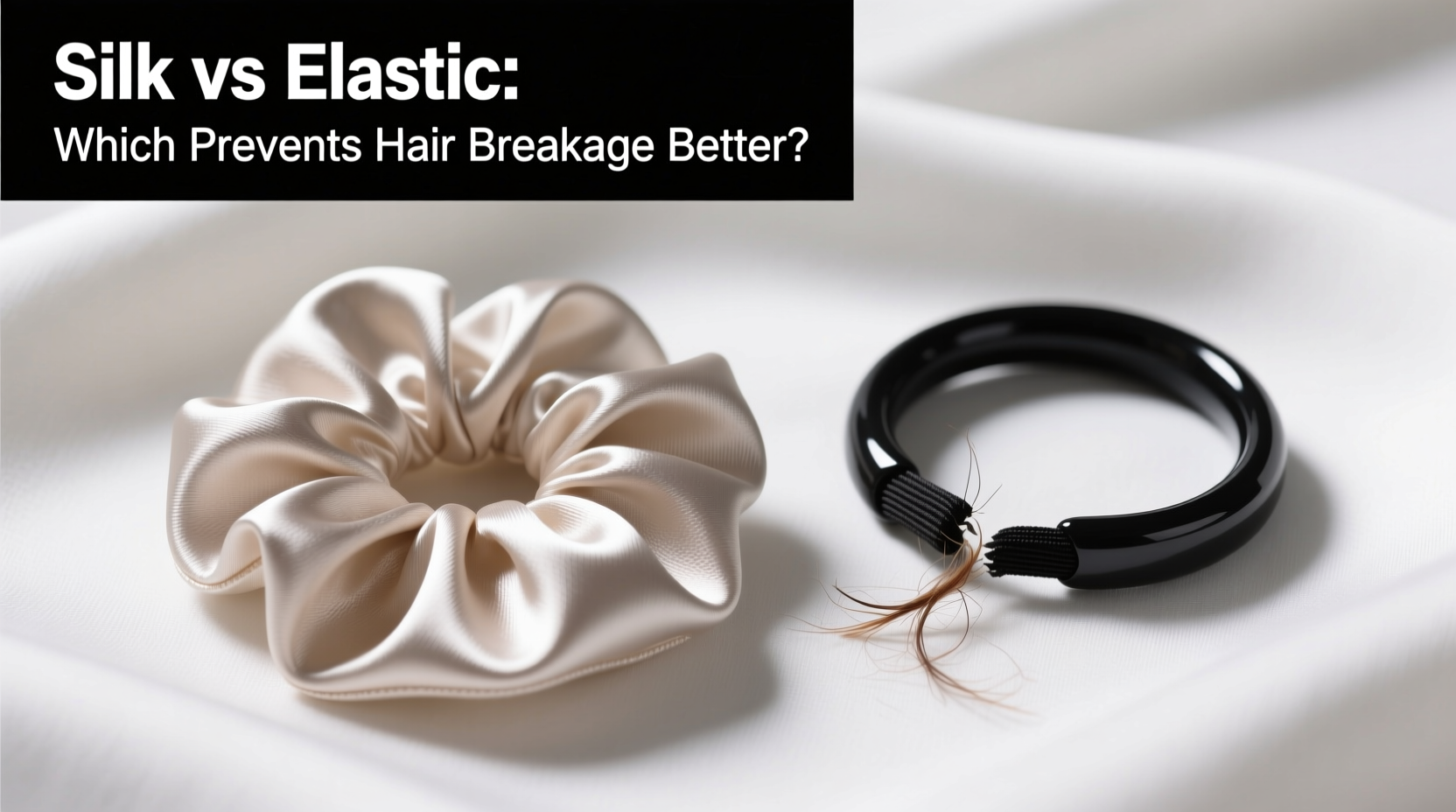
Most conventional hair ties rely on tight rubber cores wrapped in cotton, polyester, or nylon fabric. While functional, these materials create significant friction against the hair shaft. When you twist an elastic into place, microscopic fibers catch on cuticles—the outer layer of the hair strand. Over time, this repeated snagging lifts and damages the cuticle, leading to split ends and breakage.
The problem intensifies during removal. Pulling a standard elastic through hair often requires force, especially if the band has tightened overnight or after movement. This pulling motion exerts tensile stress on individual strands, particularly at the roots and mid-lengths. Fine or chemically treated hair is especially vulnerable, as its structure is already compromised.
Additionally, many elastics lack stretch recovery. After repeated use, the rubber degrades and loses elasticity, making it harder to remove without yanking. Some users resort to cutting damaged elastics off their hair—a drastic measure that underscores how harmful they can become.
“Hair breakage isn’t always due to poor nutrition or heat styling. Everyday accessories like tight elastics contribute significantly to structural fatigue.” — Dr. Lena Torres, Trichologist & Hair Health Researcher
The Science Behind Silk and Reduced Friction
Silk is a natural protein fiber produced by silkworms, known for its smooth texture and low coefficient of friction. In practical terms, this means silk creates less resistance when sliding against other surfaces—including human hair. Studies measuring surface interaction show that silk generates up to 40% less friction than cotton and even more compared to synthetic fabrics commonly used in hair ties.
This reduced friction translates directly into less tangling and fewer snags. When you remove a silk scrunchie, it slides off smoothly instead of catching on knots or kinks. There’s no need to tug or pull, which drastically reduces the risk of snapping delicate strands.
Beyond surface smoothness, silk also helps maintain moisture balance. Cotton and polyester absorb moisture from hair, which can lead to dryness and brittleness over time. Silk, however, is non-absorbent and doesn’t leach natural oils from the scalp or strands. This property supports overall hair integrity, especially for curly, coily, or dry textures that rely on hydration to stay strong.
Comparative Analysis: Silk Scrunchie vs. Elastic Hair Tie
| Feature | Silk Scrunchie | Standard Elastic |
|---|---|---|
| Friction Level | Low – smooth glide prevents snagging | High – rough fabric catches on cuticles |
| Mechanical Stress | Minimal – gentle hold without tension | High – tight grip strains roots and mid-shafts |
| Moisture Interaction | Non-absorbent – preserves natural oils | Absorptive – draws moisture from hair |
| Durability | Long-lasting with proper care | Rubber degrades quickly; fabric wears out |
| Breakage Risk | Low – ideal for fragile or fine hair | High – contributes to daily micro-tears |
| Nighttime Use | Safe – reduces sleep-time tangling | Risky – increases friction on pillowcase |
The data clearly favors silk scrunchies when the goal is minimizing physical damage. While both options serve the basic function of holding hair back, silk does so while actively supporting hair health rather than compromising it.
Real-World Impact: A Case Study in Hair Preservation
Jamila R., a 32-year-old educator with 3C/4A curly hair, had struggled with chronic breakage along her hairline for years. She attributed it to protective styling but noticed worsening thinning at her temples despite avoiding braids and weaves. After consulting a trichologist, she was advised to audit her daily hair accessories.
Jamila switched from tight, coated elastics to wide-band silk scrunchies for her ponytails and buns. Within three weeks, she reported less morning frizz and fewer loose strands on her pillow. After two months, her stylist noted visible improvement in edge density during a trim. “I didn’t realize how much damage my old elastics were doing,” she said. “Now I use silk scrunchies even at night, and my hair feels stronger than it has in years.”
This experience aligns with clinical observations: reducing mechanical trauma—even from small sources—can yield measurable improvements in hair retention and strength over time.
Best Practices for Using Silk Scrunchies Effectively
Simply owning a silk scrunchie isn’t enough. To maximize protection, follow these guidelines:
- Choose the right size: Opt for medium to large scrunchies that distribute tension evenly. Small bands concentrate pressure on fewer strands.
- Avoid excessive tightness: Even silk can cause strain if pulled too tightly. Keep styles loose, especially near the crown and nape.
- Use for low-manipulation styles: Ideal for loose buns, half-up styles, and nighttime wear. Avoid twisting repeatedly, which can still stress roots.
- Clean regularly: Hand-wash every 2–3 weeks with mild detergent to prevent oil buildup and maintain silk integrity.
- Store properly: Keep in a drawer away from direct sunlight to prevent fiber degradation.
Common Misconceptions About Hair Ties and Damage
Many believe that any soft-looking fabric-covered elastic is safe for hair. However, unless the material is genuinely smooth and non-abrasive—like mulberry silk—most \"soft\" elastics still pose risks. Knit cotton, velvet, and printed polyester may feel plush but often pill or fray, creating micro-hooks that snag hair.
Another myth is that breakage only comes from aggressive styling. In reality, cumulative micro-damage from daily habits—like using the wrong hair tie—adds up over months and years. Prevention starts with consistent, low-impact choices, not emergency fixes after damage occurs.
Some also assume silk scrunchies are too delicate for daily use. On the contrary, high-quality silk scrunchies with reinforced stitching and durable inner bands can last longer than cheap elastics when cared for properly. They represent an investment in long-term hair wellness.
Step-by-Step Guide to Transitioning from Elastics to Silk Scrunchies
If you're ready to make the switch, follow this simple five-step process:
- Inventory Your Current Hair Ties: Gather all your existing elastics and assess their condition. Discard any with fraying fabric, exposed rubber, or stiffness.
- Research Quality Brands: Look for scrunchies made from 100% mulberry silk (not “silk-like” polyester). Check for seamless wraps and flexible inner bands.
- Start with Two or Three: Replace your most-used elastics first—those for daily ponytails or bedtime use.
- Adjust Your Styling Technique: Use looser holds and avoid wrapping multiple times. Let the smoothness of silk do the work, not tension.
- Monitor Results Over Four Weeks: Track shedding, tangles, and edge health. Note any reduction in flyaways or broken pieces.
Within a month, most users notice softer hair, fewer tangles upon waking, and improved manageability throughout the day.
Frequently Asked Questions
Can silk scrunchies really prevent hair breakage?
Yes. By reducing friction and eliminating abrasive contact, silk scrunchies minimize cuticle damage and prevent unnecessary pulling. While they won’t fix underlying issues like nutritional deficiencies or chemical overload, they play a key role in preventing mechanical breakage.
Are silk scrunchies suitable for all hair types?
Absolutely. Fine, straight hair benefits from reduced snagging, while thick, curly, or coily textures gain from minimized tangling and preserved moisture. Even short-haired individuals can use them for top-knots or securing bangs without risking root stress.
Do silk scrunchies hold hair as securely as regular elastics?
When designed well, yes. High-quality silk scrunchies use flexible inner bands that provide secure hold without excessive tightness. They’re especially effective for medium to low-tension styles. For high-intensity workouts, consider a silk-covered athletic band for added grip.
Conclusion: A Small Change with Lasting Benefits
Switching from standard elastics to silk scrunchies is more than a trend—it’s a scientifically supported shift toward healthier hair maintenance. The reduction in friction, preservation of natural oils, and elimination of abrasive contact collectively lower the daily wear and tear that leads to breakage. Whether you have fine strands prone to snapping or dense curls vulnerable to tangling, silk scrunchies offer a simple, elegant solution.
This change doesn’t require overhauling your entire routine. It starts with replacing one damaging tool with a gentler alternative. Over time, that single swap can lead to stronger ends, fuller edges, and greater confidence in your hair’s resilience.




 浙公网安备
33010002000092号
浙公网安备
33010002000092号 浙B2-20120091-4
Comments
No comments yet. Why don't you start the discussion?