
Sleeping with braids has long been a go-to technique among people with curly, wavy, or textured hair. Advocates claim it enhances curl definition, reduces frizz, and saves time in the morning. But others warn of potential damage—especially when braids are too tight, worn too frequently, or made with improper techniques. So, is this nighttime ritual helping your curls thrive or silently contributing to hair breakage? The answer isn’t black and white. It depends on how you braid, how often, and what type of hair you have. This article breaks down the science, shares expert insights, and offers practical guidance to help you make an informed decision.
The Science Behind Braiding and Curl Formation
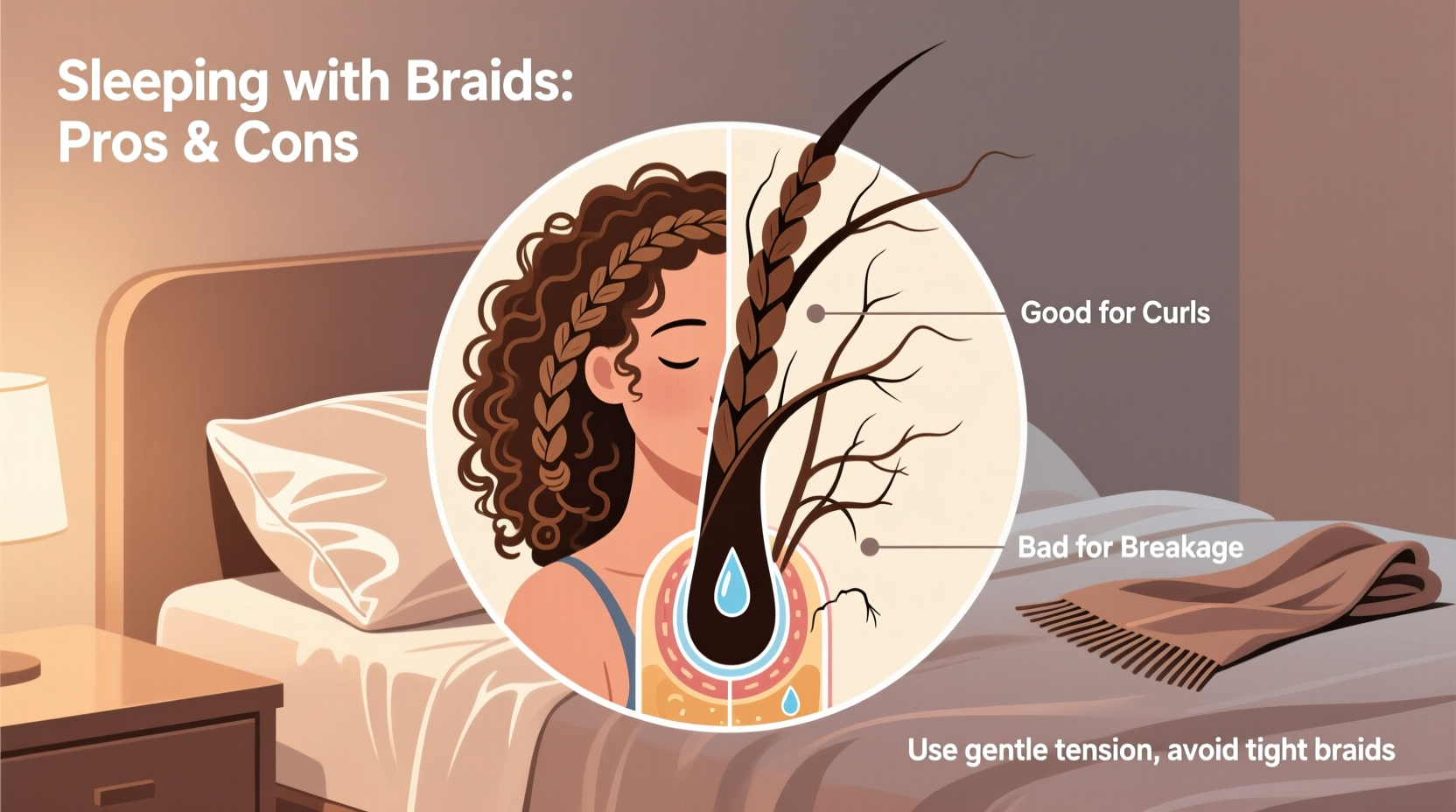
Braiding damp or dry hair overnight works by setting the hair into a specific shape as it dries or rests. When hair is plaited before sleep, the strands conform to the structure of the braid, which can influence curl pattern upon unraveling. For many with naturally wavy or curly hair, this method helps encourage uniform wave formation and minimizes randomness in curl direction.
The effectiveness largely hinges on moisture retention and tension. If done correctly—with loose braids and proper preparation—sleeping with braids can lock in hydration and reduce friction against the pillowcase, both of which are beneficial for curl integrity. However, excessive tension at the roots or along the hair shaft can lead to mechanical stress, weakening the cuticle and increasing susceptibility to split ends and breakage.
According to Dr. Zoe Draelos, a board-certified dermatologist specializing in cosmetic dermatology, “Hair is most vulnerable when wet. Applying tension through tight braiding during this phase increases the risk of structural damage.” This insight underscores the importance of technique: not all braiding is created equal.
Benefits of Sleeping with Braids for Curly Hair
When practiced mindfully, sleeping with braids offers several advantages for curl preservation and enhancement:
- Enhanced curl definition: Braids set the hair into consistent patterns, resulting in more defined waves or spiral curls once released.
- Reduced frizz: Encasing hair in braids minimizes exposure to environmental factors like humidity and friction from cotton pillowcases.
- Time-saving styling: Wake up with pre-formed curls, reducing the need for heat tools that contribute to long-term damage.
- Morning volume control: Especially useful for thick or voluminous hair types that tend to puff out overnight.
- Protective styling: Braids act as a shield, keeping ends tucked away and reducing tangling and snagging during sleep.
Potential Risks: How Braids Can Cause Breakage
Despite their popularity, braids aren’t inherently safe. Mismanagement can lead to avoidable hair damage. Common issues include:
- Traction alopecia: Caused by prolonged pulling on follicles, especially around the hairline and temples. This condition can result in permanent hair loss if unaddressed.
- Cuticle abrasion: Rough handling or using non-slip elastics can cause surface-level damage, leading to dryness and splitting.
- Mattress friction: Even with braids, sleeping on cotton sheets creates resistance that weakens strands over time.
- Moisture trapping: Tight braids on damp hair may prevent full drying, creating a breeding ground for mildew or scalp irritation.
“Tight hairstyles—even temporary ones like overnight braids—can exert enough force to damage the hair follicle. I’ve seen patients develop receding hairlines simply from habitual tight ponytails or braids.” — Dr. Angela Jenkins, Trichologist
The risk escalates with frequency. Wearing braids every night without rest periods denies the scalp recovery time, increasing vulnerability to micro-trauma. Fine or chemically treated hair is particularly susceptible.
Best Practices for Safe Nighttime Braiding
To enjoy the benefits of braided curls without compromising hair health, follow these evidence-based guidelines:
- Braid only slightly damp hair: Fully wet hair is fragile. Allow it to air-dry until about 70% dry before braiding.
- Keep braids loose: Avoid taut sections, especially near the roots. Your scalp should feel no pressure.
- Use soft, snag-free ties: Opt for silk scrunchies or coil-free elastic bands designed for delicate hair.
- Limits frequency: Reserve braiding for 2–3 nights per week rather than nightly use.
- Protect with satin: Sleep on a satin pillowcase or wear a satin bonnet over your braids to reduce friction.
- Hydrate before braiding: Apply a leave-in conditioner or light oil (like jojoba or argan) to seal in moisture and provide slip.
Step-by-Step Guide: How to Braid Safely for Morning Curls
Follow this routine to achieve beautiful, healthy results:
- Prep your hair: After washing, gently detangle with a wide-tooth comb and apply a leave-in conditioner.
- Section loosely: Divide hair into 2–4 sections depending on thickness. Avoid parting too tightly.
- Braid gently: Start with a loose three-strand braid from root to tip. Don’t pull; let gravity assist.
- Secure softly: Fasten ends with a satin scrunchie or coil-free tie—never standard rubber bands.
- Protect overnight: Cover with a satin bonnet or sleep on a satin pillowcase.
- Unravel carefully: In the morning, undo braids starting from the ends, working upward with fingers—not a brush.
- Refresh curls: Spritz with water or a curl refresher, then scrunch to reactivate shape.
Do’s and Don’ts of Overnight Braiding
| Do’s | Don’ts |
|---|---|
| Use wide, soft hair ties | Use tight elastics or metal clips |
| Braid on mostly dry hair | Braid soaking wet hair |
| Limit braiding to 2–3 times/week | Sleep in braids every night |
| Apply a light moisturizer before braiding | Go to bed with dry, untreated hair |
| Sleep on satin or silk | Sleep on cotton pillowcases |
| Unravel braids with fingers | Yank or aggressively brush out knots |
Real-Life Example: A Case Study in Balance
Maya, a 29-year-old with 3C curls, struggled with inconsistent curl patterns and excessive frizz. She began sleeping in two large braids three nights a week to enhance definition. Initially, her curls looked bouncier and required less styling in the morning. However, after six weeks of daily braiding—including tight fishtail styles—she noticed thinning along her hairline and increased shedding.
After consulting a trichologist, Maya learned she was experiencing early signs of traction alopecia. She adjusted her routine: switching to looser braids, reducing frequency to twice weekly, incorporating a satin bonnet, and adding weekly deep conditioning treatments. Within two months, her shedding decreased, and her curls remained defined without the strain. Her experience highlights the fine line between benefit and harm—and the importance of listening to your hair’s signals.
FAQ: Common Questions About Sleeping with Braids
Can sleeping with braids cause permanent hair loss?
Yes, if braids are consistently too tight, especially around the edges. Traction alopecia—a form of hair loss caused by constant pulling—can become permanent if not addressed early. Looser styles and reduced frequency significantly lower this risk.
Are some braid types safer than others?
Absolutely. Large, loose three-strand braids are safest. Small braids, cornrows, or tight French braids increase tension and are more likely to cause damage. For overnight wear, simplicity and looseness are key.
How do I know if my braids are too tight?
If you feel any pulling, discomfort, or headache after braiding, they’re too tight. Additionally, visible indentations on the scalp or raised bumps along the hairline are warning signs.
Final Verdict: Good for Curls, But Only With Caution
Sleeping with braids can be excellent for enhancing curl definition and protecting hair—but only when done correctly. The practice is neither universally good nor bad; it’s conditional. When applied with care, moderation, and attention to hair health, braiding overnight supports curl formation and reduces daily manipulation. But when overused or executed poorly, it becomes a source of cumulative damage.
The key lies in balance: embrace the benefits while respecting your hair’s limits. Prioritize gentle techniques, protective materials, and regular rest days. Pay attention to how your scalp and strands respond. Healthy curls aren’t built overnight—they’re maintained through consistent, informed care.




 浙公网安备
33010002000092号
浙公网安备
33010002000092号 浙B2-20120091-4
Comments
No comments yet. Why don't you start the discussion?