
Sleep is a cornerstone of health, yet millions struggle to achieve consistent, restorative rest. In response, many turn to tools like white noise machines, apps, or fans to create a steady auditory backdrop that drowns out disruptive sounds. While white noise has gained popularity as a sleep aid, a growing debate questions whether it genuinely enhances sleep quality—or simply masks underlying problems that require more attention. Understanding the difference between symptom management and long-term solutions is essential for making informed decisions about sleep hygiene.
The Science Behind White Noise and Sleep
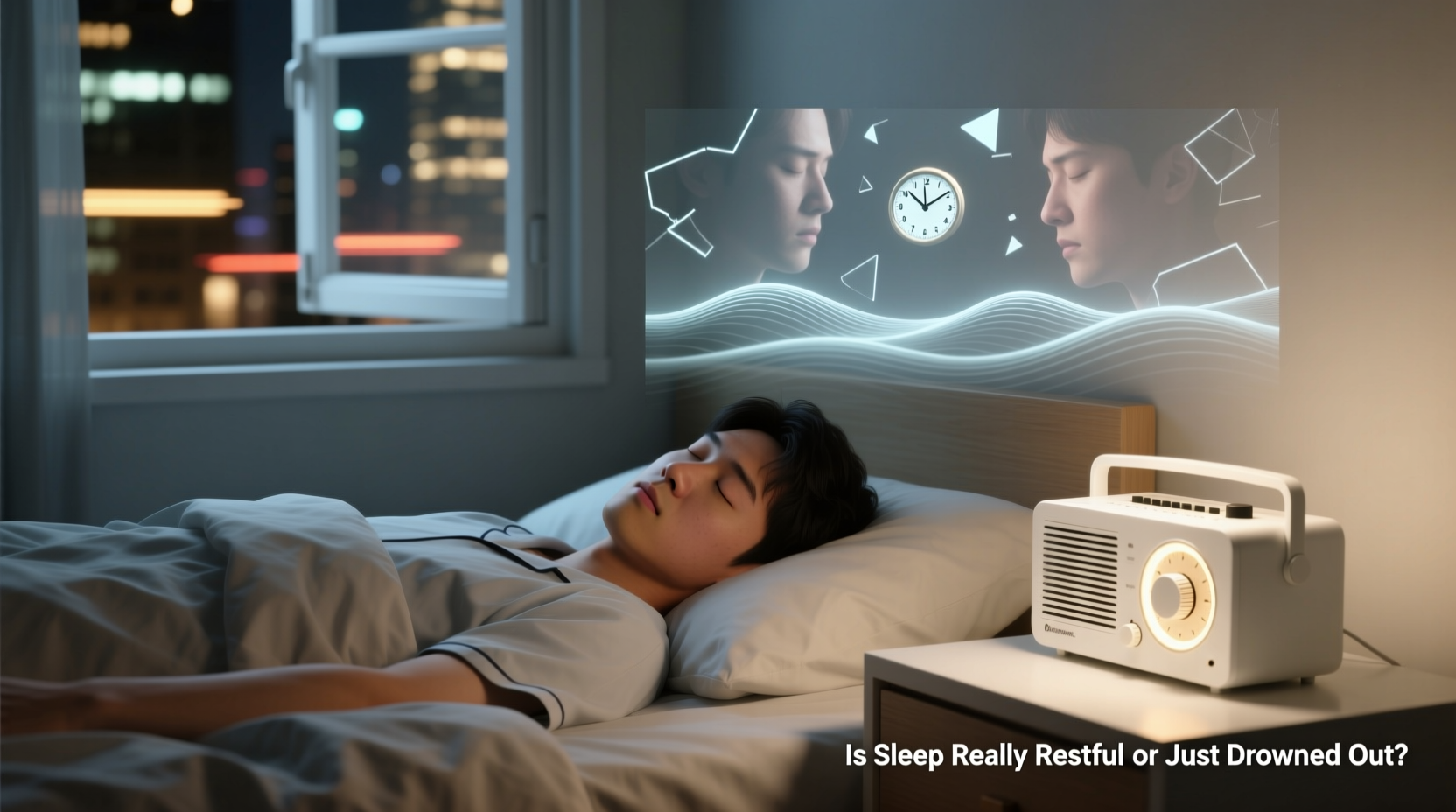
White noise is a type of sound that contains all frequencies audible to the human ear, distributed evenly across the spectrum. Think of the static from an untuned radio or the hum of a fan. Its primary function in sleep is to reduce the contrast between background sounds and sudden, jarring noises—like a slamming door or barking dog—that can trigger micro-awakenings during light sleep stages.
Studies suggest that white noise can improve sleep onset latency (the time it takes to fall asleep) and reduce nighttime awakenings, especially in noisy environments such as hospitals or urban apartments. A 2020 meta-analysis published in Sleep Medicine Reviews found that white noise significantly improved sleep efficiency in both adults and infants when external noise levels were unpredictable.
However, the effect is largely mechanical: white noise doesn’t alter the biological drivers of poor sleep; it acts as an acoustic buffer. This raises an important distinction—does using white noise fix sleep dysfunction, or does it merely cover up environmental stressors while leaving root causes unaddressed?
When White Noise Helps: Practical Benefits
For certain individuals and situations, white noise provides measurable benefits. It’s particularly effective in environments where control over ambient sound is limited. Below are common scenarios where white noise demonstrates clear utility:
- Urban dwellers exposed to traffic, sirens, or late-night neighbors.
- New parents trying to soothe infants or maintain sleep despite household disruptions.
- Shift workers sleeping during daylight hours when external noise is high.
- People with mild auditory sensitivity who are easily startled by abrupt sounds.
In these cases, white noise functions similarly to blackout curtains—it creates a controlled sensory environment that supports better sleep conditions. It can also help train the brain to associate a consistent sound with bedtime, reinforcing circadian rhythms through auditory cues.
“Consistent use of white noise can act as a sleep cue, signaling the brain that it’s time to wind down—similar to how dimming lights supports melatonin release.” — Dr. Lena Patel, Sleep Neurologist at Boston Sleep Institute
Masking vs. Solving: The Hidden Risks of Dependency
While white noise may offer short-term relief, reliance on it without addressing deeper sleep issues can be problematic. Chronic insomnia, sleep apnea, anxiety-related hyperarousal, or poor sleep hygiene often manifest as difficulty falling or staying asleep. Using white noise in these cases might reduce one symptom—environmental noise disruption—but ignore the core condition.
Consider someone with undiagnosed obstructive sleep apnea. They may use white noise to drown out their partner’s complaints about snoring, but the machine does nothing to address oxygen desaturation or fragmented sleep architecture. Over time, this masking effect delays diagnosis and allows health risks—such as hypertension or cognitive decline—to progress unchecked.
Likewise, individuals with high stress or rumination may find temporary comfort in white noise, but if intrusive thoughts persist, the root psychological factors remain untreated. In such cases, white noise becomes a crutch rather than a cure.
Signs You Might Be Masking, Not Healing
- You rely on white noise every single night and feel unable to sleep without it—even in quiet settings.
- You still wake up fatigued despite “sleeping through the night” with white noise.
- You’ve never evaluated your sleep for medical or psychological causes.
- You use increasingly loud volumes to achieve the same effect, suggesting habituation.
Comparative Analysis: White Noise vs. Alternative Sleep Supports
White noise is just one tool in a broader sleep optimization toolkit. How does it stack up against other interventions? The table below compares key attributes.
| Method | Effectiveness | Long-Term Sustainability | Addresses Root Causes? |
|---|---|---|---|
| White Noise | Moderate (for noise disruption) | Medium (risk of dependency) | Rarely |
| Cognitive Behavioral Therapy for Insomnia (CBT-I) | High | High | Yes |
| Sleep Hygiene Optimization | Moderate to High | High | Sometimes |
| Medical Treatment (e.g., CPAP for apnea) | High (when properly diagnosed) | High | Yes |
| Earplugs + Eye Mask | Moderate | High | No |
This comparison underscores that while white noise is accessible and helpful in specific contexts, it lacks the transformative potential of evidence-based treatments like CBT-I or medical interventions.
A Real-World Example: Sarah’s Sleep Journey
Sarah, a 34-year-old graphic designer living in downtown Chicago, began using a white noise app after moving into a building with thin walls. At first, it worked wonders—she fell asleep faster and stopped waking up when her neighbor’s dog barked. Encouraged, she used it nightly for over a year.
But gradually, she noticed new issues: she felt groggy in the mornings, had trouble focusing at work, and started relying on caffeine to stay alert. When she tried sleeping at a friend’s quiet countryside home, she couldn’t fall asleep without her app—even though there were no disturbances.
After consulting a sleep specialist, Sarah discovered she had moderate anxiety contributing to hyperarousal at bedtime. Her use of white noise had masked her racing thoughts initially, but over time, her brain became dependent on the sound to initiate sleep. With therapy and mindfulness training, she reduced her reliance on white noise and now uses it only occasionally during travel or noisy nights.
Sarah’s experience illustrates how a helpful tool can evolve into a dependency when not paired with broader self-assessment.
Best Practices for Responsible Use of White Noise
White noise isn’t inherently harmful—but how you use it matters. To ensure it supports rather than hinders long-term sleep health, follow this checklist:
- Evaluate your sleep environment first. Address fixable noise issues—like sealing windows or using thicker curtains—before resorting to audio masking.
- Use low-to-moderate volume. Keep output below 50 dB to prevent auditory fatigue or potential hearing damage with prolonged exposure.
- Vary the sound type. Try alternatives like pink noise (deeper, more balanced frequency distribution) or brown noise (heavier low-end tones), which some users find more soothing.
- Limit duration. Use timers so white noise shuts off after you’re likely asleep, reducing unnecessary nighttime exposure.
- Assess your overall sleep quality. Track energy levels, mood, and focus during the day—not just sleep duration—as indicators of true restfulness.
- Consult a professional if sleep problems persist. Don’t assume white noise is enough if you’re still tired, irritable, or experiencing daytime impairment.
Step-by-Step: Transitioning Away from White Noise Dependency
- Week 1: Continue using white noise but start journaling how you feel upon waking and during the day.
- Week 2: Introduce one night per week without white noise in a quiet setting. Note any differences in sleep quality.
- Week 3: Practice relaxation techniques (e.g., diaphragmatic breathing or body scans) before bed to reduce reliance on external stimuli.
- Week 4: Gradually reduce usage to two or three nights per week, focusing on creating a calm pre-sleep routine.
- Ongoing: Use white noise situationally—during travel, storms, or noisy events—rather than nightly.
“We see patients who’ve used white noise for years without realizing they have treatable conditions like restless legs syndrome or nocturnal anxiety. The noise masks the symptoms, delaying care.” — Dr. Marcus Tran, Director of the Pacific Sleep Clinic
Frequently Asked Questions
Can white noise damage hearing over time?
Prolonged exposure to white noise at high volumes—especially when played close to the ears via headphones or bedside speakers—can contribute to noise-induced hearing loss. To minimize risk, keep volume low and place devices at least three feet from the bed.
Is white noise safe for children and babies?
White noise can help infants sleep by mimicking the sounds of the womb, but caution is needed. The American Academy of Pediatrics warns against placing white noise machines inside cribs or too close to a baby’s head. Use them at a distance and turn them off once the child is asleep.
Does white noise affect deep sleep or REM cycles?
Current research shows mixed results. Some studies suggest continuous white noise may slightly suppress slow-wave (deep) sleep, while others show no significant impact. More research is needed, but occasional use appears low-risk for healthy individuals.
Conclusion: Use White Noise Wisely, Not Blindly
White noise can be a valuable ally in the pursuit of better sleep—particularly in noisy environments or during transitional periods. It can shorten sleep onset, reduce awakenings, and provide comfort. But it should not replace critical evaluation of why sleep is disrupted in the first place.
The goal isn’t just to sleep through noise, but to achieve truly restorative rest. That means being honest about whether you’re solving a problem or covering it up. If you’re using white noise as a permanent fix for chronic sleep difficulties, it may be time to look deeper—at stress levels, mental health, physical conditions, or lifestyle habits.
Treat white noise like a pair of noise-canceling headphones: useful in the right context, but not a substitute for addressing the source of the noise. By combining smart environmental adjustments with proactive health practices, you can build a sleep foundation that doesn’t depend on constant auditory masking.




 浙公网安备
33010002000092号
浙公网安备
33010002000092号 浙B2-20120091-4
Comments
No comments yet. Why don't you start the discussion?