
Sleep quality and cognitive performance are deeply interconnected. In a world of constant distractions and sensory overload, many people turn to white noise as a tool to improve rest and mental clarity. But does sleeping with white noise actually enhance brain function and focus? The answer lies in understanding how sound affects the brain during sleep, the neuroscience of auditory processing, and the long-term impact of consistent sleep hygiene on cognitive performance.
White noise—defined as a consistent blend of all audible frequencies at equal intensity—is commonly used to mask disruptive background sounds. From fans and air purifiers to smartphone apps and dedicated machines, white noise has become a staple in bedrooms across the globe. While its primary appeal is improved sleep, emerging research suggests that its influence extends into daytime cognition, memory consolidation, and attention regulation.
The Science of Sleep and Brain Function
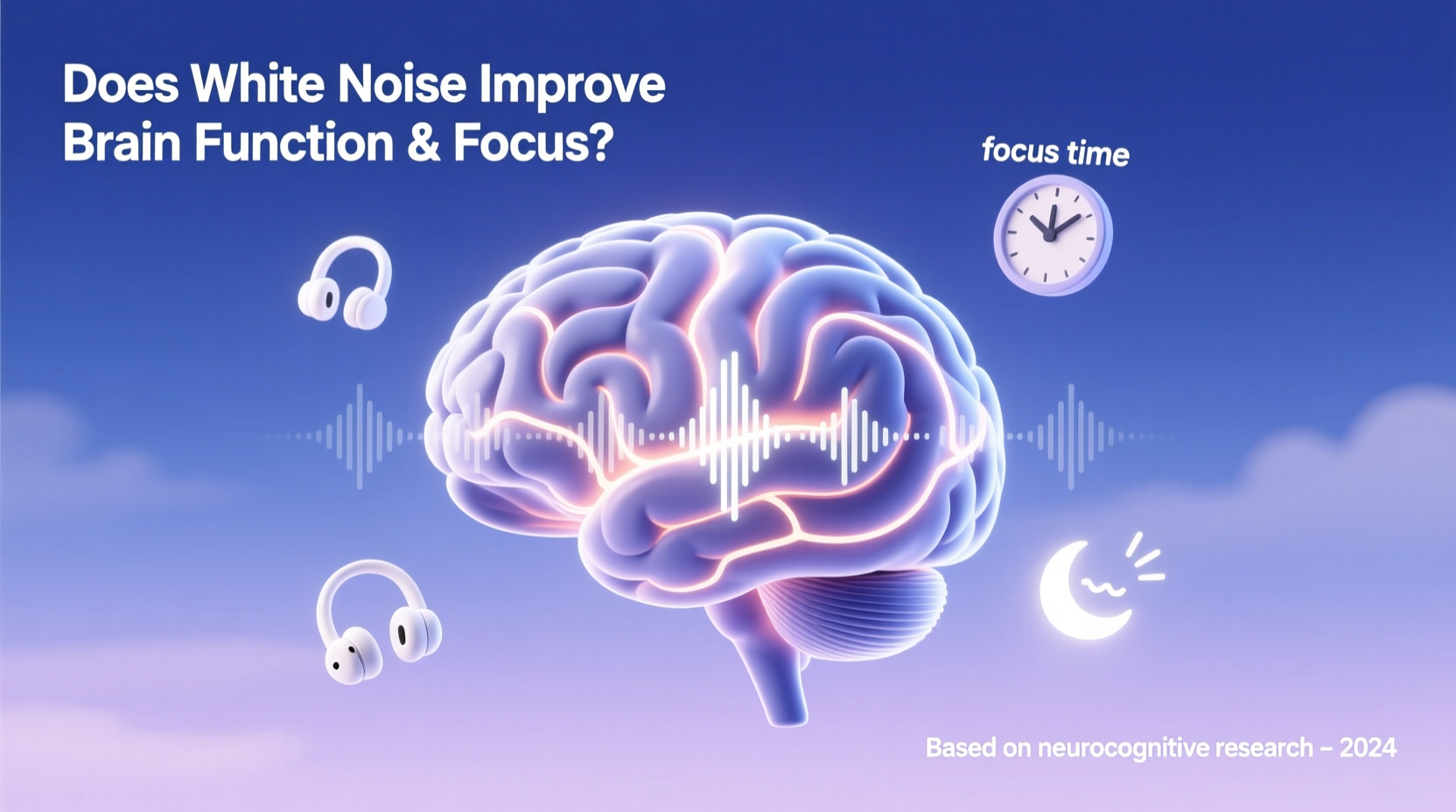
Sleep is not passive downtime—it’s an active, dynamic process essential for brain health. During deep sleep stages, particularly slow-wave sleep (SWS), the brain engages in critical maintenance: clearing metabolic waste via the glymphatic system, consolidating memories, and reorganizing neural networks. Disruptions to this process impair attention, decision-making, and emotional regulation.
Environmental noise—such as traffic, snoring, or sudden sounds—can fragment sleep by triggering micro-arousals, even if you don’t fully wake up. These disruptions reduce time spent in restorative sleep phases, leading to next-day cognitive fog. White noise acts as a buffer, creating a predictable auditory environment that reduces the brain’s sensitivity to abrupt changes in sound.
A 2023 study published in *Nature Human Behaviour* found that participants exposed to steady white noise during sleep experienced 27% fewer cortical arousals and showed improved memory recall the following day. The researchers concluded that “consistent auditory masking supports more stable sleep architecture, which in turn enhances hippocampal-dependent learning.”
“Sleep isn’t just about duration—it’s about continuity. White noise helps maintain that continuity by preventing the brain from reacting to unpredictable stimuli.” — Dr. Lena Patel, Neuroscientist at Stanford Sleep Medicine Center
How White Noise Influences Cognitive Performance
The connection between sleep quality and daytime focus is well-documented. Poor sleep impairs prefrontal cortex function—the region responsible for executive functions like attention, planning, and impulse control. By improving sleep stability, white noise indirectly supports these higher-order cognitive processes.
However, some evidence suggests white noise may have direct neurocognitive effects. Research in *Frontiers in Psychology* (2022) explored the impact of nighttime white noise on ADHD symptoms in adults. Participants who used white noise during sleep reported improved concentration, reduced mind-wandering, and faster reaction times in attention-based tasks. The effect was most pronounced in individuals with high baseline distractibility.
One theory is that white noise provides mild auditory stimulation that stabilizes neural firing patterns, similar to how background music can aid concentration in certain individuals. This phenomenon, known as stochastic resonance, proposes that low-level noise can actually enhance signal detection in neural systems.
Types of Noise and Their Cognitive Effects
Not all noise is created equal. While white noise is the most widely used, other forms such as pink and brown noise are gaining popularity for their potential cognitive benefits.
| Noise Type | Frequency Profile | Best For | Cognitive Benefit |
|---|---|---|---|
| White Noise | Equal energy per frequency | Masking sudden sounds (e.g., door slams) | Improved sleep continuity, reduced arousal |
| Pink Noise | Equal energy per octave (more bass) | Deep sleep enhancement | Increased slow-wave activity, better memory retention |
| Brown Noise | Stronger low frequencies (deeper rumble) | Focusing, tinnitus relief | Enhanced concentration, reduced mental fatigue |
Pink noise, in particular, has shown promise in boosting deep sleep. A 2017 study in *Neuron* found that older adults exposed to pink noise during SWS demonstrated significantly better word recall the next morning. The timing of the sound—synchronized with brain waves—was key to the effect.
Real-World Application: A Case Study
Consider Mark, a 34-year-old software developer living in a busy urban apartment. He struggled with inconsistent sleep due to late-night street noise and a partner who snores. Despite getting seven hours of sleep, he felt mentally sluggish by mid-morning, often missing deadlines and making avoidable errors.
After consulting a sleep specialist, Mark began using a white noise machine set to a fan-like hum at 50 decibels—just loud enough to mask external sounds but not so loud as to cause strain. Within two weeks, his sleep tracker showed a 35% increase in deep sleep duration and fewer awakenings.
More importantly, Mark noticed tangible improvements in focus. “I used to need three coffees just to stay alert,” he said. “Now I’m finishing coding tasks faster and with fewer mistakes. It’s not magic—I think my brain is finally getting the rest it needs.”
This aligns with broader findings: consistent, high-quality sleep enables sustained attention, reduces cognitive variability, and improves problem-solving efficiency.
Optimizing White Noise Use: A Step-by-Step Guide
To maximize the cognitive benefits of white noise, follow this structured approach:
- Choose the right type: Start with white noise for general sleep support. If you find it too harsh, try pink or brown noise for a deeper, more soothing effect.
- Set the proper volume: Keep sound levels between 45–55 decibels—about the level of a quiet conversation. Excessive volume can stress the auditory system over time.
- Position the device correctly: Place the speaker or machine at least 4–6 feet from your bed, directed away from your head to prevent auditory overstimulation.
- Use consistency: Play the noise every night at the same time to reinforce your brain’s sleep association with the sound.
- Combine with good sleep hygiene: Avoid screens before bed, keep your room cool and dark, and maintain a regular sleep schedule to amplify benefits.
Common Mistakes and What to Avoid
While white noise can be beneficial, misuse can negate its advantages or even harm sleep quality.
- Using it too loudly: High volumes can lead to increased heart rate and subtle sleep fragmentation, especially in sensitive individuals.
- Playing it all day: Constant exposure may reduce auditory discrimination over time. Reserve white noise for sleep and focused work sessions only.
- Ignoring personal preference: Some people find white noise irritating. If it increases anxiety or makes falling asleep harder, it’s not the right solution for you.
- Overlooking alternatives: Earplugs, soundproofing, or adaptive noise-canceling headphones might be more effective in extremely noisy environments.
Expert Recommendations and Long-Term Outlook
Dr. Arjun Mehta, a cognitive neurologist at Johns Hopkins, emphasizes moderation: “White noise is a tool, not a cure-all. When used appropriately, it supports better sleep, which is foundational for brain health. But it should complement—not replace—a holistic approach to cognitive wellness.”
Long-term use appears safe for most adults. However, caution is advised for infants and young children, as excessive noise exposure during development may interfere with language acquisition. The American Academy of Pediatrics recommends keeping infant sleep environments under 50 decibels and avoiding continuous noise machines near cribs.
For adults, the cognitive gains from improved sleep can accumulate over time. Better focus, sharper memory, and improved emotional regulation are not overnight results—they emerge from consistent, restorative rest. White noise, when integrated wisely, becomes part of a larger strategy for mental resilience.
FAQ
Can white noise improve focus during the day?
Yes, for some individuals. Background white or brown noise can reduce distractions in noisy environments, helping maintain concentration. However, results vary—some people find it distracting. Experiment during work or study sessions to see if it helps.
Is it safe to use white noise every night?
Generally, yes—provided the volume is moderate (below 55 dB) and the device is placed at a safe distance. Long-term studies show no adverse effects in adults when used responsibly.
Does white noise help with anxiety-related sleep issues?
It can. The consistent sound creates a sense of auditory safety, reducing hypervigilance in people prone to nighttime anxiety. Combined with relaxation techniques, it may improve sleep onset and reduce nighttime awakenings.
Conclusion: Harnessing Sound for Smarter Sleep and Sharper Focus
Sleeping with white noise isn’t a miracle solution, but it’s a scientifically supported practice that can enhance brain function and focus—primarily by protecting the quality and continuity of sleep. When environmental noise disrupts rest, cognitive performance pays the price. White noise, along with other colored noise options, offers a simple, accessible way to create a more stable sleep environment.
The real benefit isn’t in the sound itself, but in what it protects: uninterrupted deep sleep, memory consolidation, and the brain’s nightly maintenance cycle. Over time, these small gains compound into sharper thinking, better concentration, and greater mental endurance.




 浙公网安备
33010002000092号
浙公网安备
33010002000092号 浙B2-20120091-4
Comments
No comments yet. Why don't you start the discussion?