
Sleep is a cornerstone of health, influencing everything from cognitive performance to immune function. Among the many factors that affect sleep quality, environmental sound plays a surprisingly powerful role. For years, people have turned to white noise machines, fans, or apps to drown out disruptive sounds at night. But does this practice actually enhance deep sleep—the most restorative phase of the sleep cycle? The answer isn’t simply yes or no; it depends on individual needs, environment, and how white noise is used.
Deep sleep, also known as slow-wave sleep, occurs primarily during the first half of the night and is critical for physical recovery, memory consolidation, and hormonal regulation. Disruptions during this stage—whether from external noises or internal stressors—can reduce its duration and effectiveness. White noise, a consistent blend of sound frequencies across the audible spectrum, may help stabilize the auditory environment, reducing abrupt awakenings and supporting longer periods of uninterrupted deep sleep.
How White Noise Influences Sleep Architecture
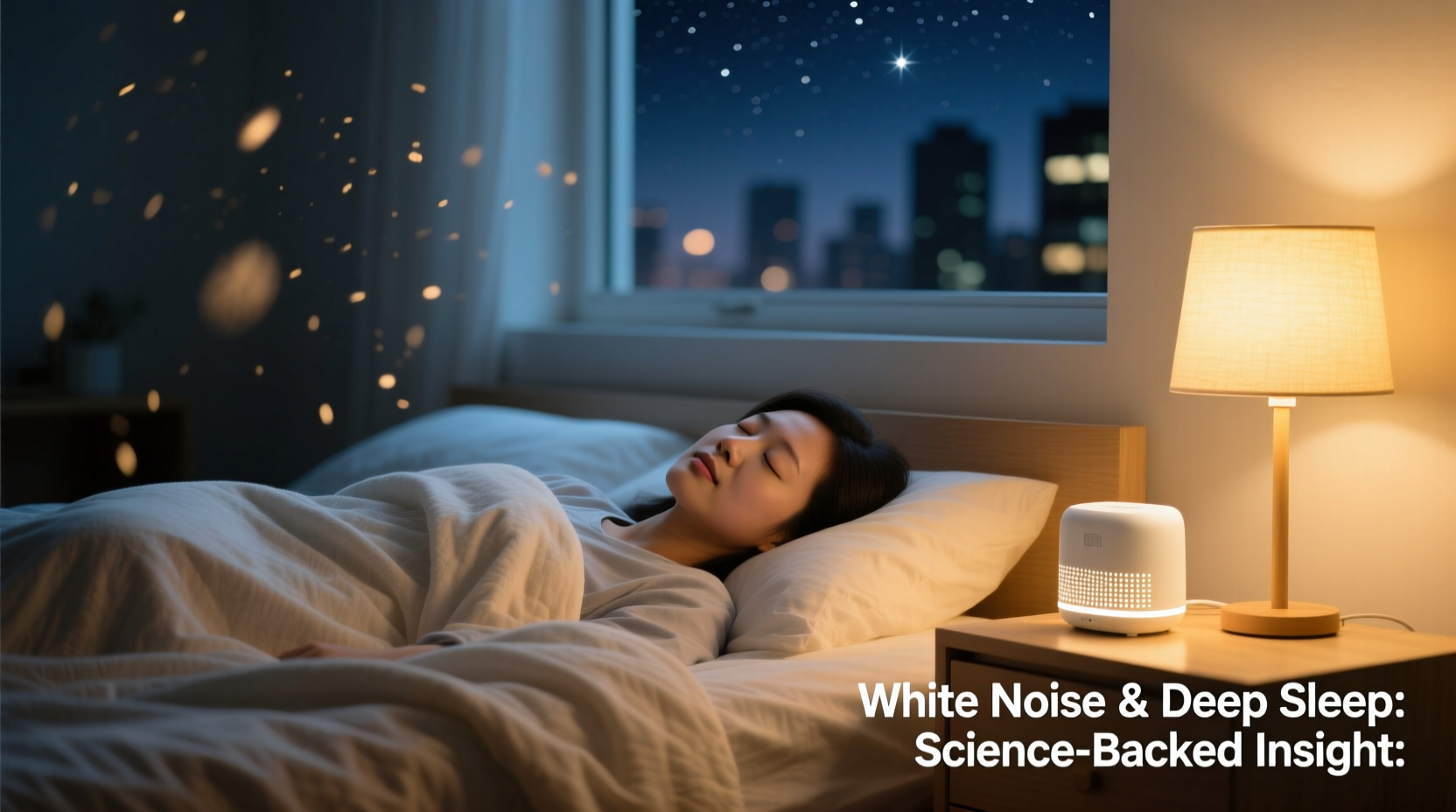
Sleep architecture refers to the cyclical pattern of sleep stages throughout the night, including light sleep, deep sleep, and REM (rapid eye movement) sleep. External stimuli, especially sudden or irregular sounds like traffic, barking dogs, or creaking floors, can interrupt transitions between these stages, particularly deep sleep.
White noise works by creating a steady auditory backdrop that masks unpredictable environmental sounds. This phenomenon, known as \"auditory masking,\" reduces the contrast between background noise and sudden disturbances. When the brain perceives fewer fluctuations in sound, it’s less likely to trigger arousal responses that pull you out of deep sleep.
A 2021 study published in *Sleep Medicine Reviews* analyzed data from 17 clinical trials and found that white noise significantly reduced sleep onset latency—the time it takes to fall asleep—and improved subjective sleep quality, especially in noisy environments such as hospitals or urban apartments. While the direct impact on deep sleep duration wasn’t always measurable, participants reported fewer awakenings and greater feelings of restfulness upon waking.
“Consistent auditory environments support stable sleep cycles. White noise doesn’t necessarily increase deep sleep directly, but by minimizing disruptions, it creates optimal conditions for it to occur.” — Dr. Lena Torres, Sleep Neurologist, Stanford Center for Sleep Sciences
Benefits and Limitations of White Noise for Deep Sleep
The use of white noise offers several advantages, particularly for individuals living in high-noise areas or those sensitive to auditory interruptions. However, it’s not universally beneficial, and improper use can lead to dependency or even hearing concerns over time.
Advantages of Using White Noise
- Noise masking: Effective at covering intermittent sounds like door slams, sirens, or partner snoring.
- Faster sleep onset: Creates a predictable auditory cue that signals the brain it’s time to relax.
- Improved sleep continuity: Reduces micro-awakenings that fragment deep sleep cycles.
- Useful for shift workers: Helps simulate nighttime conditions during daytime sleep.
Potential Drawbacks
- Habituation: Some users become dependent on white noise and struggle to sleep without it.
- Overexposure risks: Prolonged exposure to loud or poorly calibrated devices may contribute to auditory fatigue.
- Not ideal for everyone: Certain individuals find white noise irritating or overly stimulating, especially if they prefer silence.
- May mask important sounds: Could prevent awareness of alarms, crying babies, or emergencies if too loud.
Types of Noise and Their Impact on Sleep Depth
While white noise is the most commonly used, other types of sound spectra are gaining popularity for sleep enhancement. Each has unique acoustic properties that may influence deep sleep differently.
| Type of Noise | Description | Best For | Potential Downsides |
|---|---|---|---|
| White Noise | Equal intensity across all frequencies (e.g., static, fan sound) | Masking sharp, high-pitched sounds | Can feel harsh or buzzy to some listeners |
| Pink Noise | Lower frequencies emphasized (e.g., rain, wind) | Enhancing deep sleep rhythms; more natural sound | Less effective for high-frequency noise masking |
| Brown Noise | Even deeper bass tones (e.g., thunder, waterfall) | Calming for anxiety-related insomnia | May be too rumbly or overwhelming at high volumes |
| Nature Sounds | Non-spectral recordings (e.g., ocean waves, forest birds) | Psychological relaxation | Inconsistent patterns may disrupt sleep over time |
Recent research suggests pink noise may have a slight edge over white noise when it comes to deep sleep enhancement. A 2017 study from *Frontiers in Human Neuroscience* found that participants exposed to pink noise during sleep showed increased slow-wave activity and reported feeling more refreshed. The rhythmic, balanced nature of pink noise appears to synchronize with brainwave patterns associated with deep sleep, potentially amplifying its restorative effects.
Step-by-Step Guide to Optimizing White Noise for Better Deep Sleep
If you're considering using white noise to improve your deep sleep, follow this structured approach to maximize benefits while minimizing risks.
- Assess your sleep environment: Identify common noise disruptions (e.g., street traffic, HVAC systems, partner snoring).
- Choose the right type of noise: Start with white noise for general masking; try pink or brown noise if you seek a deeper, calming effect.
- Select a reliable sound source: Use a dedicated machine, fan, or app with consistent output and no looping artifacts.
- Set an appropriate volume: Keep it below 50 dB—just loud enough to mask disturbances without dominating the room.
- Position the device correctly: Place it at least 3–6 feet from your bed and directed away from your head to avoid direct exposure.
- Test over multiple nights: Give your brain time to adjust. Monitor changes in wakefulness, morning alertness, and overall restfulness.
- Evaluate dependency: Occasionally try sleeping without it to ensure you haven’t developed reliance.
Real-World Example: Urban Professional with Light Sleep
James, a 34-year-old software developer in downtown Chicago, struggled with fragmented sleep due to late-night traffic and neighbor noise. Despite maintaining good sleep hygiene, he often woke up groggy, suspecting his deep sleep was being interrupted.
After consulting a sleep coach, he began using a white noise machine set to a soft fan setting at 45 dB. He placed it across the room and used a timer to turn it off after 90 minutes. Within a week, he noticed fewer nighttime awakenings. After two weeks, he used a sleep-tracking wearable and observed a 15% increase in measured deep sleep duration.
“I didn’t think a small box could make such a difference,” James said. “Now I feel more mentally sharp in the mornings. It’s not magic, but it created the quiet consistency my brain needed.”
This case illustrates how targeted use of white noise can address specific environmental challenges and yield measurable improvements in sleep depth—even without changing other habits.
Checklist: Is White Noise Right for Your Sleep?
Before adopting white noise as part of your nightly routine, consider the following checklist to determine if it aligns with your needs:
- ✅ Do you live in a noisy environment (city, shared housing, near airports)?
- ✅ Are you frequently awakened by sudden sounds?
- ✅ Have you ruled out medical sleep disorders (e.g., sleep apnea)?
- ✅ Can you control the volume and placement of the sound source?
- ✅ Are you open to experimenting with different noise types (pink, brown)?
- ✅ Do you currently rely on earplugs, which may be uncomfortable or ineffective?
If you answered “yes” to most of these, white noise could be a valuable addition to your sleep toolkit. If not, simpler solutions like blackout curtains, cooler room temperatures, or mindfulness practices might offer better returns.
Frequently Asked Questions
Can white noise damage hearing over time?
When used at moderate volumes (below 50 dB) and at a safe distance from the bed, white noise is unlikely to cause hearing damage. However, prolonged exposure to sounds above 85 dB—such as a loud machine placed near the pillow—can contribute to noise-induced hearing loss over time. Always prioritize low-to-moderate volume settings.
Is white noise safe for children and infants?
White noise is commonly used to help infants sleep, but caution is advised. The American Academy of Pediatrics warns that some infant sound machines can emit unsafe noise levels when placed too close to cribs. If used, place the device across the room, set it to a low volume, and use it only during sleep onset rather than all night.
Does white noise work for people with insomnia?
For some individuals with insomnia, particularly those whose condition is exacerbated by environmental stressors or hyperarousal, white noise can provide a soothing anchor. However, it is not a standalone treatment. Cognitive behavioral therapy for insomnia (CBT-I) remains the gold standard, and white noise should be considered a complementary tool, not a cure.
Conclusion: Enhancing Deep Sleep Through Smarter Sound
Sleeping with white noise isn’t a universal solution, but for many, it offers a practical way to protect the integrity of deep sleep. By buffering against disruptive sounds and creating a consistent auditory environment, it helps the brain stay in restorative phases longer. While it doesn’t directly generate more deep sleep, it removes obstacles that prevent it from occurring naturally.
The key lies in intentional use—choosing the right type of noise, setting safe volume levels, and integrating it into a broader sleep-supportive lifestyle. Whether you opt for the steady hum of white noise, the soothing rhythm of pink noise, or the deep resonance of brown noise, the goal remains the same: to give your body the quiet consistency it needs to heal, recover, and thrive each night.




 浙公网安备
33010002000092号
浙公网安备
33010002000092号 浙B2-20120091-4
Comments
No comments yet. Why don't you start the discussion?