
Sleep quality and mental focus are deeply influenced by environmental stimuli, and sound plays a critical role. In recent years, white noise has gained popularity as a tool to improve concentration during work and enhance rest at night. From apps to machines, many people rely on a constant hum of static-like sound to drown out distractions. But is this widespread practice truly beneficial? Or could prolonged exposure to white noise have unintended consequences? The answer isn't straightforward—while white noise can support deeper sleep and sharper focus for some, improper use may lead to auditory fatigue, dependency, or even disrupted sleep architecture.
This article examines the neuroscience behind white noise, evaluates its impact on cognitive performance and sleep cycles, and identifies when it helps—and when it might hurt.
The Science Behind White Noise and Brain Function
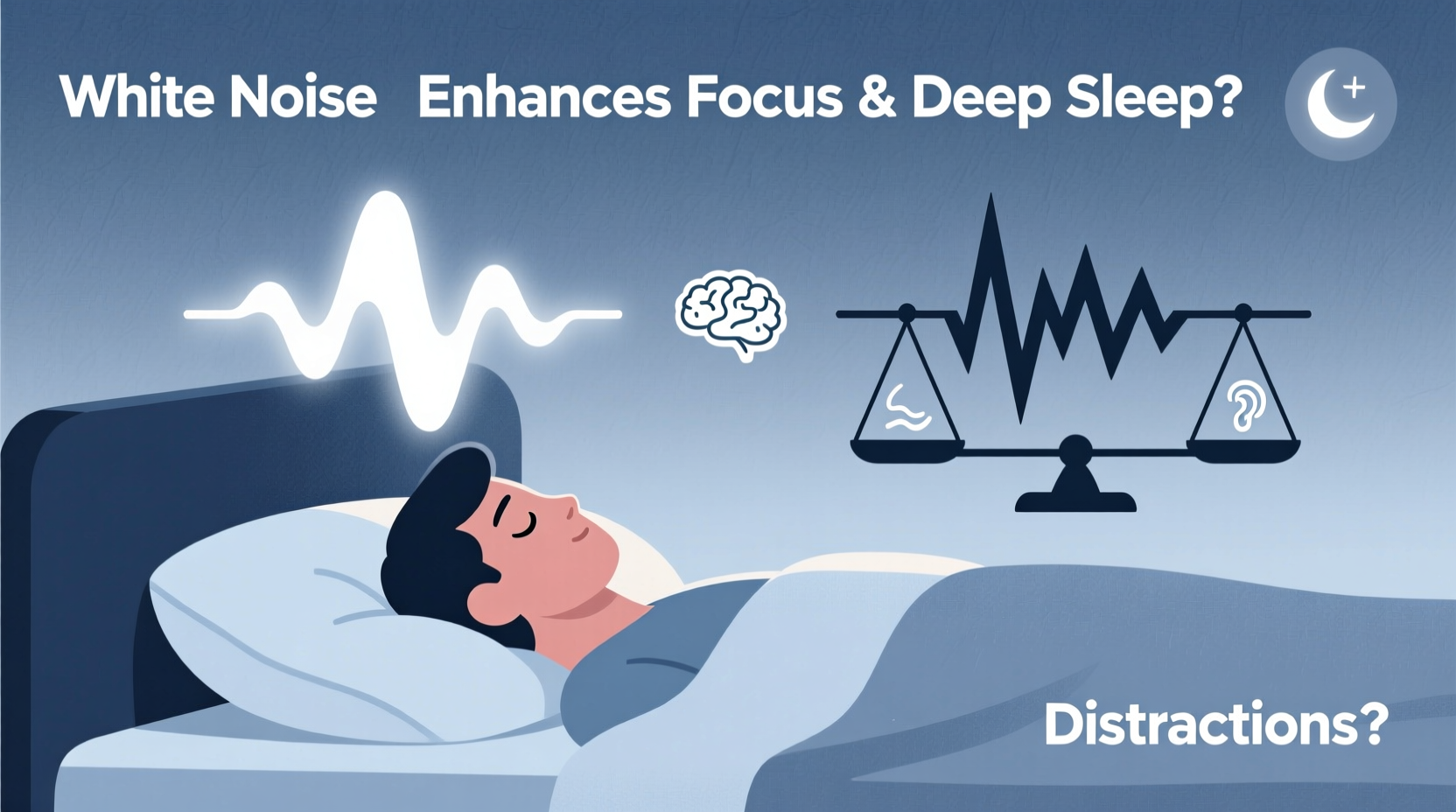
White noise is a type of sound that contains all audible frequencies distributed equally across the spectrum. It's often described as a steady \"shhh\" sound, similar to a fan running or radio static. Unlike music or speech, which contain patterns the brain tries to interpret, white noise provides a consistent auditory backdrop that masks sudden or disruptive sounds.
Neurologically, white noise influences the thalamus—the brain’s sensory gatekeeper. By filling the auditory cortex with neutral input, it reduces the contrast between background silence and abrupt noises (like a door slamming or a phone ringing), making those disruptions less likely to trigger arousal responses. This mechanism is particularly useful in environments where control over ambient sound is limited.
Studies have shown that white noise can enhance focus in individuals with attention deficits. A 2020 study published in *Frontiers in Psychology* found that moderate levels of white noise improved sustained attention and working memory in participants with ADHD, likely due to a phenomenon known as stochastic resonance—where low-level background noise actually enhances neural signal detection.
“White noise doesn’t eliminate distractions—it changes how the brain processes them. For some, it acts like auditory blinders, helping maintain focus.” — Dr. Lena Torres, Cognitive Neuroscientist, University of Michigan
Benefits of White Noise for Sleep Quality
Deep, uninterrupted sleep relies on stable transitions through sleep stages, especially slow-wave (NREM) and REM phases. Environmental noise—traffic, snoring partners, barking dogs—can fragment these cycles, reducing sleep efficiency and delaying entry into restorative stages.
White noise mitigates this disruption. Research from the *Journal of Clinical Sleep Medicine* indicates that hospital patients exposed to continuous white noise fell asleep faster and experienced fewer awakenings compared to those in standard noisy wards. The masking effect prevents micro-arousals caused by unpredictable sounds, supporting longer periods of consolidated sleep.
In home settings, white noise machines or apps are commonly used to create a predictable sonic environment. Parents often use them to help infants sleep, leveraging the womb-like consistency of sound that babies find comforting. Adults in urban areas or shared living spaces also report improved sleep onset and reduced nighttime wakefulness when using white noise nightly.
Potential Downsides: When White Noise Backfires
Despite its advantages, white noise isn’t universally beneficial. Overuse, excessive volume, or inappropriate timing can undermine its intended effects. One major concern is auditory system overload. Continuous exposure—even to non-intrusive sounds—can desensitize the ear and brain, potentially contributing to tinnitus or hyperacusis over time.
A 2023 review in *Sleep Health* warned that long-term reliance on high-volume white noise might impair the brain’s ability to process subtle auditory cues essential for natural sleep regulation. Participants who used loud white noise (>60 dB) nightly showed delayed REM onset and reduced delta wave activity during deep sleep, suggesting interference with restorative processes.
Another risk is dependency. Some users find they can no longer fall asleep without white noise, indicating psychological or physiological conditioning. This dependence limits flexibility—traveling, power outages, or device malfunctions become sources of sleep anxiety.
Children are especially vulnerable. The American Academy of Pediatrics cautions against placing white noise machines too close to infants or using them throughout the night at high volumes, as this may affect auditory development and language acquisition.
Do’s and Don’ts of Using White Noise Safely
| Do | Don’t |
|---|---|
| Use low-to-moderate volume (40–50 dB) | Set volume above 60 dB, especially near children |
| Place devices away from the bed or crib | Put speakers directly beside the pillow |
| Leverage timers to turn off after sleep onset | Run white noise all night unless medically advised |
| Experiment with alternatives like pink or brown noise | Assume all types of noise have the same effect |
| Use intermittently, not every single night | Develop rigid dependency without breaks |
Alternatives to White Noise: Pink, Brown, and Nature Sounds
Not all noise is created equal. While white noise spreads energy evenly across frequencies, other spectrums may be more effective—or gentler—for sleep and focus.
- Pink noise emphasizes lower frequencies, creating a deeper, more balanced sound (like steady rain or rustling leaves). Studies suggest pink noise enhances deep sleep stability and improves memory consolidation.
- Brown noise (or red noise) focuses even more on bass tones, resembling a distant thunderstorm or strong waterfall. Many users find it calming for anxiety and concentration.
- Nature recordings—birdsong, ocean waves, forest ambiance—offer rhythmic, non-repeating patterns that some brains interpret as soothing rather than masking.
Choosing the right type depends on individual preference and sensitivity. Those prone to feeling overwhelmed by high-pitched sounds may benefit more from brown noise, while people seeking gentle background texture might prefer nature audio.
“I switched from white to pink noise after noticing morning ear fatigue. The difference was immediate—deeper sleep and no ‘ringing’ sensation upon waking.” — Mark R., software developer and long-time remote worker
Step-by-Step Guide to Using White Noise Effectively
If you're considering incorporating white noise into your routine, follow this structured approach to maximize benefits and minimize risks:
- Assess your environment: Identify primary noise disturbances (e.g., traffic, roommates). If intermittent loud sounds are the issue, white noise is likely helpful.
- Select your device: Choose a dedicated machine, app, or smart speaker. Machines often offer better sound quality and safety features than phone apps.
- Choose the sound type: Start with white noise, but experiment with pink or brown if the high-frequency hiss feels harsh.
- Set proper volume: Keep it just loud enough to mask disturbances—ideally under 50 dB. Use a sound meter app to check levels.
- Position strategically: Place the device across the room, not near your head. Avoid direct airflow from fans if using one as a source.
- Use a timer: Set it to run for 30–60 minutes, aligning with typical sleep onset duration. This reduces overnight exposure.
- Mix usage: Don’t rely on it every night. Alternate with silence or nature sounds to prevent dependency.
- Monitor effects: Track sleep quality and morning alertness over two weeks. Adjust or discontinue if grogginess increases.
Real-World Example: How Sarah Improved Her Focus and Sleep
Sarah, a freelance writer living in a busy Brooklyn apartment, struggled with both daytime distractions and fragmented sleep. Traffic noise and neighbor activity made concentration difficult, and she often woke up feeling unrested despite sleeping eight hours.
She began using a white noise app at 45 dB during work sessions and before bedtime. Initially, her focus improved dramatically—she completed tasks 30% faster with fewer interruptions. At night, she fell asleep faster and reported fewer awakenings.
However, after three months, Sarah noticed she couldn’t concentrate in coffee shops or quiet libraries. She also started waking up with mild ear pressure. Concerned, she consulted a sleep specialist who recommended switching to pink noise and limiting usage to only when necessary.
By rotating between pink noise, silence, and short-term white noise use, Sarah regained auditory flexibility and maintained her productivity gains without side effects. Her experience highlights the importance of moderation and mindful adaptation.
Frequently Asked Questions
Can white noise damage hearing over time?
When used at safe volumes (below 50–60 dB) and placed at a distance, white noise is unlikely to cause hearing damage. However, prolonged exposure to high-volume white noise—especially through headphones—can contribute to noise-induced hearing loss or tinnitus. Always prioritize low volume and limit duration.
Is it okay to use white noise every night?
Occasional use is generally safe, but nightly reliance may lead to dependency or reduced effectiveness. Experts recommend using it situationally—during travel, in noisy environments, or for short recovery periods—rather than as a permanent fixture. Taking regular breaks helps maintain natural sleep adaptability.
What’s the difference between white, pink, and brown noise?
White noise has equal intensity across all frequencies, resulting in a bright, hissy sound. Pink noise reduces higher frequencies, producing a flatter, more balanced tone (like rainfall). Brown noise emphasizes low frequencies even further, offering a deep, rumbling quality. Each affects the brain differently; many find pink and brown noise more soothing for sleep.
Conclusion: Finding Your Sound Balance
White noise can be a powerful ally for improving focus and deep sleep—when used wisely. Its ability to mask disruptive sounds makes it valuable in chaotic environments, and research supports its benefits for certain populations, including those with ADHD or light sleep tendencies. Yet, like any tool, it carries risks when overused or misapplied.
The key lies in intentionality: choose the right type of noise, control volume and duration, and remain flexible in your approach. Alternating between white noise, alternative soundscapes, and silence builds resilience and prevents dependency. Listen to your body—if you wake up with ear fatigue or struggle without the sound, it’s time to reassess.




 浙公网安备
33010002000092号
浙公网安备
33010002000092号 浙B2-20120091-4
Comments
No comments yet. Why don't you start the discussion?