
Smart lighting has moved beyond novelty status. What once felt like a luxury reserved for tech enthusiasts is now accessible, affordable, and increasingly integrated into modern homes. With voice control, scheduling, color tuning, and energy monitoring, these systems promise convenience and efficiency. But does that mean every light switch should be upgraded? Is it practical—or even beneficial—to install smart lighting in every room, or should you focus only on key areas?
The answer depends on your lifestyle, budget, and long-term goals. While full-home automation sounds appealing, strategic deployment often delivers better value. This article breaks down where smart lighting makes the most impact, where it may be overkill, and how to build a system that enhances daily life without unnecessary complexity.
Understanding Smart Lighting: More Than Just Remote Control
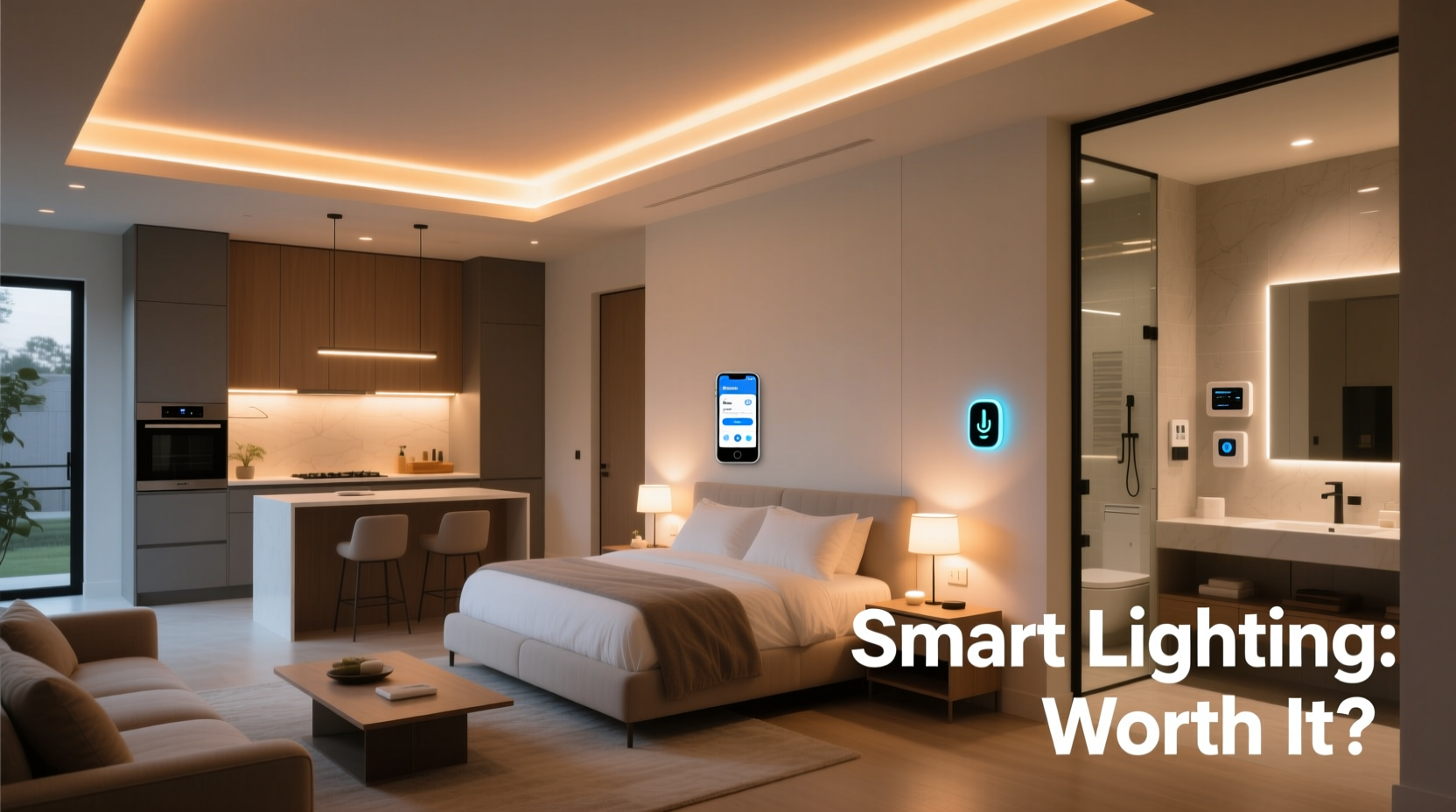
Smart lighting refers to LED bulbs or fixtures connected to your home network, controllable via smartphone apps, voice assistants (like Alexa or Google Assistant), or automated routines. Features vary by brand and model but commonly include:
- Remote on/off control from anywhere
- Scheduling based on time or sunrise/sunset
- Dimming and color temperature adjustment (warm to cool white)
- Full RGB color options in some models
- Integration with security systems and motion sensors
- Energy usage tracking
These capabilities go far beyond traditional switches. For example, lights can simulate occupancy while you're away, gently wake you with a sunrise simulation, or adjust automatically as natural daylight fades. However, not all rooms benefit equally from such features.
Where Smart Lighting Delivers Maximum Value
Certain areas of the home see more frequent interaction, require flexible lighting, or contribute significantly to ambiance and safety. These are ideal candidates for smart lighting upgrades.
Living Room: The Hub of Activity
The living room is often the center of family gatherings, entertainment, and relaxation. Lighting here needs to adapt—bright for movie nights, dim for conversation, warm for reading. Smart bulbs allow scene creation (e.g., “Movie Time,” “Guest Mode”) and integration with TVs or sound systems.
Kitchen: Function Meets Safety
Task lighting under cabinets, inside pantries, or above islands benefits from motion activation or scheduling. Imagine opening a cabinet at night and having the interior light up automatically. Smart switches can also ensure lights aren’t accidentally left on, reducing energy waste.
Bedroom: Enhancing Sleep and Routine
This space directly impacts circadian rhythms. Smart lighting can gradually brighten in the morning to mimic sunrise, helping regulate wakefulness. At night, warm-toned lighting can signal the body to prepare for sleep. Scheduling bedtime dimming or turning off lights remotely (without getting out of bed) adds real convenience.
“Lighting that supports natural sleep cycles can improve rest quality by up to 20%.” — Dr. Lena Patel, Sleep Health Researcher, National Wellness Institute
Bathroom: Safety and Practicality
Nighttime bathroom visits are common—and hazardous in complete darkness. A motion-activated smart nightlight or low-level illumination can prevent accidents without disrupting sleep. Color temperature settings can also help create a spa-like experience during evening routines.
Entryways and Hallways: Security and First Impressions
Automated entry lighting improves curb appeal and deters intruders. Lights that turn on at dusk or when motion is detected make arriving home safer and more welcoming. Integration with doorbells or cameras creates a cohesive security ecosystem.
Rooms Where Smart Lighting May Be Overkill
Not every space justifies the investment. Some rooms have minimal use, simple lighting needs, or infrequent access, making automation less impactful.
Laundry Room
Most laundry tasks occur during daylight hours or with brief visits. Unless you frequently run loads late at night, smart controls offer little advantage. A basic timer switch might suffice instead.
Garage
While motion-sensing lights are useful, full smart bulb integration may not be necessary. Dedicated motion floodlights or smart switches tied to vehicle arrival (via geofencing) can provide automation without equipping every fixture.
Attic or Storage Rooms
These spaces are accessed sporadically. Installing smart lighting here increases upfront cost and maintenance complexity for negligible return. A pull-chain light or battery-powered LED with motion detection is often more practical.
Closets
Interior closet lighting is typically short-duration and task-specific. Motion-activated stick-on LEDs are inexpensive and effective alternatives to smart bulbs. Unless part of a high-end dressing area, full integration rarely pays off.
Cost-Benefit Analysis: Full Home vs. Targeted Installation
Upgrading an entire house can quickly become expensive. Let’s break down the financial and functional implications.
| Approach | Avg. Cost (1,500 sq ft home) | Installation Time | Energy Savings | User Benefit |
|---|---|---|---|---|
| Full-Home Smart Lighting | $600–$1,200 | 8–15 hours | 15–25% | High (consistency, full automation) |
| Key Areas Only (5–7 rooms) | $250–$500 | 3–6 hours | 10–18% | High (focused utility) |
| Minimal Setup (2–3 rooms) | $100–$200 | 1–2 hours | 5–10% | Moderate (limited reach) |
The data shows diminishing returns beyond key zones. Most households gain 80% of the benefits by automating high-traffic, high-impact areas. Full-home systems are best suited for new builds, major renovations, or users deeply invested in whole-home automation ecosystems.
Step-by-Step Guide to Planning Your Smart Lighting Setup
Follow this logical sequence to design a smart lighting plan that fits your needs without overspending.
- Assess Room Usage: Track how often each room is used and for what purpose (e.g., cooking, relaxing, working).
- Prioritize Based on Impact: Rank rooms by potential benefit—safety, convenience, ambiance, or energy savings.
- Choose the Right Technology: Decide between smart bulbs, smart switches, or plug-in modules. Bulbs are easier to install; switches offer broader control and work with any bulb.
- Map Out Automation Goals: Define desired behaviors—e.g., “Turn on kitchen lights at sunset,” “Dim bedroom lights at 9 PM.”
- Test One Room First: Install in one high-priority room to evaluate performance before scaling.
- Scale Gradually: Expand based on satisfaction and budget, focusing on the next highest-value room.
- Integrate with Ecosystem: Connect to voice assistants or smart home hubs (e.g., Apple HomeKit, Samsung SmartThings) for unified control.
Mini Case Study: The Thompson Family's Smart Lighting Journey
The Thompsons, a family of four in Portland, wanted to improve home safety and reduce electricity bills. They initially considered upgrading all 18 lights in their home but opted for a phased approach after consulting an electrician.
They started with the living room, kitchen, master bedroom, and front porch—areas used daily and at varying times. Using Philips Hue and Lutron Caséta switches, they set up:
- Front porch lights turning on at dusk and off at midnight
- Kitchen under-cabinet lights activating with motion after dark
- Bedroom lights fading in 30 minutes before alarm time
After six months, they saved 17% on lighting-related energy use and reported improved sleep and convenience. They later added hallway and bathroom lighting due to positive experiences but skipped the laundry room and attic. Their total spend was $420—less than half the cost of a full-home upgrade—with nearly all the benefits.
Checklist: Is Smart Lighting Right for This Room?
Use this checklist to evaluate each room before installing smart lighting:
- ☑ Is the room used multiple times per day?
- ☑ Do lighting needs change throughout the day (e.g., bright to dim)?
- ☑ Would automation improve safety (e.g., nighttime navigation)?
- ☑ Does the room host social or relaxation activities?
- ☑ Will integration enhance security (e.g., remote control, occupancy simulation)?
- ☑ Is the existing wiring accessible for smart switches?
- ☑ Can the room benefit from color tuning or scheduling?
If four or more apply, smart lighting is likely a worthwhile investment. Fewer than three suggest limited return on effort and cost.
Frequently Asked Questions
Can I mix smart and regular lighting in the same home?
Yes—and it’s often the most practical approach. You can control smart lights via app or voice while using standard switches elsewhere. Many users maintain this hybrid setup indefinitely.
Do smart bulbs wear out faster than regular LEDs?
No. Most smart bulbs are based on LED technology and last 15,000 to 25,000 hours—comparable to standard LEDs. However, constant connectivity may slightly increase heat output, so ensure proper ventilation in enclosed fixtures.
Are there privacy concerns with smart lighting?
Like any connected device, smart lights transmit data. Choose brands with strong encryption and local control options (e.g., Matter protocol). Disable cloud access if not needed, and keep firmware updated to prevent vulnerabilities.
Final Recommendation: Strategic, Not Universal
Smart lighting is worth installing—but not necessarily in every room. The strongest returns come from areas central to daily routines, safety, and comfort. Living rooms, kitchens, bedrooms, and entry points benefit most. Utility spaces, storage areas, and infrequently used rooms rarely justify the expense or complexity.
A targeted rollout allows you to test functionality, refine preferences, and scale intelligently. It reduces upfront costs, simplifies troubleshooting, and ensures each installation serves a clear purpose. Over time, you’ll develop a personalized system that feels intuitive rather than overwhelming.




 浙公网安备
33010002000092号
浙公网安备
33010002000092号 浙B2-20120091-4
Comments
No comments yet. Why don't you start the discussion?