
In an era where nearly every household device connects to Wi-Fi, smart lighting has emerged as one of the most accessible entry points into home automation. From dimmable LED bulbs to voice-controlled fixtures, these systems promise convenience, energy savings, and enhanced ambiance. But with each new gadget comes another app to download, update, and troubleshoot. So, is smart lighting a meaningful upgrade—or just digital clutter disguised as innovation?
The answer isn’t universal. For some, smart lights streamline daily routines and reduce electricity bills. For others, they become yet another forgotten feature in an overcrowded tech ecosystem. The real value lies not in the technology itself, but in how it’s implemented and aligned with your lifestyle.
Understanding Smart Lighting: Beyond the Hype
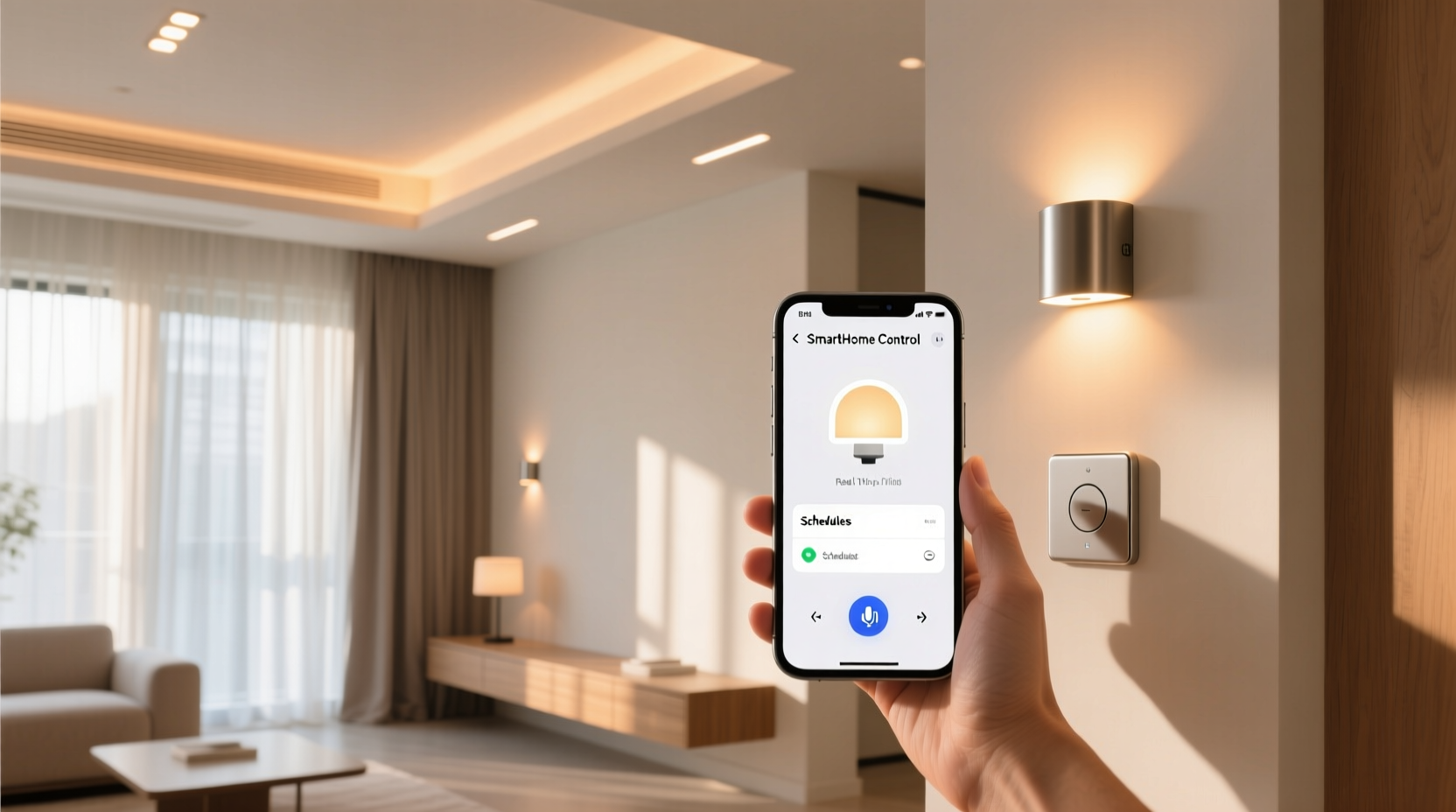
Smart lighting refers to light fixtures or bulbs that connect to your home network—typically via Wi-Fi, Bluetooth, Zigbee, or Z-Wave—and can be controlled remotely through a smartphone app, voice assistant, or automation schedule. Unlike traditional switches, these systems allow granular control: adjusting brightness, changing color temperature, setting scenes (like “movie night” or “wake-up”), and even syncing with music or alarms.
At their core, smart lights are designed to adapt to human behavior rather than demand rigid adherence to fixed settings. A well-configured system might turn on at sunset, gradually brighten in the morning to simulate sunrise, or dim automatically when you start watching a film.
But functionality doesn’t guarantee utility. Many users install smart bulbs only to abandon them after a few weeks due to poor integration, unreliable performance, or sheer complexity. The difference between success and frustration often comes down to planning and realistic expectations.
Benefits That Actually Matter
When implemented thoughtfully, smart lighting delivers tangible improvements. These aren’t just gimmicks; they translate into time saved, energy reduced, and comfort enhanced.
- Energy Efficiency: Most smart bulbs are LED-based, consuming up to 80% less energy than incandescent bulbs. With scheduling and motion detection, lights operate only when needed, further reducing waste.
- Convenience & Accessibility: Voice commands or automated triggers eliminate the need to get up to flip a switch. This is especially valuable for individuals with mobility challenges or during late-night trips to the kitchen.
- Mood Enhancement: Tunable white and full-color options let you adjust lighting to match activities—cool blue-white for focus, warm amber for relaxation. Studies suggest proper lighting can improve sleep quality and mental alertness.
- Security Simulation: Set lights to turn on and off randomly while away, giving the impression someone is home. This deters potential intruders more effectively than leaving lights on manually.
- Integration with Smart Homes: When linked with other devices—thermostats, blinds, security cameras—lighting becomes part of a responsive environment. Imagine lights turning on as your garage door opens or dimming when your TV starts playing.
“Lighting is the most immediate way to change the feel of a space. Smart controls make that adjustment effortless and precise.” — Dr. Lena Torres, Environmental Psychologist specializing in residential design
Common Pitfalls and Why People Give Up
Despite its potential, smart lighting faces widespread skepticism. User abandonment rates remain high, particularly among first-time adopters. Several recurring issues contribute to this:
- App Overload: Each brand typically requires its own app. Philips Hue, LIFX, Nanoleaf, and TP-Link all have separate interfaces. Managing multiple apps defeats the purpose of simplification.
- Setup Complexity: Some systems require hubs (like the Hue Bridge), which add cost and configuration steps. Others rely solely on Wi-Fi, straining bandwidth if dozens of bulbs are connected.
- Limited Interoperability: Not all smart lights work seamlessly across platforms. A bulb compatible with Alexa may not support Apple HomeKit without firmware updates or third-party bridges.
- Latency and Reliability: Delayed responses or dropped connections frustrate users. Nothing undermines trust faster than saying “Turn on the living room lights” and waiting five seconds for a response.
- Cost vs. Value Perception: At $15–$50 per bulb, replacing an entire home can exceed $500. For many, the ROI isn’t obvious unless paired with significant usage patterns or energy savings goals.
These drawbacks don’t invalidate smart lighting—they highlight the importance of choosing the right system for your needs.
Choosing Wisely: A Practical Guide
To avoid buyer’s remorse, follow a structured approach before purchasing any smart bulbs or fixtures.
Step 1: Define Your Goals
Ask what problem you’re solving. Are you aiming to save energy? Improve safety? Enhance ambiance? Simplify routines? Prioritize use cases that align with your daily life.
Step 2: Audit Your Current Setup
Identify which rooms benefit most from automation. High-traffic areas like kitchens and living rooms, or spaces used at night (hallways, bathrooms), are ideal candidates. Avoid over-investing in rarely used guest rooms.
Step 3: Choose the Right Protocol
| Protocol | Pros | Cons | Best For |
|---|---|---|---|
| Wi-Fi | No hub required; direct app access | Bulky on network; slower response | Small setups (1–5 bulbs) |
| Zigbee/Z-Wave | Low power; stable mesh network | Requires hub; higher upfront cost | Whole-home systems |
| Bluetooth | Cheap; no hub needed | Short range; limited scalability | Single-room applications |
Step 4: Prioritize Ecosystem Compatibility
If you already use Amazon Alexa, Google Assistant, or Apple HomeKit, select bulbs certified for those platforms. Cross-platform compatibility reduces friction and avoids future migration headaches.
Step 5: Test Before Scaling
Purchase one or two starter bulbs. Install them, test responsiveness, integrate with voice assistants, and evaluate satisfaction over a week. Only expand if the experience feels intuitive and useful.
Real-World Example: The Martinez Family
The Martinez family lives in a three-bedroom suburban home. Both parents work long hours, and their 10-year-old daughter often returns from school before anyone else. Safety and routine were key concerns.
They installed four smart bulbs: two in the hallway, one in the kitchen, and one in the living room. Using geofencing (location-based triggers), lights turn on automatically when the daughter’s phone enters a 500-foot radius around the house. This ensures she never walks into a dark home.
Additionally, a “Homework Mode” scene activates at 4:30 PM on weekdays—bright, cool-toned lighting in the dining area where she studies. At 7:30 PM, the lights shift to warmer tones to signal winding down.
Over six months, their electricity bill decreased by 12%, primarily due to eliminating forgotten-on lights. More importantly, peace of mind increased. “It’s not about flashy colors,” says Maria Martinez. “It’s knowing my kid feels safe coming home.”
Checklist: Is Smart Lighting Right for You?
Before committing, review this checklist:
- ☐ I frequently forget to turn off lights and want to reduce energy waste.
- ☐ I use voice assistants regularly and would benefit from hands-free control.
- ☐ I travel often and could use scheduled/randomized lighting for security.
- ☐ I struggle with nighttime visibility and would benefit from motion-activated pathways.
- ☐ I’m willing to invest time in setup and occasional maintenance.
- ☐ My internet connection is stable enough to support additional IoT devices.
If at least four apply, smart lighting is likely a worthwhile investment. If fewer do, consider delaying adoption until your needs evolve.
Frequently Asked Questions
Can smart bulbs work with regular light switches?
Yes—but with caveats. Smart bulbs must remain powered to stay connected. Turning them off at the wall switch cuts power and disables remote control. Best practice: leave the physical switch always \"on\" and control brightness/operation via app or voice.
Do smart lights slow down my Wi-Fi?
Potentially, if using Wi-Fi-based models. A single bulb uses minimal bandwidth, but 20+ bulbs streaming commands simultaneously can impact performance. Opt for Zigbee or Z-Wave systems with a central hub to offload traffic from your main router.
Are smart bulbs secure from hacking?
Like any internet-connected device, vulnerabilities exist. However, reputable brands use encryption and regular firmware updates. Minimize risk by using strong passwords, enabling two-factor authentication, and keeping apps updated.
Conclusion: Worth It—if Done Right
Smart lighting isn’t inherently valuable—it becomes valuable when it serves a clear purpose in your life. For those seeking greater control, efficiency, and personalization, it can transform the way they interact with their homes. But for others, it risks becoming another neglected app, another password to remember, another device collecting digital dust.
The key is intentionality. Don’t automate for automation’s sake. Focus on specific pain points: security gaps, energy leaks, accessibility barriers. Start small, test thoroughly, and scale only when results justify the effort.
Technology should simplify, not complicate. When smart lighting aligns with your actual habits—not imagined ones—it stops being just another app and starts feeling like an extension of your home.




 浙公网安备
33010002000092号
浙公网安备
33010002000092号 浙B2-20120091-4
Comments
No comments yet. Why don't you start the discussion?