
For renters, especially those in short-term or transitional housing, the idea of investing in smart home technology often feels out of reach. Permanent installations are off-limits, lease agreements restrict modifications, and the fear of sunk costs looms large. Yet, smart lighting has evolved beyond hardwired systems and complex hubs. Today’s market offers flexible, non-invasive solutions that adapt to temporary living situations—without sacrificing functionality or convenience. The real question isn’t whether smart lighting works for renters, but whether it’s truly worth the investment when you might move in six months.
The answer depends on how you define value. Is it energy savings? Mood enhancement? Security while traveling? Or simply the daily ease of voice-controlled ambiance? For many renters, the benefits of smart lighting go far beyond novelty. With the right approach, temporary smart lighting setups can deliver long-term advantages—even if your lease is short.
Why Smart Lighting Appeals to Renters
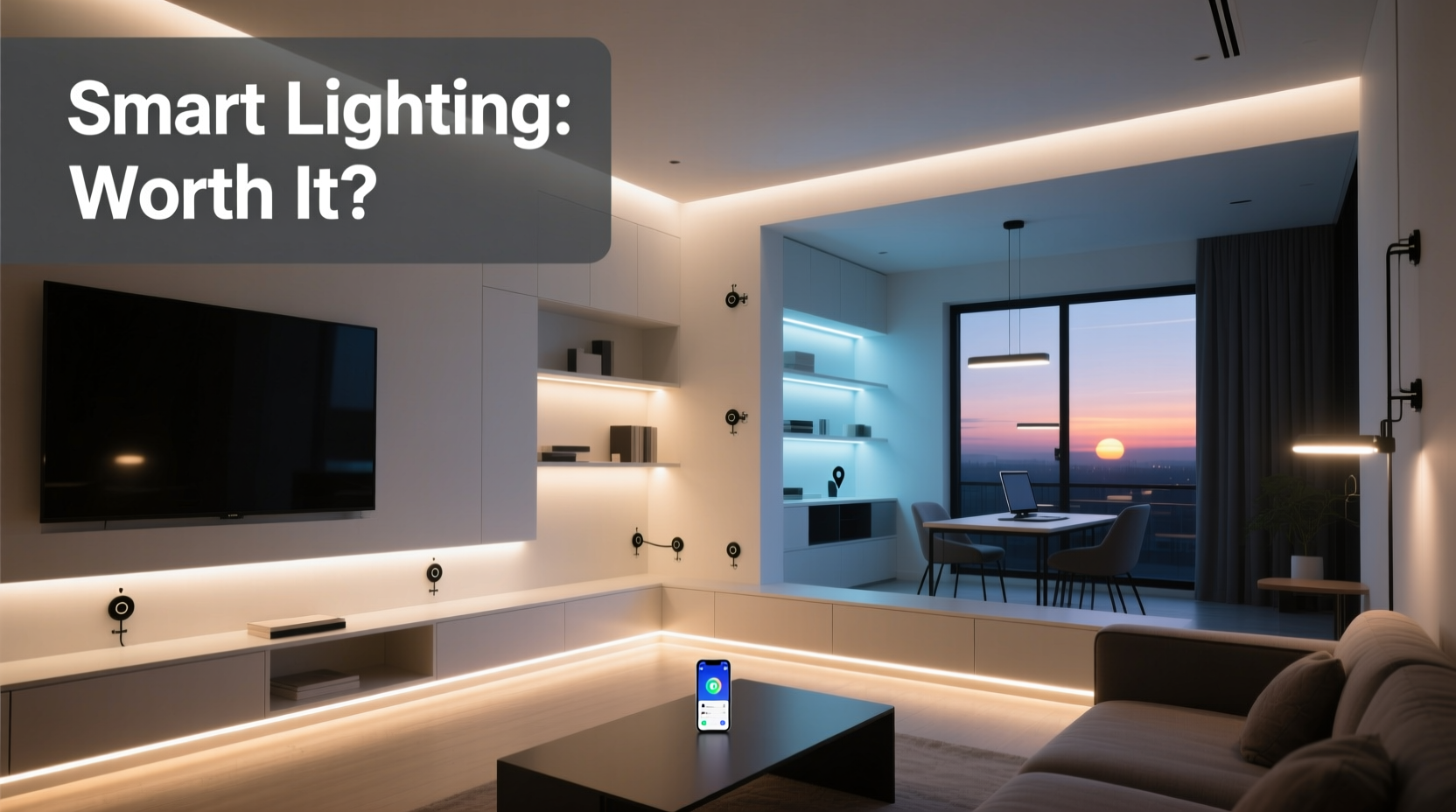
Smart lighting offers control, customization, and automation that traditional bulbs can’t match. For renters, this means the ability to transform a generic apartment into a personalized space—without drilling holes or rewiring circuits. Modern smart bulbs, plug-in adapters, and portable fixtures are designed with mobility in mind. They screw into existing sockets, connect via Wi-Fi or Bluetooth, and sync with apps that travel with you from one home to the next.
One of the most compelling reasons renters adopt smart lighting is flexibility. You’re not locked into a single setup. Whether you're in a studio apartment or sharing a house, you can adjust brightness, color temperature, and scheduling based on room use, time of day, or even mood. A warm amber glow in the evening supports relaxation; bright white light in the morning mimics natural daylight and boosts alertness. These subtle changes influence well-being more than most realize.
Temporary Smart Lighting Solutions That Work
The key to making smart lighting viable for renters lies in choosing products that require no permanent installation. Here are the most effective options available today:
- Screw-in smart bulbs: Replace standard A19 bulbs with smart versions. Brands like Philips Hue, LIFX, and TP-Link Kasa offer Wi-Fi-enabled bulbs that work with Alexa, Google Assistant, and Apple HomeKit.
- Smart plug adapters: Plug lamps into smart outlets or adapters. These allow any lamp to become “smart” without modifying wiring.
- Portable smart lamps: Freestanding lights like the Nanoleaf Table Lamp or BenQ WiT MindDuo offer built-in intelligence and mobility.
- Under-cabinet LED strips: Adhesive-backed smart strips add ambient lighting under shelves or behind furniture—easily removed during move-out.
These solutions are not only removable but also reusable. When you relocate, simply unscrew the bulb, unplug the adapter, and pack them up. No residue, no damage, no violation of lease terms.
“Renters are among the fastest-growing adopters of smart lighting because they prioritize convenience and personalization over permanence.” — Jordan Lee, IoT Product Strategist at HomeTech Insights
Cost vs. Benefit: Is It Worth the Investment?
A common hesitation is cost. Smart bulbs range from $15 to $60 each, and full-room automation can add up quickly. But evaluating worth requires looking beyond sticker price. Consider the following dimensions of value:
| Factor | Short-Term Benefit | Long-Term Value |
|---|---|---|
| Energy Efficiency | Moderate (LED-based, lower wattage) | High (up to 80% less energy than incandescent) |
| Lifespan | Good (15,000–25,000 hours) | Excellent (lasts through multiple moves) |
| Rental Compatibility | High (no tools or permits needed) | High (same gear works across homes) |
| Daily Convenience | Immediate (voice/app control) | Compounding (habits improve over time) |
| Security Features | Useful (scheduled on/off patterns) | Valuable (deters break-ins while away) |
While the upfront cost may seem steep, the reusability of smart lighting components turns them into portable assets. Unlike painting a wall or installing shelving—improvements that stay behind—smart bulbs move with you. Over three rental units, the same set of four bulbs could serve for years, amortizing the initial expense.
Real-World Example: Sarah’s Studio Upgrade
Sarah rented a small studio in Chicago for nine months. She wanted to make the space feel larger and more inviting but couldn’t paint or install new fixtures. Her solution? Two Philips Hue White and Color Ambiance bulbs in floor and table lamps, plus a smart plug for her overhead fixture.
Using the Hue app, she programmed scenes: “Focus” (bright white) for work hours, “Relax” (soft orange) for evenings, and “Sunrise Simulation” to wake gently on winter mornings. She also set random schedules when traveling to simulate occupancy.
After moving to Denver, Sarah reused all her bulbs in the new apartment. The setup took 20 minutes. She estimates she saved $120 in potential security system fees and gained measurable improvements in sleep quality and productivity. “It paid for itself in peace of mind,” she says.
Step-by-Step Guide to Setting Up Temporary Smart Lighting
Implementing a renter-friendly smart lighting system doesn’t require technical expertise. Follow this sequence to get started:
- Assess your current lighting: Identify which lamps or fixtures you use daily and can easily modify.
- Choose non-permanent products: Opt for screw-in bulbs or smart plugs. Avoid anything requiring electrician installation.
- Pick a compatible ecosystem: Decide between Wi-Fi-only (easier setup) or Zigbee/Z-Wave (better performance, needs hub). For renters, Wi-Fi models like Kasa or LIFX reduce complexity.
- Install and test: Screw in bulbs or plug in adapters. Connect to your phone via the manufacturer’s app.
- Create routines: Set automatic on/off times, dimming levels, and color changes based on your schedule.
- Label and store carefully: When moving, note which bulb goes where and pack them securely for reuse.
This process typically takes under an hour and scales easily. Start with one room, evaluate results, then expand.
Common Pitfalls to Avoid
Even simple smart lighting setups can run into issues. Renters should be aware of these common mistakes:
- Over-relying on cloud services: Some brands shut down servers years later, rendering devices useless. Choose companies with local control options or strong track records.
- Ignoring Wi-Fi load: Too many connected devices can slow your network. Prioritize essential lights and use Ethernet-connected hubs if possible.
- Skipping backups: Save scene settings and schedules in notes or screenshots. Rebuilding them after a reset is tedious.
- Forgetting about renters insurance: High-end smart bulbs aren’t always covered under standard policies. Document purchases and check coverage.
Frequently Asked Questions
Can I take smart bulbs with me when I move?
Absolutely. Smart bulbs are designed to be transferred. Simply unscrew them from the socket, pack them safely, and reinstall in your next home. As long as the new space has compatible fixtures (standard E26/E27 bases), they’ll work the same way.
Do smart bulbs work without a hub?
Yes. Many modern smart bulbs—including LIFX, TP-Link Kasa, and newer Philips Hue models—connect directly to Wi-Fi without needing a separate hub. This reduces cost and complexity, making them ideal for renters.
Will my landlord know I installed smart lighting?
Not unless you tell them. Since no wiring changes are made and bulbs look nearly identical to regular LEDs, there’s no visible sign of modification. Just ensure you leave the original bulbs behind if required—or replace them before handing over keys.
Final Checklist Before You Buy
Before purchasing any smart lighting product as a renter, run through this checklist:
- ✅ No permanent installation required
- ✅ Compatible with voice assistants (Alexa, Google, Siri)
- ✅ Works on your Wi-Fi network (2.4 GHz band supported)
- ✅ Easy to remove and reinstall
- ✅ Energy-efficient (look for ENERGY STAR or equivalent)
- ✅ Manufacturer offers multi-year support guarantee
- ✅ Packaged for safe transport between homes
This ensures you invest in solutions that align with both your current living situation and future mobility.
Conclusion: Yes, It’s Worth It—If Done Right
Smart lighting isn’t just for homeowners. For renters, it represents a rare opportunity to gain control over an environment often defined by limitations. The ability to customize ambiance, enhance security, and maintain consistency across moves adds tangible quality-of-life improvements. While not every product suits temporary living, the right choices—removable, reusable, and intuitive—deliver lasting value far beyond their initial cost.
The real advantage isn’t in the technology itself, but in the freedom it provides: to shape your space, protect your peace, and carry your comforts with you. If you’ve hesitated because you don’t own your home, reconsider. Smart lighting, when chosen wisely, isn’t a fixture—it’s a tool. And tools belong wherever you do.




 浙公网安备
33010002000092号
浙公网安备
33010002000092号 浙B2-20120091-4
Comments
No comments yet. Why don't you start the discussion?