
In recent years, standing desks have transitioned from niche ergonomic accessories to mainstream fixtures in home offices, corporate environments, and co-working spaces. While their physical health benefits—such as improved posture and reduced sedentary time—are widely recognized, an emerging body of evidence suggests a deeper psychological impact. Could simply standing while working help reduce anxiety? The answer, supported by both physiological research and real-world experience, leans toward yes. This article explores how standing desk usage may contribute to lower anxiety levels, the science behind it, and practical ways to integrate this tool into a mentally healthier workday.
The Science Behind Movement and Mental Health
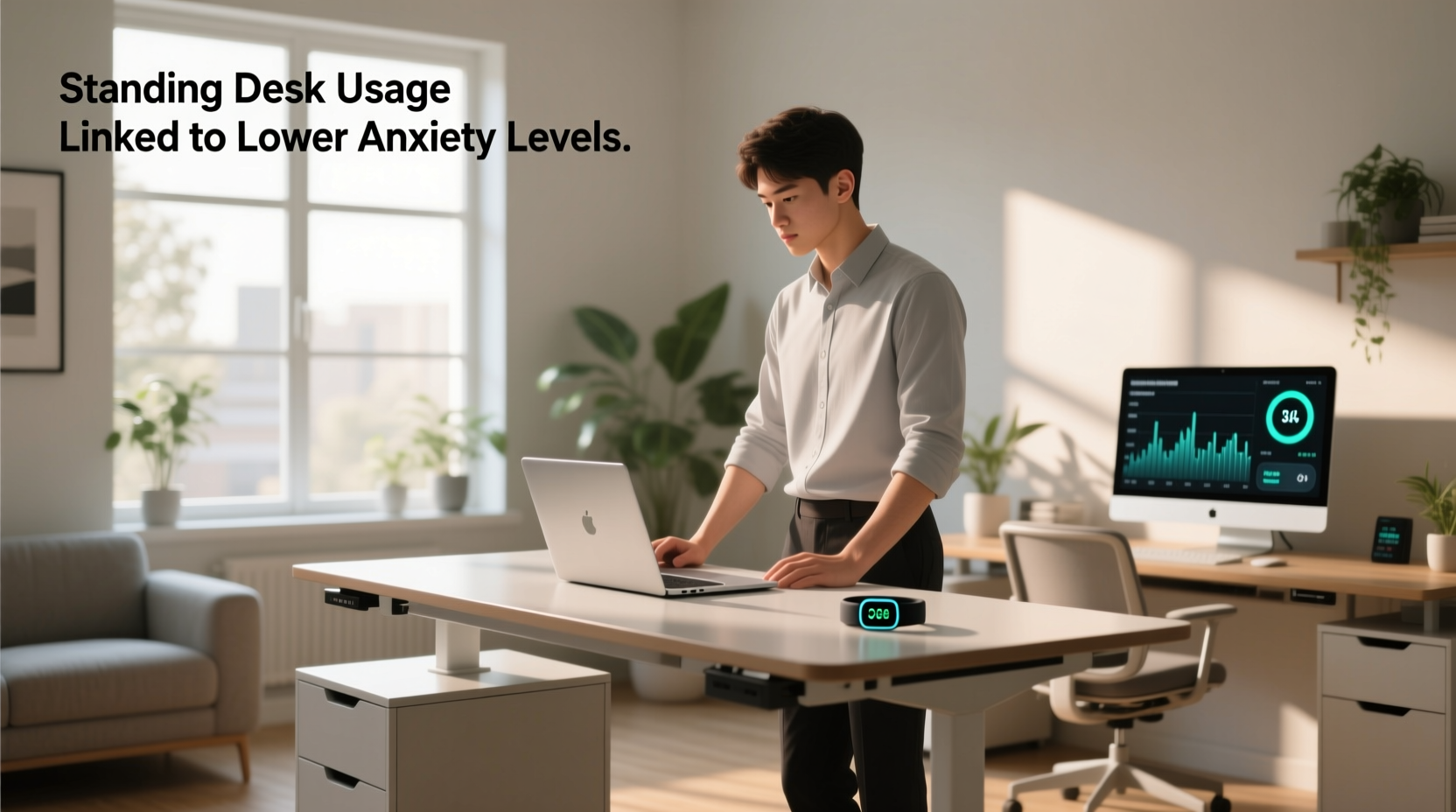
Anxiety is not solely a mental state—it’s deeply intertwined with the body’s physiology. Prolonged sitting has been associated with increased cortisol production, the hormone responsible for stress response. When individuals remain seated for extended periods, especially during high-pressure tasks, blood flow slows, oxygen delivery to the brain decreases, and muscle tension builds—all factors that can exacerbate feelings of nervousness and unease.
Standing introduces subtle but meaningful changes. It activates postural muscles, increases heart rate slightly (by about 5–10 beats per minute), and enhances circulation. These small shifts stimulate the parasympathetic nervous system, which helps regulate emotional balance. A 2021 study published in the Journal of Occupational and Environmental Medicine found that participants who used sit-stand desks reported a 17% reduction in perceived stress over eight weeks compared to those who remained seated throughout the day.
“Even low-intensity movement like standing can modulate autonomic nervous system activity, reducing sympathetic dominance often seen in chronic anxiety.” — Dr. Lena Patel, Cognitive Neuroscientist at Stanford University
This doesn’t mean standing all day eliminates anxiety—but it appears to create conditions less conducive to its escalation.
How Standing Desks Influence Mood Regulation
Beyond biochemical changes, standing desks affect mood through behavioral and environmental mechanisms:
- Increased agency over workspace: The ability to adjust one’s desk fosters a sense of control, which is psychologically protective against anxiety.
- Breaks in monotony: Alternating between sitting and standing disrupts mental fatigue, a common trigger for anxious rumination.
- Posture-mood feedback loop: Upright posture has been shown in multiple studies to correlate with higher self-esteem and lower cortisol levels. Slouching, conversely, reinforces feelings of helplessness.
A notable experiment conducted at the University of Bath observed that office workers using adjustable desks demonstrated improved mood resilience during high-demand tasks. Participants were asked to complete cognitive challenges under time pressure. Those who had access to standing options showed faster recovery from elevated heart rates post-task, indicating better emotional regulation.
Real-World Impact: A Mini Case Study
Sarah Kim, a 34-year-old UX designer based in Portland, struggled with generalized anxiety disorder exacerbated by long hours at her computer. After transitioning to remote work in 2020, her symptoms intensified—she described feeling “trapped” in her chair, experiencing frequent panic spikes mid-afternoon.
On her therapist’s recommendation, Sarah invested in a height-adjustable desk. She began alternating every 30 minutes: 30 minutes sitting, 30 standing. Within two weeks, she noticed fewer episodes of chest tightness and racing thoughts. By week six, her daily anxiety logs showed a consistent decline in peak intensity scores.
“It wasn’t magic,” Sarah said. “But standing gave me little resets. I could feel my shoulders drop, my breath deepen. It became a ritual—a way to check in with my body instead of staying stuck in my head.”
Her experience aligns with clinical observations: micro-breaks involving postural change serve as natural anchors for mindfulness, helping interrupt cycles of anxious thinking.
Optimal Usage Patterns for Anxiety Reduction
Not all standing desk use is equally effective. Poor implementation—such as standing too long without support or doing so inconsistently—can lead to discomfort, which may increase stress rather than reduce it. The key lies in strategic integration.
Here’s a step-by-step guide to maximize mental health benefits:
- Start gradually: Begin with 15–20 minutes of standing per hour. Use a timer or smart desk reminder.
- Focus on transitions: Treat each sit-to-stand shift as a mini mindfulness exercise. Take three slow breaths before resuming work.
- Combine with light movement: Shift weight, perform calf raises, or do gentle shoulder rolls while standing.
- Use during high-focus or high-stress tasks: Stand when starting challenging projects or after meetings to reset your nervous system.
- End the day with intention: Lower the desk for winding down activities to signal closure.
| Usage Pattern | Mental Benefit | Potential Risk if Misused |
|---|---|---|
| 30 min sit / 30 min stand | Balances energy and focus | Leg fatigue if no anti-fatigue mat |
| Standing only during calls/meetings | Enhances alertness and presence | Limited overall benefit |
| Standing first hour of work | Boosts morning mood and momentum | May cause dizziness if dehydrated |
| Extended standing (>2 hrs continuous) | Rarely beneficial; may increase agitation | Physical strain leading to irritability |
Complementary Strategies to Enhance the Effect
While standing desks alone aren’t a standalone treatment for anxiety, they function best within a broader wellness framework. Consider combining them with these evidence-based practices:
- Natural lighting: Position your desk near a window. Sunlight regulates circadian rhythms and boosts serotonin.
- Plants or greenery: Studies show indoor plants reduce subjective stress by up to 15%.
- Digital boundaries: Turn off non-essential notifications during standing intervals to prevent sensory overload.
- Hydration: Keep water nearby. Dehydration amplifies anxiety symptoms.
Do’s and Don’ts of Standing Desk Use for Anxiety Management
| Do | Don’t |
|---|---|
| Alternate positions every 30–60 minutes | Stand rigidly still for hours |
| Wear supportive footwear or use an anti-fatigue mat | Go barefoot on hard flooring |
| Pair standing with deep breathing or grounding techniques | Use standing as a way to push through burnout |
| Track mood changes over two weeks to assess impact | Expect immediate results |
| Consult a physical therapist if you have chronic pain | Ignore persistent discomfort |
Frequently Asked Questions
Can standing desks replace therapy or medication for anxiety?
No. Standing desks should be viewed as a complementary strategy, not a substitute for professional mental health care. They may support symptom management but are not a primary treatment for clinical anxiety disorders.
How long should I stand each day to see mental health benefits?
Research suggests accumulating 2–4 hours of standing throughout the workday, broken into intervals, yields measurable improvements in mood and stress markers. Consistency over time matters more than duration in a single session.
Are there people who shouldn’t use standing desks for anxiety?
Individuals with certain conditions—such as severe varicose veins, balance issues, or lower limb injuries—may find prolonged standing counterproductive. Always consult a healthcare provider before making significant changes to your work routine.
Putting It Into Practice: A Weekly Implementation Checklist
To effectively leverage a standing desk for anxiety reduction, follow this actionable checklist:
- ☐ Assess your current desk setup and ergonomics
- ☐ Set a goal: e.g., “I will stand for 30 minutes every other hour”
- ☐ Invest in an anti-fatigue mat and supportive shoes
- ☐ Schedule a weekly review to note changes in mood or energy
- ☐ Integrate one mindfulness practice during standing time (e.g., box breathing)
- ☐ Adjust lighting and add a plant to your workspace
- ☐ Share your plan with a colleague or partner for accountability
Conclusion
The link between standing desk usage and lower anxiety levels is more than anecdotal—it’s grounded in physiological responses, behavioral psychology, and growing empirical support. While no single tool can eliminate anxiety, rethinking how we occupy our workspaces can significantly influence mental resilience. Standing desks offer a simple yet powerful way to reintroduce movement, autonomy, and bodily awareness into the modern workday.
For anyone navigating the pressures of remote work, back-to-back meetings, or information overload, small interventions matter. By intentionally alternating postures, listening to your body’s signals, and creating a workspace that supports both productivity and peace of mind, you take meaningful steps toward sustainable well-being.




 浙公网安备
33010002000092号
浙公网安备
33010002000092号 浙B2-20120091-4
Comments
No comments yet. Why don't you start the discussion?