
In modern workplaces, the debate over whether standing while working improves focus and energy levels has gained significant traction. With rising awareness of sedentary lifestyle risks, many professionals are turning to standing desks or hybrid setups in hopes of boosting productivity and mental clarity. But does simply standing up actually enhance cognitive performance and alertness? The answer isn’t a simple yes or no—it depends on context, duration, individual physiology, and how the transition is managed.
Decades of research into ergonomics, neuroscience, and workplace wellness suggest that prolonged sitting can dull mental sharpness and reduce blood flow to the brain. Conversely, controlled standing may stimulate circulation, engage core muscles, and support sustained attention. However, standing all day introduces its own challenges, including fatigue, lower back strain, and diminished concentration after extended periods.
This article examines the physiological and psychological effects of standing versus sitting, analyzes real-world outcomes, and offers practical strategies for optimizing your work posture to maximize both energy and focus.
The Science Behind Posture and Cognitive Function
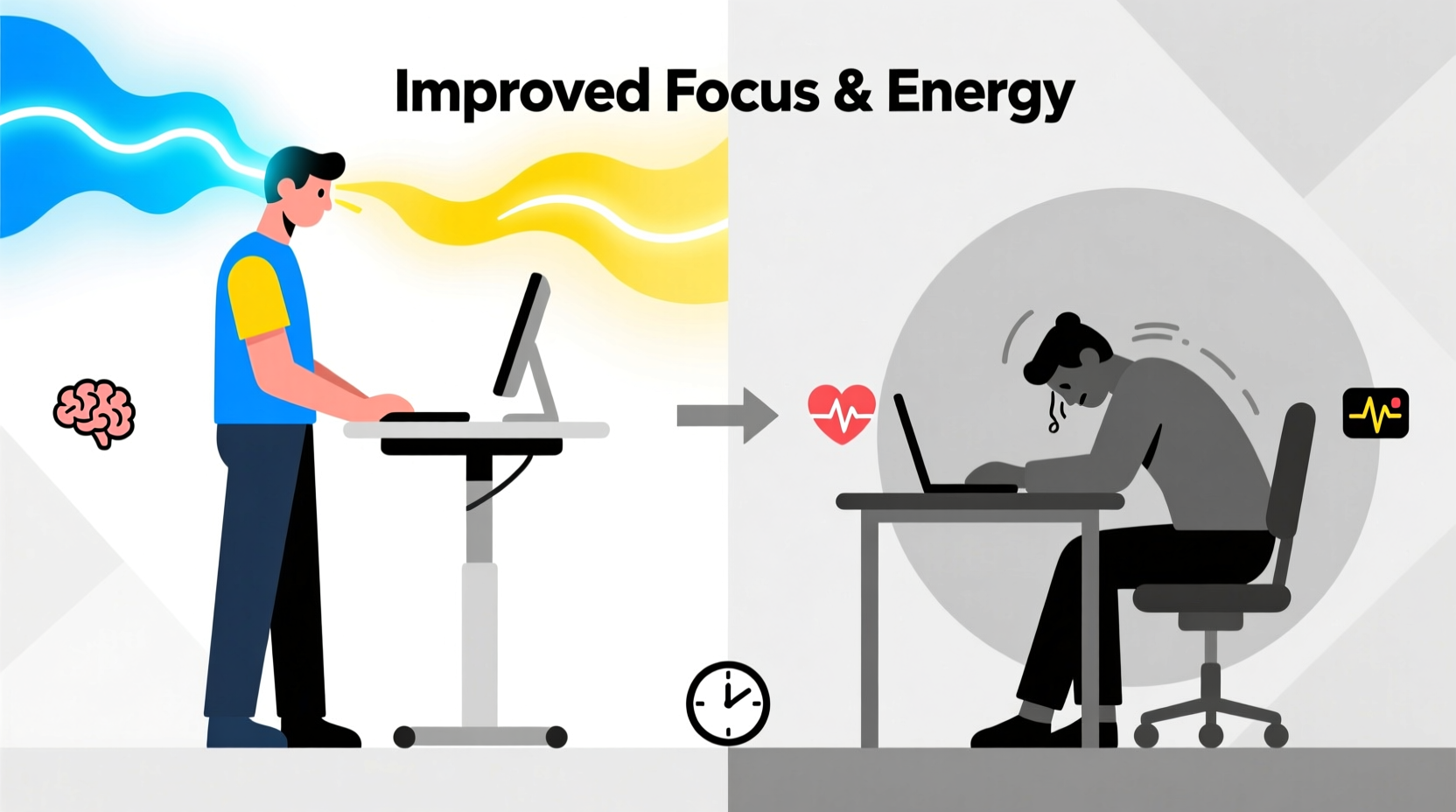
Posture influences more than just physical comfort—it directly affects brain function. When you sit for long stretches, especially in a slouched position, your diaphragm compresses, reducing oxygen intake. Lower oxygenation means less fuel for the brain, which can lead to mental fog, slower reaction times, and reduced problem-solving ability.
A 2018 study published in the Journal of Physical Activity and Health found that participants who used standing desks for two hours showed improved executive function, including better memory recall and task-switching speed, compared to those who remained seated. Researchers attributed this to increased cerebral blood flow and heightened sympathetic nervous system activity during upright postures.
“Standing engages postural muscles and subtly increases heart rate, which enhances oxygen delivery to the brain. This low-level activation can prime the mind for sharper focus.” — Dr. Lena Torres, Cognitive Ergonomist, University of Michigan
However, the benefits plateau—and often reverse—after about 90 minutes of continuous standing. Muscle fatigue sets in, stress hormones like cortisol rise, and cognitive load increases as the body diverts resources to maintain balance and posture. This creates a U-shaped curve: moderate standing boosts cognition; excessive standing impairs it.
Energy Levels: Standing vs. Sitting Compared
Energy fluctuates throughout the workday, heavily influenced by movement patterns. Sitting for more than 30–45 minutes without interruption triggers a metabolic slowdown. Insulin sensitivity drops, circulation slows, and energy expenditure decreases by up to 20% compared to light standing or fidgeting.
Standing, even passively, increases calorie burn by approximately 0.15 kcal per minute more than sitting—a modest difference, but one that adds up over time. More importantly, standing activates anti-gravity muscles (calves, glutes, core), which act as secondary pumps for venous return. This improves cardiovascular efficiency and helps maintain steady energy levels without the crashes associated with prolonged inactivity.
Still, not all standing is beneficial. Static standing—remaining in one place without movement—can cause blood to pool in the legs, leading to discomfort, swelling, and eventual fatigue. The key isn’t just standing, but *dynamic* standing: shifting weight, taking micro-steps, or using an anti-fatigue mat to encourage subtle motion.
Comparative Analysis: Pros and Cons of Each Posture
| Aspect | Sitting | Standing |
|---|---|---|
| Focus Duration | Better for deep, prolonged concentration tasks (e.g., writing, coding) | Enhances alertness for short bursts; declines after ~60–90 min |
| Energy Maintenance | Tends to decline steadily after 45+ minutes of inactivity | Supports stable energy if paired with movement; fatiguing if static |
| Musculoskeletal Impact | Risk of lower back pain, poor posture, hip tightness | Risk of foot pain, varicose veins, knee strain if unbalanced |
| Cognitive Stimulation | Moderate; may dull alertness over time | Higher initial stimulation due to mild physical engagement |
| Best Use Case | Detailed analytical work, video calls, reading | Brainstorming, data entry, phone calls, creative sprints |
The ideal approach isn’t choosing one posture over the other, but integrating both strategically throughout the day. The human body evolved for movement, not static positioning. A dynamic work environment—one that encourages regular transitions—is most conducive to sustained focus and energy.
Step-by-Step Guide to Optimizing Your Work Posture
Transitioning to a standing desk or incorporating more upright work requires intentionality. Done poorly, it leads to discomfort and discouragement. Follow this timeline to build sustainable habits:
- Week 1: Assess and Prepare
Measure your workspace. Ensure your monitor is at eye level, elbows bent at 90°, and wrists neutral when typing. If using a standing desk, start with 15-minute intervals twice a day. - Week 2: Build Tolerance
Increase standing sessions to 30 minutes, three times daily. Pair each session with light stretching or walking in place to promote circulation. - Week 3: Integrate Movement
Add micro-movements: shift weight side-to-side, perform calf raises, or use a balance pad. Replace one sitting meeting with a standing or walking alternative. - Week 4: Establish Rhythm
Adopt a 30/30 or 45/45 cycle: 30 minutes sitting, 30 minutes standing. Adjust based on energy and comfort. Track focus levels in a journal. - Ongoing: Refine and Adapt
Listen to your body. If you feel fatigued or distracted while standing, shorten the duration. Rotate footwear and use supportive mats to reduce joint stress.
Real-World Example: A Tech Worker’s Transformation
Mark, a software developer in Seattle, struggled with afternoon energy crashes and difficulty concentrating after lunch. He typically sat for 7–8 hours straight, only breaking to eat or commute. After reading about cognitive benefits of movement, he invested in a height-adjustable desk.
He began cautiously—standing for 20 minutes after lunch. Within a week, he noticed fewer cravings and improved alertness during code reviews. By week three, he had established a 45-minute sitting, 30-minute standing rhythm. He also started doing shoulder rolls and ankle circles while standing.
After six weeks, Mark reported a 40% reduction in midday fatigue and completed complex debugging tasks 25% faster, according to his team’s sprint tracking. “I didn’t expect such a clear mental shift,” he said. “It’s not that standing makes me smarter—it keeps my brain from shutting down.”
His experience aligns with broader trends: structured posture variation supports cognitive resilience far more effectively than any single position.
Actionable Tips for Maximizing Focus and Energy
Checklist: Building a Balanced Work Posture Routine
- ☑ Invest in an adjustable-height desk or converter
- ☑ Position monitor at eye level to avoid neck strain
- ☑ Begin with 15–20 minute standing intervals
- ☑ Alternate every 30–45 minutes between sitting and standing
- ☑ Incorporate micro-movements (weight shifts, stretches) while standing
- ☑ Use a timer or app to prompt posture changes
- ☑ Track energy and focus levels weekly to adjust timing
- ☑ Prioritize supportive footwear and anti-fatigue mats
Frequently Asked Questions
Can standing too much hurt your focus?
Yes. While short bouts of standing enhance alertness, standing for more than 90 minutes continuously can lead to physical discomfort and mental fatigue. The body begins to allocate cognitive resources toward managing pain or balance, detracting from task performance. It’s essential to alternate with sitting and incorporate movement.
Is a standing desk worth it for remote workers?
For many, yes—but value depends on usage. A standing desk is most effective when used as part of a dynamic routine, not as a replacement for all sitting. Even occasional standing breaks (2–3 times daily) can improve circulation and mental clarity. Consider a convertible riser if space or budget is limited.
How do I know if standing is helping my energy?
Track subjective indicators: Do you feel more alert within 10–15 minutes of standing? Are afternoon slumps less severe? Also monitor objective signs: fewer yawns, reduced need for caffeine, improved task completion speed. Keep a simple log for one week to identify patterns.
Conclusion: Movement Over Position
The question isn’t whether standing is universally better than sitting, but how to use both intelligently. Standing can elevate energy and sharpen focus—when applied in moderation and combined with movement. Sitting remains essential for deep cognitive work, provided it’s not uninterrupted.
The real advantage lies in variability. Humans thrive on change: shifting postures, changing environments, introducing motion. Instead of chasing a single \"optimal\" position, design a workflow that embraces rhythm and responsiveness. Let your body guide you—fatigue is a signal, not a failure.




 浙公网安备
33010002000092号
浙公网安备
33010002000092号 浙B2-20120091-4
Comments
No comments yet. Why don't you start the discussion?