
In the past decade, the way we consume entertainment has undergone a seismic shift. Gone are the days of cable bundles with 200 channels you never watch. Today, viewers are faced with a new dilemma: how many streaming subscriptions is too many? With major platforms like Netflix, Disney+, Hulu, HBO Max, Amazon Prime Video, Apple TV+, and niche services like Shudder or Mubi, the average household now juggles multiple accounts. But at what point does the cost outweigh the convenience? And when budgets tighten, is password sharing a viable workaround — or a risky shortcut?
The answer isn’t binary. It depends on your viewing habits, financial priorities, household size, and tolerance for digital gray areas. This article examines the real value of stacking subscriptions, the hidden costs of password sharing, and smarter strategies to enjoy premium content without overspending.
The Streaming Landscape: A Subscription Overload
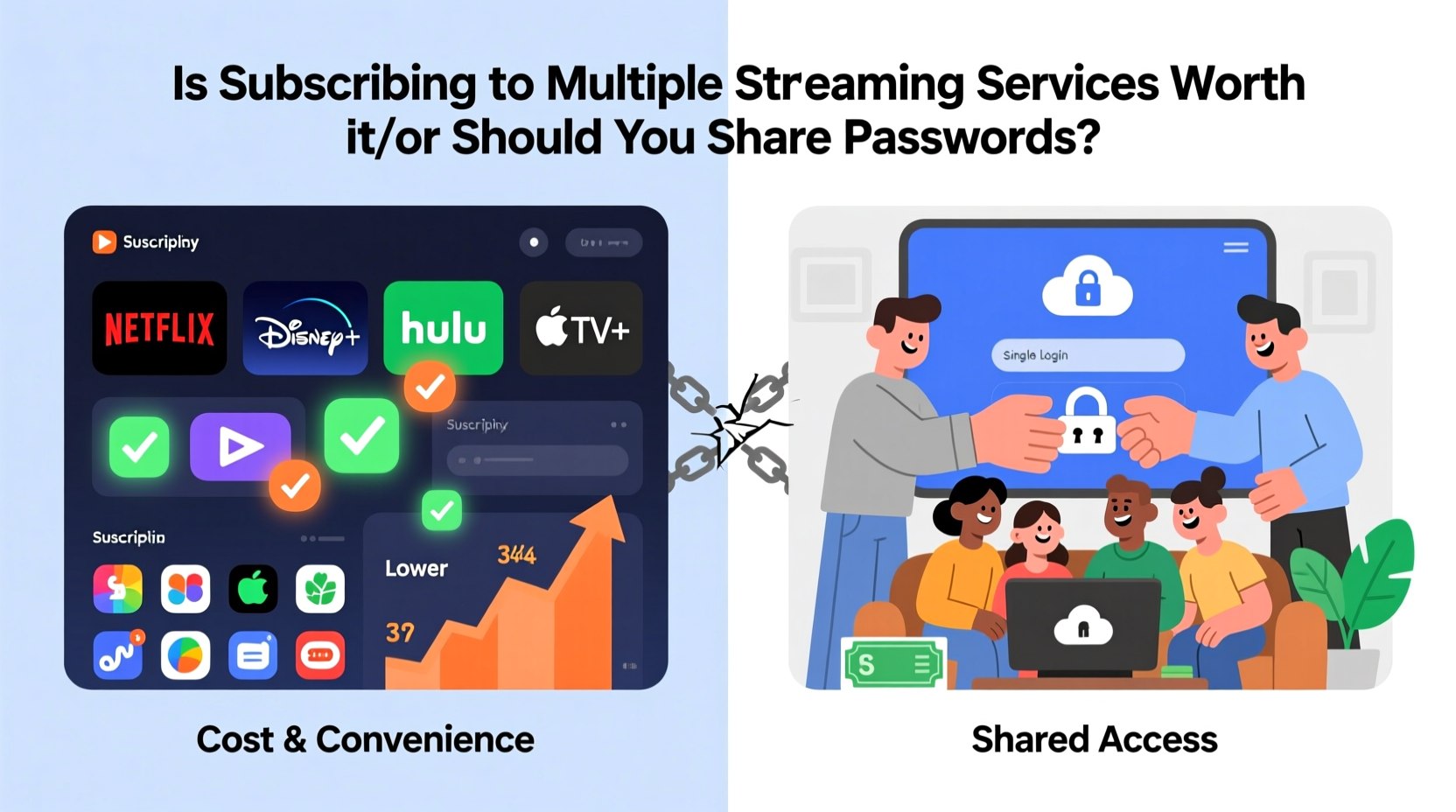
As of 2024, the average U.S. household subscribes to four streaming services. At an average cost of $15 per service, that’s $60 monthly — more than traditional cable used to cost. Yet, unlike cable, these platforms offer on-demand access, no commercials (on most plans), and original programming that dominates cultural conversations.
Consider this: You might keep Netflix for its award-winning dramas, Disney+ for family content and Marvel series, Hulu for next-day network TV, and HBO Max for prestige films. Each platform holds exclusive titles you can’t get elsewhere. But do you actually use all four every month? Or are some sitting idle while you cycle through one or two favorites?
The Math: Is Multiple Subscriptions Worth the Cost?
Let’s run the numbers. Below is a comparison of popular U.S.-based streaming services, their base prices, key content, and ideal user profiles.
| Service | Monthly Cost (Base Plan) | Key Content | Best For |
|---|---|---|---|
| Netflix | $15.49 | Stranger Things, The Crown, Squid Game, documentaries | Binge-watchers, global content lovers |
| Disney+ | $13.99 | Marvel, Star Wars, Pixar, National Geographic | Families, sci-fi/fantasy fans |
| Hulu | $7.99 (with ads), $17.99 (no ads) | Next-day FX shows, The Handmaid’s Tale, reality TV | Cable cord-cutters, live TV seekers |
| HBO Max | $15.99 | Succession, House of the Dragon, Warner Bros. films | Film buffs, prestige drama fans |
| Amazon Prime Video | $8.99 (or included in Prime) | The Boys, Reacher, Academy Award contenders | Prime shoppers, action/sci-fi viewers |
| Apple TV+ | $9.99 | Ted Lasso, Severance, Foundation | High-production-value seekers |
If you subscribe to just three of these — say, Netflix, Disney+, and HBO Max — you’re spending nearly $46 a month. That’s over $550 annually. For individuals or couples, this may feel excessive unless they’re heavy users.
However, for families with diverse tastes, bundling can make sense. Parents might want documentaries on Apple TV+, kids demand cartoons on Disney+, and teens crave thrillers on Netflix. In such cases, the cost per person drops significantly, improving the value proposition.
“Streaming fatigue is real. Consumers are starting to realize they don’t need access to everything — just what they love.” — Dana White, Chief Marketing Officer at Nielsen Digital
Password Sharing: Convenient, But Risky?
Password sharing has become a cultural norm. According to a 2023 Parks Associates report, nearly 40% of streaming subscribers share their login credentials with someone outside their household. Friends split Netflix bills, siblings use parents’ Disney+ accounts, and college students borrow roommates’ logins.
On the surface, it seems harmless. Why pay full price when you can split the cost? But platforms are cracking down. Netflix introduced paid “extra member” fees for users adding people outside their home. Disney+ and HBO Max now limit simultaneous streams and monitor IP address anomalies. Violations can lead to warnings, throttled quality, or account suspension.
There are also ethical considerations. When millions share passwords, studios lose revenue, which affects future productions. Writers, actors, and crew depend on subscription income. Widespread sharing undermines the sustainability of high-quality content.
Mini Case Study: The Roommate Dilemma
Emma and Jake, both graduate students in Chicago, shared a Netflix account to save money. They each paid $7.75 monthly — half the standard fee. For months, it worked seamlessly. Then Netflix flagged unusual activity: simultaneous streaming from different ZIP codes. Emma was visiting her family in Milwaukee, while Jake stayed in Chicago. Their account was temporarily locked until they verified their location.
After resetting the password and confirming residence, Netflix prompted them to upgrade to a “Plus” plan for $22.99 — allowing two extra members at $5.99 each. What started as a $15.49 subscription now cost $22.99, with no option to return to the cheaper tier. Their short-term savings led to long-term expense.
Smarter Alternatives to Unlimited Subscriptions
You don’t have to choose between overspending and breaking terms of service. Several ethical, budget-friendly strategies exist.
1. Rotate Services Monthly
Instead of maintaining five active subscriptions, rotate based on what you want to watch. Use Netflix in January to binge a winter release, switch to Disney+ in February for a new Marvel series, then pause and resume as needed. Most platforms allow easy pausing or cancellation without penalties.
2. Leverage Free Trials Strategically
Many services offer 7–30 day free trials. Time them around major releases. Sign up for HBO Max when a new season of *The Last of Us* drops, finish watching, then cancel. Just remember to set calendar reminders — auto-renewal catches many off guard.
3. Join a Legal Group Plan
Some platforms officially support group billing. Spotify pioneered this with Family and Duo plans. Netflix now offers “Extra Member” options for $7.99/month per additional adult. While not free, it’s cheaper than a full subscription and keeps you compliant.
4. Explore Bundles and Promotions
Look for bundled deals. T-Mobile offers free Netflix and Max with certain unlimited plans. Amazon Prime includes video, music, and shipping benefits for $14.99/month — a strong value if you shop frequently. Student discounts (like Hulu for $2.99/month) also reduce costs legally.
5. Use Ad-Supported Tiers
Hulu, Peacock, Paramount+, and even Netflix now offer lower-priced ad-supported plans. Interruptions aside, you gain access to 90% of the content at half the cost. For casual viewers, this trade-off makes financial sense.
Checklist: How to Optimize Your Streaming Strategy
- ✅ Audit your current subscriptions — list every one you pay for
- ✅ Track actual usage — how many hours per week on each?
- ✅ Identify overlapping content — are two services offering similar shows?
- ✅ Calculate total monthly spend — is it under $40? $60? More?
- ✅ Review terms of service — are you violating any sharing rules?
- ✅ Explore cheaper tiers — can you switch to an ad-supported plan?
- ✅ Set up a rotation schedule — pick one primary service per month
- ✅ Use free trials around major releases — but cancel before renewal
- ✅ Consider legal group plans — especially for roommates or partners
- ✅ Re-evaluate every quarter — drop what you no longer use
FAQ: Common Questions About Streaming Subscriptions
Can I get in trouble for sharing my streaming password?
While rare, yes. Platforms like Netflix now enforce policies against out-of-household sharing. You may face account restrictions, forced upgrades, or loss of features. Legally, you're violating the Terms of Service, though criminal charges are highly unlikely.
Is it worth having more than three streaming services?
Only if you actively use them. For most households, three well-chosen services provide ample content. Beyond that, diminishing returns set in. Focus on diversity — one general, one family, one niche — rather than quantity.
What’s the cheapest way to watch HBO content?
Opt for the ad-supported Max plan at $9.99/month. Alternatively, check if your cable provider or mobile carrier (e.g., Verizon, AT&T) includes Max in a bundle. Some libraries also offer free access via Kanopy or Hoopla, though selection is limited.
Conclusion: Balance Value, Ethics, and Practicality
The rise of streaming has given us unprecedented choice, but with that comes responsibility — financial, ethical, and practical. Subscribing to multiple services isn't inherently wasteful, but it becomes so when unused. Password sharing may feel like a harmless hack, but it carries risks and undermines the creative ecosystem.
The smart approach lies in intentionality. Know what you watch, why you watch it, and how much you’re willing to pay. Rotate services, leverage promotions, and embrace ad-supported tiers when appropriate. Avoid mindless renewals. Treat your streaming budget like any other — with awareness and control.




 浙公网安备
33010002000092号
浙公网安备
33010002000092号 浙B2-20120091-4
Comments
No comments yet. Why don't you start the discussion?