
If you're sitting at your desk, Alienware monitor glowing in front of you, and wondering whether a jump to a super ultrawide display will elevate your gaming experience, you're not alone. The allure of a massive curved screen stretching beyond the standard 21:9 aspect ratio is strong—especially with titles like Cyberpunk 2077, Microsoft Flight Simulator, and F1 23 supporting ultra-wide resolutions. But does that extra width translate into real performance, immersion, or productivity gains? Or is it just flashy overkill?
The answer isn’t a simple yes or no. It depends on your gaming habits, hardware setup, and how much you value peripheral vision in immersive experiences. Let’s break down what “super ultrawide” really means, how it compares to traditional ultrawide panels, and whether making the switch from your current Alienware monitor is a smart move.
Understanding the Display Landscape: Ultrawide vs Super Ultrawide
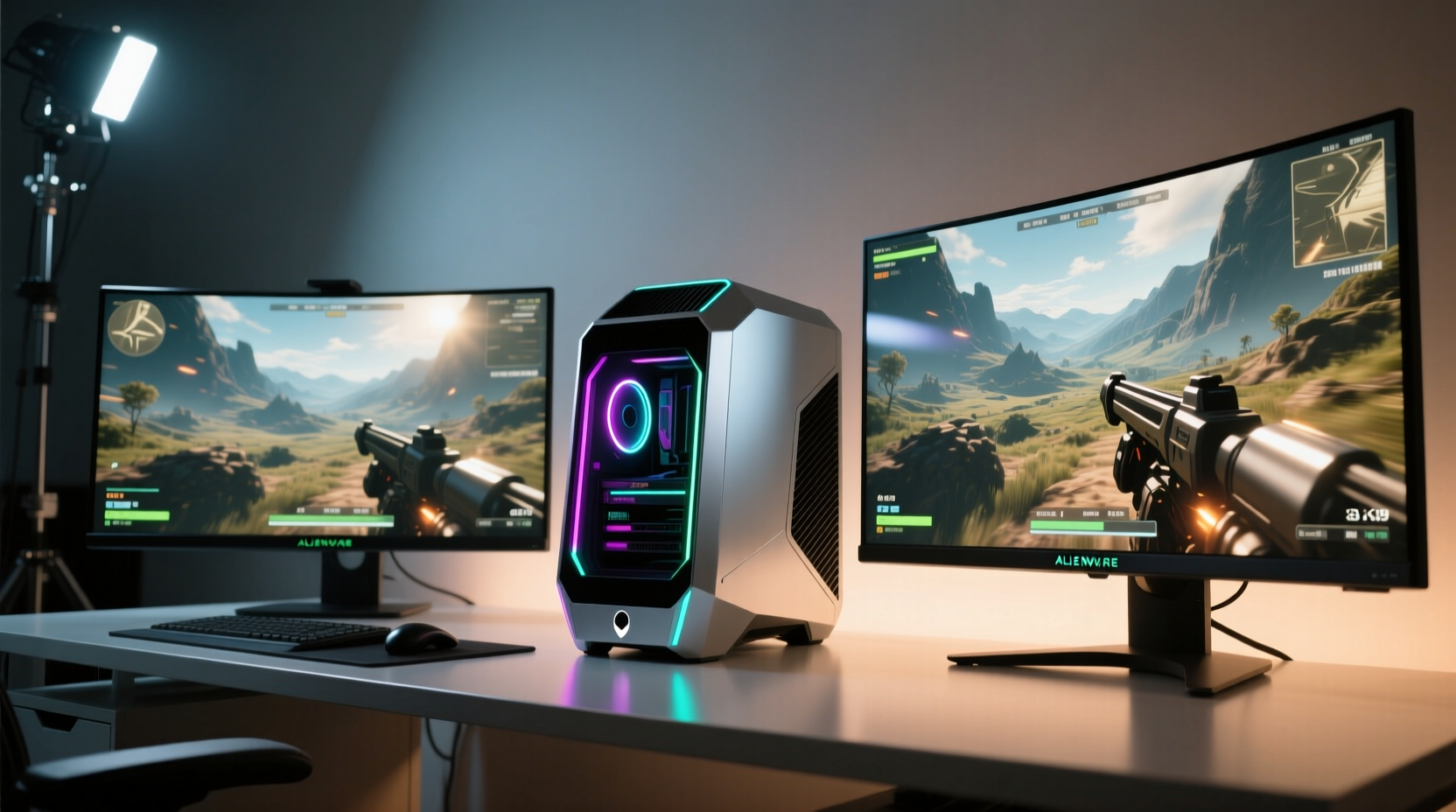
Standard ultrawide monitors typically run at 3440x1440 resolution with a 21:9 aspect ratio. This is double the horizontal pixels of a 1080p display but compressed into a single curved panel, offering more screen real estate without stacking multiple monitors. They’ve become popular among gamers and multitaskers alike for their cinematic feel and improved workflow.
Super ultrawide monitors, however, take things further—usually landing at 3840x1600 or even 5120x2160 (5K). These fall into the 32:9 category, effectively combining two 1440p screens side by side into one seamless display. Samsung’s Odyssey Neo G9, for example, runs at 5120x2160 with a 1000R curve, creating an almost wraparound effect that fills your field of view.
Performance and Immersion: Where Super Ultrawide Shines
The primary advantage of a super ultrawide lies in immersion. With a 32:9 aspect ratio, your peripheral vision engages more naturally with the game world. In simulators like DCS World or iRacing, this added width gives you earlier visual cues on incoming traffic or obstacles, improving reaction time. First-person shooters also benefit—enemies appearing from extreme edges are easier to spot before they open fire.
Resolution plays a key role too. A 5120x2160 display has nearly 11 million pixels—more than two and a half times the pixel count of a standard 1440p monitor. That level of detail is staggering in well-optimized games, especially when paired with HDR and high refresh rates (some models offer up to 240Hz).
However, this leap comes at a cost: GPU strain. Pushing 11 million pixels demands top-tier graphics hardware. Even an RTX 4080 may struggle to maintain consistent frame rates in AAA titles at native resolution without DLSS or FSR upscaling. If your current Alienware setup uses a mid-range GPU, upgrading the monitor alone could bottleneck performance.
“Super ultrawides are less about raw specs and more about experiential payoff. When properly supported, they transform gaming into something closer to virtual reality—without the headset.” — Marcus Lin, Senior Display Analyst at TechVision Labs
Practical Considerations: Space, Compatibility, and Cost
Before pulling the trigger, assess your physical setup. Super ultrawide monitors are enormous—often exceeding 49 inches diagonally. You’ll need ample desk depth (at least 32 inches) and a sturdy mount or stand. Viewing distance matters too; sitting too close can cause eye fatigue due to constant lateral tracking.
Additionally, check your GPU’s output capabilities. Most super ultrawides require DisplayPort 1.4 or HDMI 2.1 for full resolution and refresh rate support. Older Alienware systems might lack these ports, requiring a GPU upgrade alongside the monitor.
| Feature | Regular Ultrawide (21:9) | Super Ultrawide (32:9) |
|---|---|---|
| Typical Resolution | 3440x1440 | 5120x2160 |
| Pixels (approx.) | 5 million | 11 million |
| GPU Demand | Moderate (RTX 3070+ recommended) | High (RTX 4080/4090 ideal) |
| Desk Depth Needed | 24–28 inches | 30+ inches |
| Average Price Range | $600–$1,000 | $1,200–$2,500 |
| Best For | Multitasking, immersive single-player games | Sim racing, flight sims, productivity workflows |
Real-World Example: From Alienware AW3423DW to Odyssey G9
Take Alex, a long-time Alienware owner using the AW3423DW—a QD-OLED 34-inch ultrawide running at 3440x1440. He loved the color accuracy and deep blacks but felt limited in racing games where situational awareness was key. After upgrading to the Samsung Odyssey Neo G9, he noticed immediate differences: earlier detection of rival cars in Assetto Corsa Competizione, smoother cockpit visibility in Microsoft Flight Simulator, and the ability to keep Discord, browser, and game all visible at once during streams.
But there were trade-offs. His RTX 3080 Ti struggled with native 5K resolution in Red Dead Redemption 2, forcing him to use FSR quality mode. He also had to extend his desk and adjust lighting to reduce glare on the larger reflective surface. Still, nine months later, he says it was “the most transformative upgrade I’ve made outside of my GPU.”
Step-by-Step: How to Decide If a Super Ultrawide Is Right for You
- Evaluate Your Current Setup: Note your GPU model, available ports, desk space, and viewing distance.
- Assess Your Game Library: Do you play simulators, open-world RPGs, or strategy games? These benefit most from extra width.
- Check GPU Compatibility: Use tools like NVIDIA’s FPS calculator to estimate performance at 5120x2160.
- Test in Person (if possible): Visit a retailer with demo units to experience the curve and scale firsthand.
- Budget for the Full Upgrade: Include potential costs for a new GPU, mounting solution, or desk expansion.
- Consider Productivity Gains: If you stream, edit video, or work with spreadsheets, the multitasking benefits may justify the cost.
FAQ
Can I run two 1440p monitors instead of one super ultrawide?
You can, but you’ll lose seamlessness. Bezels create visual breaks, and some games don’t span correctly across both screens. A single super ultrawide eliminates these issues and provides a cleaner aesthetic.
Do all games support 32:9 resolution?
Most modern AAA titles do, especially those released after 2020. However, older or indie games may not recognize the resolution. Many users report success using community patches or forced aspect ratios via GPU control panels.
Will a super ultrawide reduce motion sickness in flight sims?
Some users report reduced discomfort due to the wider field of view matching natural human vision more closely. However, improper curvature or poor calibration can worsen it. Start with moderate settings and adjust gradually.
Final Verdict: Should You Upgrade from Your Alienware?
If you’re already invested in a premium ecosystem like Alienware, the jump to a super ultrawide isn't just about resolution—it's about redefining your relationship with the screen. For competitive esports players focused on CS2 or Valorant, the marginal gain may not justify the investment. But for immersive single-player adventures, simulation enthusiasts, or hybrid work-play users, the super ultrawide offers a generational leap in engagement.
Your Alienware monitor likely delivers excellent color, response time, and build quality. But technology evolves. If you crave deeper immersion, broader multitasking, and a future-proof display, and your rig can handle the load, then yes—super ultrawide is genuinely better for gaming in many scenarios.




 浙公网安备
33010002000092号
浙公网安备
33010002000092号 浙B2-20120091-4
Comments
No comments yet. Why don't you start the discussion?