
Boiling water has long been considered a reliable method for making tap water safer to drink. In emergency situations, during travel, or in regions with questionable water quality, boiling is often the go-to solution. But does boiling eliminate all risks? And if not, should you still filter your water even after boiling it? The answer isn't as straightforward as it seems — and depends on what contaminants are present in your local water supply.
This article breaks down exactly what boiling removes (and what it doesn’t), why filtration remains critical in many cases, and how to make informed decisions about your household’s drinking water safety.
What Boiling Water Actually Removes
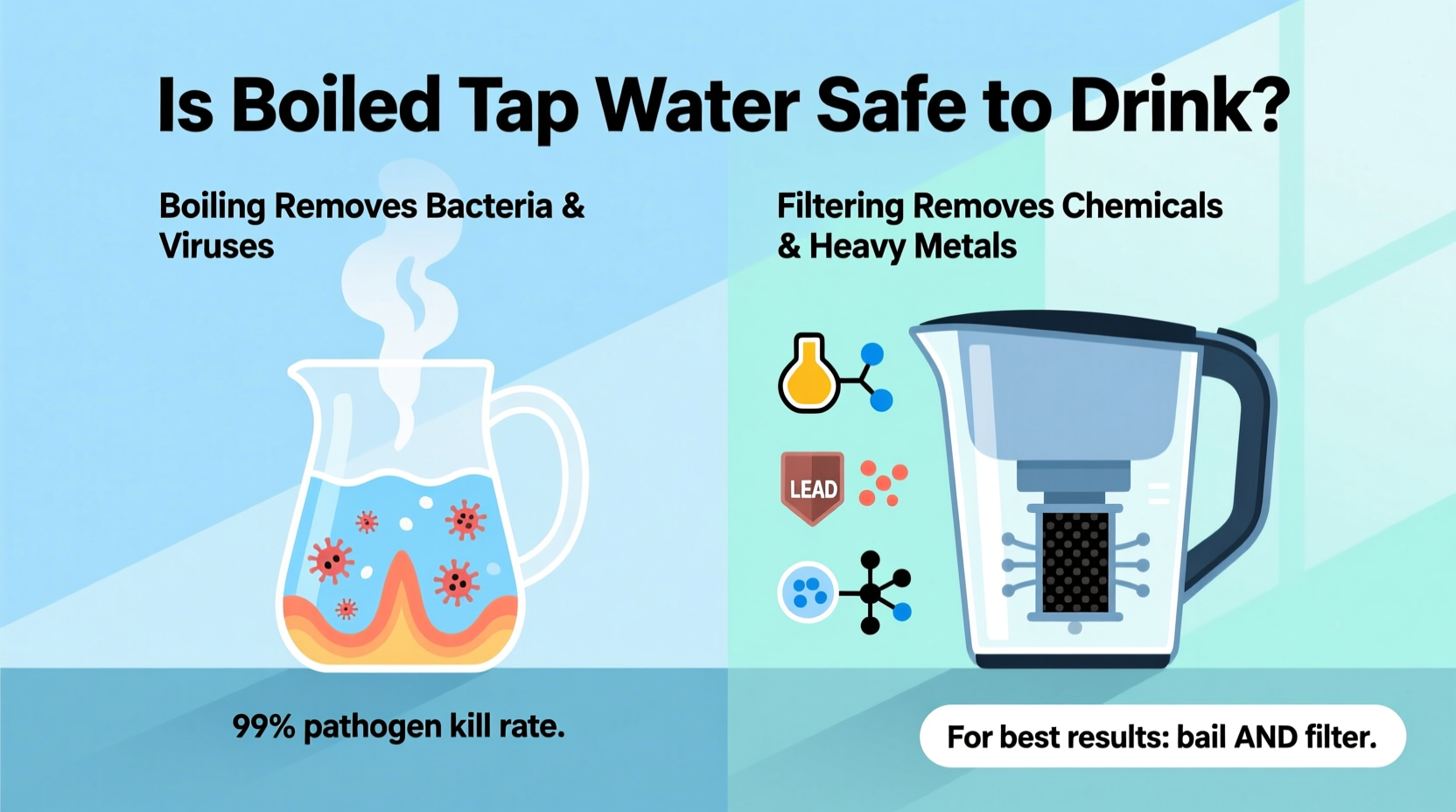
Boiling is highly effective at killing biological pathogens. When water reaches a rolling boil for at least one minute (or three minutes at higher altitudes), it destroys:
- Bacteria (e.g., E. coli, Salmonella, Legionella)
- Viruses (e.g., Norovirus, Hepatitis A)
- Protozoa (e.g., Giardia, Cryptosporidium)
The heat disrupts the cellular structure of microorganisms, rendering them inactive and harmless. This makes boiling an excellent defense against waterborne illnesses caused by microbial contamination — especially important in areas with compromised sanitation or after natural disasters.
However, boiling does nothing to remove chemical pollutants, heavy metals, nitrates, pharmaceutical residues, or microplastics. In fact, boiling can concentrate certain contaminants because water volume decreases through evaporation, leaving behind higher concentrations of non-volatile substances like lead or arsenic.
When Filtering Is Still Necessary After Boiling
If your tap water contains any of the following, boiling alone is insufficient:
- Lead: Can leach from old pipes; linked to developmental issues in children and cardiovascular problems in adults.
- Chlorine and chloramines: Used for disinfection but can create harmful byproducts and affect taste/odor.
- Nitrates: Common in agricultural runoff; dangerous for infants under six months.
- PFAS (\"forever chemicals\"): Found in industrial areas; resistant to heat and do not break down during boiling.
- Microplastics: Increasingly detected in municipal supplies; cannot be removed by boiling.
Filtration systems, particularly those using activated carbon, reverse osmosis, or ion exchange, are designed to target these invisible threats. Without them, boiled water may be microbiologically safe but chemically hazardous.
“Boiling water is a time-tested method for pathogen control, but modern water challenges require multi-barrier protection. Relying solely on boiling leaves consumers vulnerable to chemical exposure.” — Dr. Lena Torres, Environmental Health Scientist, CDC
Comparing Treatment Methods: What Removes What?
| Contaminant | Removed by Boiling? | Removed by Carbon Filter? | Removed by Reverse Osmosis? |
|---|---|---|---|
| Bacteria & Viruses | Yes | Partial (depends on pore size) | Yes |
| Giardia / Cryptosporidium | Yes | Yes (with sub-micron filter) | Yes |
| Lead | No (concentrates) | Limited | Yes |
| Chlorine | No | Yes | Yes |
| PFAS | No | Some (high-quality carbon) | Yes |
| Nitrates | No | No | Yes |
| Microplastics | No | Yes (with fine filtration) | Yes |
| Pharmaceuticals | No | Partial | Yes |
This comparison shows that while boiling eliminates biological risks, only advanced filtration technologies provide broad-spectrum protection.
Step-by-Step: How to Safely Treat Tap Water at Home
For optimal safety, follow this integrated approach to treating tap water:
- Test Your Water First
Use a certified lab or EPA-approved home test kit to identify specific contaminants in your supply. Municipalities issue annual Consumer Confidence Reports (CCRs) — request yours online. - Boil If Microbial Risk Is Present
Bring water to a rolling boil for 1 minute (3 minutes above 5,000 ft elevation). Let cool before use. - Filter Using Appropriate Technology
Choose a filter based on your contaminant profile:- Activated carbon: Best for chlorine, VOCs, some pesticides.
- Reverse osmosis: Removes lead, nitrates, PFAS, fluoride, arsenic.
- Ceramic filters: Effective against bacteria and cysts.
- Maintain Equipment Regularly
Replace filter cartridges per manufacturer guidelines (typically every 2–6 months). An expired filter can harbor bacteria or stop removing contaminants. - Store Treated Water Properly
Keep cooled boiled or filtered water in clean, BPA-free containers. Avoid prolonged storage at room temperature to prevent recontamination.
Real-World Example: A Family’s Experience in Flint, Michigan
In 2016, the Johnson family lived in Flint during the height of the city’s water crisis. Like many residents, they initially believed that boiling their tap water would make it safe. After their young daughter developed unexplained rashes and fatigue, they consulted a pediatrician who suspected lead exposure.
Testing revealed that despite regular boiling, their water contained 27 ppb of lead — nearly twice the EPA action level. Boiling had done nothing to reduce the metal concentration and may have slightly increased it due to evaporation.
They installed a reverse osmosis system under their kitchen sink and began using bottled water for cooking. Within weeks, symptoms improved. Their case highlights a common misconception: boiling improves microbiological safety but offers zero protection against toxic metals and industrial chemicals.
Do’s and Don’ts of Tap Water Treatment
| Do’s | Don’ts |
|---|---|
| ✔ Test your water annually | ✖ Assume boiling makes water completely safe |
| ✔ Use NSF/ANSI-certified filters | ✖ Reuse plastic bottles indefinitely |
| ✔ Replace filters on schedule | ✖ Ignore changes in taste, color, or odor |
| ✔ Combine boiling and filtration when needed | ✖ Drink hot water directly from the tap (can leach more lead) |
| ✔ Flush pipes before collecting drinking water | ✖ Use boiling as a long-term substitute for proper filtration |
Frequently Asked Questions
Can I just boil my tap water and skip the filter?
You can — but only if your primary concern is biological contamination. If your water contains lead, chlorine byproducts, PFAS, or nitrates, boiling will not help and could worsen the problem. Most experts recommend filtration regardless of boiling.
Does boiling remove chlorine from tap water?
Partially. Boiling for 15–20 minutes will off-gas some chlorine, but chloramines (used by many cities) are much more stable and require activated carbon filtration for removal. For consistent results, don’t rely on boiling alone.
What’s the safest way to treat tap water at home?
A two-step process: boil if there’s a known microbial risk (e.g., boil advisory), then filter using a system certified to remove your area’s specific contaminants. Reverse osmosis units with UV sterilization offer the highest level of protection for homes with complex water quality issues.
Final Recommendation: Boil When Needed, Filter Always
Boiling tap water is a valuable tool — but it's only one piece of the puzzle. It effectively neutralizes disease-causing organisms, making it ideal during emergencies or in regions with poor sanitation. However, it fails to address the growing list of chemical pollutants now prevalent in public water systems.
Modern water treatment requires a layered approach. Think of boiling as targeting the “living” threats and filtration as handling the “invisible” ones. Together, they form a robust defense against both acute illness and long-term health risks.
Before deciding whether to filter after boiling, know what’s in your water. Check your local CCR, conduct a home test, and invest in a filtration system tailored to your needs. Whether it’s a simple pitcher filter or a whole-house reverse osmosis unit, taking control of your water quality is one of the most impactful steps you can take for your family’s health.




 浙公网安备
33010002000092号
浙公网安备
33010002000092号 浙B2-20120091-4
Comments
No comments yet. Why don't you start the discussion?