
In the United States, access to clean drinking water is often taken for granted—yet the question of whether tap water is truly safe continues to surface. With bottled water dominating grocery aisles and marketing campaigns touting purity and convenience, many consumers are left wondering: Is it worth the cost and environmental toll? More importantly, is tap water actually safe to drink, or should we rely on bottled alternatives?
The answer isn't as simple as a yes or no. It depends on location, infrastructure, regulation, and individual health considerations. This article breaks down the facts, compares safety standards, evaluates environmental and economic impacts, and provides practical guidance for making informed decisions about your daily hydration.
Regulatory Oversight: Who Ensures Water Safety?
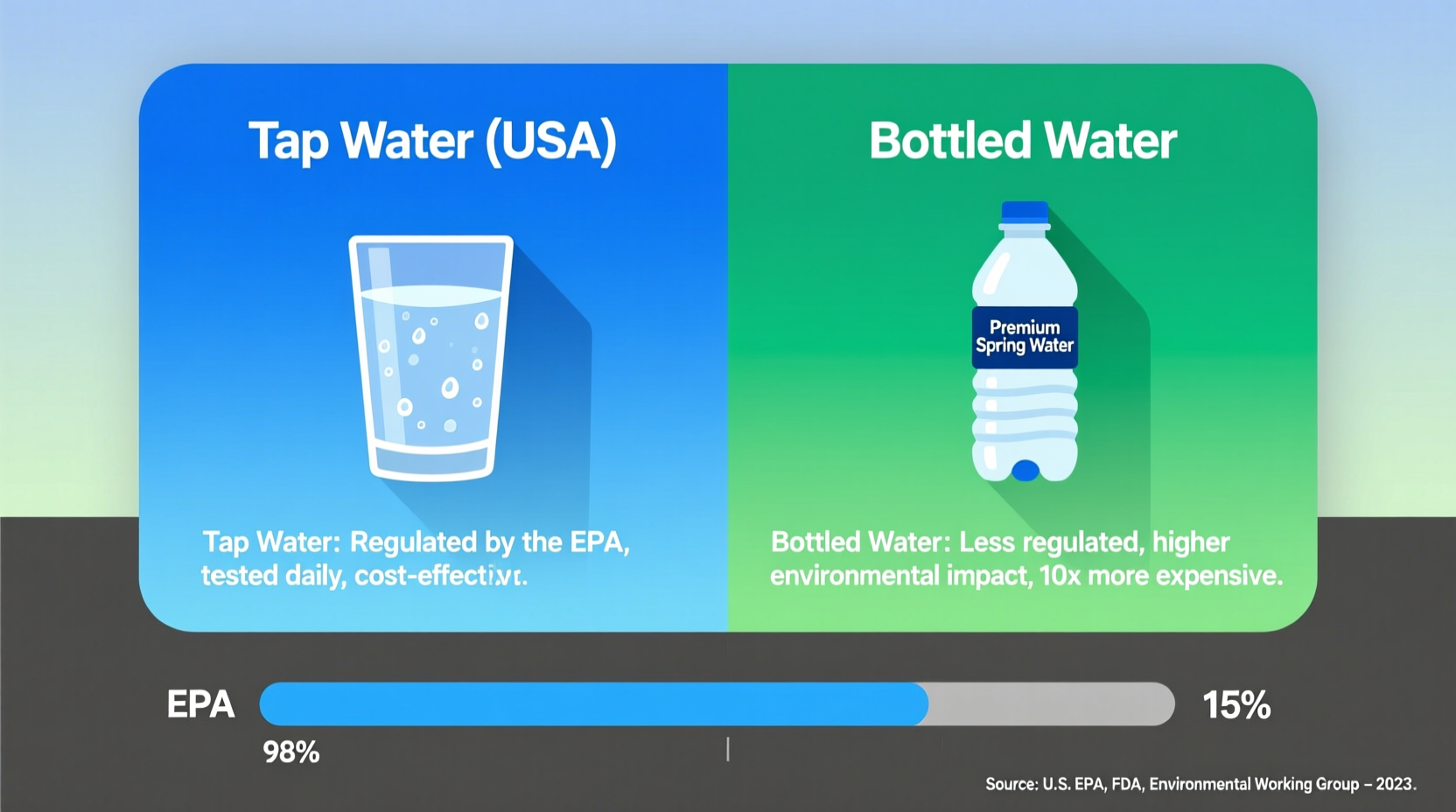
The safety of drinking water in the U.S. is governed by two primary federal agencies: the Environmental Protection Agency (EPA) and the Food and Drug Administration (FDA). Their roles differ significantly based on whether the water comes from the tap or a bottle.
The EPA regulates public tap water under the Safe Drinking Water Act (SDWA), which mandates strict testing and reporting requirements for over 90 contaminants, including lead, arsenic, nitrates, and microbial pathogens. Public water systems must test regularly and provide annual Consumer Confidence Reports (CCRs) to their customers detailing water quality.
In contrast, the FDA oversees bottled water as a food product. While it adopts many EPA standards, enforcement is less consistent. Bottled water companies are not required to disclose contaminant testing results publicly, nor do they face the same frequency of inspections as municipal suppliers.
“Tap water in most U.S. cities meets or exceeds federal safety standards. The real issue isn’t universal risk—it’s transparency and aging infrastructure.” — Dr. Lena Patel, Environmental Health Scientist at Johns Hopkins University
Comparing Contaminants: Tap vs. Bottled
Both tap and bottled water can contain trace contaminants, but the nature and levels vary. Municipal systems treat water using chlorine, chloramine, or ultraviolet light to kill bacteria and viruses. However, disinfection byproducts (DBPs), such as trihalomethanes, may form and persist at low levels.
Bottled water brands often use reverse osmosis, distillation, or filtration methods. While this removes many impurities, studies have found microplastics in nearly all major bottled water brands. A 2024 study by Orb Media detected an average of 325 plastic particles per liter across tested samples—particles small enough to enter human bloodstream and tissues.
Lead contamination remains a concern in older cities with corroded pipes. Flint, Michigan, is the most infamous example, but similar issues have surfaced in Newark, New Jersey, and Pittsburgh, Pennsylvania. Importantly, lead typically enters water after it leaves the treatment plant—through household plumbing—meaning both tap and bottled water users in affected homes may be at risk unless mitigation steps are taken.
Common Contaminants Found in U.S. Drinking Water
| Contaminant | Primary Source | Treatment Method | Found More In |
|---|---|---|---|
| Lead | Aging pipes and fixtures | Corrosion control, filters | Taps (especially pre-1986 homes) |
| Microplastics | Polyester fibers, packaging | Limited removal via standard filtration | Bottled water |
| Chlorine Byproducts | Disinfection process | Activated carbon, aeration | Treated tap water |
| Nitrates | Agricultural runoff | Ion exchange, reverse osmosis | Rural wells and some municipal supplies |
| PFAS (\"Forever Chemicals\") | Industrial discharge, firefighting foam | Advanced filtration (e.g., GAC, RO) | Both (increasingly regulated) |
Environmental and Economic Impact
Beyond personal health, the choice between tap and bottled water has broader consequences. The production and disposal of plastic bottles contribute significantly to pollution. The U.S. consumes over 50 billion plastic water bottles annually, with fewer than 30% being recycled. The rest end up in landfills or oceans, where they take up to 450 years to decompose.
Transportation also plays a role. Bottled water is often shipped hundreds or thousands of miles, generating greenhouse gas emissions. In contrast, tap water is locally sourced and distributed through existing infrastructure, resulting in a far lower carbon footprint.
Economically, bottled water costs an average of $1.22 per gallon, while tap water averages just $0.005 per gallon—making it roughly 250 times cheaper. For a family of four drinking eight cups daily, switching entirely to tap could save over $1,000 per year.
Real-World Scenario: The Chicago Homeowner’s Dilemma
Sarah Thompson, a homeowner in Chicago’s Logan Square neighborhood, began questioning her tap water after noticing a faint metallic taste. She had young children and was concerned about potential lead exposure. Her first instinct was to switch to bottled water, but the cost and waste troubled her.
She requested her city’s CCR and discovered that while the municipal supply met EPA standards, her 1920s-era home likely had lead service lines. Instead of relying on bottled water indefinitely, she took action: she installed a certified NSF/ANSI 53 filter for lead removal, flushed her taps each morning before use, and had her water independently tested. The results showed lead levels dropped from 12 ppb to under 1 ppb—well below the EPA’s 15 ppb action level.
Sarah now drinks filtered tap water confidently and uses a refillable stainless steel bottle. “I realized I didn’t need to abandon tap water—I just needed to understand my specific risks and address them,” she said.
Step-by-Step Guide to Safer Drinking Water at Home
Whether you live in a major city or a rural town, you can take proactive steps to ensure your drinking water is safe. Follow this timeline to assess and improve your water quality:
- Month 1: Review Your Local Water Report
Visit your water utility’s website and download the latest Consumer Confidence Report. Look for any violations or elevated levels of contaminants like lead, PFAS, or nitrates. - Month 1 (continued): Inspect Your Plumbing
Determine if your home has lead pipes or brass fixtures containing lead. Homes built before 1986 are more likely to have lead components. Check where the water line enters your house or consult a plumber. - Month 2: Test Your Water
Purchase a certified home test kit or hire a state-certified lab. Focus on lead, PFAS, coliform bacteria, and nitrates if you’re on a private well. Testing costs between $20 and $200 depending on scope. - Month 3: Install a Point-of-Use Filter
Choose a filter certified to remove your identified contaminants. Look for NSF/ANSI certifications: Standard 53 for lead and chemicals, Standard 58 for reverse osmosis, and Standard 42 for aesthetic improvements. - Ongoing: Maintain and Replace Filters
Follow manufacturer guidelines—typically every 2 to 6 months. A clogged or expired filter can worsen water quality. - Optional: Consider a Whole-House System
If multiple contaminants are present or you want whole-home protection (e.g., for showers), invest in a comprehensive filtration system installed at the main water line.
When Bottled Water Makes Sense
While tap water is generally safe and sustainable, there are legitimate situations where bottled water is a reasonable short-term solution:
- Boil Water Advisories: During emergencies like pipe breaks or flooding, authorities may recommend bottled water until the system is confirmed safe.
- Unreliable Infrastructure: In areas with frequent contamination reports or unregulated private wells, bottled water may be safer until remediation occurs.
- Medical Conditions: Immune-compromised individuals may opt for sterile or distilled bottled water during recovery periods.
- Travel or Outdoor Activities: When access to clean tap water is unavailable, bottled water ensures hydration without risk.
However, long-term reliance on bottled water should be avoided unless medically advised. It offers no proven health advantage over properly treated tap water and introduces environmental and financial burdens.
Frequently Asked Questions
Is tap water safer than bottled water?
In most U.S. cities, tap water is subject to more rigorous and transparent testing than bottled water. Municipal systems must comply with EPA standards and report results publicly. Bottled water lacks equivalent oversight, and microplastic contamination is a growing concern. For these reasons, tap water is generally considered equally or more reliable when infrastructure is intact.
Can I trust my tap water if it tastes or smells strange?
Odd taste or odor doesn’t necessarily mean unsafe water. Chlorine is commonly used for disinfection and can cause a bleach-like smell. Sulfur may indicate bacterial presence in hot water heaters. However, metallic tastes could signal lead, and cloudy water might suggest sediment or air bubbles. If concerns persist, get your water tested rather than assuming it’s unsafe.
Do refrigerator filters make tap water safe?
Many fridge filters reduce chlorine and improve taste, but not all remove lead or PFAS. Check the product specifications for NSF/ANSI certification. Most basic carbon filters meet Standard 42 (aesthetic effects), but you’ll need Standard 53 or 58 for health-related contaminants. Replace filters on schedule to maintain effectiveness.
Action Plan: Making the Smart Choice
“The best water isn’t the one in the fanciest bottle—it’s the one you’ve verified is clean, accessible, and responsibly sourced.” — Dr. Michael Tran, Public Health Engineer
Instead of defaulting to bottled water out of habit or marketing influence, adopt a more thoughtful approach:
📋 Water Safety Checklist- ✅ Obtain and read your local water quality report
- ✅ Identify your home’s plumbing age and materials
- ✅ Test tap water if you suspect contamination
- ✅ Install a certified filter for targeted protection
- ✅ Use reusable bottles to reduce waste
- ✅ Stay informed about local water advisories
Conclusion
Tap water in the United States is overwhelmingly safe to drink, especially when supported by proper infrastructure and informed consumer habits. Bottled water offers convenience but rarely superior safety—and often at a steep environmental and financial cost. The key is not to choose one over the other blindly, but to understand your specific context.
By reviewing water reports, testing your supply, and using effective filtration when needed, you can confidently rely on tap water as a healthy, sustainable choice. In doing so, you protect not only your family’s well-being but also the planet’s resources.




 浙公网安备
33010002000092号
浙公网安备
33010002000092号 浙B2-20120091-4
Comments
No comments yet. Why don't you start the discussion?