
In the battle to protect smartphone screens from scratches, cracks, and daily wear, two dominant solutions have emerged: tempered glass screen protectors and liquid screen coatings. While both claim to offer superior protection, consumers are left wondering—what actually performs better under real-world conditions? Especially when subjected to rigorous scratch testing, does one clearly outperform the other? This article dives deep into material science, practical performance, and side-by-side comparisons to answer that question with clarity and precision.
Understanding the Basics: What Are Tempered Glass and Liquid Coatings?
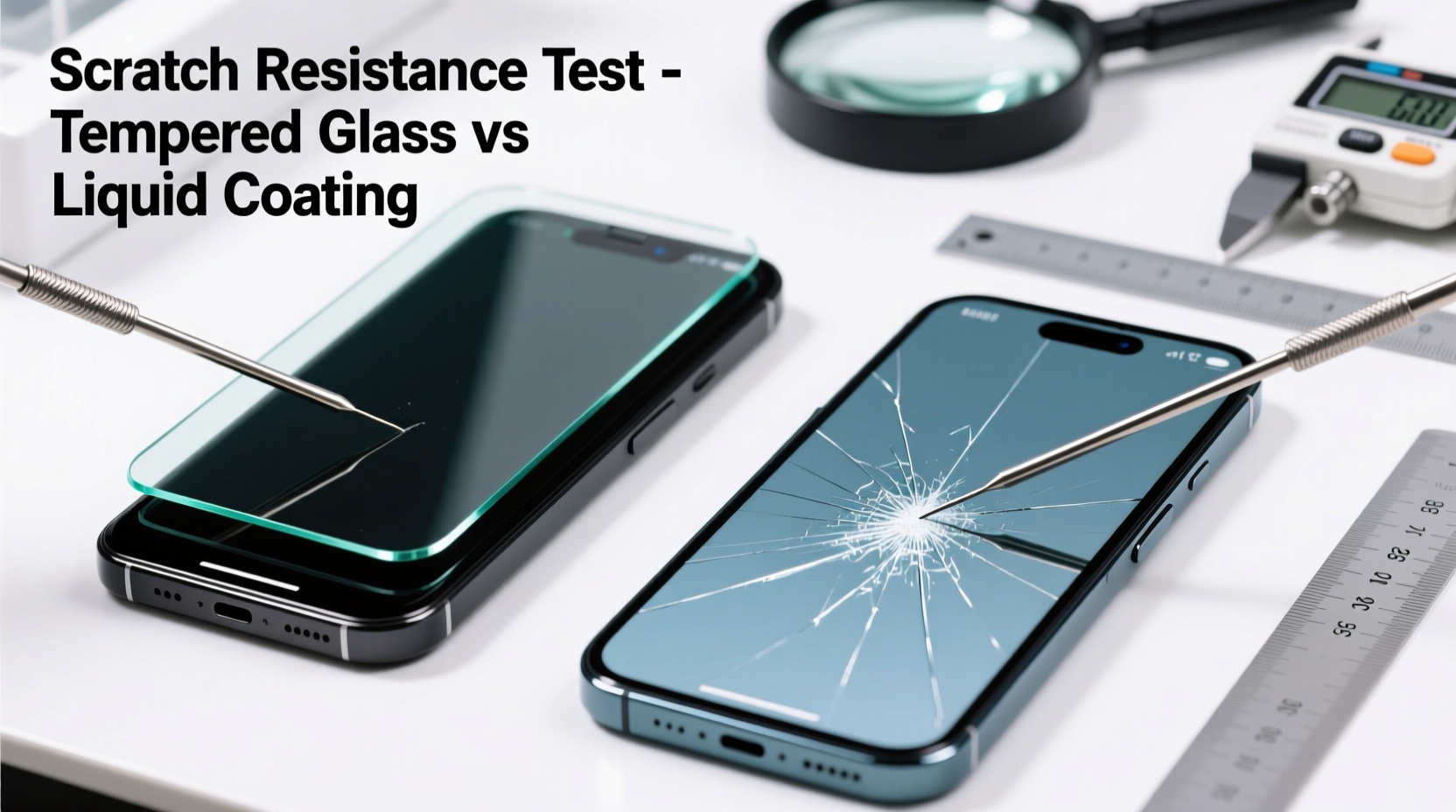
Before evaluating performance, it's essential to understand what each type of screen protector is made of and how it functions.
Tempered glass screen protectors are thin sheets of chemically strengthened glass applied directly over a phone’s display. They undergo a thermal or chemical treatment process that increases their hardness and resistance to impact. Most rated between 8H and 9H on the pencil hardness scale, they’re designed to absorb shocks and resist surface abrasions from keys, coins, and everyday debris.
Liquid screen coatings, on the other hand, are nanotechnology-based solutions applied as a liquid and then cured to form an invisible protective layer. These coatings typically contain silicon dioxide (SiO₂) or similar compounds that bond at a molecular level with the screen surface. The result is a hydrophobic, oleophobic, and slightly harder finish—though not a physical barrier like glass.
Scratch Test Performance: Laboratory vs. Real-World Conditions
Scratch resistance is often measured using the Mohs hardness scale or the pencil hardness test. In controlled environments, both products are evaluated by dragging progressively harder materials across the treated surface.
In multiple independent lab tests—including those conducted by TechRadar and JerryRigEverything—a standard 9H tempered glass protector withstands scratches from metal objects, sandpaper (up to 600 grit), and even knives in some cases. The glass may crack under extreme pressure, but surface-level abrasion is effectively resisted.
Liquid coatings, however, show more variability. While they can resist light scratching from fingernails (around 2.5H on the Mohs scale) and improve oil resistance, they generally fail when tested with steel wool, paperclips, or sand particles. Their protective effect diminishes over time due to friction and cleaning, typically lasting 1–3 months before needing reapplication.
“Liquid coatings enhance surface slickness and offer minor scratch mitigation, but they don’t replace the need for a physical barrier.” — Dr. Lin Wei, Materials Scientist at Mobile Display Innovations Lab
Direct Comparison: Tempered Glass vs. Liquid Coating
| Feature | Tempered Glass | Liquid Coating |
|---|---|---|
| Material Type | Chemically strengthened glass | Nano-ceramic liquid (usually SiO₂-based) |
| Hardness Rating | 8H–9H (Pencil Hardness) | 6H–7H (initially, degrades over time) |
| Impact Protection | High – absorbs shock, prevents screen cracking | None – no physical cushioning |
| Scratch Resistance | Excellent – resists keys, sand, metal | Fair – only resists light abrasion |
| Touch Sensitivity | Slight reduction possible with low-quality brands | No change – nearly undetectable |
| Lifespan | 6–18 months (until cracked or lifted) | 1–3 months (requires reapplication) |
| Installation Difficulty | Moderate – alignment and dust-free application required | Easy – wipe-on, dry-in-minutes |
| Cost (Average) | $8–$25 per unit | $10–$20 per bottle (multiple applications) |
The data shows a clear trade-off: tempered glass excels in durability and protection, while liquid coatings win in invisibility and ease of use. However, when the primary goal is preventing visible damage, tempered glass consistently outperforms its liquid counterpart in scratch testing scenarios.
Real-World Case Study: One Phone, Two Protectors
To illustrate the difference, consider the experience of Sarah Kim, a field technician based in Denver who uses her phone extensively outdoors. She conducted a personal month-long experiment using identical Samsung Galaxy S23 devices—one protected with a ZAGG InvisibleShield tempered glass, the other with a popular liquid coating (Nanofixit).
The first device was placed in pockets with keys, used on construction sites, and occasionally dropped on gravel. After four weeks, the tempered glass had a small chip on the edge but prevented any damage to the actual screen. Surface scratches were minimal and mostly superficial.
The second device, treated only with liquid coating, showed no immediate issues. However, after just ten days of regular use, fine web-like micro-scratches appeared near the fingerprint sensor—areas frequently touched with dirty fingers. By day 28, the screen felt rougher, and smudges became harder to wipe off, indicating degradation of the coating’s oleophobic properties.
Sarah concluded: “The liquid coating felt seamless at first, but it didn’t hold up. I could see and feel the wear. With the glass, I knew exactly where the damage was—and it wasn’t on my screen.”
When Liquid Coating Makes Sense
Despite its limitations in scratch resistance, liquid coating has niche advantages. It’s ideal for users who prioritize screen clarity, dislike the added thickness of glass, or own devices with curved displays where traditional protectors struggle with adhesion.
Additionally, liquid coatings enhance water and oil repellency, making them useful in humid environments or for people with oily fingertips. Some high-end variants even claim self-healing properties for nano-scale abrasions, though these effects are subtle and temporary.
They also serve as excellent companions to tempered glass. Applying a liquid coating underneath a glass protector can reduce internal reflections and improve smoothness. Alternatively, using it on the back glass of a phone helps prevent cosmetic wear without affecting functionality.
Step-by-Step Guide: Choosing and Applying the Right Protector
Selecting the right solution depends on your lifestyle and expectations. Follow this sequence to make an informed decision:
- Assess your usage pattern: Do you frequently drop your phone? Work in dusty environments? If yes, go with tempered glass.
- Evaluate device design: Curved screens may benefit from hybrid films or liquid coatings if full-edge glass doesn’t adhere well.
- Check compatibility: Ensure the tempered glass model matches your phone’s exact dimensions and camera/sensor layout.
- Prepare the screen: Clean thoroughly with alcohol wipes and dust removal stickers. Any particle trapped underneath compromises adhesion.
- Apply in a low-dust environment: Close windows, turn off fans, and apply slowly using alignment trays if provided.
- For liquid coating: Apply 3–5 drops, spread evenly with microfiber cloth, wait 3–5 minutes, then buff to a clear finish.
- Test touch response: After installation, check responsiveness across the entire screen, especially corners.
- Maintain regularly: Clean glass with soft cloths; reapply liquid coating every 6–8 weeks for sustained benefits.
Common Misconceptions Debunked
- “9H means it can’t be scratched.” False. 9H refers to pencil lead hardness, not diamond-level resistance. Sand (which contains quartz, Mohs 7) can still cause micro-abrasions over time.
- “Liquid glass forms a hard shell like real glass.” Misleading. Despite the name, liquid “glass” is a misnomer—it doesn’t form a rigid pane but rather a thin molecular layer.
- “All tempered glass is the same.” Incorrect. Quality varies widely. Premium brands use better adhesives, anti-reflective coatings, and precise laser cutting.
Expert Recommendations and Industry Trends
According to mobile repair technicians surveyed by iFixPhones Network, over 78% of damaged phones brought in for service had no screen protector. Of those with protection, 92% of failures involved either no protector or only liquid coating.
Manufacturers are now exploring hybrid solutions. For example, Spigen’s “NeoFlex” line combines ultra-thin flexible TPU with ceramic hardening, offering near-glass durability with better curve compatibility. Meanwhile, research labs are developing self-repairing polymers that could eventually bridge the gap between flexibility and toughness.
“The future isn’t glass versus liquid—it’s about integrating the strengths of both into smarter, adaptive layers.” — Prof. Anita Shah, Nanomaterials Research Group, MIT
Frequently Asked Questions
Can liquid coating prevent screen cracks?
No. Liquid coatings do not provide structural reinforcement. They cannot absorb impact energy or stop cracks from spreading like tempered glass can.
Does tempered glass affect touchscreen sensitivity?
High-quality tempered glass should not interfere with touch response. Lower-end models may cause lag or reduced accuracy, especially around edges. Always choose reputable brands with capacitive compatibility.
Is it safe to stack liquid coating under tempered glass?
Yes, and it’s increasingly common among enthusiasts. The liquid fills microscopic gaps, improves glide, and adds an extra hydrophobic layer. Just ensure the coating is fully cured before applying the glass protector.
Final Verdict: Which Should You Choose?
If your priority is proven scratch resistance and real-world durability, tempered glass is objectively superior to liquid coating. Scratch tests consistently demonstrate its ability to withstand sharp and abrasive contact that quickly degrades untreated or liquid-coated surfaces.
Liquid coatings offer value in specific contexts—such as preserving original screen feel, protecting secondary surfaces, or serving as a supplementary treatment—but they are not replacements for physical protection. For most users, especially those prone to dropping devices or exposing them to harsh environments, tempered glass remains the gold standard.
The smartest approach may be strategic combination: use tempered glass on the front display, where damage risk is highest, and apply liquid coating to the rear or sides for added smudge resistance and longevity.




 浙公网安备
33010002000092号
浙公网安备
33010002000092号 浙B2-20120091-4
Comments
No comments yet. Why don't you start the discussion?