
For fans of classic fighting games, few titles evoke nostalgia quite like *Marvel vs. Capcom 2: New Age of Heroes*. Released in 2000, its fast-paced combat, massive roster, and iconic soundtrack have cemented it as a genre staple. Today, players face a new decision: invest in the Arcade1Up home arcade cabinet version, or track down an original arcade board, console copy, or digital re-release? The answer depends on your priorities—authenticity, convenience, cost, or collectibility.
The Appeal of the Original Game
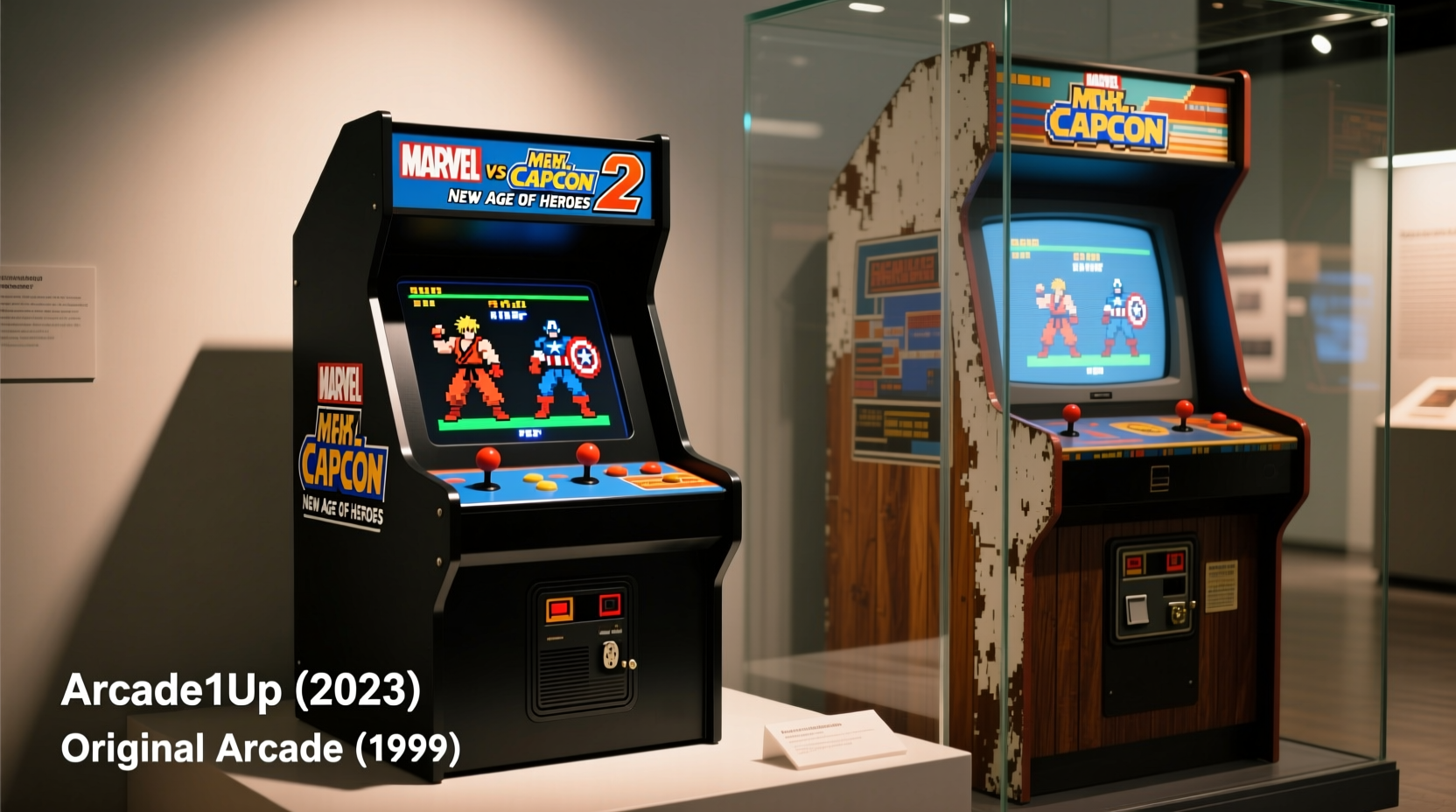
The original *Marvel vs. Capcom 2* debuted in arcades with CPS-2 hardware, later appearing on Dreamcast, PlayStation 2, Xbox, and eventually digital platforms like Xbox Live Arcade. Its legacy is built on tight mechanics, chaotic tag-team battles, and a roster that includes fan favorites like Ryu, Wolverine, and Jill Valentine.
Playing the original offers several advantages:
- Precision input: Arcade boards and well-maintained consoles provide minimal input lag, critical for competitive play.
- Fidelity to design: No emulation quirks or scaled visuals—what you see is what developers intended.
- Modding potential: Original hardware can be modified with rollback netcode via kits like Pandadoor, making online play viable.
“True fighting game enthusiasts still seek out original MvC2 setups because timing windows are unforgiving. Even 30ms of lag changes everything.” — Derek Lin, Competitive Fighting Game Coach
However, sourcing original hardware isn’t simple. Arcade PCBs (printed circuit boards) are expensive, often priced between $400–$700, and require compatible monitors and power supplies. Console versions lack online multiplayer and may suffer from region restrictions or aging components.
What the Arcade1Up Version Offers
In 2022, Arcade1Up released a dedicated *Marvel vs. Capcom 2* cabinet as part of their premium lineup. Standing at around 5 feet tall, it mimics the look of a real arcade machine, complete with a 19-inch screen, dual speakers, and authentic artwork.
Key features include:
- Pre-installed ROM of *MvC2* with no need for emulation setup
- Three-button layout per player, matching the original control scheme
- Bluetooth connectivity for wireless save functionality and updates
- Online leaderboards and Wi-Fi-enabled tournaments (limited adoption)
The cabinet runs on a proprietary Android-based system, which handles emulation through a custom frontend. While not using original hardware, the emulation is generally stable, with accurate audio and visuals scaled to fit the modern LCD panel.
Performance Comparison: Arcade1Up vs. Original Hardware
| Feature | Arcade1Up Cabinet | Original Arcade PCB | Digital Re-release (XBLA) |
|---|---|---|---|
| Input Lag | Moderate (~50ms) | Low (~16ms) | Variable (depends on TV) |
| Visual Fidelity | Scaled 720p, slight blurring | Native 240p CRT output | Upscaled 1080p, clean but filtered |
| Audio Quality | Good, stereo speakers | Excellent, original mix | Lossless, high bitrate |
| Cost (as of 2024) | $499 MSRP (often discounted) | $400–$700 + monitor costs | $15–$20 (used digital) |
| Multiplayer Setup | Built-in dual controls | Requires external wiring | Local split-screen only |
| Maintenance | Minimal; plug-and-play | High; aging capacitors, repairs needed | None |
While the Arcade1Up version lacks pixel-perfect authenticity, it excels in accessibility. It’s a self-contained unit that works out of the box—ideal for casual players or collectors who want the aesthetic without technical hassle.
Who Should Choose the Arcade1Up Version?
The cabinet makes sense for specific audiences:
- Collectors: The cabinet doubles as a display piece, especially when placed in a game room or entertainment area.
- Casual players: If you’re revisiting the game for fun rather than competition, the Arcade1Up experience is more than sufficient.
- Families or social gamers: The built-in two-player setup encourages local matches, something increasingly rare in modern gaming.
That said, competitive players will notice the difference. Emulation introduces minor timing inconsistencies, and the buttons—though improved over earlier Arcade1Up models—are not tournament-grade. For those training for combos or perfect blocks, original hardware or modded systems remain superior.
Real Example: A Collector’s Dilemma
James R., a retro gaming enthusiast from Portland, faced this decision in 2023. He already owned a modded PS2 with *MvC2*, but wanted a true arcade feel. After researching, he bought the Arcade1Up cabinet during a Black Friday sale for $349. “It looks incredible next to my pinball machine,” he said. “I don’t play it every day, but when friends come over, it’s always the centerpiece.”
He later added a Pandadoor kit to his PS2 for serious practice. “The cabinet is for vibes. The PS2 is for skill. I use both differently.”
Step-by-Step Guide: Choosing Your Path
- Define your goal: Are you playing casually, collecting, or competing?
- Assess your space: Do you have room for a 5-foot cabinet? If not, original hardware or digital may be better.
- Set a budget: Original PCBs plus a CRT monitor can exceed $1,000 with shipping. Arcade1Up is cheaper upfront.
- Test before buying: Visit a retro arcade or friend’s setup to compare feel and responsiveness.
- Consider long-term maintenance: Older hardware requires upkeep; Arcade1Up offers limited support after warranty.
- Explore mods: If you choose original hardware, factor in the cost and effort of adding rollback netcode.
Checklist: Before You Buy Either Option
- ✅ Determine your primary use case (casual, competitive, decorative)
- ✅ Measure available space for an Arcade1Up cabinet (needs ~2.5 sq ft floor space)
- ✅ Research current market prices for original PCBs and cabinets
- ✅ Check if your TV supports low-latency mode for digital versions
- ✅ Look for Arcade1Up sales—Walmart and Best Buy often discount by 20–30%
- ✅ Verify return policy and warranty terms
Frequently Asked Questions
Can I upgrade the controls on the Arcade1Up cabinet?
Yes. Many users replace the stock Sanwa-style buttons and joysticks with genuine Sanwa parts for better feel. The process requires basic tools and voids the warranty, but is well-documented in online forums.
Is the Arcade1Up version accurate to the arcade original?
Visually and mechanically, it’s very close. However, due to emulation and screen scaling, there’s slight input lag and visual smoothing that purists notice. For most players, it’s negligible.
Why isn’t Marvel vs. Capcom 2 officially re-released on modern platforms?
Licensing issues involving character rights (especially X-Men and Spider-Man characters under Sony/Marvel agreements) have prevented a full remaster. This scarcity drives demand for existing copies and hardware.
Final Verdict: Worth It or Not?
The Arcade1Up *Marvel vs. Capcom 2* cabinet is worth it—if you value presentation, convenience, and nostalgic aesthetics. It brings the arcade experience into your home without requiring technical expertise. At around $350–$500, it’s a reasonable investment for collectors and casual players alike.
But if you're serious about mastering the game, competing online, or preserving historical accuracy, the original remains unmatched. Seek out a modded console or arcade board paired with rollback netcode for the best modern experience.
Ultimately, the two options serve different purposes. The Arcade1Up cabinet is a tribute. The original is the source. You don’t have to choose one—you can appreciate both for what they offer.




 浙公网安备
33010002000092号
浙公网安备
33010002000092号 浙B2-20120091-4
Comments
No comments yet. Why don't you start the discussion?