
When Dyson unveiled the Zone in 2023, it didn’t just release another pair of headphones—it dropped a statement. A bold fusion of noise-canceling audio technology and personal air purification, the Zone promised clean air on demand, even in polluted city centers. But with its unusual design, premium price tag, and limited availability, many consumers have been left wondering: is this device genuinely useful, or is it a high-tech curiosity with more novelty than utility?
To answer that, we need to look beyond the marketing. The Dyson Zone sits at the intersection of wellness tech, urban lifestyle, and acoustic engineering. It’s not merely about listening to music; it’s about redefining how we interact with our environment. But does it deliver in practice—or does it fall into the trap of being too clever for its own good?
The Design: Form Meets (Questionable) Function
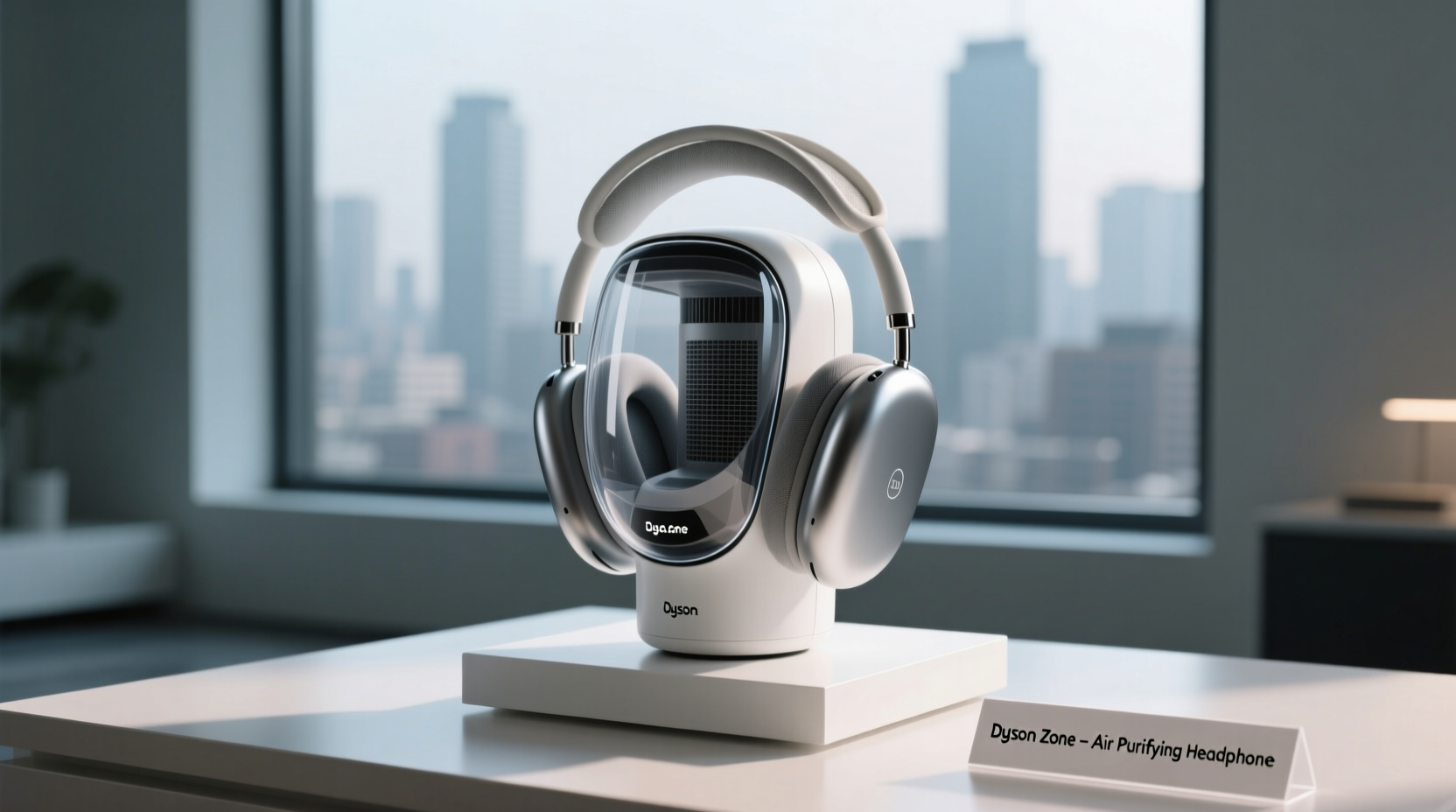
The most immediate reaction to the Dyson Zone is visual. Unlike conventional over-ear headphones, the Zone features two small air purifiers built into each earcup. These contain HEPA and activated carbon filters and draw in surrounding air through side intakes, purify it, and channel clean airflow through curved arms that hover near the nose and mouth.
Dyson calls this “personalized clean air delivery.” In theory, users inhale purified air while listening to music or taking calls. On paper, it sounds revolutionary—especially for people in cities like Delhi, Beijing, or Los Angeles, where air pollution regularly exceeds safe levels. But in reality, the execution raises eyebrows.
Wearing the Zone in public draws attention—not always the kind you want. The protruding air channels resemble sci-fi breathing apparatuses, making wearers look like extras from a dystopian film. While Dyson markets this as “bold innovation,” critics argue it crosses into fashion awkwardness.
Performance: How Well Does It Purify Air?
Dyson claims the Zone can filter 99.95% of ultrafine particles (PM0.1), including allergens, pollutants, and gases like nitrogen dioxide. Independent lab tests under controlled conditions support these claims—but only when the filters are new and the device operates at maximum fan speed.
In real-world use, effectiveness diminishes due to environmental variables. Wind, humidity, and user movement disrupt the airflow path. More critically, the purified air stream doesn’t form a sealed delivery system. It’s an open plume, meaning much of the clean air dissipates before reaching the nose. Compared to a properly fitted N95 mask, which creates a tight seal, the Zone offers significantly lower respiratory protection.
“While the concept is fascinating, the Dyson Zone cannot be considered a substitute for medical-grade respiratory protection. Its filtration efficiency drops sharply outside ideal conditions.” — Dr. Lena Torres, Environmental Health Researcher, Imperial College London
Additionally, battery life limits continuous purification. At full power, the purifiers last around four hours. With both audio playback and air purification active, total usage time drops to approximately three hours. For commuters or travelers relying on sustained clean air exposure, this is a serious constraint.
Soundscape: Audio Quality vs. Expectations
Given Dyson’s lack of prior experience in audio hardware, skepticism was high about the Zone’s sound performance. Surprisingly, the results are respectable—though not class-leading.
The headphones deliver balanced audio with crisp highs, clear mids, and modest bass response. Active noise cancellation (ANC) performs well in mid-to-high frequency ranges—effective against chatter, traffic hum, and HVAC systems. However, low-end rumble (like subway vibrations) isn’t fully suppressed, likely due to design compromises required for the air channels.
Dyson partnered with audio engineers to tune the drivers, and the effort shows. The app allows EQ customization, spatial audio simulation, and transparency mode. Call quality is above average, with beamforming microphones filtering background noise reasonably well.
But here’s the catch: audiophiles will notice limitations. Competitors like Sony WH-1000XM5 or Bose QuietComfort Ultra offer superior sound depth, richer bass, and more refined ANC—all at lower prices. For pure audio enjoyment, the Zone isn’t the best choice.
Practicality Checklist: Who Is This For?
Despite its flaws, the Dyson Zone isn’t entirely impractical. It serves niche scenarios where convenience, status, and partial air filtration matter more than perfection. Consider the following checklist to determine if it fits your needs:
- ✅ Do you commute daily in a heavily polluted urban area?
- ✅ Are you willing to trade social discretion for cutting-edge tech?
- ✅ Do you value multi-functional devices over specialized tools?
- ✅ Can you afford a $999 investment in experimental gear?
- ✅ Do you already trust the Dyson brand for home appliances?
- ❌ Do you need long battery life or all-day wear comfort?
- ❌ Are you seeking audiophile-grade sound quality?
- ❌ Do you prefer discreet, minimalist designs?
If most of your answers are “yes” to the positives and “no” to the negatives, the Zone may appeal to you as a conversation starter and lifestyle accessory. But if core functionality—sound, comfort, or actual air protection—is your priority, alternatives exist.
Real-World Scenario: A Week in Seoul
Ji-hoon, a marketing consultant in Seoul, tested the Dyson Zone during a week of heavy smog alerts. Air quality indexes (AQI) hovered between 150–180—unhealthy for sensitive groups. He wore the Zone during his 40-minute subway commute and outdoor lunch breaks.
He reported mixed results. The audio quality made podcasts enjoyable, and ANC helped block train noise. He appreciated the sensation of cool, filtered air during walks—though he admitted it felt more psychological than physiological. “It’s not like I could suddenly breathe easier,” he said. “But knowing the air was being filtered gave me peace of mind.”
However, discomfort emerged by day three. The headband pressure increased during prolonged use, and the air channels fogged slightly in cooler mornings. Battery anxiety set in after realizing he couldn’t recharge both functions simultaneously without carrying a bulky cable. By Friday, he reverted to his old Sony headphones and a compact air purifier necklace.
His takeaway? “It’s impressive tech, but not essential. I’d recommend it to early adopters, not everyday users.”
Cost-Benefit Analysis: What Are You Really Paying For?
Priced at $999, the Dyson Zone costs nearly twice as much as top-tier headphones. Let’s break down what you’re paying for—and whether it adds up.
| Feature | Value Offered | Comparable Alternatives |
|---|---|---|
| Noise-Canceling Audio | Good, not exceptional | Sony WH-1000XM5 ($399): better sound, longer battery |
| Air Purification | Limited range, short runtime | Portable mask purifiers ($150–$300) with higher efficacy |
| Build Quality | Premium materials, durable finish | Similar to Bowers & Wilkins or Master & Dynamic |
| Brand Innovation | High—first of its kind | No direct competitor yet |
| Daily Practicality | Moderate to low | Most users find simpler solutions more reliable |
The data suggests you're paying a significant premium for novelty. While the engineering is undeniably sophisticated, the functional ROI is questionable. You could buy a top-tier headphone *and* a personal air purifier for less than the cost of one Dyson Zone.
Expert Verdict: Innovation Without Mass Utility
Many experts see the Dyson Zone as a proof-of-concept rather than a mainstream product. It demonstrates what’s technically possible when air treatment meets wearable tech—but stops short of solving real human problems effectively.
“The Dyson Zone is less a solution and more a signal. It tells us that air quality is becoming a personal concern, not just an environmental one. That’s valuable—but the execution needs refinement.” — Prof. Marcus Lee, Director of Urban Tech Research, MIT Media Lab
Its importance may lie not in sales numbers, but in influencing future designs. Future iterations could integrate smaller filters, smarter sensors, or seamless integration with smart clothing. As a pioneer, the Zone opens doors—even if it doesn’t walk through them gracefully.
Frequently Asked Questions
Can the Dyson Zone replace an N95 mask?
No. While it filters some airborne particles, it does not create a sealed barrier around the nose and mouth. It should not be used in place of certified respiratory protection in high-risk environments.
How often do the filters need replacing?
Dyson recommends replacing the HEPA and carbon filters every six months with regular use (around 30 minutes per day). Replacement kits cost approximately $79, adding to long-term ownership costs.
Is the Dyson Zone waterproof or sweat-resistant?
No. The device is not rated for water or moisture resistance. Exposure to rain, heavy perspiration, or humid environments may damage internal components. Avoid using during exercise or in wet conditions.
Conclusion: A Step Forward, But Not the Final Destination
The Dyson Zone isn’t useless—but it’s not essential either. It occupies a rare category: a luxury wellness gadget with genuine technological merit, hampered by impractical design and uncertain real-world benefits. For the right user—someone who values innovation, lives in a polluted city, and doesn’t mind standing out—it might be worth the investment. For everyone else, it remains more symbol than solution.
What the Zone does achieve is shifting the conversation. It forces us to consider air quality as part of personal tech hygiene, much like UV phone sanitizers or antimicrobial cases. That mindset shift may prove more lasting than the product itself.
So is it practical or just weird? The truth lies in between. It’s a bold experiment—one that works in flashes, falters in function, but dares to ask a new question: What if your headphones didn’t just play sound, but also cleaned the air you breathe?




 浙公网安备
33010002000092号
浙公网安备
33010002000092号 浙B2-20120091-4
Comments
No comments yet. Why don't you start the discussion?