
When it comes to wearable tech, two names dominate the conversation: Fitbit and Apple. The Fitbit Versa series and the Apple Watch have both earned loyal followings, but for very different reasons. One is praised for its health focus and affordability; the other for its seamless integration with the iPhone ecosystem and advanced features. But which one actually performs better in everyday life? We’ve compiled insights from real users, long-term testers, and industry experts to answer that question honestly — not based on marketing claims, but on actual experience.
Fitness Tracking: Where Fitbit Shines
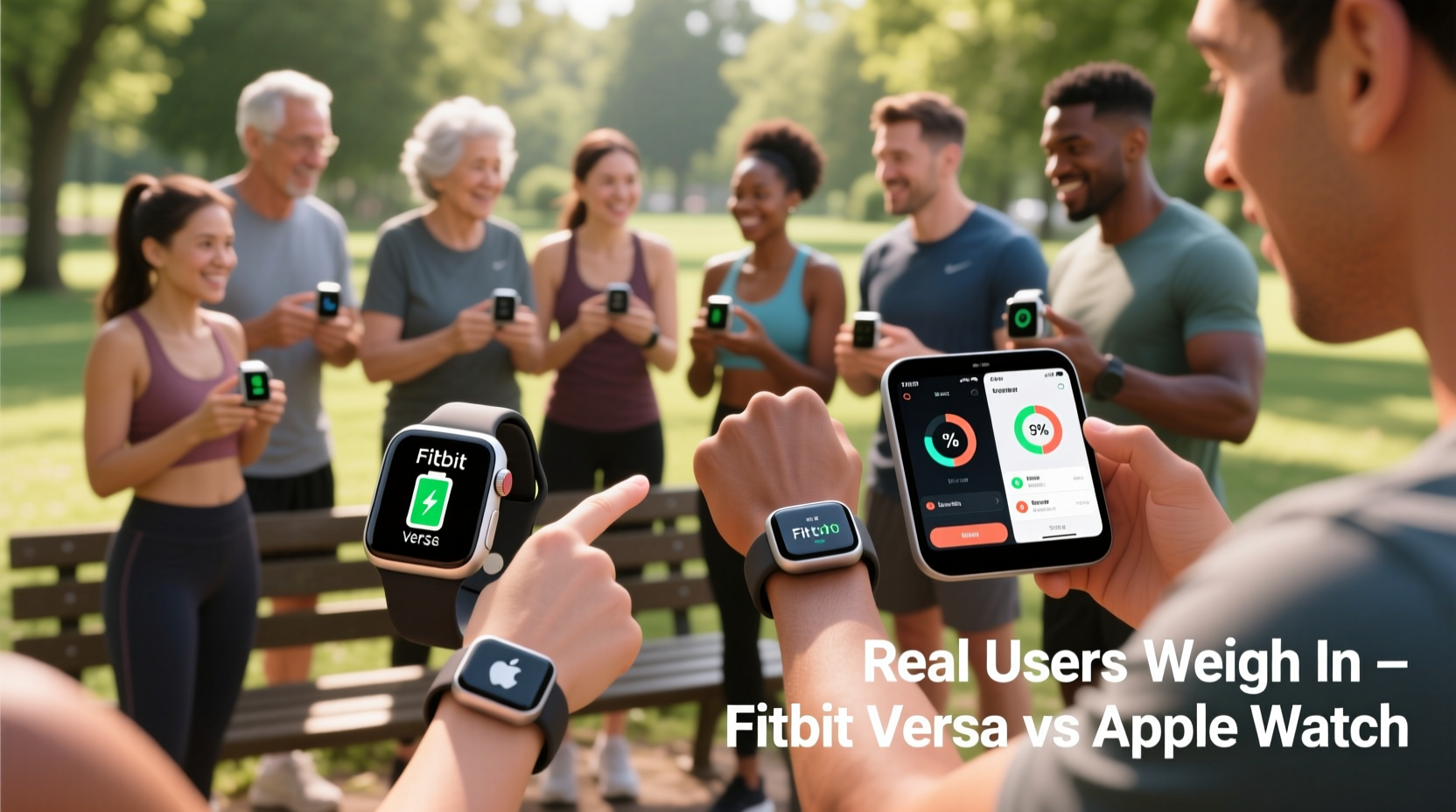
The Fitbit Versa has built its reputation on health and fitness. Unlike the Apple Watch, which balances lifestyle, communication, and wellness, the Versa prioritizes biometrics and activity tracking. Real users consistently report that Fitbit’s algorithms are more accurate for step counting, heart rate monitoring during workouts, and sleep analysis.
One user, Sarah M., a marathon runner from Portland, shared her experience: “I used the Apple Watch for six months, then switched to the Versa 3. My resting heart rate readings were suddenly consistent, and my sleep scores made more sense. Fitbit just seems to care more about the details of health data.”
The Versa includes continuous SpO2 monitoring, skin temperature variation tracking, and automatic exercise recognition — all standard even on older models. While the Apple Watch now offers ECG and blood oxygen sensing, these features are often buried under layers of menus or require manual initiation.
Battery Life: A Clear Advantage for Fitbit
Perhaps the most frequently cited advantage of the Fitbit Versa is its battery life. Most models last between 5 to 7 days on a single charge under normal usage. In contrast, the Apple Watch typically needs daily charging — sometimes twice a day if GPS or streaming music is used frequently.
This difference becomes critical for users who travel often, forget to charge devices, or simply dislike the nightly ritual of plugging in another gadget. “I love my iPhone, but I hate how much attention the Apple Watch demands,” said Mark T., a teacher from Austin. “With the Versa, I charge it once a week. It just works in the background.”
Extended battery life also means uninterrupted sleep tracking. Since the Versa doesn’t need nightly charging, users can wear it continuously, ensuring complete sleep cycle data. The Apple Watch, while improving, still struggles with this due to power constraints.
Smart Features and Ecosystem: Apple Takes the Lead
Where the Apple Watch pulls ahead is in smart functionality. If you’re deeply embedded in the Apple ecosystem, the Watch isn’t just a tracker — it’s a remote control for your digital life. Users praise its ability to reply to messages, make calls, control HomeKit devices, and use Apple Pay seamlessly.
“I couldn’t imagine driving without my Apple Watch giving me turn-by-turn directions on my wrist,” said Lisa Chen, a graphic designer in San Francisco. “The haptic taps are so precise, and I never miss a notification.”
The Fitbit Versa does offer notifications, voice assistants (Google Assistant and Alexa), and basic app support, but the interface feels slower and less intuitive. App selection is limited, and third-party development lags far behind watchOS. For casual users, this may not matter. But for those who treat their watch as a productivity tool, the gap is noticeable.
“Battery life favors Fitbit, but responsiveness and integration favor Apple. It’s not just about what the device does — it’s how smoothly it fits into your routine.” — David Lin, Wearable Tech Analyst at GadgetScope
Price and Value Comparison
Cost is another major factor influencing user preference. The Fitbit Versa line typically ranges from $199 to $299, depending on the model and features. The Apple Watch starts at $249 for the SE model and climbs to over $700 for the Ultra with cellular.
For budget-conscious buyers, the Versa offers excellent value. You get robust health tracking, decent design, and multi-day battery at a fraction of the cost. However, Apple counters with stronger build quality, brighter displays, and faster processors.
| Feature | Fitbit Versa 4 | Apple Watch SE (Gen 3) |
|---|---|---|
| Starting Price | $229 | $249 |
| Battery Life | 6 days | 18 hours |
| Sleep Tracking | Detailed stages + SpO2 | Basic (with subscription) |
| ECG Support | No | Yes |
| Water Resistance | 50m (swim-proof) | 50m (swim-proof) |
| App Ecosystem | Limited | Extensive |
| Operating System Updates | 2 years avg | 5+ years |
Note: While Fitbit wins on upfront value, Apple provides longer software support, meaning your device stays functional and secure for years longer.
Real User Scenario: A Week with Both Devices
To understand the practical differences, we followed James R., a 38-year-old project manager and occasional triathlete, as he tested both watches over seven days. He wore the Fitbit Versa 4 Monday through Wednesday, switched to the Apple Watch SE Thursday through Friday, then compared notes over the weekend.
His findings were telling. During his morning runs, the Versa provided more detailed post-workout summaries, including readiness scores and recovery time suggestions. Sleep data was richer, showing trends in deep vs. REM sleep. However, when commuting, the Apple Watch proved superior: quick replies to Slack messages, contactless entry via transit cards, and seamless handoff to AirPods for calls.
“The Fitbit felt like a dedicated coach,” James noted. “The Apple Watch felt like a personal assistant. I’d pick the Versa for training season, but the Apple Watch for workweeks.”
What Experts Recommend Based on Use Case
There is no universal “better” device — only what suits your lifestyle. Industry analysts emphasize matching the tool to your primary goal.
- Choose Fitbit Versa if: You prioritize fitness tracking, want longer battery life, prefer lower cost, and don’t need constant smartphone-like interaction.
- Choose Apple Watch if: You own an iPhone, rely on notifications, use voice commands frequently, or want access to a mature app ecosystem.
Checklist: How to Decide Which Watch Is Right for You
- Am I primarily focused on fitness and health tracking? → Lean toward Fitbit.
- Do I own an iPhone and use Apple services daily? → Lean toward Apple Watch.
- Is battery life a pain point with current devices? → Fitbit wins.
- Do I want to install third-party apps like Strava, Spotify, or banking tools? → Apple offers broader support.
- Am I on a tight budget? → Fitbit offers better value out of the box.
- Do I travel frequently or forget to charge gadgets? → Fitbit’s week-long battery is a game-changer.
FAQ
Can the Fitbit Versa work with an iPhone?
Yes, the Fitbit Versa is fully compatible with iPhones and syncs well with iOS. However, some features like Apple Music control or iMessage replies are limited compared to native Apple Watch functionality.
Does the Apple Watch track fitness as well as Fitbit?
It tracks core metrics accurately, but Fitbit generally provides deeper insights into sleep patterns, recovery, and long-term health trends without requiring subscriptions for basic features.
Which lasts longer — hardware or software?
Apple Watch devices typically receive OS updates for 5–6 years, while Fitbit models are supported for about 2–3 years. This makes Apple a better long-term investment if you plan to keep the device for several years.
Final Verdict: It Depends on What You Value Most
The Fitbit Versa isn’t universally “better” than the Apple Watch — but for many users, it’s more than sufficient. Its strength lies in simplicity, accuracy, and endurance. If your main goal is to improve health, monitor activity, and avoid constant charging, the Versa delivers exceptional performance.
The Apple Watch, meanwhile, excels as a connected lifestyle device. It’s ideal for professionals, communicators, and iPhone power users who want their wrist to do more than count steps.
In the end, real users aren’t choosing based on brand loyalty — they’re choosing based on what fits their rhythm. Whether you’re training for a 5K or managing a busy inbox, the right watch should fade into the background and enhance your life, not demand attention.




 浙公网安备
33010002000092号
浙公网安备
33010002000092号 浙B2-20120091-4
Comments
No comments yet. Why don't you start the discussion?