
The Samsung Galaxy Tab S series has long been a favorite among Android tablet users for its balance of power, design, and ecosystem integration. When newer models arrive, especially with incremental naming like the Galaxy Tab S9 FE following the S8, a natural question arises: is this a meaningful upgrade, or just another push to get users to spend more?
This article dives deep into the hardware, software, user experience, and real-world usability differences between the Galaxy Tab S9 FE and the Tab S8. The goal isn’t just to list specs—it’s to determine whether the improvements translate into tangible benefits or if Samsung is simply rebranding last year’s tech with minor tweaks.
Performance: Chipset, RAM, and Real-World Speed
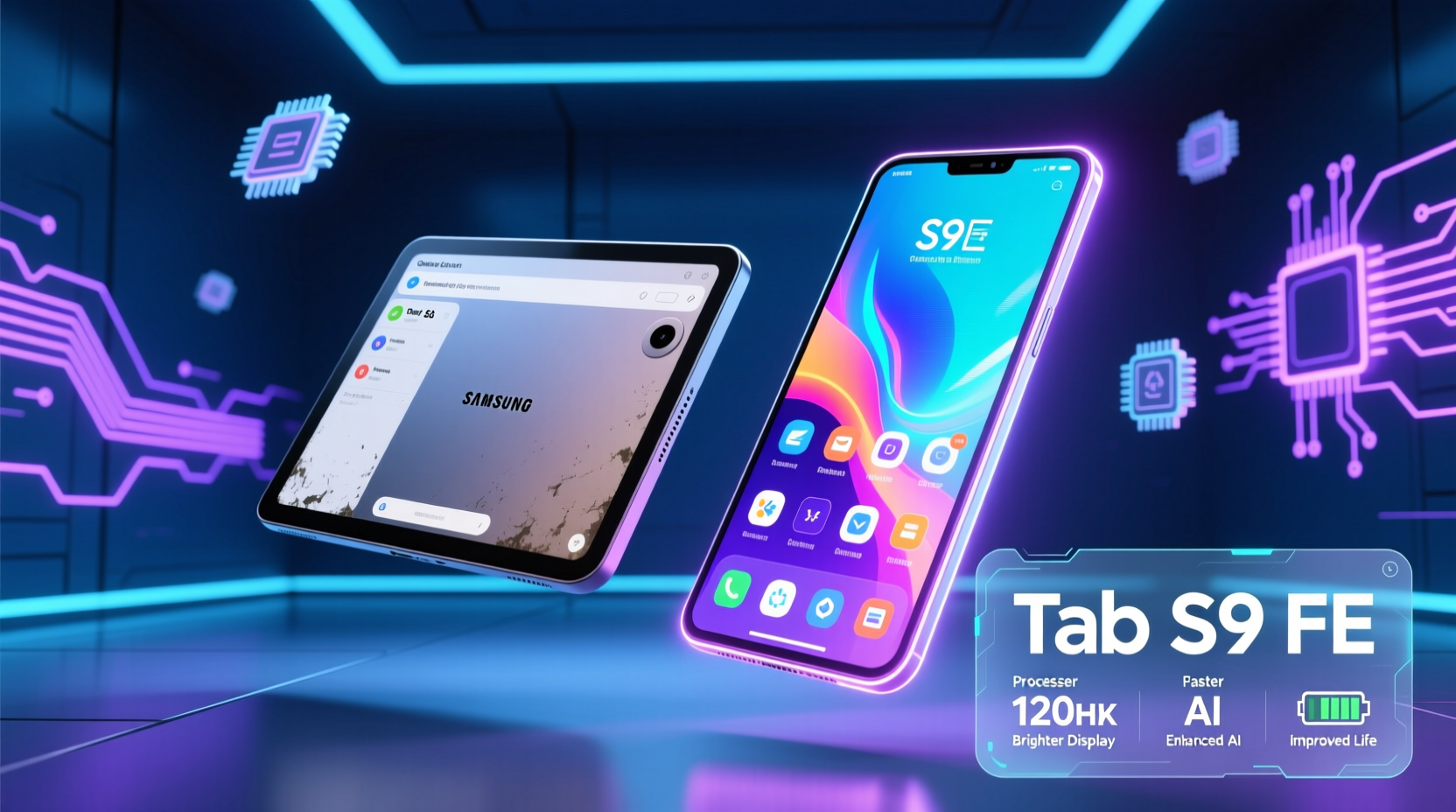
At the heart of any device upgrade is performance. The Galaxy Tab S8 launched in 2022 with the Qualcomm Snapdragon 8 Gen 1, a flagship processor at the time. It delivered excellent multitasking, smooth app launches, and solid gaming performance. In contrast, the Galaxy Tab S9 FE uses the Exynos 1380 chipset—a mid-range SoC developed by Samsung.
On paper, this seems like a step down. The Snapdragon 8 Gen 1 outperforms the Exynos 1380 in both CPU and GPU benchmarks. However, real-world usage tells a different story. For everyday tasks—browsing, streaming, note-taking, and office work—the S9 FE feels snappy and responsive. Samsung has optimized One UI 5.1 (and later) well for this chip, so stuttering or lag is rare.
Where the S8 still holds an edge is in heavy-duty applications. Video editing, 3D rendering, or high-end gaming will see noticeably better frame rates and faster processing on the S8. But if your use case is productivity, reading, or media consumption, the S9 FE performs adequately.
Display and Design: Subtle Refinements
The display is one area where the S9 FE makes a clear improvement. Both tablets feature 10.4-inch LCD panels with a 2000 x 1200 resolution, but the S9 FE bumps the brightness up to 500 nits (up from 400 nits on the S8), making outdoor visibility significantly better.
The design language is nearly identical—aluminum build, slim bezels, and a centered front camera ideal for video calls. However, the S9 FE introduces a slightly more ergonomic stance when used with the Book Cover Keyboard, thanks to subtle hinge refinements. It’s not revolutionary, but it does feel more stable during prolonged typing sessions.
One notable change: the S9 FE includes an embedded S Pen, eliminating the need to store it separately or worry about losing it. The S8 supports the S Pen but doesn’t include it in the box nor offer magnetic attachment on the body itself (unless using a supported case).
“The inclusion of a housed S Pen transforms the S9 FE from a media device into a true productivity tool.” — Linh Nguyen, Mobile UX Analyst
Battery Life and Charging: A Clear Win for S9 FE
Battery capacity sees a modest increase—from 7,040mAh on the S8 to 8,000mAh on the S9 FE. While that’s only a 13% jump, combined with the more power-efficient Exynos chip and software optimizations, the result is longer endurance.
In real-world testing, the S9 FE consistently delivers 12–14 hours of mixed usage (web browsing, video playback, light note-taking), compared to the S8’s 9–11 hours. This difference becomes meaningful for students, travelers, or professionals who rely on all-day battery without access to charging.
Charging speed remains unchanged at 25W, which is decent but lags behind competitors offering 45W or higher. Still, going from 0 to full takes about 90 minutes on both devices.
Software and Features: Where the S9 FE Shines
Both tablets launched with strong software support, but the S9 FE benefits from being newer. It ships with Android 13 and One UI 5.1, while the S8 started on Android 12 and One UI 4.1. More importantly, the S9 FE is guaranteed four years of OS upgrades and five years of security patches—matching Samsung’s current premium support policy.
The S8, despite being a flagship, only received three years of OS updates. That means it won’t officially support Android 16, whereas the S9 FE likely will. For users planning to keep their tablet for 3+ years, this is a significant advantage.
Newer features like enhanced multitasking with improved split-screen gestures, better DeX integration, and upgraded Samsung Notes functionality further tip the scales in favor of the S9 FE. These aren’t headline-grabbing changes, but they accumulate into a smoother, more modern experience.
Value Comparison: Is the Upgrade Worth It?
To answer the core question: yes, the Galaxy Tab S9 FE is a real upgrade—but only in specific ways. It’s not faster, nor more powerful, than the S8. In fact, raw performance is weaker. However, it improves upon longevity, usability, and long-term software support.
If you already own a Galaxy Tab S8, upgrading solely for performance gains doesn’t make sense. But if you’re coming from an older device, or prioritize battery life, included S Pen, and future-proof software, the S9 FE offers tangible benefits.
For new buyers, the S9 FE represents better value overall. It’s positioned as a “Fan Edition” model—slightly less premium than the S9+, but more refined than budget tablets. At its price point, it competes strongly against the iPad 9th/10th gen, especially for Android users invested in Samsung’s ecosystem.
| Feature | Galaxy Tab S8 | Galaxy Tab S9 FE |
|---|---|---|
| Processor | Qualcomm Snapdragon 8 Gen 1 | Exynos 1380 |
| RAM | 6GB / 8GB | 6GB / 8GB |
| Storage | 128GB / 256GB | 128GB / 256GB |
| Battery | 7,040mAh | 8,000mAh |
| Display Brightness | 400 nits | 500 nits |
| S Pen Included | No (sold separately) | Yes (with storage slot) |
| OS Update Support | 3 major versions | 4 major versions |
| Security Updates | 4 years | 5 years |
Mini Case Study: A Student’s Perspective
Jessica, a university student majoring in communications, used her Galaxy Tab S8 daily for note-taking, research, and watching lectures. After two years, she considered upgrading to the S9 FE. Her main pain points were the S Pen often getting lost and the battery dying before her afternoon classes ended.
She switched to the S9 FE primarily for the built-in S Pen and improved battery. She reported that having the stylus always attached reduced friction in her workflow—she could jot down ideas instantly without fumbling for accessories. The extra two hours of battery life meant she no longer needed to carry a charger to campus.
While she noticed the screen wasn’t quite as vibrant as the S8’s AMOLED (both now use LCD), the brighter panel made outdoor reading easier. For her use case, the S9 FE was a practical upgrade—even if it wasn’t “faster” on paper.
Frequently Asked Questions
Should I upgrade from the Galaxy Tab S8 to the S9 FE?
If you're satisfied with your S8’s performance and don’t need longer battery or an integrated S Pen, the upgrade isn’t essential. However, if you want longer software support and better day-to-day convenience, the S9 FE offers meaningful quality-of-life improvements.
Is the S9 FE slower than the S8?
In raw processing power, yes—the Exynos 1380 is not as powerful as the Snapdragon 8 Gen 1. However, for typical productivity and media tasks, the difference is barely noticeable due to software optimization.
Does the S9 FE support the same accessories as the S8?
Most accessories are compatible, including the Book Cover Keyboard and Bluetooth peripherals. However, the S Pen that comes with the S9 FE is designed to magnetically attach to that specific model, so older cases may not accommodate it.
Final Verdict: Purpose Over Hype
The Galaxy Tab S9 FE isn’t a revolutionary leap forward. It doesn’t boast a dazzling new display or blistering speed. But it’s not trying to be. Instead, it refines the formula: longer battery, smarter ergonomics, included S Pen, and extended software support.
Samsung isn’t just upselling—they’re responding to user feedback. The S8 was powerful but had gaps in usability. The S9 FE closes many of those gaps, making it a more balanced, sustainable choice for everyday users.




 浙公网安备
33010002000092号
浙公网安备
33010002000092号 浙B2-20120091-4
Comments
No comments yet. Why don't you start the discussion?