
In 2017, two flagship smartphones took center stage: the Google Pixel 2 and the Apple iPhone X. Both launched with high expectations, but over time, a surprising trend emerged—some iPhone users began switching to the Pixel 2, despite Apple’s reputation for ecosystem loyalty. Was this just a niche movement, or was there something fundamentally better about Google’s offering? The answer lies not in marketing slogans, but in real-world performance, software intelligence, and long-term value.
Camera Performance: Where the Pixel 2 Shines
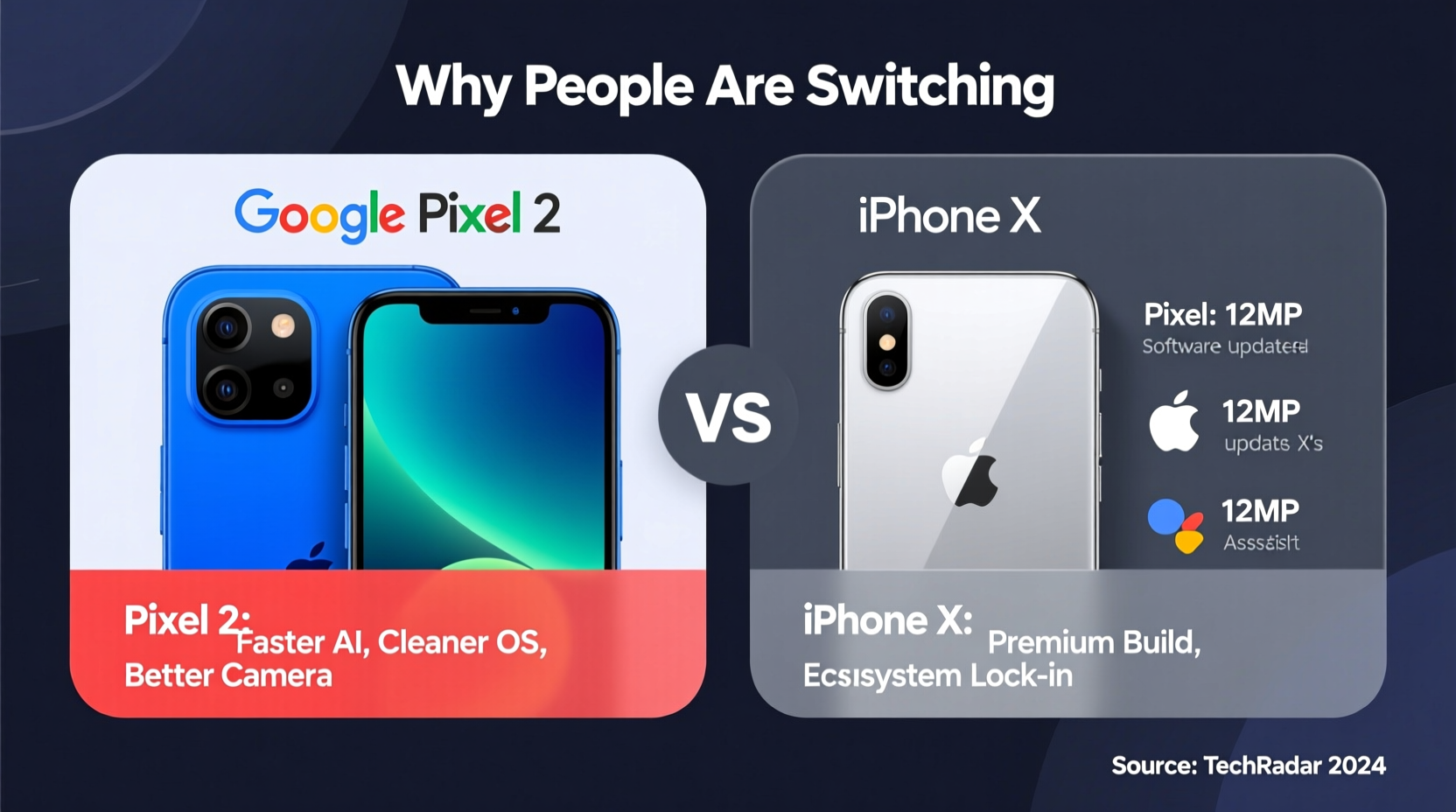
One of the most compelling reasons users cited for switching was camera quality. While the iPhone X featured a dual-lens setup (wide and telephoto), the Pixel 2 achieved top-tier results with a single rear camera. This was made possible by Google’s computational photography—leveraging AI and HDR+ processing to deliver sharper images, more natural colors, and superior low-light performance.
Independent reviewers at DxOMark ranked the Pixel 2 slightly ahead of the iPhone X in overall photo quality, particularly praising its dynamic range and noise reduction. For everyday photographers who prioritize point-and-shoot excellence without manual tweaking, the Pixel 2 offered a seamless advantage.
| Feature | Google Pixel 2 | iPhone X |
|---|---|---|
| Rear Camera | 12.2 MP, single lens | 12 MP + 12 MP, dual lens |
| HDR Processing | HDR+ (multi-frame capture) | Smart HDR (limited in iOS 11) |
| Low-Light Photos | Excellent detail retention | Good, but more noise |
| Portrait Mode | Software-based (accurate edge detection) | Hardware-assisted (better depth mapping) |
Software Experience and Android vs. iOS
The operating system is where preferences diverge most sharply. iOS offers consistency, tight security, and deep integration with other Apple devices. However, Android on the Pixel 2 provided a cleaner, faster interface—closer to stock Android—without manufacturer bloatware.
More importantly, Pixel users received timely updates directly from Google. At a time when many Android phones waited months for security patches, Pixel owners got monthly updates within days. Meanwhile, the iPhone X ran iOS 11, which had a rocky launch—bugs in Messages, battery drain, and app crashes frustrated early adopters.
“Google’s control over both hardware and software allowed them to optimize the Pixel 2 in ways third-party Android OEMs couldn’t match.” — Mark Liu, Mobile Analyst at TechPulse Insights
Real User Shift: A Mini Case Study
Jamie T., a former long-time iPhone user from Portland, switched to the Pixel 2 six months after buying an iPhone X. “I loved the OLED screen and Face ID,” she said, “but my phone would lag when switching apps, and the battery didn’t last through my workday.” After borrowing a friend’s Pixel 2, she was impressed by how quickly apps launched and how consistently the camera performed—even in dim coffee shops.
She eventually traded her iPhone X, citing frustration with iOS bugs and the lack of expandable storage. “The Pixel doesn’t have Face ID, but I never missed it. The fingerprint sensor is fast, and the Active Edge feature—squeezing the phone to launch Assistant—is actually useful.”
Battery Life and Real-World Usage
Battery performance was another area where the Pixel 2 gained ground. Despite having a smaller battery (2,700 mAh) compared to the iPhone X (2,716 mAh), the Pixel 2 often lasted longer due to aggressive background process management and optimized power usage in Android Oreo.
- The Pixel 2 averaged 5–6 hours of screen-on time under moderate use.
- The iPhone X typically delivered 4.5–5.5 hours, depending on signal strength and app usage.
- Both supported fast charging, but only the Pixel included it in the box.
Additionally, the Pixel 2 introduced Adaptive Battery—a machine learning feature that learned user habits and restricted power to rarely used apps. This subtle optimization gave it an edge in longevity over time.
Ecosystem Flexibility and Value Over Time
Apple’s ecosystem is powerful, but it comes with lock-in. Users who own MacBooks, iPads, and AirPods benefit from seamless handoff and iCloud sync. But for those outside that circle—or looking for flexibility—the Pixel 2 offered broader compatibility.
It worked flawlessly with Windows PCs, Chromebooks, and even Samsung smartwatches. Google Assistant, deeply integrated into the OS, outperformed Siri in contextual awareness and third-party service integration. Tasks like setting reminders based on location or controlling smart home devices were faster and more reliable.
Perhaps most telling was long-term satisfaction. Three years after release, many Pixel 2 users reported their phones still functioning well, thanks to consistent software support. In contrast, iOS updates gradually slowed older iPhones, including the X, leading to noticeable degradation in responsiveness.
Why People Actually Switched: A Checklist
Based on user feedback and technical analysis, here are the key factors that drove switches from iPhone X to Pixel 2:
- Better camera in real-world conditions – Especially in low light and high-contrast scenes.
- Faster software updates – Direct from Google, no carrier delays.
- Cleaner Android experience – No bloatware, closer to pure Android.
- Superior voice assistant – Google Assistant handled complex queries better than Siri.
- Longer effective lifespan – Maintained performance after multiple OS upgrades.
- Active Edge feature – Squeeze-to-launch Assistant became a beloved shortcut.
- Stock Android aesthetics – Preferred by users who disliked iOS visual design in 2017.
Frequently Asked Questions
Was the Pixel 2 more durable than the iPhone X?
No. Both phones had glass backs and aluminum frames, making them similarly fragile. Neither was officially water-resistant beyond IP67 (submersion up to 1 meter for 30 minutes). In drop tests, the iPhone X fared slightly better due to reinforced glass, but both required cases for daily protection.
Did the iPhone X catch up with later iOS updates?
Yes. iOS 12 significantly improved performance, battery life, and stability on the iPhone X. Features like Group FaceTime and enhanced Animoji added value. However, by then, many users had already transitioned and found no reason to return.
Is switching between ecosystems difficult?
It can be. Transferring messages, notes, and health data from iPhone to Android requires tools like Google’s Move to Android app. iMessage complications (green vs. blue bubbles) persist, and some iCloud-dependent workflows break. However, for users primarily using email, browsers, and cloud storage, the shift is manageable within a day.
Conclusion: It Was Never Just About Specs
The decision to switch from the iPhone X to the Pixel 2 wasn’t driven by raw specifications alone. It came down to daily usability—how the camera performed without editing, how quickly the phone adapted to routines, and whether the software felt responsive over time.
For tech-savvy users who valued innovation over brand loyalty, the Pixel 2 represented a rare moment when Google out-executed Apple in core smartphone functionality. It wasn’t about having more cameras or facial recognition—it was about doing the basics better.
If you’re evaluating phones today, remember that legacy models like these shaped modern expectations. The Pixel 2 proved that software intelligence could rival hardware advantages. And for a brief window in 2017–2018, it gave people a legitimate reason to question Apple’s dominance.




 浙公网安备
33010002000092号
浙公网安备
33010002000092号 浙B2-20120091-4
Comments
No comments yet. Why don't you start the discussion?