
In the secondhand smartphone market, older flagships often resurface at tempting prices. The Samsung Galaxy S6 Edge and HTC U11 were both premium devices in their time—but released five years apart. Today, you might find either for under $100. But which offers more value now? While nostalgia can color our judgment of iconic designs like the S6 Edge’s curved display, real-world usability matters most. This comparison cuts through legacy appeal to examine performance, software support, camera quality, and longevity—because buying a used phone isn’t just about price; it’s about how well it functions today.
Performance and Hardware: A Generation Gap
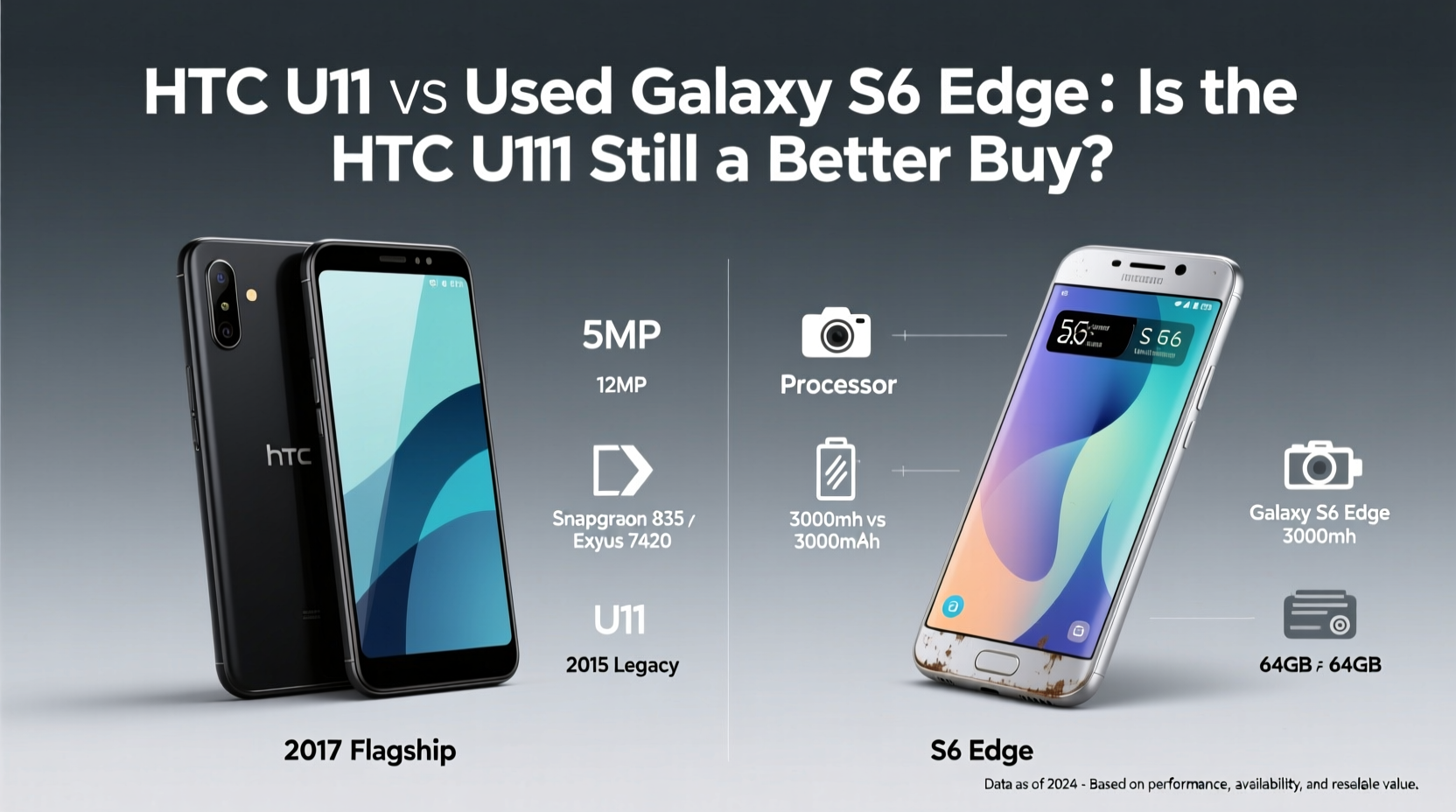
The Galaxy S6 Edge launched in early 2015 with Samsung’s Exynos 7420 (or Snapdragon 810 in some regions), 3GB of RAM, and up to 128GB of storage. At the time, it was among the fastest Android phones available. However, by modern standards, its hardware struggles with multitasking, app loading, and even basic navigation in updated apps.
In contrast, the HTC U11 arrived in 2017 with the Qualcomm Snapdragon 835, 4GB or 6GB of RAM, and UFS 2.1 storage. This chipset remains surprisingly capable in 2024 for light to moderate use. Apps open faster, background processes are smoother, and overall responsiveness is noticeably better—even when running newer versions of Android.
| Feature | HTC U11 | Galaxy S6 Edge |
|---|---|---|
| Release Year | 2017 | 2015 |
| Processor | Snapdragon 835 | Exynos 7420 / Snapdragon 810 |
| RAM | 4GB / 6GB | 3GB |
| Storage Type | UFS 2.1 | eMMC 5.0 |
| Battery Capacity | 3000 mAh | 2600 mAh |
| Charging | Quick Charge 3.0 | Fast Charging (proprietary) |
The U11’s superior architecture translates into real advantages: quicker app launches, better handling of Chrome tabs, and smoother UI animations. The S6 Edge may boot, but stutters are common during daily use—especially if you install Google Play Services updates or newer versions of messaging apps.
Software and Security: Why Updates Matter
Android version and security patch level significantly impact usability and safety. The Galaxy S6 Edge shipped with Android 5.0 and received updates up to Android 7.0 Nougat. It hasn't seen a security patch since 2017. Using this device on public Wi-Fi or entering passwords risks exposure to known exploits.
The HTC U11 launched with Android 7.1 and was updated to Android 9 Pie. While HTC ended official support in 2019, the active developer community has ported LineageOS 18.1 (based on Android 11) and newer. This means the U11 can run a secure, maintained OS with regular security fixes—if you're comfortable with custom ROMs.
“Even mid-tier phones from 2017 offer better long-term software viability than flagship models from 2015.” — David Lin, Mobile Security Analyst at OpenFirmware Group
For users who prefer stock experiences, the U11 still runs its original Android 9 firmware reliably. The S6 Edge cannot safely run modern web browsers or banking apps without elevated risk.
Camera Quality: Innovation vs. Legacy
The S6 Edge was praised for its 16MP rear camera in 2015, particularly in daylight. Its sensor captured sharp images with vibrant colors. But low-light performance was inconsistent, and video topped out at 1440p. More critically, the camera app and image processing haven’t evolved—meaning no computational photography, HDR improvements, or night modes.
The HTC U11 introduced Edge Sense (squeeze detection) and featured an UltraPixel 3 camera system. Its 12MP sensor used larger pixels for improved dynamic range and low-light clarity. It won multiple awards for audio and video recording quality, including DxOMark’s top spot at launch. In 2024, the U11 still captures usable photos in dim environments and records stabilized 4K video—capabilities the S6 Edge lacks entirely.
- HTC U11: 4K video @ 30fps, OIS + EIS, laser autofocus
- Galaxy S6 Edge: 1440p video max, basic stabilization, slow autofocus in low light
If you plan to take photos or record videos—even casually—the U11 delivers a meaningfully better experience.
Build, Design, and Daily Usability
The S6 Edge’s dual-curved AMOLED display was revolutionary. Even today, few budget phones replicate that visual flair. However, the glass back attracts fingerprints and is prone to cracks. The lack of IP rating means no water resistance. Additionally, the battery degrades faster due to age and non-removable design—many units now suffer from poor charge retention.
The HTC U11 features a polished glass body with symmetrical front speakers and IP67 water resistance. You can rinse it under a tap or survive brief rain exposure—something the S6 Edge cannot claim. Its display is flat, making screen protector application easier, and the build feels more durable despite similar materials.
One underrated feature of the U11 is Edge Lighting, where the sides glow in response to notifications. Combined with Edge Sense, it adds tactile interactivity absent on older devices.
Real-World Example: Maria’s Upgrade Dilemma
Maria, a freelance writer on a tight budget, needed a reliable backup phone for travel. She considered the S6 Edge ($65) versus the U11 ($85). She bought the S6 Edge expecting “good enough” performance. Within days, she noticed Gmail took over 10 seconds to load, WhatsApp crashed frequently, and the battery drained by noon. After rooting the device to install a lightweight ROM, she regained some speed—but lost access to Google Pay and cloud sync.
She eventually traded up to a used HTC U11. Though slightly pricier, it ran Android 9 smoothly, supported her productivity apps, and lasted a full day. “I wasted time and money on the cheaper option,” she said. “The U11 just works.”
Buying Checklist: What to Verify Before Purchase
To avoid disappointment when buying either device, follow this checklist:
- Test Boot Time: Does the phone start within 30 seconds?
- Check App Responsiveness: Open Chrome, Facebook, and YouTube. Do they lag?
- Inspect Battery Health: Use AccuBattery or similar to estimate capacity (below 80% = degraded).
- Verify Charging: Does it accept fast charging? Any overheating?
- Screen Inspection: Look for dead pixels, burn-in (common on S6 Edge OLED), or touch unresponsiveness.
- Camera Test: Take photos in bright and low light. Review focus speed and noise levels.
- Network Compatibility: Confirm LTE bands match your carrier (especially important for global variants).
Frequently Asked Questions
Can the Galaxy S6 Edge run modern apps safely?
Technically yes, but many apps—including banking and messaging platforms—block installation on unsupported Android versions due to security risks. Even if installed, vulnerabilities remain unpatched.
Is the HTC U11 waterproof after years of use?
IP67 certification applies only when new. Seals degrade over time, especially if exposed to moisture or dust. While it may survive splashes, submerging it is risky. Still, it’s far more resilient than the non-rated S6 Edge.
Which phone holds resale value better?
Neither is appreciating, but the U11 retains functional value longer due to stronger hardware and moddability. Enthusiasts often seek it for custom ROM projects, while the S6 Edge is largely viewed as obsolete.
Final Verdict: The HTC U11 Wins on Practical Grounds
The Galaxy S6 Edge was iconic, but technology moves forward. In 2024, choosing between these two comes down to one question: do you want a museum piece or a functional tool? The HTC U11, though aging, offers better performance, more recent software, superior camera capabilities, and meaningful durability features. It supports modern workflows, handles current apps, and benefits from ongoing community development.
The S6 Edge might impress visually, but its limitations are systemic—slow processor, outdated OS, fragile battery, and zero security updates. For just $20–$30 more, the U11 provides a dramatically better user experience.




 浙公网安备
33010002000092号
浙公网安备
33010002000092号 浙B2-20120091-4
Comments
No comments yet. Why don't you start the discussion?