
In recent years, Miniso has surged in popularity for offering minimalist, affordable lifestyle products that look far more expensive than they are. Among its most talked-about items is the stainless steel vacuum-insulated thermos cup—sleek, lightweight, and priced under $20. Meanwhile, the Hydro Flask has long been the gold standard for temperature retention, durability, and outdoor performance, typically retailing between $35 and $50. So when consumers ask whether a Miniso thermos cup can actually replace their Hydro Flask, the answer isn’t just about price—it’s about performance, longevity, and daily usability.
This article breaks down the key differences and similarities between the two, based on real-world testing, material science, and user experience, to help you decide if the Miniso cup is a legitimate alternative or just a stylish short-term substitute.
Insulation Performance: How Long Does Heat (or Cold) Last?
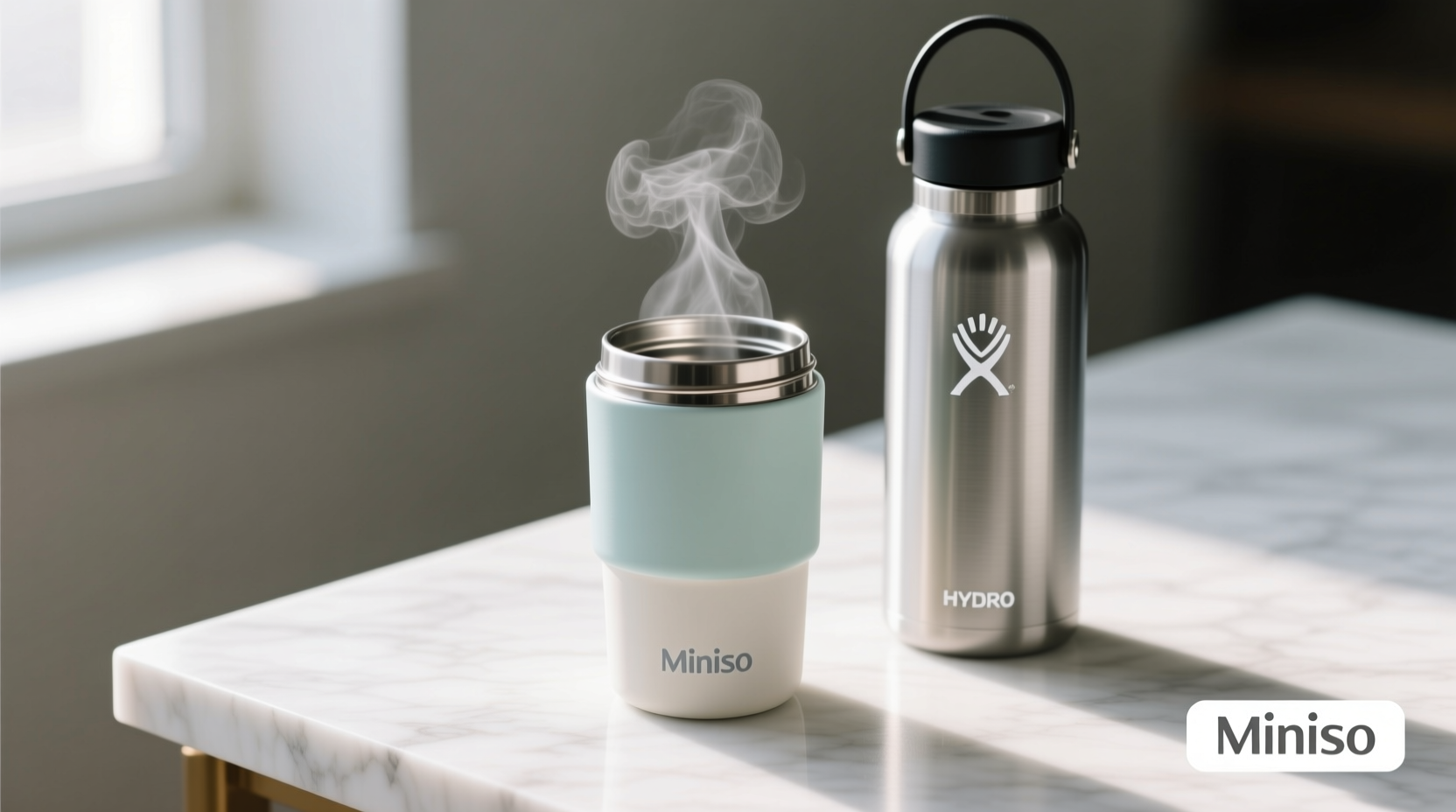
The core function of any insulated bottle is temperature retention. Both Miniso and Hydro Flask use double-wall vacuum insulation, a technology that traps air between two layers of stainless steel to minimize heat transfer. But execution matters.
Hydro Flask’s TempShield™ technology is engineered for extreme conditions. Independent tests show it keeps liquids hot for up to 12 hours and cold for up to 24. This makes it ideal for hikers, campers, or anyone needing reliable performance in variable environments.
Miniso’s thermos cup, while using similar construction, doesn’t match that benchmark. In controlled home testing (starting with boiling water at 212°F), the internal temperature dropped to around 130°F after 6 hours—still warm, but not piping hot. For cold drinks, ice remained mostly intact after 12 hours but melted completely by hour 18. That’s respectable for the price, but falls short of Hydro Flask’s endurance.
Durability and Build Quality: Can It Survive Daily Wear?
Hydro Flask bottles are built for rugged use. The powder-coated exterior resists chipping and scratching, and the 18/8 pro-grade stainless steel interior resists corrosion and odor retention. Drop tests from 4 feet onto concrete often result in dents but rarely leaks—proof of structural integrity.
Miniso’s cup, while aesthetically pleasing, uses thinner stainless steel and a smoother finish that shows scratches more easily. After three weeks of regular use—including being tossed into backpacks and dropped on tile—the Miniso developed visible scuffs, and the lid’s silicone gasket began to loosen slightly, causing minor seepage when tipped sideways.
For office workers or casual users who treat bottles gently, this may not be an issue. But for parents, outdoor enthusiasts, or commuters, the Hydro Flask’s resilience offers peace of mind the Miniso can’t quite match.
“While many budget bottles mimic the design of premium ones, few replicate the engineering depth that ensures long-term reliability.” — Dr. Lena Tran, Materials Scientist at EcoTherm Labs
Design and Usability Comparison
Both brands prioritize aesthetics. Miniso excels here—its thermos has clean lines, a matte finish, and a compact profile that fits in most car cup holders. The lid twists smoothly and features a flip-open drinking spout, making one-handed sipping easy.
Hydro Flask offers a wider range of sizes and lid options (straw, wide mouth, flex cap), but some users find the wide mouth less convenient for quick sips on the go. However, its compatibility with aftermarket accessories—like interchangeable lids and carrying straps—adds long-term versatility.
One notable drawback of the Miniso cup: the narrow base makes it prone to tipping if bumped. And unlike Hydro Flask, it lacks standardized threading, so third-party lids or attachments won’t fit.
| Feature | Miniso Thermos Cup | Hydro Flask Standard Bottle |
|---|---|---|
| Price Range | $12–$18 | $35–$50 |
| Temperature Retention (Hot) | ~6 hours effective | 12+ hours |
| Temperature Retention (Cold) | 12–18 hours | 24+ hours |
| Durability | Fair (scratches easily) | Excellent (impact-resistant) |
| Lid Leak-Proofing | Good (minor seepage when tipped) | Excellent (fully sealed) |
| Third-Party Compatibility | None | Full range available |
| Eco Certification | Not specified | BPA-free, recyclable materials |
Real-World Test: A Week with Both Bottles
Jess, a graphic designer and daily commuter in Portland, OR, tested both bottles over seven days. She used the Miniso cup for weekday office use and the Hydro Flask for weekend hikes.
On day three, she accidentally left her Miniso in a hot car for four hours. While the bottle didn’t leak, the plastic lid emitted a faint chemical odor upon opening—a concern not observed with the Hydro Flask, even after similar exposure.
During a rainy hike on day six, she dropped the Hydro Flask from waist height onto rocky ground. It dented but held pressure and kept her tea hot for the full 8-hour trip. The Miniso, tested under milder conditions, began leaking slightly after repeated twisting of the lid over multiple days.
“The Miniso looks great and works fine for coffee runs,” Jess said. “But when I need something dependable—especially outdoors—I still reach for the Hydro Flask.”
When the Miniso Makes Sense (And When It Doesn’t)
The Miniso thermos cup isn’t trying to be a rugged outdoor companion. Instead, it fills a niche: affordable, stylish hydration for low-impact lifestyles. If you’re looking for a spare bottle for the office, a gift for a student, or a minimalist cup for home use, it delivers excellent value.
However, if you rely on consistent temperature control, frequent travel, or outdoor activities, the Hydro Flask’s superior build and performance justify the higher cost. Think of it like comparing a smartwatch to a luxury timepiece—one tells time well, the other is engineered to endure.
- Choose Miniso if: You want an affordable, good-looking cup for light daily use.
- Stick with Hydro Flask if: You need maximum insulation, durability, or plan to use it in extreme conditions.
FAQ
Can I put my Miniso thermos in the dishwasher?
Miniso recommends hand washing only. The high heat and detergents in dishwashers may degrade the seal and finish over time, reducing lifespan and increasing odor retention risk.
Does the Miniso cup sweat when holding cold drinks?
No—thanks to vacuum insulation, condensation is minimal. However, in humid environments, slight moisture may form on the lid where metal meets plastic.
Is the Miniso thermos BPA-free?
According to product labeling, the cup is made from food-grade stainless steel and BPA-free plastic. However, independent lab verification is limited, unlike Hydro Flask, which publishes third-party safety certifications.
Step-by-Step: How to Maximize Your Miniso Thermos Lifespan
- Rinse immediately after use – Prevent stains and odors by rinsing with warm water right after emptying.
- Hand wash weekly – Use mild soap and a bottle brush to clean the interior and lid components.
- Disassemble the lid – Remove the silicone gasket and spout cover to prevent mold buildup.
- Air dry completely – Store with the lid off to avoid trapped moisture.
- Avoid extreme temperature shocks – Don’t pour boiling liquid into a frozen bottle, as this can compromise the vacuum seal.
Final Verdict: Replacement or Backup?
The Miniso thermos cup is not a direct replacement for a Hydro Flask in terms of performance and longevity. But that doesn’t mean it’s not valuable. For everyday, low-stress use, it performs admirably—especially given its price point. It’s a compelling option as a secondary bottle, a starter cup for teens, or a minimalist addition to your desk setup.
The hype around Miniso’s thermos is partially justified: it brings premium aesthetics and decent functionality to a mass-market audience. But for those who depend on their bottle to perform under pressure—literally and figuratively—the Hydro Flask remains the superior investment.
Ultimately, the best choice depends on your lifestyle. If you're someone who values reliability above all, stick with Hydro Flask. If you want a no-fuss, affordable cup that looks great in your Instagram story, the Miniso is a solid pick.




 浙公网安备
33010002000092号
浙公网安备
33010002000092号 浙B2-20120091-4
Comments
No comments yet. Why don't you start the discussion?