
In an age where smartphone cameras capture high-resolution images with computational enhancements, AI-driven portrait modes, and instant cloud backup, it’s fair to question the relevance of devices like the Fujifilm Instax Mini 11. This compact instant camera, released in 2019, prints physical photos in seconds using proprietary film. It lacks digital storage, editing capabilities, or connectivity features. Yet, nearly five years after its debut—and amid rapid technological advancement—it continues to sell steadily, appear on gift lists, and populate social media feeds. The persistence of the Instax Mini 11 raises a compelling question: in a world dominated by pixel-perfect smartphone photography, does an analog instant camera still have a place?
The answer isn’t just yes—it’s layered. Relevance isn’t solely determined by technical superiority. It’s shaped by emotional resonance, usability, cultural trends, and the human desire for tangible experiences. The Instax Mini 11 thrives not because it competes with smartphones on specs, but because it offers something smartphones can’t replicate: immediacy, imperfection, and intimacy.
The Rise of Digital Fatigue and the Analog Resurgence
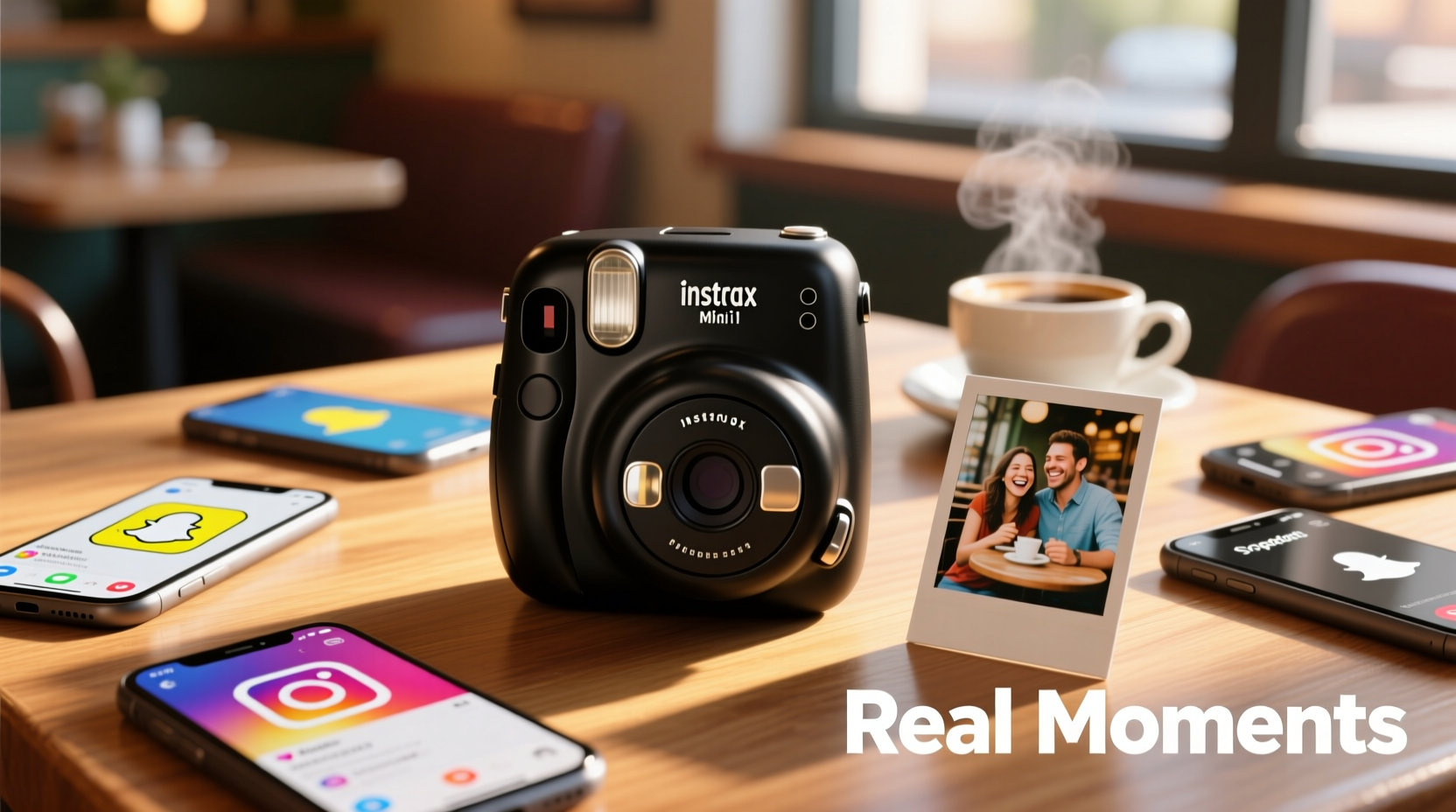
Smartphone photography has made capturing moments effortless, but that ease comes at a cost. The average person takes over 1,000 photos per year, most of which are never revisited. Digital overload has led to what psychologists call “photo fatigue”—a sense of disconnection from our own memories due to oversaturation and lack of curation.
In contrast, the Instax Mini 11 forces intentionality. Each photo costs money (film is roughly $0.75–$1 per shot), limiting impulse snaps. You must compose, commit, and accept the result—no retakes, no filters, no deleting. This constraint fosters mindfulness. As photojournalist Lena Tran observes:
“Digital photography gives us infinite choices. The Instax gives us presence. You’re not just taking a photo—you’re participating in a ritual.” — Lena Tran, Documentary Photographer
This shift aligns with broader cultural movements toward minimalism, slow living, and tactile experiences. Vinyl records, paper journals, and board games have all seen revivals—not because they’re more efficient, but because they offer richer sensory engagement. The Instax Mini 11 fits squarely within this trend.
What the Instax Mini 11 Offers That Smartphones Don’t
While smartphones excel at documentation, the Instax Mini 11 excels at creation. Its value lies not in resolution or zoom, but in experience. Consider these distinct advantages:
- Instant physical output: No waiting to print or share. The photo emerges in 10–15 seconds, warm to the touch, smudging slightly if handled too soon—a sensory detail absent from digital files.
- No screens, no scrolling: The photo becomes a standalone object, often passed hand-to-hand, taped to walls, or tucked into wallets. It exists outside the digital loop.
- Social catalyst: At parties or gatherings, the act of taking an Instax photo draws people together. Everyone leans in to see the developing image, creating shared anticipation.
- Aesthetic nostalgia: The soft focus, slight color shifts, and white borders evoke a vintage feel that curated Instagram filters only imitate.
Comparative Breakdown: Instax Mini 11 vs. Smartphone Photography
| Feature | Instax Mini 11 | Smartphone (e.g., iPhone 15) |
|---|---|---|
| Photo Quality | Low resolution, soft focus, analog warmth | High resolution, sharp detail, HDR support |
| Sharing Speed | Instant physical print (10–15 sec) | Instant digital sharing via apps |
| Cost Per Photo | $0.70–$1.00 (film + battery) | Negligible (digital storage) |
| Editability | None—what you shoot is what you get | Full editing suite (cropping, filters, retouching) |
| Tangibility | Physical keepsake, displayable, giftable | Digital file, easily lost or forgotten |
| User Experience | Ritualistic, engaging, limited shots | Effortless, abundant, often passive |
This comparison isn’t about declaring a winner. It’s about recognizing different purposes. The smartphone is a tool for memory preservation; the Instax Mini 11 is a tool for moment-making.
Real-World Use Case: A Birthday Party Reimagined
Consider Sarah, a 32-year-old event planner, who brought an Instax Mini 11 to her sister’s birthday dinner. Instead of everyone documenting the night on their phones, she placed the camera in the center of the table. Guests took turns capturing candid moments—laughing mid-bite, blowing out candles, hugging. By evening’s end, each guest received a photo strip as a takeaway. One wrote on social media: “Best party favor ever. I taped my Instax to my fridge and smile every time I see it.”
No digital album could replicate that feeling. The photos weren’t perfectly lit or composed. But they were authentic, immediate, and personal. That night wasn’t archived—it was celebrated.
Practical Tips for Getting the Most from Your Instax Mini 11
To maximize enjoyment and photo quality, follow these best practices:
- Respect the lighting: The Mini 11 automatically adjusts flash based on ambient light. In dim settings, the orange LED near the lens will illuminate, signaling flash activation. Avoid backlighting subjects directly against windows or bright lights.
- Mind the distance: The fixed-focus lens works best from 2 feet (0.6m) to infinity. For close-ups under 2 feet, switch to macro mode using the fold-out lens adapter at the front.
- Hold steady: Because the shutter speed adjusts automatically, movement during exposure can blur the image. Stand firmly and press the button gently.
- Wait before handling: Let the photo develop fully for at least 90 seconds before touching the image area. Oils from fingers can leave marks on the emulsion.
- Curate your collection: Since each photo is physical, create albums, frames, or scrapbooks. This reinforces the value of each shot.
Is the Instax Mini 11 Obsolete? A Checklist for Buyers
Before dismissing or purchasing the Instax Mini 11, ask yourself the following:
- ✅ Do I want to create physical mementos, not just digital files?
- ✅ Am I looking for a fun, interactive way to capture moments with friends or family?
- ✅ Do I appreciate imperfection and analog aesthetics over technical perfection?
- ✅ Am I willing to pay per shot instead of shooting endlessly?
- ❌ Do I need high-quality images for professional use or online posting?
- ❌ Am I primarily interested in editing, cropping, or sharing instantly online?
If the first four resonate and the last two don’t, the Instax Mini 11 remains a relevant and rewarding choice.
The Future of Instant Film in a Digital World
Fujifilm continues to support the Instax line with new models (like the Mini Evo hybrid camera) and limited-edition film packs. Despite supply chain challenges during the pandemic, Instax film sales rebounded strongly in 2022 and 2023, particularly among Gen Z and millennials.
Marketing strategist David Kim attributes this to “emotional utility.” He explains:
“Young consumers aren’t rejecting technology—they’re curating it. They use TikTok and Instagram daily, but they also crave real-world tokens of connection. The Instax fills that gap between digital performance and private sentiment.” — David Kim, Consumer Trends Analyst
School lockers, dorm rooms, and workspaces are filled with Instax prints not because they’re the best photos, but because they’re *felt* photos. The slight tilt, the faded corner, the handwritten note on the border—all become part of the memory.
Frequently Asked Questions
Can I use other film types with the Instax Mini 11?
No. The Instax Mini 11 uses only Instax Mini film, which measures 2.1 x 3.4 inches. It is incompatible with Square or Wide formats. Third-party films exist but may vary in quality and reliability.
How long do Instax photos last?
When stored properly—away from direct sunlight, heat, and moisture—Instax prints can retain color and clarity for 10–20 years. Over time, colors may fade, especially reds and blues, adding to their nostalgic character.
Is the Instax Mini 11 worth buying in 2024?
Yes, if you value experiential photography over technical precision. It’s ideal for gifts, events, creative projects, or as a mindful alternative to screen-based documentation. It won’t replace your smartphone, but it can complement how you engage with memories.
Conclusion: Embracing Both Worlds
The Instax Mini 11 isn’t relevant because it outperforms smartphones. It’s relevant because it operates on a different frequency—one tuned to emotion, simplicity, and presence. In a culture obsessed with optimization, it dares to be inefficient. In a world of ephemeral digital content, it delivers permanence through fragility.
You don’t need to choose between digital and analog. Many people use both: snapping hundreds of phone photos while reserving the Instax for moments that feel special—first dates, family reunions, travel highlights. The Mini 11 doesn’t compete with the smartphone; it redefines what a photograph can mean.




 浙公网安备
33010002000092号
浙公网安备
33010002000092号 浙B2-20120091-4
Comments
No comments yet. Why don't you start the discussion?